
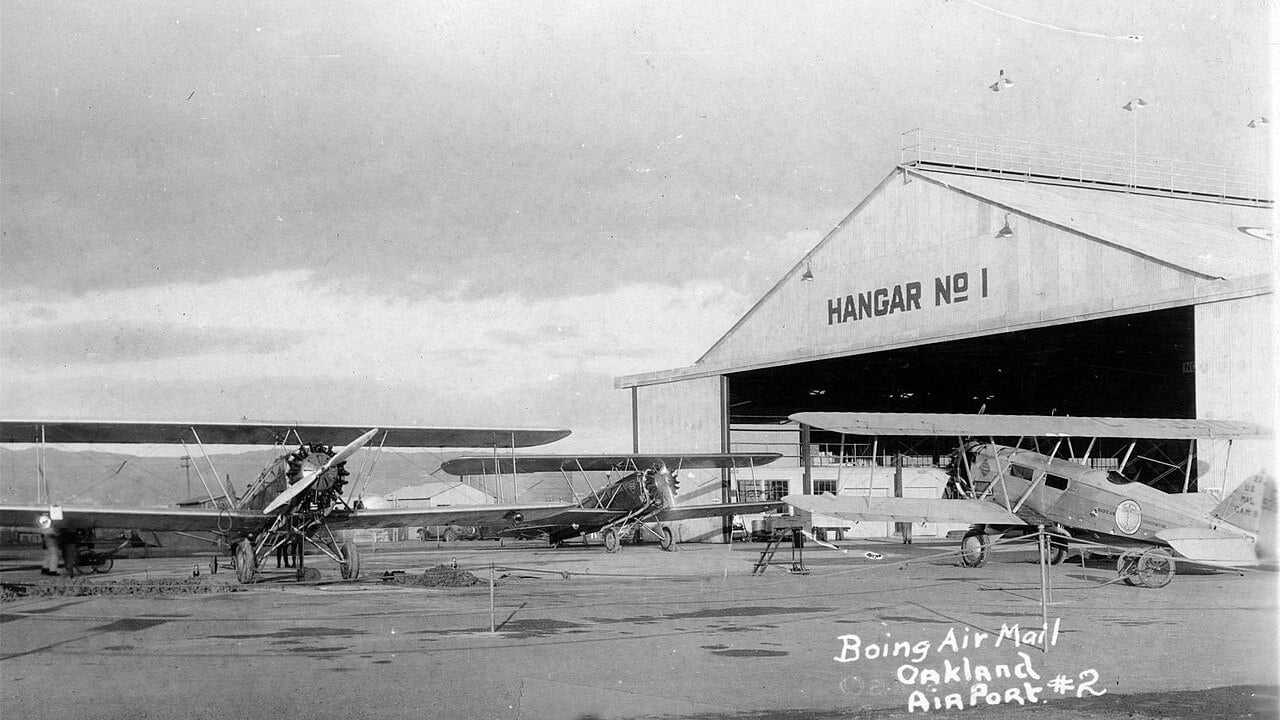
On 6 April 1926, a Varney Air Lines pilot named Leon Cuddeback landed a tiny 90 hp Curtiss Swallow biplane at Elko, Nevada, carrying a single bag of mail. He had flown from Pasco, Washington, with a stop in Boise, Idaho. It was not a glamorous flight. But it was the first scheduled run flown under a new kind of deal, and that deal would end up creating the American airline industry.
Within ten years, the companies built on those first contracts had grown into United, TWA, American and Eastern. Along the way came a political scandal, a presidential order that put the US Army in charge of the nation’s airmail, and one of the most painful winters the Army Air Corps ever lived through.
Kurzinfo
- Law: Contract Air Mail Act of 1925 (Kelly Act), sponsored by Rep. M. Clyde Kelly
- First contract run: 6 April 1926, Varney Air Lines, Pasco to Elko via Boise
- Early routes: Robertson Aircraft (St. Louis to Chicago, chief pilot Charles Lindbergh); Western Air Express CAM 4 (Los Angeles to Salt Lake City)
- Reform: McNary-Watres Act of 1930 and Walter Brown’s “Spoils Conferences”
- Airlines that grew from it: United, TWA, American, Eastern
- Army takeover: Contracts cancelled from midnight 19 February 1934; Air Corps flew the mail until 1 June 1934
- Maut: 66 crashes and 12 deaths (FAA history office, Air Force Magazine); some accounts count 13
- Ergebnis: Air Mail Act of 1934; airlines turned to passengers; Air Corps reforms
From Post Office pilots to private contractors
The US Post Office had been flying the mail itself since 1918. Its pilots built a transcontinental network, learned to fly at night along lighted airways, and paid for every lesson with crashes. Afterburner has told the story of Jack Knight’s night flight of 1921, which saved the service, and of Katherine Stinson, who flew the mail too. By the mid-1920s, the Post Office felt its experiment had worked.
Representative M. Clyde Kelly, a progressive Republican from western Pennsylvania, agreed. According to the Smithsonian’s National Air and Space Museum, Kelly believed the Post Office had achieved its goals and that it was time to let more efficient private enterprise fly the mail. His Contract Air Mail Act of 1925, known to everyone as the Kelly Act, let the Post Office pay private airlines to carry it, with payments based on the weight of the mail.
The first contracts were for feeder routes into the government’s transcontinental line, and they were numbered: Contract Air Mail, or CAM, routes. By 1927, the Post Office had handed all of its flying to commercial operators, and by 1929 more than 45 airlines were involved in carrying the mail, according to the FAA’s history office.
The airlines that grew from mail bags
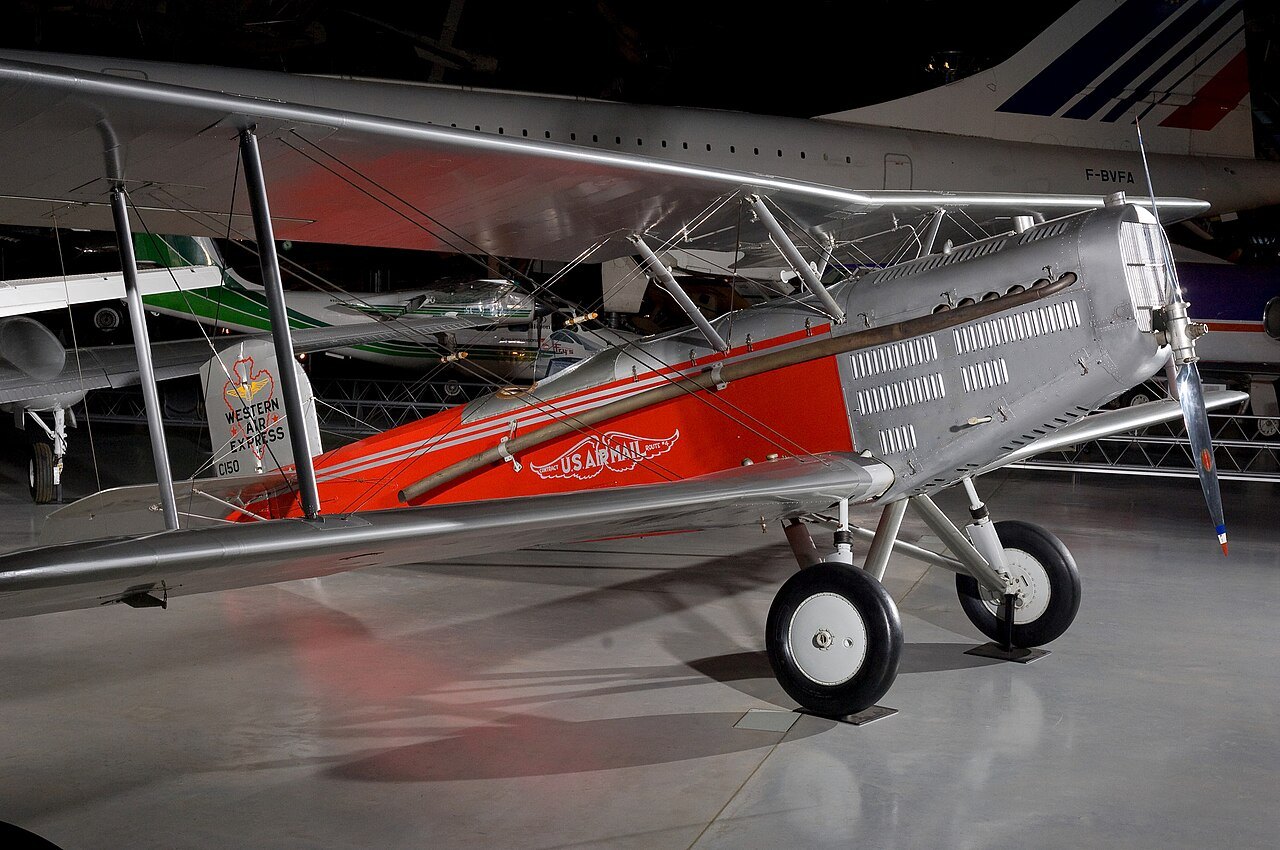
The early CAM operators were mostly small companies flying single-engine biplanes. Robertson Aircraft Corporation of St. Louis won the St. Louis to Chicago route and hired a young former Army flying cadet as its chief pilot: Charles Lindbergh. Robertson inaugurated the route on 15 April 1926, with five war-surplus de Havilland DH-4s. Two days later, Western Air Express opened CAM 4 between Los Angeles and Salt Lake City via Las Vegas, flying Douglas M-2 mailplanes.
The Smithsonian, which displays Western’s last surviving Douglas mailplane, records that the M-2s on CAM 4 compiled a perfect safety record and a profitable operation. Western invited passengers too, who could sit in the mail compartment on two removable seats. National Air Transport, later part of United Air Lines, flew a fleet of 24 Douglas mailplanes on the Chicago to New York route.
The economics, though, made passengers an afterthought. Air & Space Forces Magazine quotes historian Oliver E. Allen’s calculation that in 1926 a line would have had to charge a prohibitive $450 per ticket to earn as much from a 150 lb passenger as from the same weight of mail. Some carriers gamed the system by flooding it with junk mail.
The Smithsonian National Air and Space Museum on the Air Mail Crisis of 1934, a political, postal and aviation drama.
Walter Brown redraws the map
In 1929, Herbert Hoover’s new postmaster general, Walter Folger Brown, set out to fix that. The McNary-Watres Act of 1930 changed how airlines were paid, basing payments on the volume of mail rather than its weight, and gave Brown sweeping power to extend and consolidate routes. He wanted fewer, stronger airlines flying bigger aircraft that carried people.
In May 1930, Brown called the major operators to a series of meetings and, when they could not agree, decided the routes himself. Small carriers were pushed to merge or were frozen out. Three transcontinental systems emerged: the northern route of Boeing Air Transport, which became United; the central route of Transcontinental & Western Air, later TWA; and the southern route of American Airways. Critics would later call the meetings the “Spoils Conferences.”
It worked, commercially. Airlines bought multi-engine aircraft with radios, passenger numbers grew, and the cost of carrying the mail fell. But the losers were bitter. In 1933, Senator Hugo Black opened a Senate investigation, and in early 1934 his hearings filled the newspapers with accounts of small bidders frozen out and documents gone missing.
“A week or 10 days”
On 9 February 1934, President Franklin D. Roosevelt cancelled every domestic airmail contract, effective at midnight on 19 February, and ordered the War Department to fly the mail during “the present emergency.” Earlier that day the Chief of the Air Corps, Major General Benjamin Foulois, had been asked how long the Air Corps needed to prepare. By his own account, he told the Post Office: “I think we could be ready in about a week or 10 days.”
The Air Corps was not ready. Its pilots flew mostly in daylight and good weather, few had real night or instrument experience, and its open-cockpit biplanes had few instruments and short-range radios. The airlines, by contrast, had been flying the mail at night in modern passenger aircraft with full instrument panels and radio beams to follow.
Rogers’ warning came true almost at once. Three Army pilots were killed in bad-weather crashes on familiarisation flights before the operation even began. On 19 February a blizzard cancelled the first scheduled departure from Newark, and the first Army mail flight instead left Kansas City for St. Louis with 39 lb of mail.
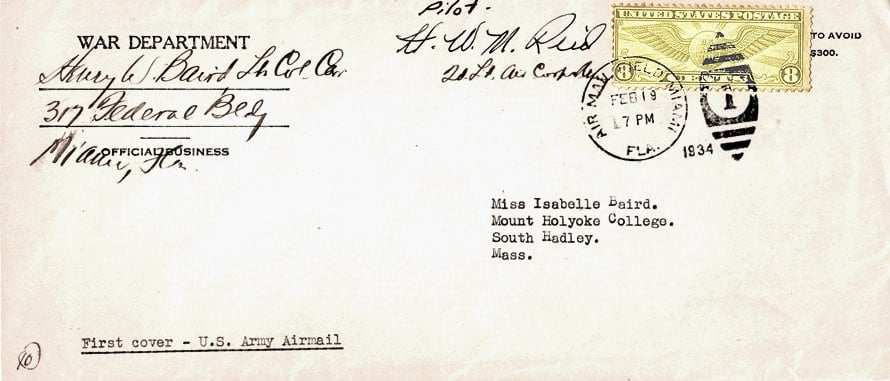
The Army Air Corps Mail Operation
The Army Air Corps Mail Operation, AACMO, used whatever it had. The Boeing P-12 fighters could carry only 50 lb of mail and became tail-heavy doing it; they were withdrawn after the first week. Douglas O-38 and O-25 observation biplanes, their rear cockpits rebuilt to hold 160 lb of mail, became the workhorses. The best mailplanes by far were the new Curtiss A-12 and the Martin YB-10, which could carry up to 2,000 lb, but the Army had only just begun receiving them.
Weather that winter was among the worst in years, and crashes mounted. On 9 March, four crew members died in separate crashes in Ohio, Florida and Wyoming, raising the toll to ten. Eddie Rickenbacker, a vice president of one of the holding companies that had lost its contracts, called the deaths “legalized murder.” Charles Lindbergh, by then a paid airline consultant, called the use of the Air Corps “unwarranted and contrary to American principles.”
Period newsreel: the US government voids the airmail contracts and the Army takes over the mail in February 1934.
The flights were halted on 10 March. They resumed on 19 March over just eight routes instead of 17, with stricter rules and only experienced pilots. The operation stabilised. In May the Post Office awarded temporary contracts to the airlines again, and the Air Corps flew its last mail pouch on 1 June 1934.
Counting the cost
The most widely quoted figures are 66 crashes and 12 deaths, the count given by the FAA history office and by Magazin der US-Luftwaffe. Some later accounts put the death toll at 13, depending on which training and ferry accidents are included, and several of the dead were not on mail flights at all. Writing in Magazin der US-Luftwaffe, John T. Correll noted that the Air Corps lost 54 airmen in flying accidents in 1934, against 46 in 1933 and 47 in 1935.
Over the whole operation, Army pilots flew about 1.5 million miles and carried around 777,000 lb of mail, completing 65.8 percent of scheduled flights.
What the fiasco built
The Air Mail Act of 1934 broke up the big holding companies that had joined airlines and aircraft manufacturers, and barred the old contract holders from bidding. The airlines simply changed their names: American Airways became American Airlines, Eastern Air Transport became Eastern Airlines, and Transcontinental & Western Air added “Inc.” With mail revenue less certain, the industry turned decisively towards passengers, and towards aircraft like the Douglas DC-3.
For the Air Corps, the humiliation proved useful. The airmail operation exposed its shortcomings in equipment, training and organisation, and led directly to boards of inquiry that produced the General Headquarters Air Force in March 1935, the first big step towards an independent US Air Force. Instrument and night flying went into the training syllabus.
A single bag of mail in a Curtiss Swallow had started it all. Eight years later, the contracts it began had built four major airlines, toppled a postmaster general’s system and forced the Army to learn to fly in the dark.
Sources: Smithsonian National Air and Space Museum (“Air Mail and the Birth of Commercial Aviation”; Douglas M-2 collection record), FAA History Office (“Airmail Comes of Age”), John T. Correll (“The Air Mail Fiasco”, Air Force Magazine, 2008), Air Force Magazine (“Valor: AACMO, Fiasco or Victory?”, 1995), San Diego Air & Space Museum Archives (Army Air Corps Air Mail Accidents collection), Nevada State Historic Preservation Office (Elko Airport marker), Minnesota Historical Society (Lindbergh and the airmail)
0 Comments