

An extension to The Race for the Bomb, our ten-part focus series. Part 9 flew the atomic missions; this piece goes back three months earlier, into the room where a handful of men decided which cities would live and which would die — and why the city at the top of the list was the only one the list saved.
Los Alamos, New Mexico, 10 May 1945. The war in Europe has been over for two days. In J. Robert Oppenheimer’s office, a committee of generals, physicists and one of the greatest mathematicians alive — John von Neumann, whom readers of this series met fleeing Budapest in Part 2 — spends two days grading Japanese cities the way examiners grade papers.
Their minutes, declassified decades later, read with a chill no dramatization improves. Targets should be important urban areas more than three miles across. They should be capable of being damaged effectively by blast. And they should be unlikely to have been attacked by August — undamaged, so that the new weapon’s work could be measured cleanly on virgin ground.
Five names came out of the grading. Yokohama: A. Kokura Arsenal: A. Niigata: B. And two cities rated AA — reserved, in effect, for the first atomic bombs. One was Hiroshima. The other, at the very top of the committee’s list, was Kyoto: the ancient capital, the city of sixteen hundred temples, home to a million people. Nobody in Kyoto knew. Nearly nobody in Washington objected. The story of the one man who did — and would not stop — is the strangest mercy in the history of air power.
Quick Facts: Choosing the Targets
- 5 targets rated on 11 May 1945: Kyoto AA, Hiroshima AA, Yokohama A, Kokura Arsenal A, Niigata B
- 1,000,000 — Kyoto’s population in the committee’s minutes; Hiroshima’s at the bombing: ~340,000–350,000
- 15 May 1945 — Kyoto, Hiroshima and Niigata placed on the “reserved” list: spared firebombing to keep them measurable
- ~30 May 1945 — Secretary of War Stimson strikes Kyoto from the atomic list; Groves lobbies for months to restore it
- 24–25 July 1945 — Nagasaki added in Kyoto’s place; the strike order names Hiroshima, Kokura, Niigata, Nagasaki
- 63 million+ warning leaflets dropped on Japan — none warned of the atomic bomb before Hiroshima
- 1954 — the Hague Convention on protecting cultural property in war, the era’s institutional lesson
The Committee and Its Criteria
The Target Committee existed because General Leslie Groves — the Manhattan Project’s driving engine, familiar from Part 5 — wanted target selection handled with the same industrial rigour as plutonium chemistry. Chaired by his deputy Thomas Farrell, staffed by scientists including von Neumann and the British physicist William Penney, it met three times through the spring of 1945. Its logic was explicitly not the logic of ordinary bombing: the bomb’s purpose was as much demonstration as destruction, and the minutes say so with unnerving candour.
On those criteria Kyoto was, in the committee’s eyes, close to perfect: a great intact urban basin, an industrial refuge into which factories and workers were being evacuated from burned cities, and — in the minutes’ most quoted, most disturbing line — a city whose people were “more highly intelligent and hence better able to appreciate the significance of the weapon.” Even the Emperor’s palace in Tokyo was weighed that May, and set aside as a decision above the committee’s station. Hiroshima earned its AA on colder physics: an army depot and port in a compact urban bowl, with adjacent hills “likely to produce a focussing effect” that would considerably increase the blast damage.
Then came the paradox that decided which Japanese cities survived the summer. To keep the chosen targets measurable, they were placed on a reserved list — protected, by order of the Joint Chiefs, from Curtis LeMay’s incendiary campaign (Part 8 of this series). Being condemned was the only thing in 1945 Japan that kept a city intact. Kyoto was spared the fire because it was promised the atom.
The Secretary Says No
Henry L. Stimson was 77 years old in the spring of 1945: Secretary of War, former Secretary of State, a Republican grandee serving a Democratic president, and the senior civilian steward of the Manhattan Project. In late May, Groves came to his office on other business; Stimson demanded to see the target list. Groves tried to stall — it was, he suggested, an operational military matter. The old man’s reply, preserved in Groves’ own memoir, ended the argument before it began.
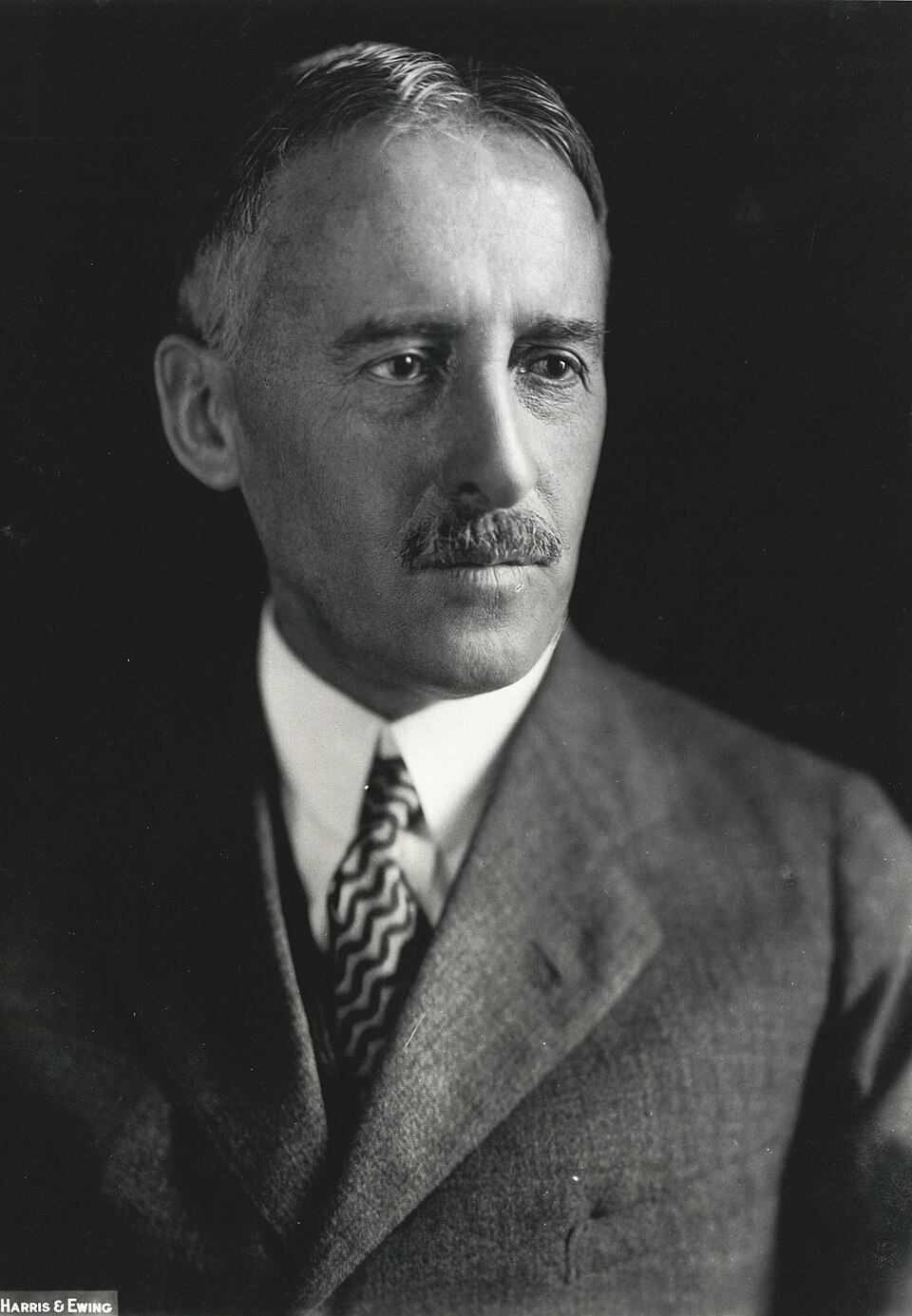
Stimson heard the name at the top of the list and struck it off on the spot — then pulled a startled General Marshall in from the next office to witness the decision. Groves, by his own account, “continued on a number of occasions afterward to urge its inclusion, but Mr. Stimson was adamant.” The general wanted Kyoto for exactly the reason the Secretary refused it: it was large enough, and intact enough, to yield “complete knowledge of the effects of an atomic bomb.” The tug-of-war ran all the way to the Potsdam conference in July, where Groves had a final plea cabled to Stimson — who took the question directly to President Truman, twice, and cabled back that the president concurred. There was, Groves wrote, no further talk about Kyoto after that.
Why did Stimson care? The romantic version — that he had honeymooned in Kyoto — is a myth, patiently dismantled by the nuclear historian Alex Wellerstein: Stimson married in 1893 and first saw Kyoto as a 59-year-old tourist in 1926. The documented reasons are two, and they are not the same. One is the reason Groves recorded: Stimson had walked the old capital, and would not go down in history as the man who erased a thousand years of Japanese civilisation. The other is in Stimson’s own diary from Potsdam, and it is pure geopolitics.
Destroying Kyoto, in other words, might hand postwar Japan to the Soviet Union. Heritage and grand strategy pointed, for once, in the same direction — and a million people who never learned there had been a vote were saved by it. For decades, many in Japan credited the American art historian Langdon Warner with the rescue, and raised monuments to him in Kyoto and Kamakura; the scholarship since has quietly moved the credit to the Secretary of War.
American History Hotline on the city America refused to bomb: the Target Committee, Stimson’s veto, and the myth of the honeymoon.
The Unspared
Every act of mercy in a target list is arithmetic: sparing one city promotes another. With Kyoto struck off, Hiroshima moved to the head of the order — the largest city in Japan, excepting Kyoto, still undamaged by American raids. The aiming point chosen was the T-shaped Aioi Bridge, unmistakable from 31,000 feet; Part 9 of this series describes what followed it on the morning of 6 August.

One persistent legend deserves the same treatment as the honeymoon: the warning that never was. American aircraft showered Japan with over 63 million leaflets that summer naming cities marked for conventional bombing — but Hiroshima was not on the leaflet lists, and no leaflet anywhere mentioned an atomic bomb before 6 August. The leaflets that did describe the new weapon were printed after Hiroshima, and reached Nagasaki only after that city, too, had been destroyed. The reserved cities were kept pristine in every sense, including innocence.
And Nagasaki — the city fate treated most strangely of all — entered the story only in the final week. It was added to the strike order on 24–25 July, filling the slot Kyoto vacated; the order named Hiroshima, Kokura, Niigata and Nagasaki and instructed that additional bombs be delivered “as soon as made ready.” On 9 August, as Part 9 recounted, Bockscar found the primary target Kokura hidden under cloud and drifting smoke — some of it deliberately made by steelworkers burning coal tar — and after three failed runs turned south. A twenty-second break in the overcast decided the rest. Nagasaki died as the backup’s backup, on a list it had joined fifteen days earlier, under a bomb aimed three kilometres wide.

The BBC’s dramatisation of Truman’s ultimatum and the decision process, from its Hiroshima documentary.
The Shield Over the Temples
Truman’s own Potsdam diary shows how imperfectly even the man giving the order understood what had been chosen. “I have told the Sec. of War, Mr. Stimson, to use it so that military objectives and soldiers and sailors are the target and not women and children,” he wrote on 25 July, adding that the world’s leader “cannot drop that terrible bomb on the old capital or the new.” Hiroshima held perhaps 25,000 soldiers among a third of a million civilians. The historian’s consensus, argued most carefully by Wellerstein, is that the Kyoto conversations left Truman genuinely believing the first target was “purely military” — a misconception that survived until the casualty reports arrived, after which he halted further atomic strikes without his express order, telling his cabinet he could not stomach killing “all those kids.”
Kyoto today is the only city on that May shortlist whose prewar self still exists — Kiyomizu-dera’s wooden stage, the Golden Pavilion, the streets the Target Committee measured for blast radii, walked now by tourists who mostly never learn how close it came. The war that nearly consumed it did leave one institutional monument: the 1954 Hague Convention for the Protection of Cultural Property in the Event of Armed Conflict, the world’s attempt to write Stimson’s veto into permanent law. It is an imperfect shield, as every war since has shown. But it exists because, once, in a war of total destruction, the man with the list said no — and the only city the atomic list ever saved is the one that stood at its top.
A concise telling of why Kyoto was spared — the reserved list, the veto, and the aftermath.
Sources: Target Committee minutes of 10–11 May 1945 (via dannen.com), Leslie Groves: Now It Can Be Told (1962), Stimson diaries via Alex Wellerstein (nuclearsecrecy.com, “The Kyoto Misconception”), Truman’s Potsdam diary, the Handy directive of 25 July 1945, Atomic Heritage Foundation, Wikipedia.
Related Posts — The Race for the Bomb Series
Series overview: all ten parts


0 Comments