
Ukraine spent two years building the one capability that reaches deep into Russia and actually hurts. On Sunday, the President of the United States asked it to stop using that capability on the target it works best against.
Speaking to reporters at his Doonbeg golf club in County Clare, on the sidelines of the Irish Open, Donald Trump said Volodymyr Zelensky had to stop knocking out diesel fuel in Russia. He added that Washington had raised it with Kyiv directly, and that there were plenty of other targets.
The White House has not elaborated. Zelensky had not publicly responded at the time of writing.
Datos rápidos
Lo que se dijo: Trump publicly asked Ukraine to stop striking Russian refineries and diesel production
When and where: Sunday 13 September 2026, press gaggle at Doonbeg, County Clare, Ireland
Reported by: Associated Press and Bloomberg, carried widely
Strikes on Russian refineries in 2026: More than 194 drone attacks, per Ukraine’s General Staff
Refining capacity affected: Kyiv claims 42.7 per cent. Reuters estimated closer to 17 per cent in spring 2026
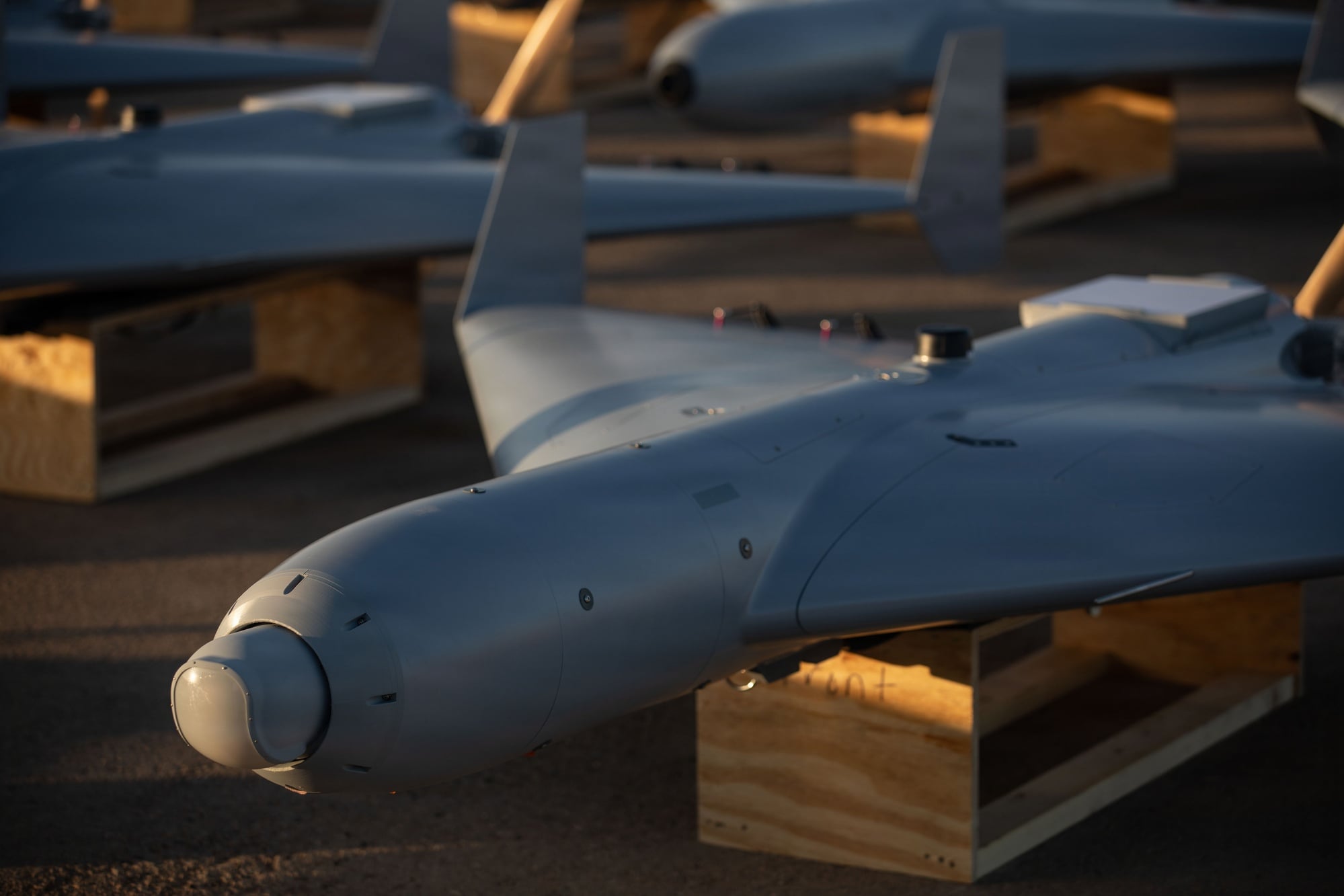
Main weapons: An-196 Liutyi, FP-1 and Sichen one-way attack drones, plus the FP-5 Flamingo cruise missile
Deepest strike: Omsk refinery, 6 July 2026, roughly 2,500 km from Ukraine
US diesel price: Passed six dollars a gallon for the first time on 11 September 2026
An entirely unmanned campaign
For an aviation audience the striking thing about this campaign is what is not involved in it. No manned aircraft cross the border. The deep strike effort runs on one-way attack drones with a thin layer of cruise missiles above them.
The An-196 Liutyi reaches beyond 1,500 km. The Fire Point FP-1 has demonstrated more than 2,500 km, which is how Omsk, Russia’s largest refinery at 22 million tonnes a year, was hit on 6 July. The newer Sichen borrows the delta layout of the Iranian-designed Shahed. Warheads are small, a few dozen kilograms, roughly half what a Geran carries, and that constraint is precisely why refineries were chosen. A distillation column is enormous, thin-walled and full of things that burn. It does not need a heavy warhead. It needs one that arrives.

Russian air defence has struggled with the problem all year. The network around individual plants is point defence built for aircraft and cruise missiles: S-400, Pantsir, Tor. Analysis published by Meduza in June found no integrated nationwide drone detection network, no proper sensor-to-shooter data fusion, and fighters and helicopters committed in numbers it described as clearly insufficient. Ukraine compounds it by sending decoys in volume to drain missile magazines. Russia’s Ministry of Defence claimed 389 drones shot down on the night of 13 September alone, which is either an impressive defensive night or an admission of the scale of the problem, depending on how you read it.
The kerosene angle
There is a direct military aviation consequence. Ukraine’s military intelligence directorate said on 30 August that the strikes had cut aviation kerosene output far enough to force Russia to ban aviation fuel exports and start importing foreign Jet A-1, naming three shadow-fleet tankers carrying roughly 70,000 tonnes between them. The same fuel feeds both Russian Aerospace Forces aircraft and, notably, Russian strike drones.
That claim comes from a Ukrainian intelligence service and has not been independently verified. It is also, if true, the single best argument against Trump’s request.
Coverage of the Omsk strike in July, the deepest reach the campaign has achieved.
How much of the diesel price is actually Ukraine?
US diesel passed six dollars a gallon for the first time on 11 September and Brent is back above 100. The question is what is driving it, and the honest answer is that Ukraine is a contributing factor rather than the main one.
The International Energy Agency described the near-closure of the Strait of Hormuz in June as the largest supply disruption in history. The strait carried around a fifth of the world’s oil before the war with Iran. On 10 and 11 September Houthi forces took Mokha and Perim Island, tightening their grip on the Bab el-Mandeb, through which 8.1 million barrels a day moved in the second quarter. A Saudi pipeline was hit by drones from Iraq on 11 September, with buyers telling Reuters a prolonged outage could remove up to four per cent of global supply. The US Strategic Petroleum Reserve stands at its lowest level since 1982.
Against that, Ukraine’s contribution is real but narrower: Russia’s own diesel export ban in July pulled barrels out of an already tight market. Trump himself said the squeeze was not caused by the Middle East but by Russia and Ukraine, which sits awkwardly beside his own remarks days earlier blaming the Iran war.
Not everyone agrees the campaign has served Ukraine well. George Beebe of the Quincy Institute has argued the opposite, telling TIME that Ukraine’s deep strike campaign has backfired, on the grounds that it has hardened Russian resolve and drawn international criticism without forcing a change in Russian policy. Konstantin Sonin of the University of Chicago offered the simplest explanation of why Ukraine keeps doing it anyway: when they strike a refinery, they strike what is vulnerable there.
That is the shape of the disagreement. Ukraine has found the one part of the Russian economy that its cheap, small-warhead drones can genuinely damage at range. Washington would prefer it aimed somewhere else. Nobody has yet suggested what a target of equivalent value and equivalent vulnerability would be.
Sources: Associated Press; Bloomberg; Reuters; TIME; UNITED24 Media; Meduza; International Energy Agency; US Energy Information Administration; Ukrainian Defence Intelligence.

0 Comments