
At one minute to one on Sunday afternoon, phones across Vilnius lit up telling people to get to shelter. The airport stopped accepting arrivals and departures. A fighter launched from Siauliai, 185 kilometres to the north-west, and went looking for whatever had appeared on the radar screens coming out of Belarus.
Thirty-eight minutes later the alert was cancelled. The pilot had found the contact and looked at it.
It was birds.
Datos rápidos
| Qué pasó | Suspected drone track from the direction of Belarus turned out to be a flock of birds |
| Cuando | Sunday 13 September 2026; yellow air alert 12:59 local, lifted 13:37 |
| Areas alerted | Vilnius city, Vilnius district, Trakai and Elektrenai districts |
| Aeropuerto | Vilnius International closed about 38 minutes, reopened around 13:52 |
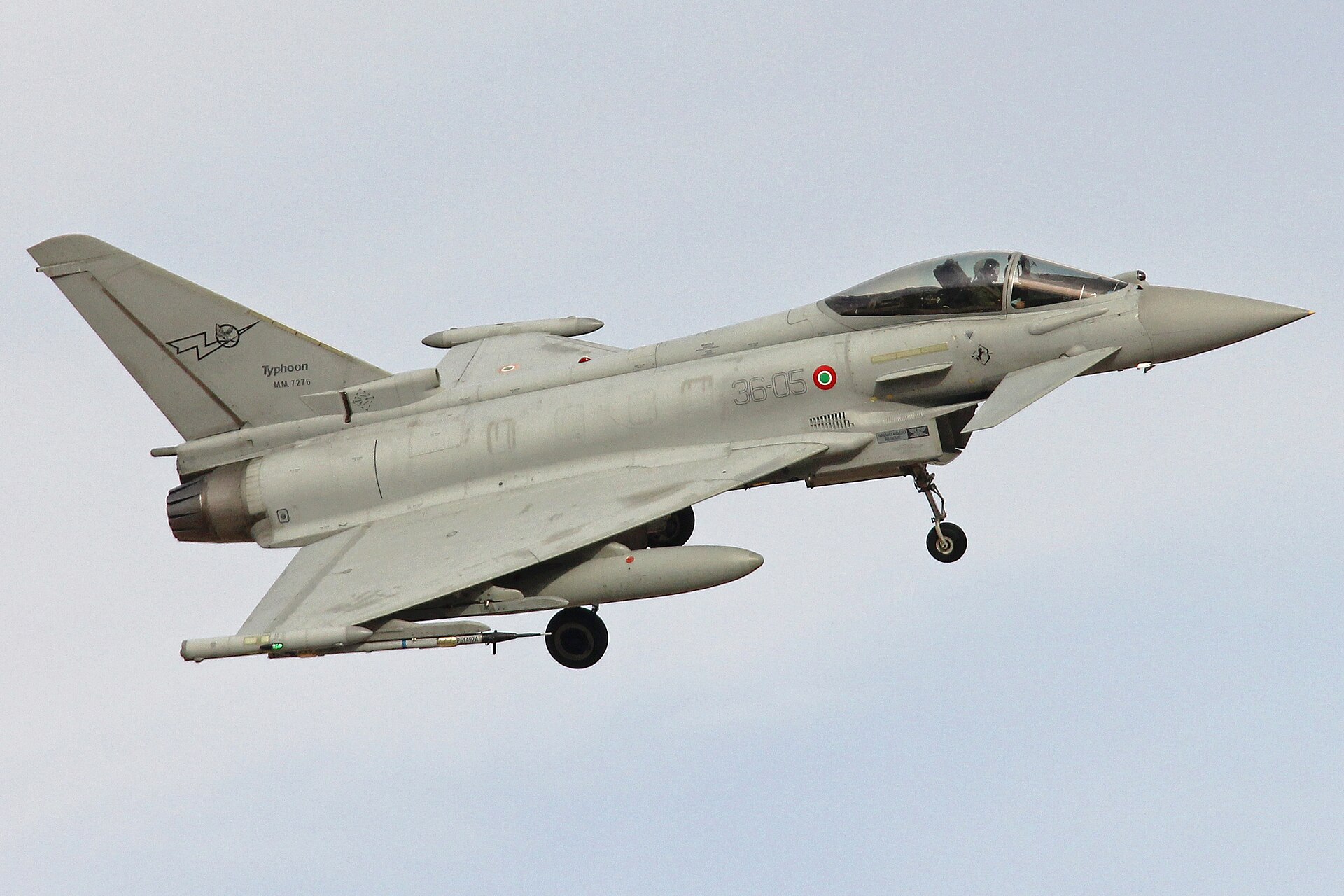
| Combatiente | NATO Baltic Air Policing, Siauliai Air Base, currently flown by the Italian Air Force with Eurofighter Typhoons |
| Flights affected | Two inbound diversions to Kaunas; a Warsaw service turned back; one diversion toward Gdansk |
| Precedent | Poland scrambled helicopters over an identical bird contact on 6 September 2026 |
| Distance to Belarus | About 30 km from Vilnius |
Thirty-eight minutes, start to finish
The sequence was textbook, which is the point. Lithuania’s National Crisis Management Centre declared a yellow air alert at 12:59 local time covering Vilnius city, Vilnius district and the Trakai and Elektrenai districts. Vilnius International Airport suspended operations in both directions. Residents got a push notification telling them to move to a safe location.
NATO’s Baltic Air Policing detachment put a fighter up from Siauliai Air Base. It found the contact, identified it visually, and that was that.
The alert came down at 13:37. The airport started moving aeroplanes again around 13:52.
Why radar cannot tell a starling from a Shahed
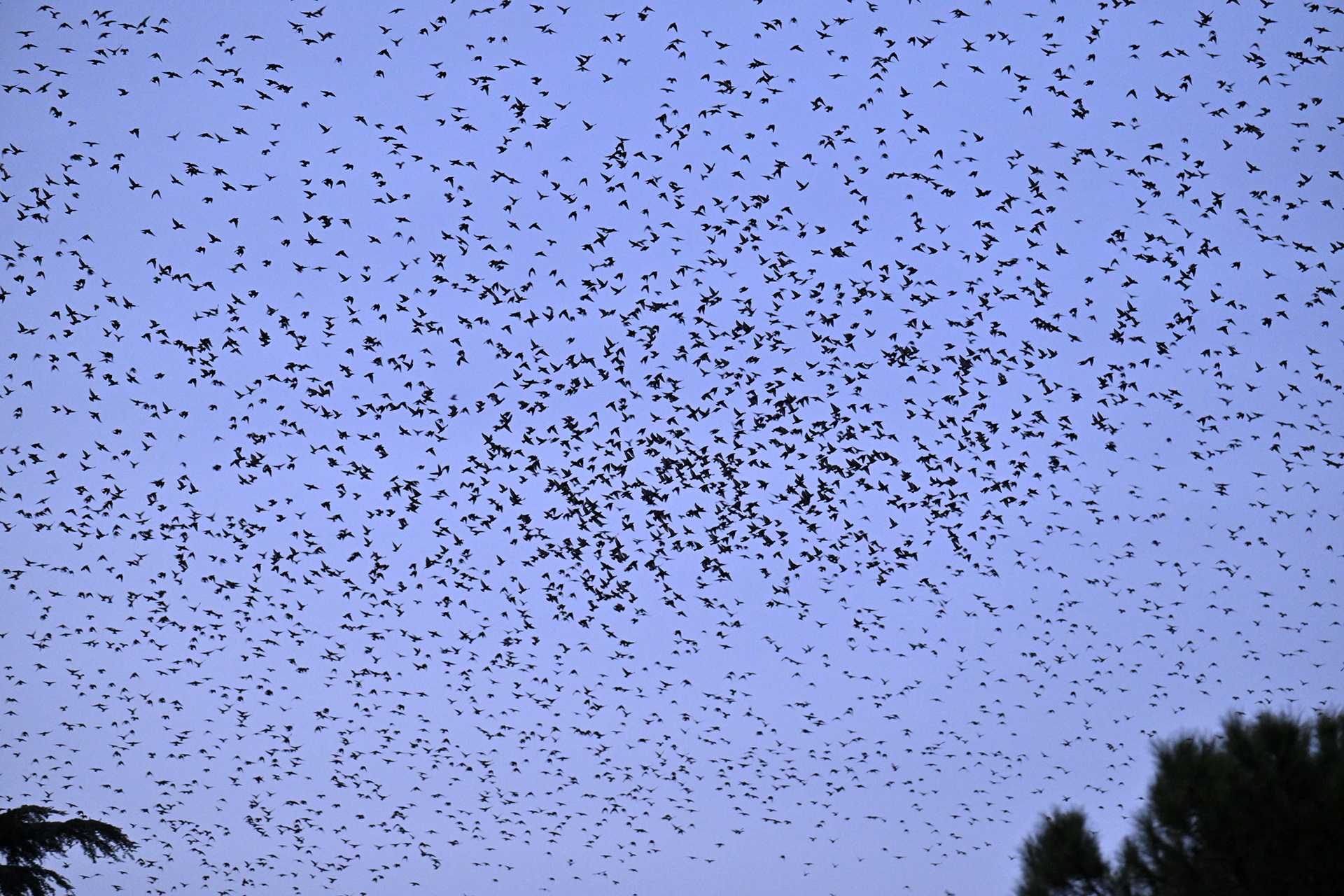
This is not incompetence. It is physics. A few hundred birds moving together at low level, in one direction, at a speed not far off a small propeller drone, return energy to a radar in a way that looks uncomfortably like a single coherent object doing something deliberate.
Vitkauskas said afterwards that a large concentration of birds travelling in the same direction can register as a drone-like object, and the crisis centre said the initial radar picture could not reliably tell the two apart. So it ordered an additional check. The additional check was a pilot with eyes.
Poland went through the identical drill eight days earlier. On 6 September its Armed Forces Operational Command scrambled helicopters after radar suggested an airspace violation from the direction of Belarus, and Rzeszow airport briefly suspended operations. Also birds. Lithuania’s own defence ministry logged the same outcome back in September 2024.
The Italians are on watch
The aircraft that settled the question belongs to the Italian Air Force, which currently holds the NATO Baltic Air Policing rotation at Siauliai with Eurofighter Typhoon. They took the mission over from French and Romanian detachments during the summer.
Baltic Air Policing has existed since 2004 because Estonia, Latvia and Lithuania have no fighter forces of their own. For twenty years it was a quiet rotation, mostly about intercepting Russian transports with their transponders switched off over the Baltic. Since 2022 it has become something closer to a standing air defence duty, and since drones started crossing the border it has acquired a job radar cannot do on its own.

The reason nobody in Vilnius laughed
From the outside this reads as farce: NATO scrambles a Typhoon, a city runs for cover, and the enemy turns out to be starlings. It is a much less funny story from inside Lithuania.
The Belarusian border is about 30 kilometres from the capital. In July 2025 a Russian-made Gerbera drone crossed from Belarus and came down in Vilnius County. A second reached a military training ground carrying an explosive device. Parliament subsequently cleared the armed forces to shoot drones down over Lithuanian territory. Vitkauskas has said at least 22 smuggling drones were logged in Lithuanian airspace in September alone.
There was even a second unidentified track the same morning, around 04:25, heading toward Kaliningrad. It left Lithuanian airspace across the border and no alert was issued, because there was not enough information to identify it and it was going the other way.
So the arithmetic Lithuania is doing is straightforward. The cost of treating a bird flock as a drone is 38 minutes of stopped traffic, two diversions and an hour of Typhoon flight time. The cost of treating a drone as a bird flock is considerably higher, and the country has already had two of them land on its territory.
Sunday was not a failure of the system. It was the system working exactly as designed, and sending a human being to look because the machine could not be sure.
Preguntas frecuentes
What happened at Vilnius Airport on 13 September 2026?
Why do birds look like drones on radar?
Which NATO aircraft was scrambled over Vilnius?
How many flights were affected?
Has this happened elsewhere in NATO recently?
Does Lithuania have a real drone problem?
Sources: LRT, Reuters, Xinhua, Lithuanian Airports, Aviation A2Z, DroneXL, Simple Flying.


0 Comments