
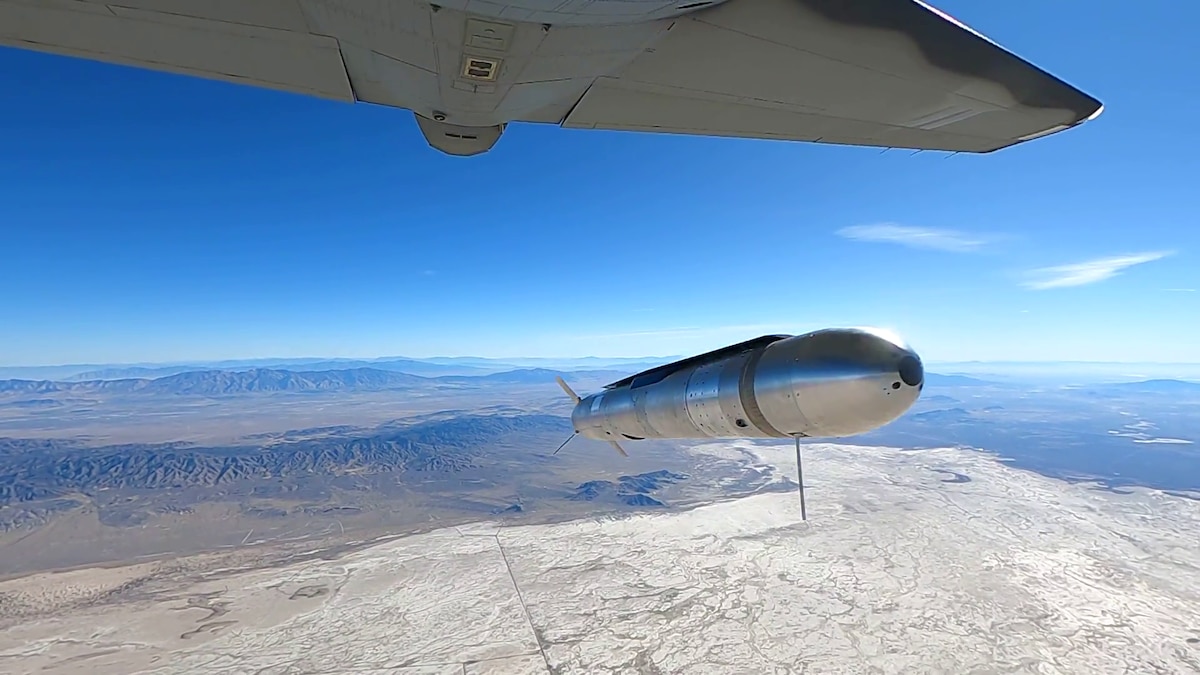
Somewhere over Africa this spring, a four-engine turboprop that first flew in 1954 rolled its ramp open and pushed a missile out the back. The missile fell clear, unfolded its wings, lit a small turbojet and flew away. Minutes later it was several hundred miles downrange, and a validated ground target was gone.
That is the short version of what Air Force Special Operations Command confirmed on 14 September 2026, standing on the floor of the Air, Space & Cyber conference at National Harbor, Maryland. The weapon is the AGM-190A Havoc Spear. It weighs about as much as a large refrigerator, costs a fraction of a Tomahawk, and it has now been fired twice in combat before it has formally finished development.
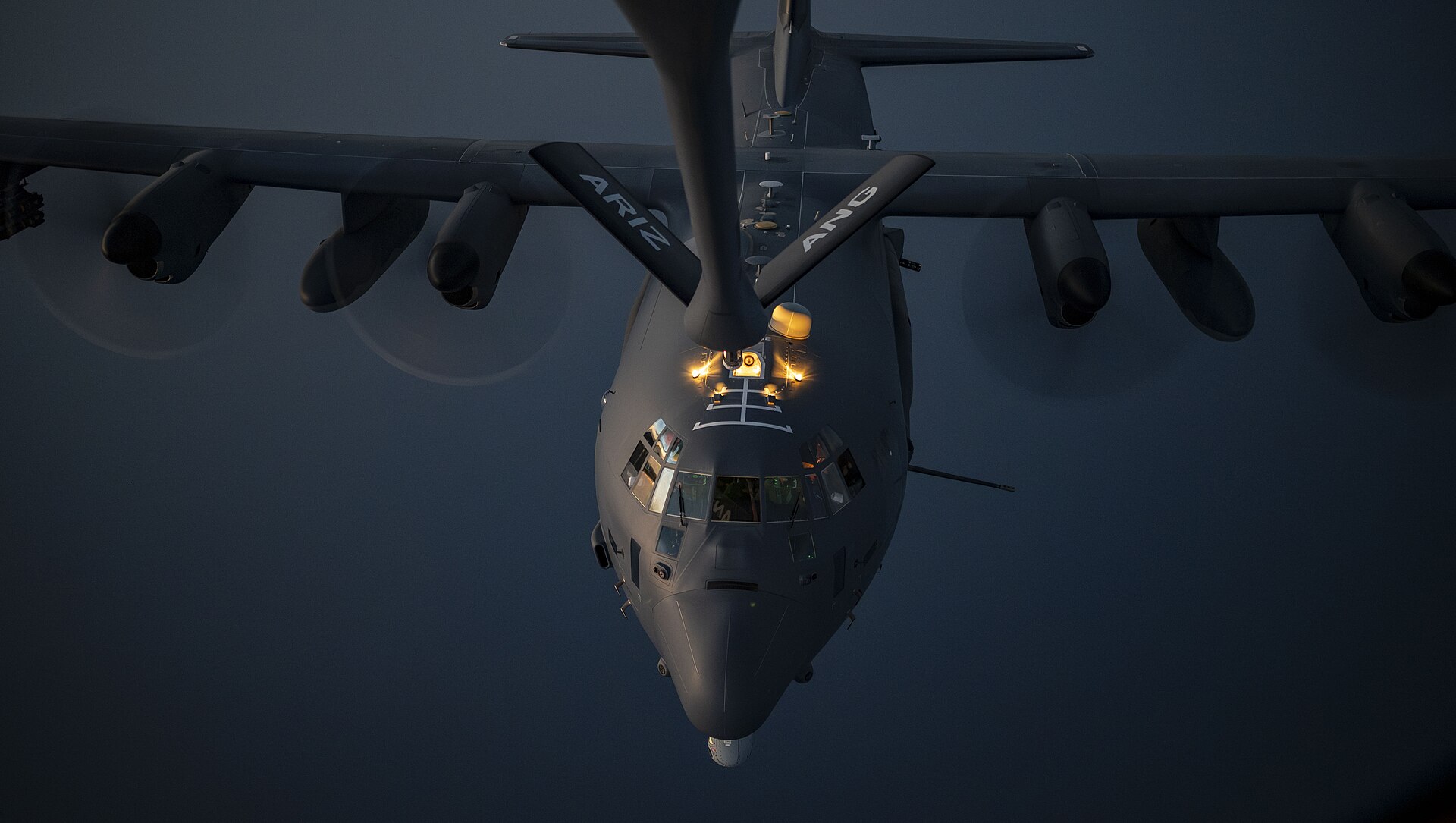
The aircraft that launched it was an AC-130J Ghostrider gunship — an airframe designed around the idea of orbiting a target at close range with a 105 mm howitzer sticking out of its side. It just became a standoff cruise-missile carrier.
Datos rápidos
Arma: AGM-190A Havoc Spear (Leidos company name: Black Arrow)
Clase: Roughly 200-pound small cruise missile, modular payload
Rango: More than 400 nautical miles (about 740 km)
Launch platform tested: AC-130J Ghostrider, launched from tubes off the cargo ramp
Combat evaluation: Two missiles, two ground targets, spring 2026, US Africa Command area of responsibility
Anunciado: 14 September 2026, by AFSOC at the AFA Air, Space & Cyber conference
Costo: About $600,000 per round in low-rate initial production; SOCOM bought 45 for $27.2 million in July 2026
Tested in a War, Not on a Range
Weapons normally graduate the other way round. You shoot them at instrumented desert targets for years, you write the reports, and eventually somebody signs a piece of paper that lets a squadron carry one. Havoc Spear did it backwards.
AFSOC partnered with US Africa Command and fired two AGM-190As at two separate validated ground targets inside AFRICOM’s area of responsibility. The command has not said where, when exactly, or against whom. What it has said is that the missile was still in a test configuration when it went to war, and that it worked.
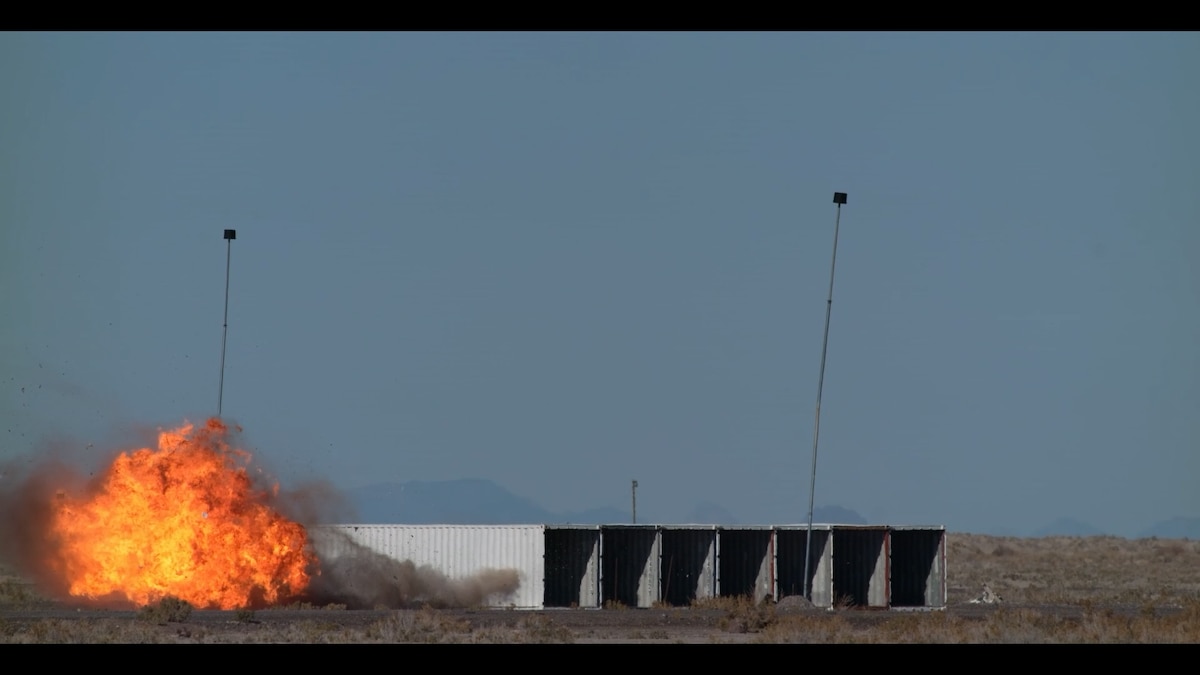
The official language is dry. The implication is not: AFSOC is comfortable enough with the weapon to have put it in front of a live enemy while the paperwork was still open.
Two Hundred Pounds, Four Hundred Miles
Havoc Spear is small. It sits in the 200-pound class, which puts it an order of magnitude below a Tomahawk and well below a JASSM. Public reference sources list a Pratt & Whitney TJ150-7 turbojet as the powerplant; AFSOC has not confirmed the engine publicly.
What matters is the number AFSOC will confirm. More than 400 nautical miles — roughly 740 kilometres — from a launch aircraft that does not have to go anywhere near the target. For a gunship community whose entire tactical identity has been built on loitering overhead in the dark, that is a different way of fighting.
The launch method is deliberately unglamorous. The missiles go out in tubes off the AC-130’s ramp. They can also be hung on pylons, or palletised and rolled out of the back of a cargo aircraft. The payload itself is modular, which is the part programme officers get excited about: the same airframe can carry different things to different problems.
The video above covers the AC-130J Ghostrider and the upgrade path that produced today’s gunship fleet — the aircraft that has now become the first Havoc Spear shooter.
From Black Arrow to AGM-190A
The weapon is a Leidos product, developed by the company’s Dynetics arm and marketed as Black Arrow. It grew out of Leidos’ work on the GBU-69 Small Glide Munition, another compact weapon built for special operations aircraft.
The timeline is unusually short by Pentagon standards. Development work began around 2021. In 2022 Leidos signed a Cooperative Research and Development Agreement with US Special Operations Command and AFSOC — a mechanism that lets the government and a company iterate together without going through a conventional programme of record. A first guided flight test followed in October 2024. By May 2025 the missile had demonstrated its 400-nautical-mile range. In November 2025 it picked up the designation AGM-190A. Four years after the CRADA was signed, it was being shot in anger.
The Real Target Is the Price Tag
In July 2026 SOCOM awarded Leidos $27.2 million for 45 missiles. That works out at roughly $600,000 a round. AFSOC officials say that figure is a low-rate initial production number and expect it to fall by as much as two thirds once volume arrives.
Even at $600,000, the arithmetic is the point. A single Tomahawk costs several times that. If you can build a weapon that flies 400 miles for the price of a small apartment, you can afford to fire a great many of them — and the Pentagon has spent the last three years discovering that magazine depth, not exquisite performance, is what runs out first.
That is the logic behind the Air Force’s Family of Affordable Mass Missiles effort. In July the Pentagon announced multiyear framework agreements covering Anduril’s Barracuda, CoAspire’s Rapidly Adaptable Affordable Cruise Missile and Zone 5 Technologies’ AGM-188 Rusty Dagger. Once those lines are running, the service could take delivery of up to 8,000 missiles a year, with budget projections pointing at as many as 28,000 over five years. AFSOC officials have suggested Havoc Spear could eventually be folded into that family.
¿Qué sucede después?
Most of the 45 missiles from the July contract will not be shot at anybody. AFSOC says the first of them arrives next autumn and that the tranche is mainly for further development — new platforms, new launch mechanisms. Which aircraft gets it next is, in Johnston’s words, a matter of what is actually available, because the command is having to work around the operational tempo it is already running.
The ambition is broader than special operations. AFSOC has said openly that it wants Havoc Spear on every type of special operations platform and every conventional platform it can manage, in multiple launch modes. A weapon that can be rolled out of a cargo ramp does not care much what is holding the ramp.
The AC-130 has spent sixty years being the aircraft that arrives overhead and stays. It now has a way of hitting something four hundred miles away and never showing up at all.
Sources: Air Force Special Operations Command release, 14 September 2026; Air & Space Forces Magazine; DefenseScoop; FlightGlobal; Directory of U.S. Military Rockets and Missiles.
0 Comments