
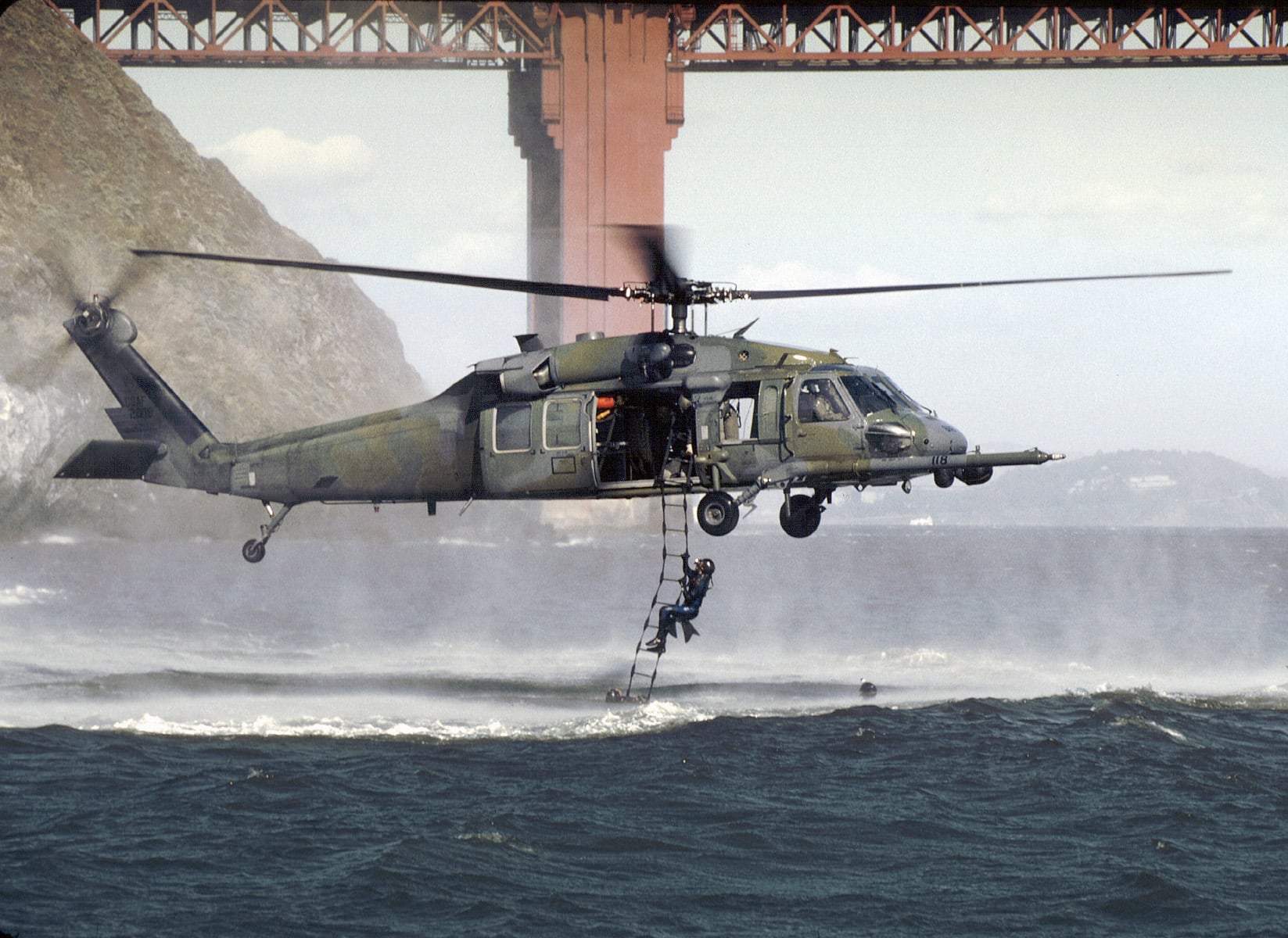
On 10 September 2026, a grey helicopter with tail number 27045 landed at Moffett Air National Guard Base in California for the last time. It was the final operational HH-60G Pave Hawk in the US Air Force, and with it ended more than four decades of the helicopter that defined American combat rescue.
The California Air National Guard's 129th Rescue Wing held a divestment ceremony for the aircraft, and the last G-models are being processed out by 30 September. From now on, Air Force rescue belongs to the HH-60W Jolly Green II.
Datos rápidos
- Aeronave: Sikorsky HH-60G Pave Hawk
- Final flight: 10 September 2026, Moffett ANGB, California
- Last tail number: 27045, 129th Rescue Wing
- En servicio: 1982 to 2026
- Construido: 112 HH-60Gs, plus six converted UH-60Ls
- Peak fleet: More than 100 aircraft
- Reemplazo: HH-60W Jolly Green II, 102 planned by January 2030
The Last Pave Hawk
Tail 27045 had served for more than three decades. According to Military Times, it helped after hurricanes Katrina, Ike and Harvey and took part in more than 300 combat saves during deployments to Afghanistan. The 129th Rescue Squadron itself has saved 1,190 lives since 1977, many of them with the Pave Hawk, HeliHub reports.
For the people who flew it, the goodbye was personal.
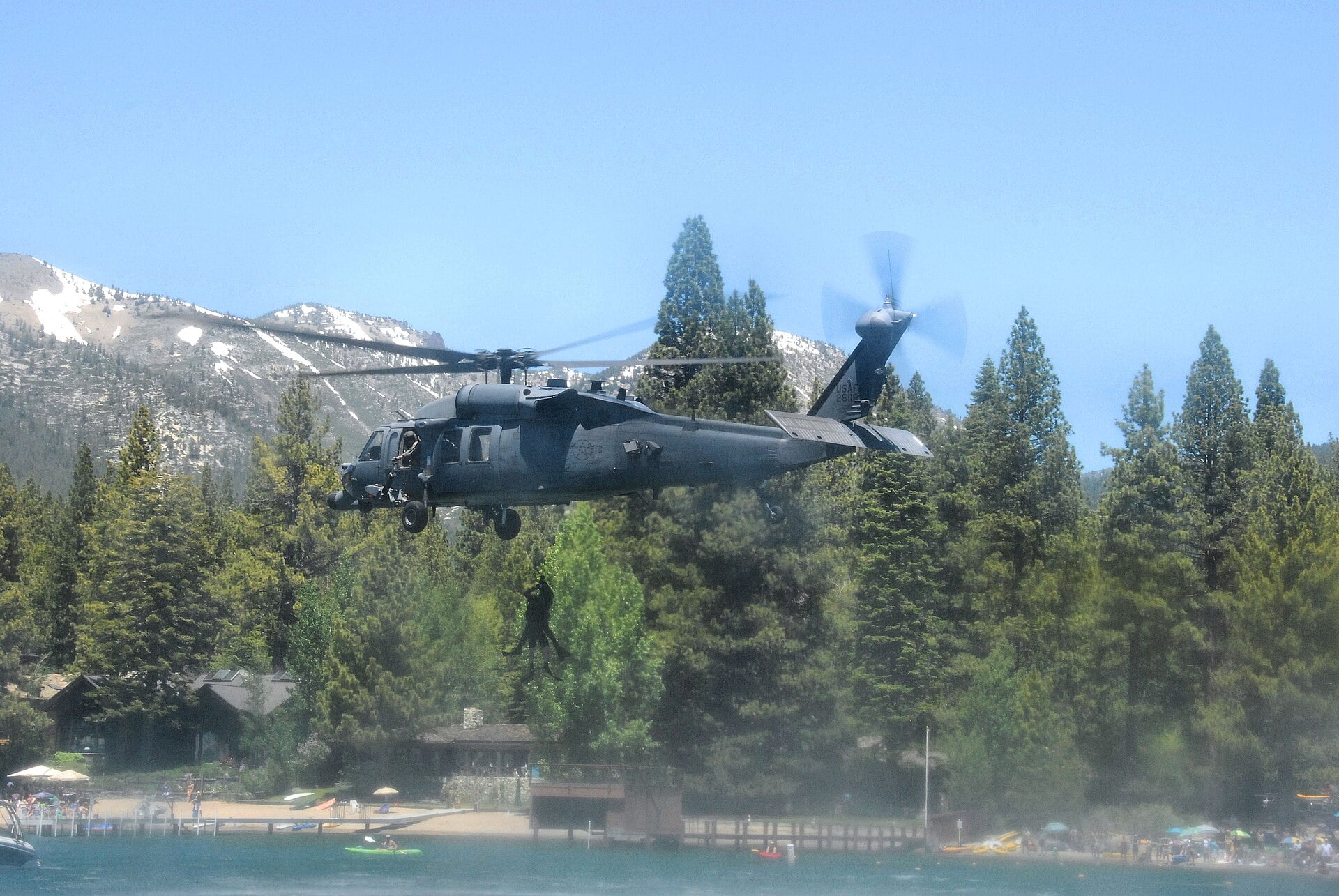
The final flight of the 129th Rescue Wing's HH-60G Pave Hawk.
From Black Hawk to Pave Hawk
The Pave Hawk began with the Army's UH-60 Black Hawk. In 1981 the Air Force picked the Black Hawk design to replace its ageing HH-3E Jolly Green Giants, the helicopters that had made the long-range rescues of the Vietnam War.
The first rescue versions, known as "Credible Hawks", added an air refuelling probe and better weapons. The fully equipped rescue model was later named HH-60G. It carried a rescue hoist, extra fuel, improved navigation and defensive systems, and two guns. Its rotor blades folded so it could be loaded into a C-5M Galaxy and flown anywhere in the world.
Air & Space Forces Magazine gives its performance as a top speed of 180 mph and a range of 580 miles, with room for eight or more passengers and a cargo hook rated at 8,000 pounds. At its peak, more than 100 HH-60Gs served in active duty, Air National Guard and Air Force Reserve squadrons.
44 Years of Getting People Out
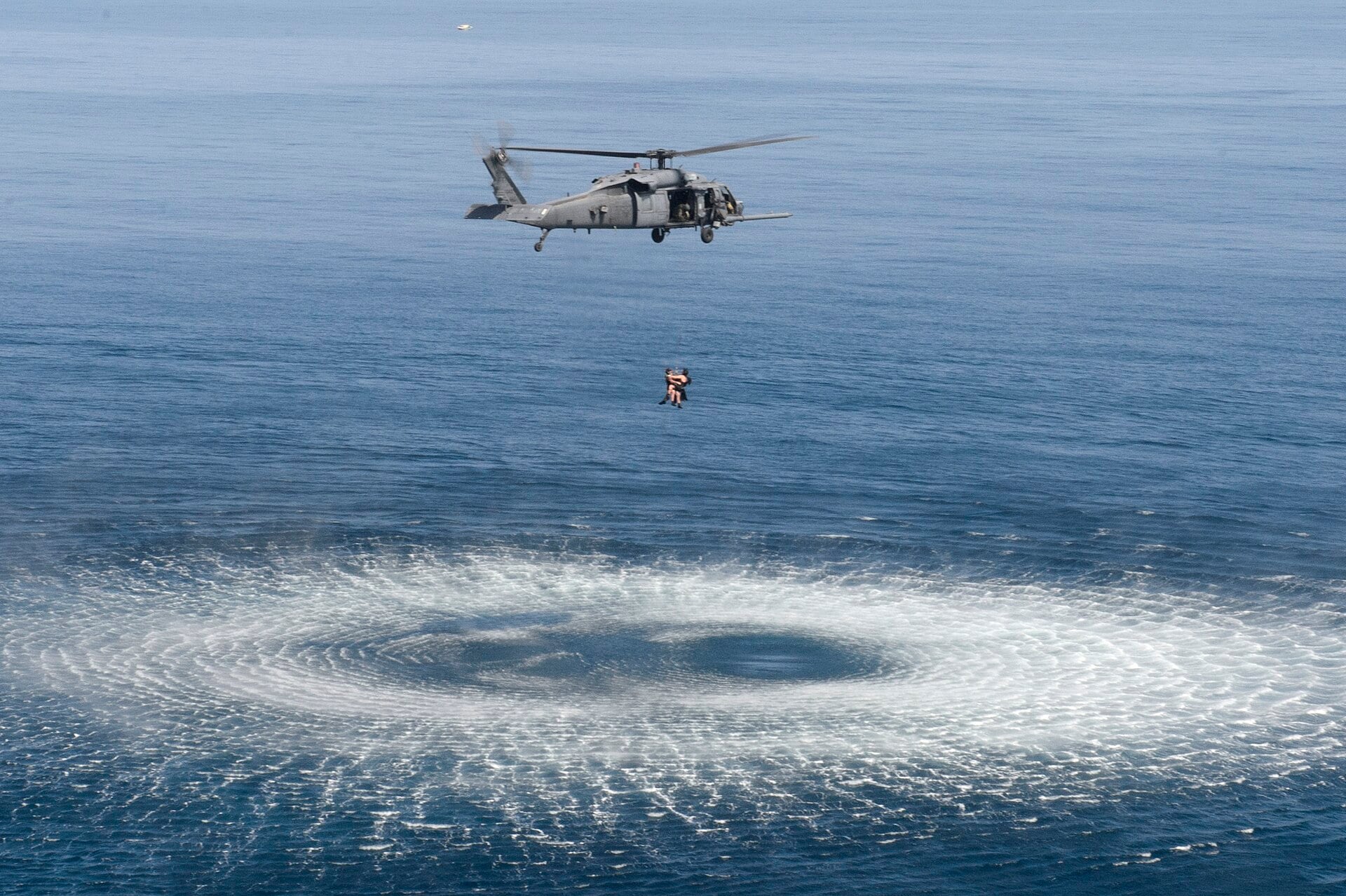
The Pave Hawk went to war in Desert Storm, covering Iraq, Saudi Arabia, Kuwait and the Gulf. Over Serbia in 1999, during Operation Allied Force, HH-60 crews recovered two USAF pilots who had been shot down behind enemy lines. After 2001 the helicopters were in Iraq and Afghanistan almost without a break.
Their work was not only in war zones. Three Pave Hawks flew 240 missions in 17 days during the Mozambique floods of 2000, and Air Force crews brought them to disaster zones from the 2004 tsunami to Hurricane Katrina.
The job had a cost. On 15 March 2018 an HH-60G crashed near al-Qa'im in western Iraq, killing all seven people on board.
A Unit-by-Unit Goodbye
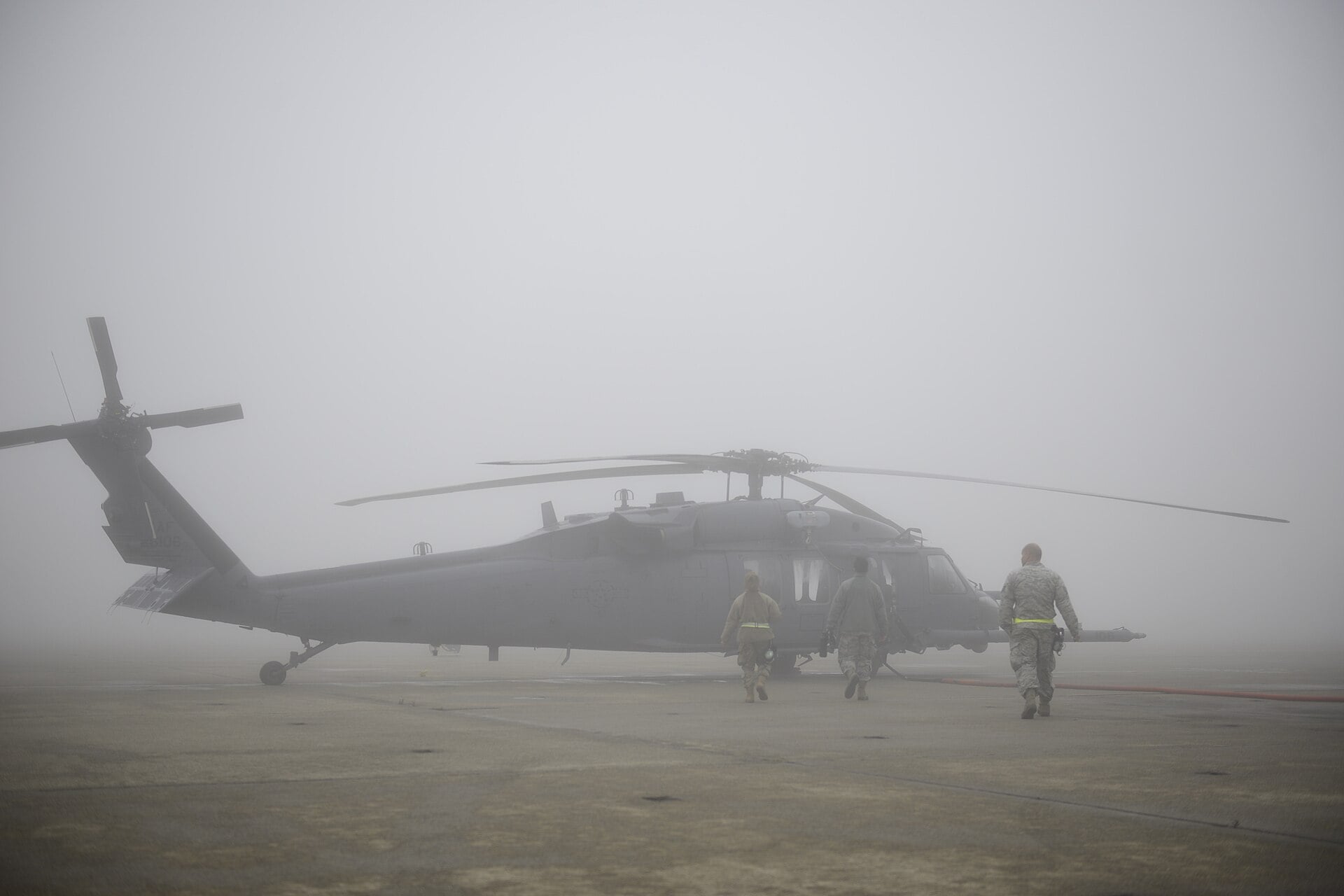
The Pave Hawk did not disappear all at once. Air & Space Forces Magazine lists the drawdown: Kadena in Japan in August 2024, Gabreski in New York in October 2024, Kirtland and Aviano in December 2024, Patrick Space Force Base in September 2025, the Alaska Air National Guard in July 2026, and finally California in September 2026.
The HH-60G Pave Hawk is formally retired.
Enter the Jolly Green II
The HH-60W Jolly Green II looks similar from the outside, but it is a new helicopter. It first flew on 17 May 2019, and the 41st Rescue Squadron received the first two on 5 November 2020. It has a digital glass cockpit, better performance in hot weather and at altitude, about twice the internal fuel of the Pave Hawk and more advanced self-defence systems.
The Air Force plans to field 102 of them, including 11 test aircraft, with the last delivery expected in January 2030. They have already been to war: in April 2026, HH-60Ws took part in a rescue inside Iran.
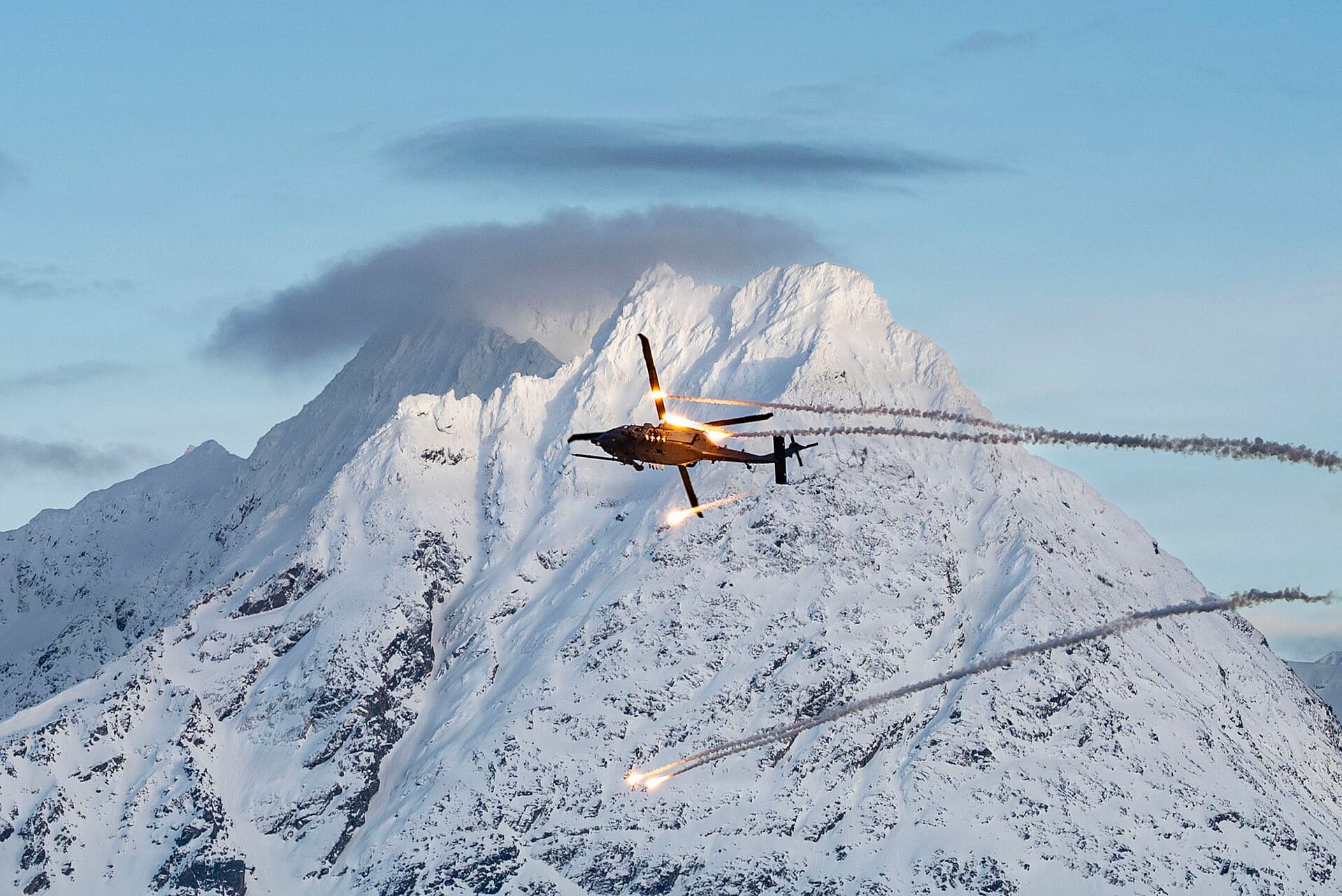
For the crews at Moffett, the new helicopter will bring new tools, but the job stays the same.
Sources: Air & Space Forces Magazine, Military Times, HeliHub, DVIDS, Wikipedia (Sikorsky HH-60 Pave Hawk)


0 Comments