
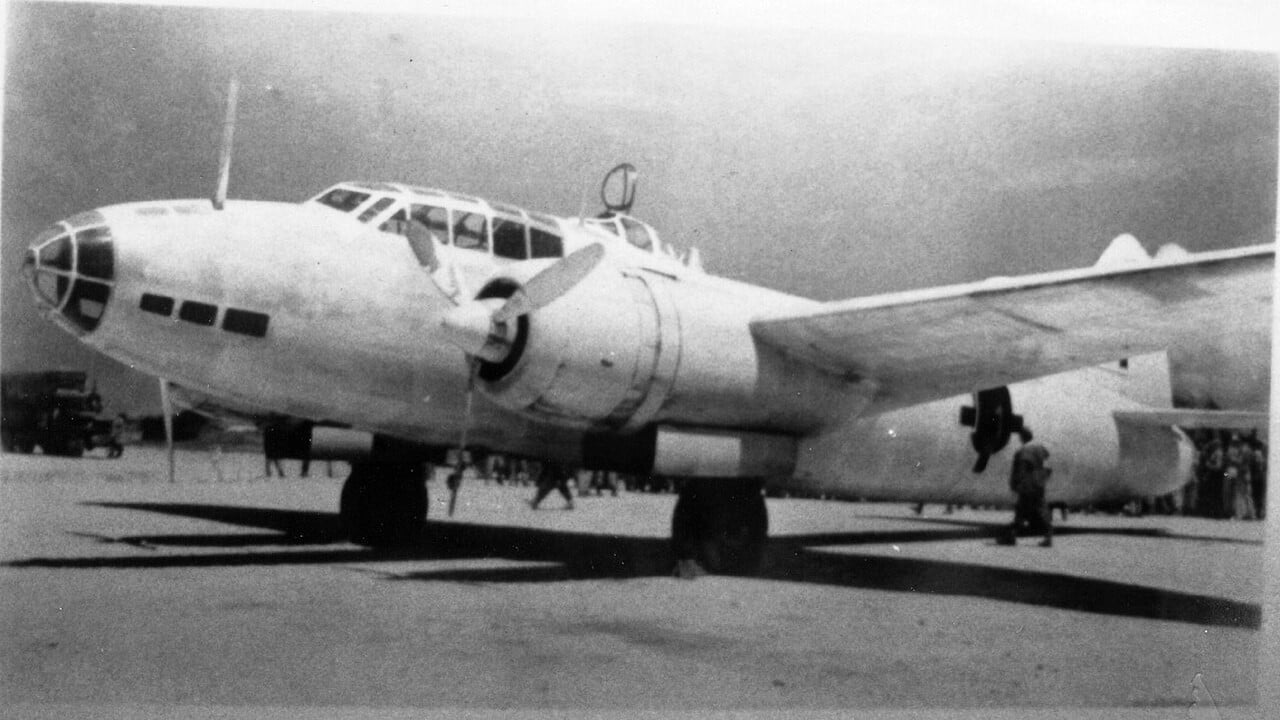
On 11 December 1941, a Japanese navy pilot named Haruki Iki flew his bomber back over an empty patch of the South China Sea off Malaya. The day before, he had helped sink the British battlecruiser HMS Rechazar there. Now he dropped a wreath into the water, a mark of respect for the men of both sides who had died below.
Iki flew a Mitsubishi G4M, the twin-engined bomber the Allies would call “Betty”. It could fly farther than almost any bomber of its day, and in the opening months of the Pacific War it struck from the Philippines to northern Australia. It also burned so easily that its own enemies gave it a nickname that stuck: the “flying lighter”.
Datos rápidos
- Tipo: Twin-engined land-based attack bomber, Imperial Japanese Navy
- Nombre oficial: Navy Type 1 Attack Bomber; Allied codename “Betty”
- Primer vuelo: 23 October 1939
- Multitud: Seven
- Strength: Exceptional range, bought by leaving out armour and self-sealing fuel tanks
- Famoso por: Sinking Príncipe de Gales y Rechazar on 10 December 1941, together with G3M “Nell” bombers
- Yamamoto: Killed aboard a G4M1 shot down by P-38s on 18 April 1943
- Surrender flight: A G4M1 and a G6M1-L2 transport, painted white with green crosses, flew Japan’s envoys to Ie Shima on 19 August 1945
- Construido: Some 2,400, including derivatives
Range above everything
The Imperial Japanese Navy ordered the G4M in 1937, while its predecessor, the Mitsubishi G3M, was still new in service over China. The requirement was startling for the time: a land-based, twin-engined attack bomber able to carry a heavy torpedo or the same weight of bombs across thousands of kilometres of ocean.
A Mitsubishi team led by Kiro Honjo met it by saving weight wherever they could. The wings became giant fuel tanks, and there was no armour plate for the crew and no self-sealing protection for the fuel. The prototype first flew on 23 October 1939, after being hauled from the Nagoya factory to Kagamigahara airfield in ox-drawn carts. Navy crews nicknamed the cigar-shaped bomber Hamaki, “cigar”.
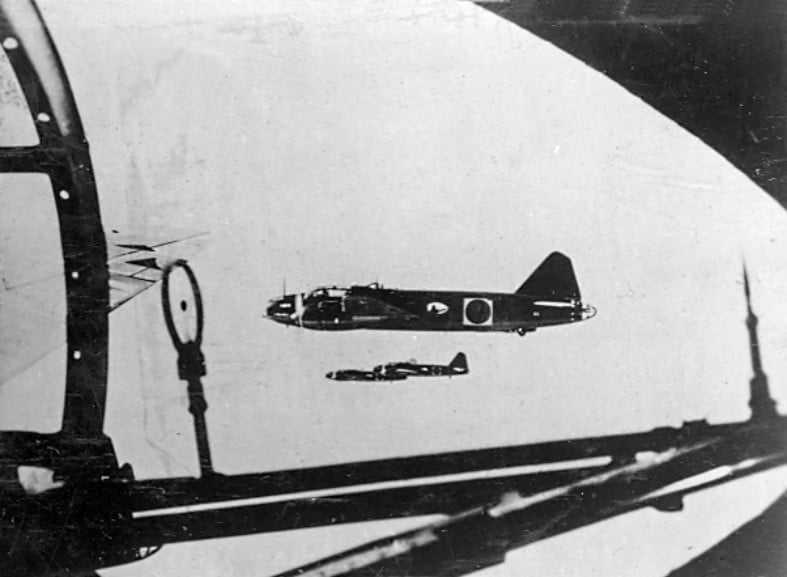
For a while, the trade-off worked. Against weak fighter opposition, the Betty’s speed and range let it appear from unexpected directions and leave again before defenders could react. On 8 December 1941, G4Ms bombed Clark Field in the Philippines. Two days later came their most famous mission.
Force Z: a victory shared with the Nell
On 10 December 1941, British Force Z, built around the new battleship HMS Príncipe de Gales and the battlecruiser HMS Rechazar, was caught off Kuantan without fighter cover. The attackers were land-based bombers of the Japanese 22nd Air Flotilla flying from Indochina, and it is worth being precise about who did what, because the Betty did not do it alone.
The Mihoro and Genzan air groups flew the older G3M “Nell”, some 60 of them, carrying bombs and torpedoes. It was a Genzan Nell’s torpedo that struck Príncipe de Gales near her port propeller shaft, a single hit that crippled her. Then, at around 12:20, 26 G4Ms of the Kanoya Air Group arrived with torpedoes. They put three more into the battleship’s starboard side and caught Rechazar in a pincer attack from both sides.
The Pritzker Military Museum & Library on the sinking of HMS Príncipe de Gales and HMS Rechazar by Japanese land-based bombers.
Rechazar rolled over and sank at 12:33. Príncipe de Gales followed at 13:18. In all, 840 British sailors died, among them Admiral Sir Tom Phillips. The Japanese lost three aircraft in the attack itself, one Nell and two Bettys. It was the first time capital ships fighting back on the open sea had been sunk by aircraft alone.
Ten RAAF Brewster Buffalo fighters of No. 453 Squadron, assigned to cover the fleet, arrived just as Príncipe de Gales went down. One of their pilots, Flight Lieutenant Tim Vigors, flew over the survivors in the water and never forgot what he saw.
Why they called it the flying lighter
Iki’s wreath came at the very top of the Betty’s fortunes. Once it met organised fighter defences, the price of all that range became clear. A few bullets into the unprotected wing tanks could turn a G4M into a torch, and Allied pilots called it the “flying lighter”, the “one-shot lighter” and the “flying Zippo”.
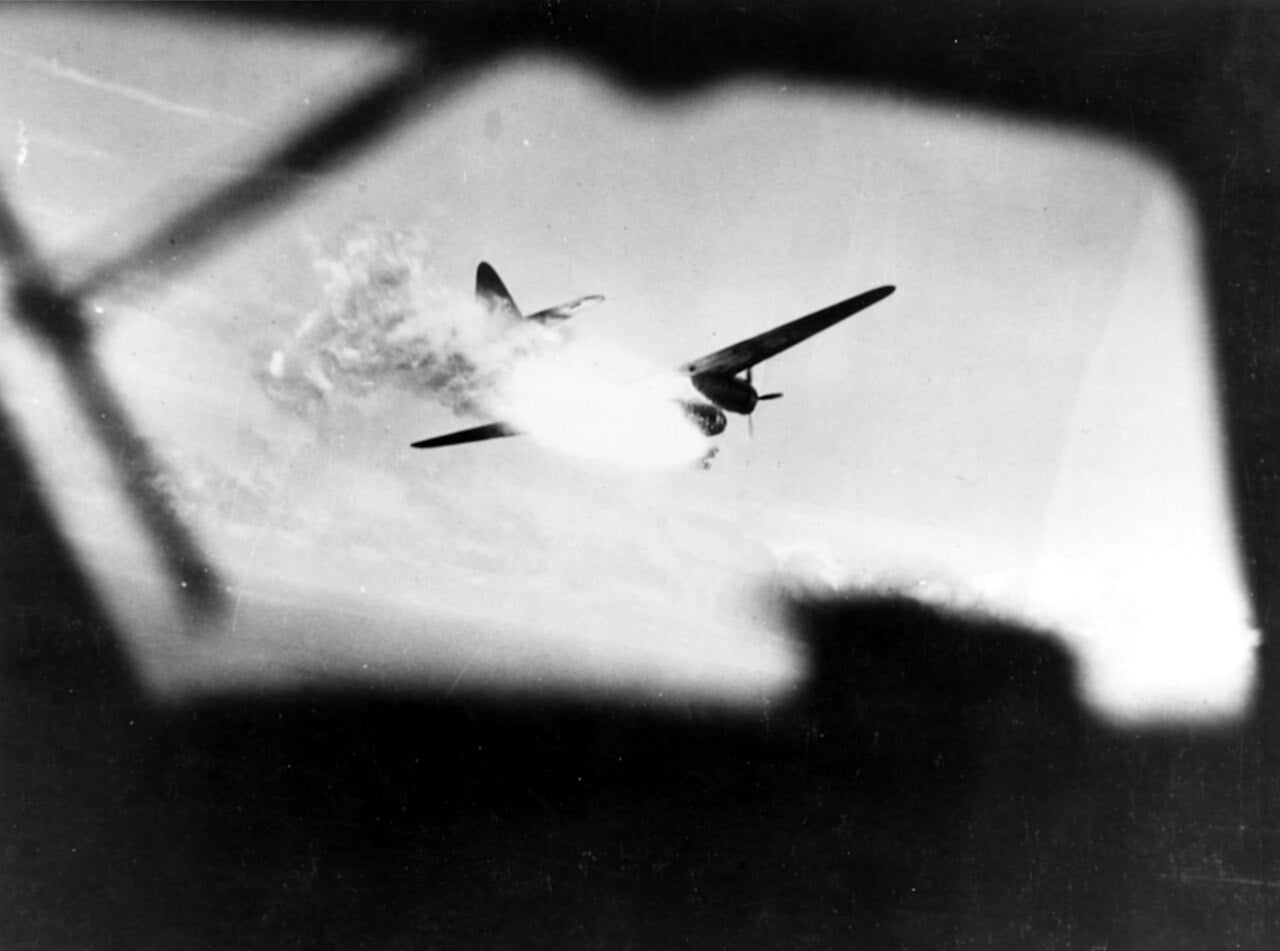
From August 1942, over Guadalcanal and the Solomons, Betty units suffered crippling losses to American fighters and anti-aircraft fire. Mitsubishi kept adding protection: rubber sheets under the wing tanks, then a tail-gun position with armour, then the G4M2 with more powerful engines. Only the late G4M3 finally received proper self-sealing tanks and crew armour, and it arrived too late to matter.
The Betty could still be dangerous. Its 20 mm tail cannon was heavier than most bombers carried, and an aircraft that did not catch fire could absorb a surprising amount of damage. But for crews of seven, flying into a defended fleet in a G4M became one of the most hazardous jobs in the Japanese Navy.
The admiral’s last flight
The best-known single Betty is one that never reached its destination. On 18 April 1943, Admiral Isoroku Yamamoto, architect of the Pearl Harbor attack, was flying on an inspection tour over Bougainville aboard a G4M1 when American P-38 Lightnings intercepted the formation. Both Bettys carrying Yamamoto and his staff were shot down, and Yamamoto was killed. The full story of that interception is told in our post on Operación Venganza.
By 1945, the Betty had been given a grim final role. Modified G4M2s carried the Ohka, a rocket-powered piloted suicide bomb, slung under the fuselage. The heavy, slow mother ships were easy prey for American fighters long before they could release their weapons.
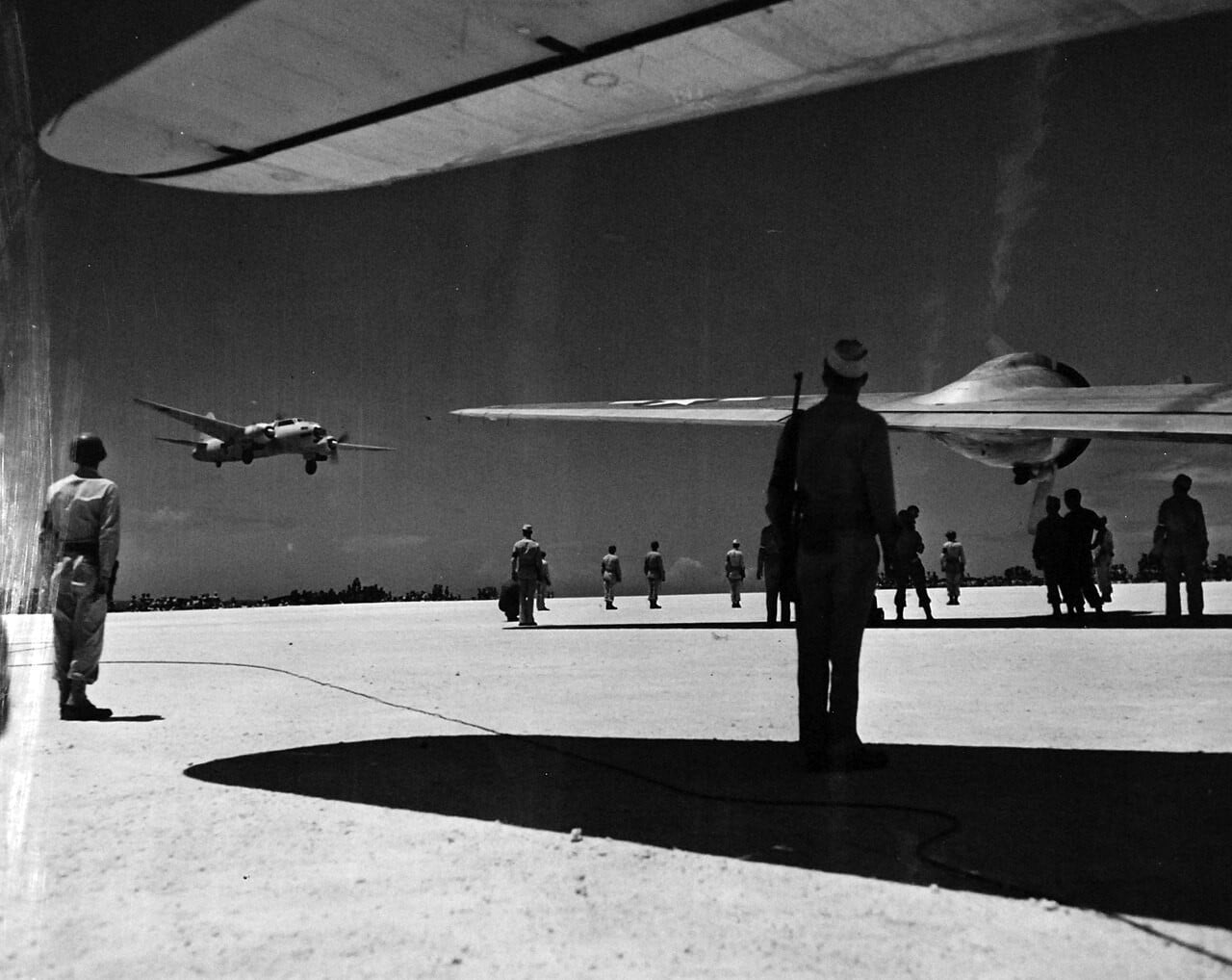
White bombers with green crosses
There was one last Betty mission, and it was nothing like the others. After Japan announced its surrender on 15 August 1945, General Douglas MacArthur ordered a Japanese delegation to fly to Manila to arrange the formal surrender. Lieutenant General Torashirō Kawabe was sent in place of the Army Chief of Staff.
On 19 August, two disarmed aircraft of the Betty family took off from Kisarazu: a G4M1 bomber and a G6M1-L2, a transport version of the same design. Both were painted all white with green crosses in place of the red roundels, and the Americans gave them the call signs “Bataan 1” and “Bataan 2”. American B-25s and P-38s escorted them to the island of Ie Shima, off Okinawa.
Original colour footage of the Japanese peace envoys arriving at Ie Shima aboard their white-painted Betty bombers on 19 August 1945.
At Ie Shima the envoys climbed out, walked across the coral runway and boarded an American C-54 for the onward flight to Manila. The bomber that had helped open the Pacific War had carried the first Japanese delegates toward its end.
Some 2,400 Bettys and their derivatives were built, yet no complete G4M survives in restored condition. An unrestored G4M1 recovered from Indonesia is displayed at the Planes of Fame Air Museum in Chino, California, and the Smithsonian holds the forward fuselage of a G4M3. For the rest, wrecks still lie across the Pacific, from Bougainville, where Yamamoto’s aircraft fell, to the islands where Betty crews fought and died.
Sources: International Churchill Society (Finest Hour), Smithsonian National Air and Space Museum, Pacific Wrecks, NavWeaps, HistoryOfWar.org, Historic Wings, René Francillon, Japanese Aircraft of the Pacific War (Putnam)
Header photo: Charles M. Daniels / Wikimedia Commons, public domain
0 Comments