
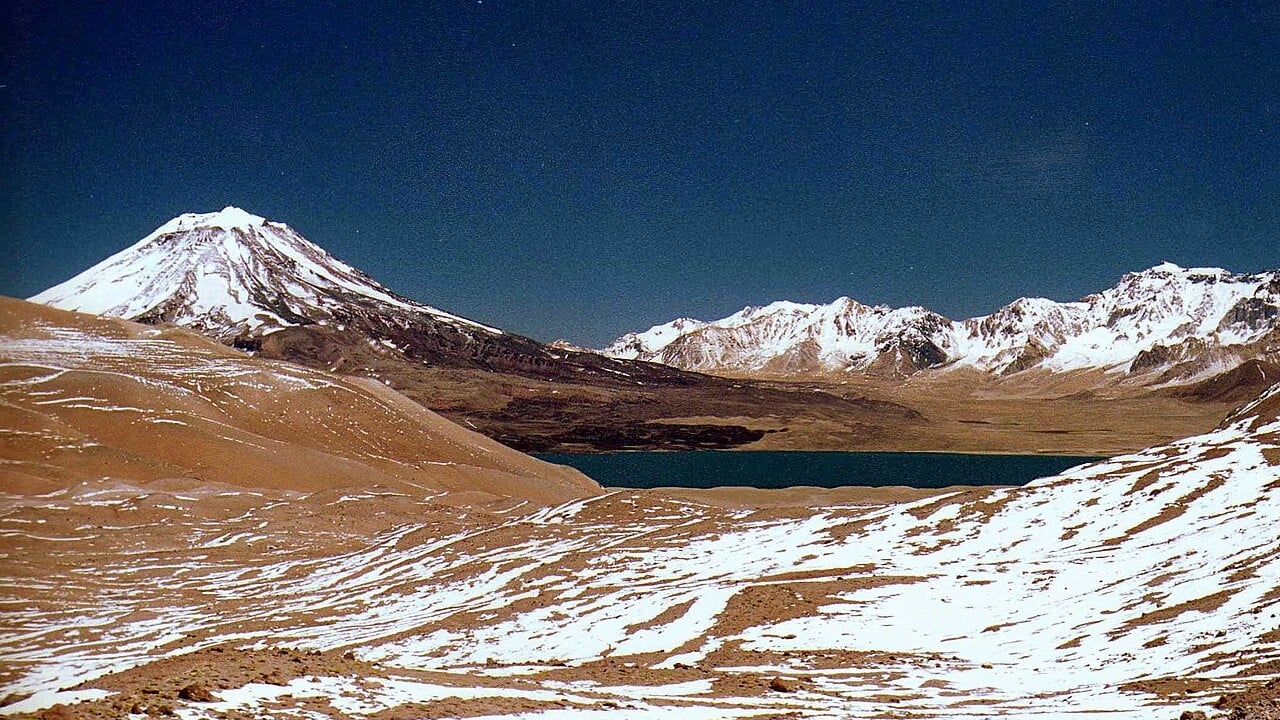
On the morning of Friday 13 June 1930, in the depths of the southern winter, Henri Guillaumet took off from Santiago de Chile to carry the mail over the Andes. It was his 92nd crossing of the range. A storm had turned him back the day before, and the weather had not improved.
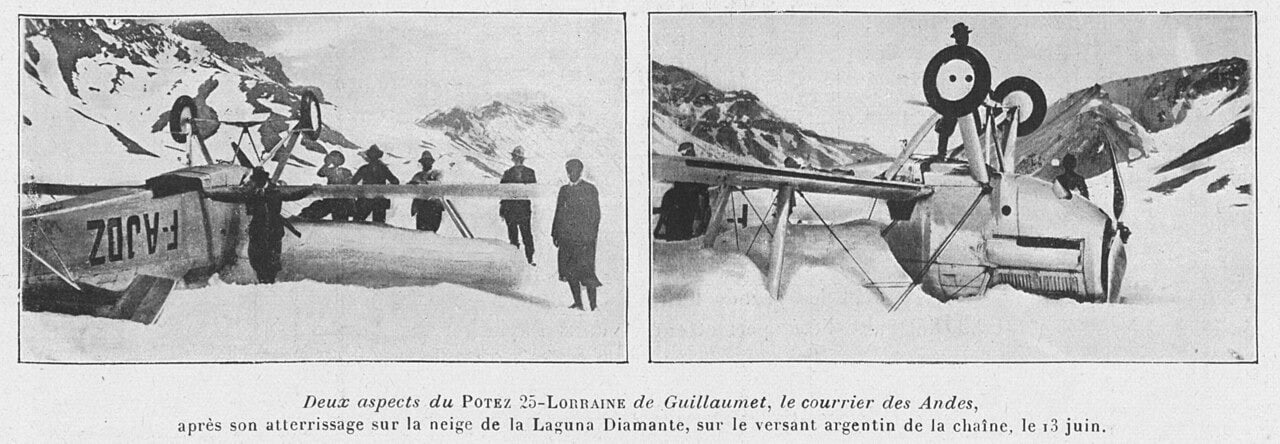
Somewhere above the cordillera, his biplane was caught in a down current and thrown out of the sky. He put it down on the snow beside a mountain lake and flipped it onto its back. Nobody knew where he was. Six days later he walked out of the mountains on his own.
His friend Antoine de Saint-Exupéry made the story famous in Terre des hommes, published in English in 1939 as Wind, Sand and Stars. But the man in the snow was not a character. He was one of the finest pilots of the Aéropostale, and this is what happened to him.
Datos rápidos
- Piloto: Henri Guillaumet (1902–1940), Aéropostale
- Aeronave: Potez 25, registration F-AJDZ
- Fecha: Friday 13 June 1930, his 92nd crossing of the Andes
- Dónde: Laguna del Diamante, Mendoza province, Argentina
- Ordeal: Two days and nights sheltering under the plane, then five days and four nights on foot
- Found: 19 June 1930, by 14-year-old Juan Gualberto García and his mother
- Legado: Retold by Saint-Exupéry in Terre des hommes (Wind, Sand and Stars), 1939
The pilot of the Andes
Guillaumet was born on 29 May 1902 at Bouy, in the Marne. He learned to fly in the military, served with a fighter regiment alongside Jean Mermoz, and joined the Latécoère airline, the future Aéropostale, in February 1926. That autumn he met a new recruit called Antoine de Saint-Exupéry and showed him the route over Spain. The two became lifelong friends.
In 1929 Guillaumet went to South America to join Mermoz on the network that carried French mail to Buenos Aires and Santiago. Crossing the Andes in open-cockpit biplanes was the most dangerous part of it. On 12 May 1930 Guillaumet flew the last leg, Mendoza to Santiago, of the first all-air mail service from France to Chile, the trip on which Mermoz made the first commercial air crossing of the South Atlantic.
Friday the 13th over the cordillera
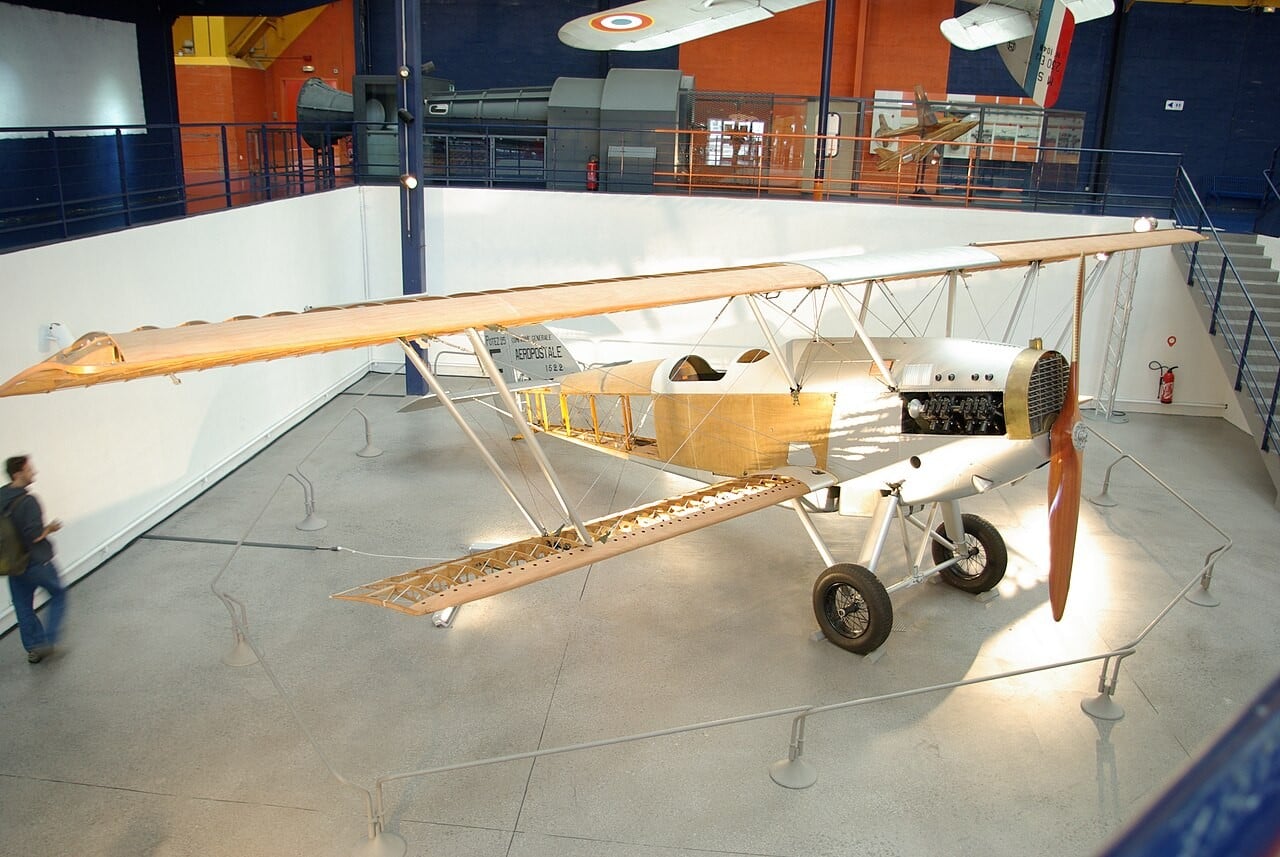
His aircraft that June morning was a Potez 25 registered F-AJDZ. Finding the usual northern route blocked, he turned south looking for a gap. According to the account he later gave Saint-Exupéry, he climbed above the clouds and set course for Argentina, then hit a down current that dragged the plane into the storm and rolled it over and over.
He broke out of the cloud above a dark lake he recognised as the Laguna del Diamante, in Mendoza province, with the Maipo volcano rising above it. Blinded by snow, he circled the lake for about two hours until his fuel ran out, then landed on the snow. The aircraft nosed over and ended upside down.
France 3 Occitanie’s Carnets de vol follows the traces of Henri Guillaumet.
He dug a shelter in the snow under the wrecked aircraft and stayed there for two days and two nights while the storm blew. When the weather cleared, a search plane passed overhead. He fired a flare, but it was not seen. Before setting off on foot, he wrote a message on the aircraft saying that he was heading east and that his last thought would be for his wife.
Five days and four nights
Guillaumet carried almost nothing: a compass, a torch, a small solid-fuel stove, matches and a few provisions. He walked through the snow and over the passes, refusing to sleep because he knew sleep would kill him. Saint-Exupéry later wrote that he walked for five days and four nights.
At one point he lay face down in the snow, ready to give up. What got him up, by his own account, was a thought about his wife, Noëlle. If his body was never found, his legal death would be postponed for four years and she would not be able to collect his insurance. He got to his feet to reach a rock where his body might be found the next summer, and kept walking.
Meanwhile Saint-Exupéry, then running the Aeroposta Argentina network, was searching the range by air from Mendoza, with no sign of his friend. Smugglers refused to form a rescue party, and Chilean officers advised the searchers to give up. Nobody, they said, could survive a winter night in those passes.
“Es imposible”
On 19 June, Guillaumet stumbled down to a remote hut where a 14-year-old boy, Juan Gualberto García, lived with his mother. Decades later García told French television that he had first taken the waving, falling figure for a madman lost in the mountains. The family cared for him, and help was called.
Saint-Exupéry was lunching in Mendoza when someone ran in to say that Guillaumet had been found. He flew out with two mechanics, spotted from the air the car bringing his friend down, and landed beside the road. It was there, swollen and burnt by the cold, that Guillaumet spoke the sentence that became his epitaph.
The mechanic Jean-René Lefebvre, who was there, returned to the spot with French television in 1976. According to that report, six months after the rescue Lefebvre brought the Potez 25 down from the mountain, hauled by a train of oxen and mules.
Argentine news report on “El Aviador y el Puestero”, an exhibition at the Fuerte San Carlos museum honouring Guillaumet and Juan Gualberto García.
The man behind the legend
Guillaumet went back to the Andes. According to his French biography, he crossed the cordillera 393 times in all. He later flew the South Atlantic with Mermoz, and flew exploratory North Atlantic flights for Air France. Afterburner told Mermoz’s story in Jean Mermoz: The Aéropostale Archangel Who Vanished at Sea.
He did not survive the next war. On 27 November 1940, flying the Farman F.220 Le Verrier to Syria with the new French High Commissioner to the Levant, Jean Chiappe, aboard, he was shot down over the Mediterranean by an Italian fighter.
Dominique Petit of the Cercle Aérophilatélique Français on Guillaumet’s accident in the Andes on 13 June 1930 and his rescue (in French).
Saint-Exupéry never forgot him. In Terre des hommes he called that sentence in the snow the noblest ever spoken, and when he himself crashed in the Libyan desert at the end of 1935, he walked east, as Guillaumet had. Today a peak in the Patagonian Andes, the Aguja Guillaumet, carries his name. It is a fitting monument for a man who simply kept taking the next step.
Sources: Antoine de Saint-Exupéry, Wind, Sand and Stars (1939), INA (Institut national de l’audiovisuel), L’Aéronautique (January 1931), France 3 Occitanie, Cercle Aérophilatélique Français
Header photo: rodoluca / Wikimedia Commons, CC BY-SA 3.0
0 Comments