
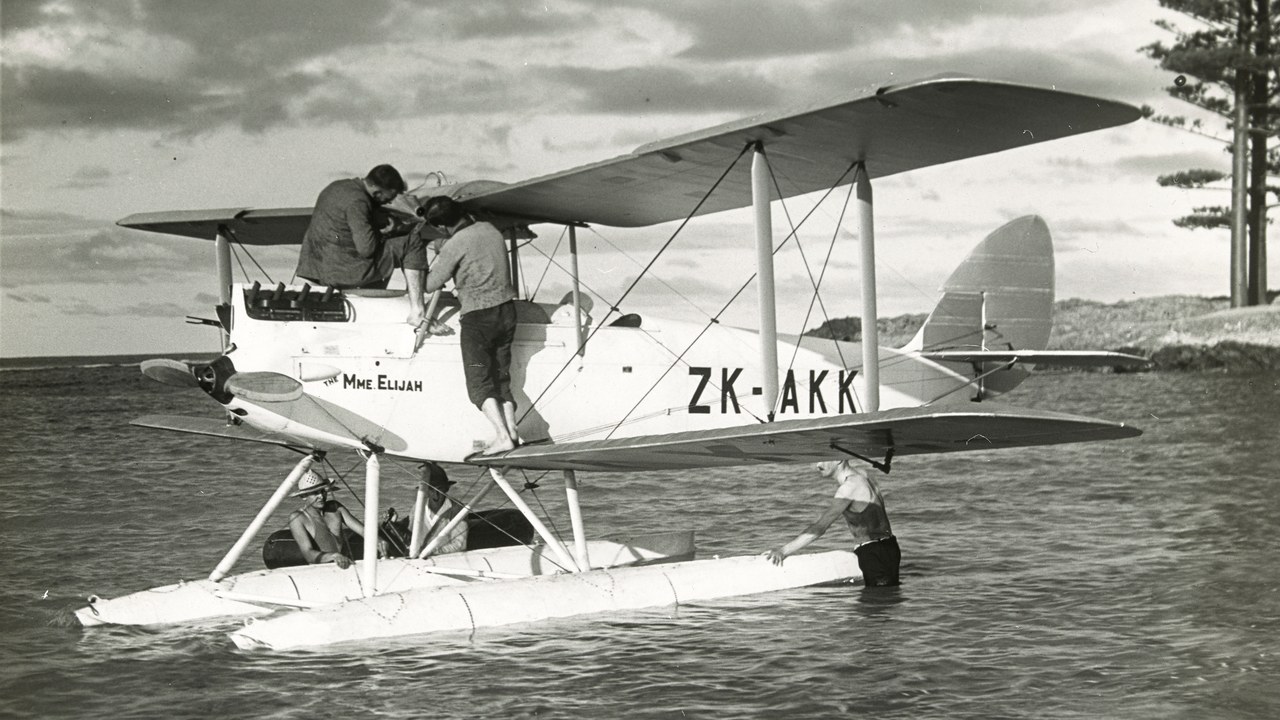
Somewhere over the Tasman Sea in 1931, a short-sighted man in an open cockpit pushed his little biplane into a shallow dive, let go of the stick for a few seconds and raised a ship’s sextant to his eye. He had to catch the sun touching the horizon, read his watch and altimeter, then grab the controls again before the aircraft wandered off.
Francis Chichester was trying to do something no pilot had done before: fly alone from New Zealand to Australia. His aircraft could not carry enough fuel to cross in one hop, so he had to find two specks of land in the middle of the ocean, Norfolk Island and Lord Howe Island, with nothing but the sun, a sextant and arithmetic.
Most people remember Chichester as the yachtsman who sailed alone around the world in Gipsy Moth IV. Thirty-five years earlier, he had pulled off a feat of navigation in the air that was just as bold.
Datos rápidos
- Piloto: Francis Chichester (1901-1972), later Sir Francis
- Aeronave: de Havilland DH 60G Gipsy Moth on floats, named Madame Elijah, ZK-AKK
- Ruta: Northern New Zealand, Norfolk Island, Lord Howe Island, Jervis Bay (New South Wales)
- Cuando: Late March to early June 1931
- Primero: First solo flight across the Tasman Sea from east to west; first aircraft to land at Lord Howe Island
- Navegación: Sextant sun sights and a deliberate offset course (aiming off)
- Setback: Floatplane overturned in a gale at Lord Howe; rebuilt with islanders over about nine weeks
- Otorgar: Inaugural Johnston Memorial Trophy, Guild of Air Pilots and Air Navigators
A beginner with big ideas
Chichester was born in Devon in 1901 and emigrated to New Zealand at eighteen, where he built up a business in forestry, mining and property. On a visit home in 1929 he took flying lessons at Brooklands, bought a de Havilland Gipsy Moth, and set off from Croydon for Australia on 15 December 1929. He reached Sydney 41 days later. He did not break Bert Hinkler’s record, but he had flown halfway round the world solo as a novice.
The Moth was shipped on to New Zealand, and Chichester started looking at the map of the Tasman Sea. In January 1931 the Australian Guy Menzies had flown solo from Sydney to New Zealand, with the prevailing westerlies behind him. Nobody had flown alone the other way, from New Zealand to Australia.
The problem was range. Even with an extra fuel tank, the Moth could not cover the full distance over open water. The answer was to break the trip into three legs, via Norfolk Island and Lord Howe Island, and to land on the sea. Chichester borrowed a set of floats from the New Zealand Permanent Air Force, forerunner of the Royal New Zealand Air Force, and turned his Gipsy Moth into a floatplane. He named it Madame Elijah, and it carried the New Zealand registration ZK-AKK.
Aiming off on purpose
Finding an island a few kilometres across after hundreds of kilometres of sea was the real challenge. Compasses in light aircraft were unreliable and there was no radio. If a pilot arrived where he thought the island should be and saw only water, he had no idea whether to turn left or right.
Chichester’s solution was to miss on purpose. Instead of aiming straight at the island, he deliberately steered to one side of it. He worked out in advance the sun’s altitude at his destination for a range of possible arrival times. When his sextant showed that the sun had reached that altitude, he knew he was on a line of position running through the island. He then turned 90 degrees, in the direction he knew the island lay, and flew along that line until it appeared.
The beauty of the method was that drift no longer threw him off to an unknown side. Any error became a question of how far along the line he still had to go. The idea of aiming off is probably as old as navigation itself, but Chichester was the first to use it methodically in an aircraft.
A 1928 de Havilland Moth with a Gipsy II engine in flight, the same family of light biplane Chichester flew across the Tasman.
Norfolk Island and a lagoon at night
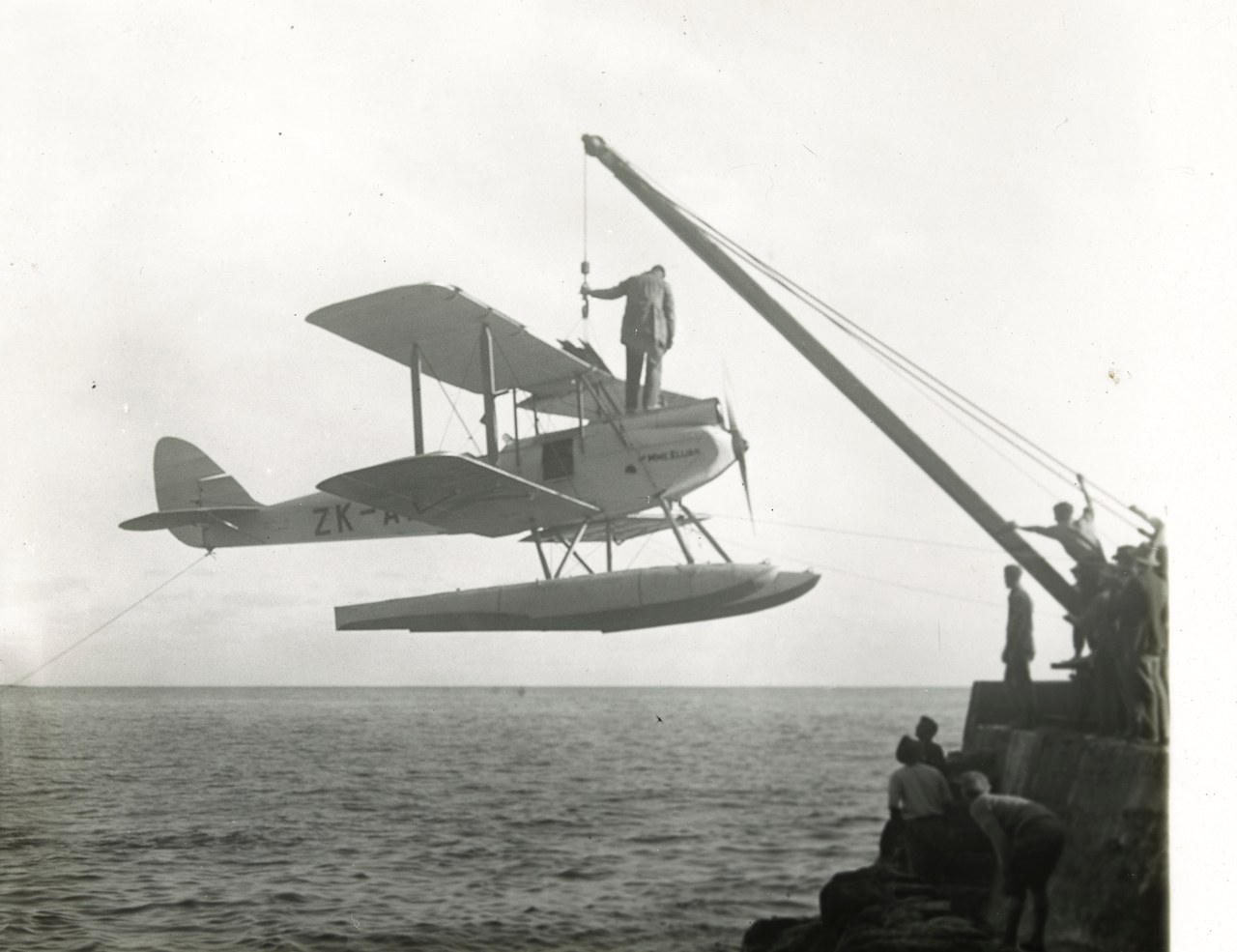
At the end of March 1931, Chichester took off from the far north of New Zealand and headed for Norfolk Island. The method worked, and he alighted safely. Islanders helped him refuel and look after the seaplane, and at one stop, probably Norfolk, a crane was used to swing Madame Elijah out of the water.
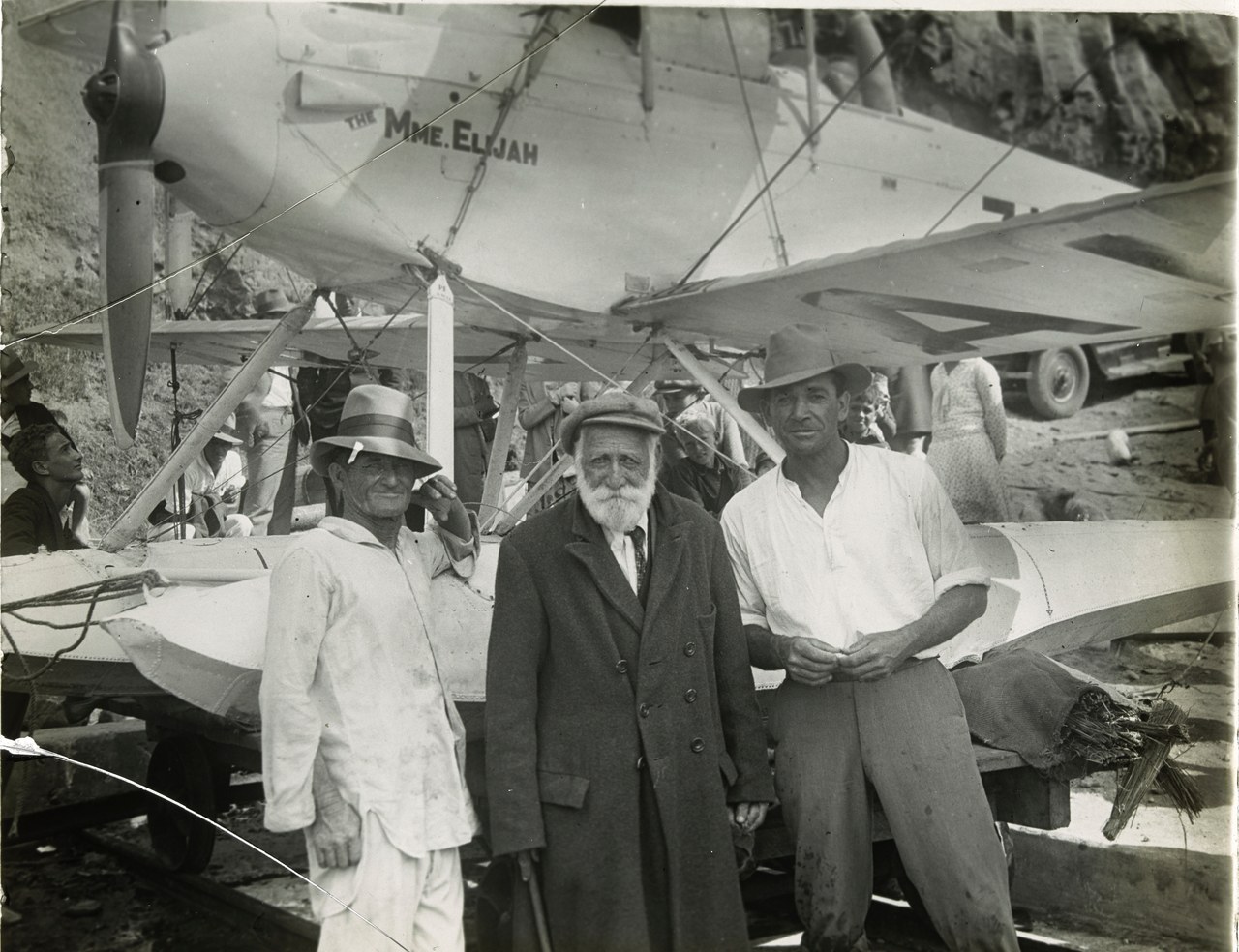
On 1 April he reached Lord Howe Island and became the first pilot ever to land an aircraft there. He moored the floatplane in the lagoon. Overnight a gale blew up, and in the morning he found Madame Elijah upside down in the water, badly damaged.
Most people would have shipped the wreck home. Chichester and the islanders, few of whom had seen an aeroplane before, rebuilt it instead. With help from a local man, R. Wilson, who had served with the Air Force in Egypt during the war, they remade the wings and fuselage, repaired the float, reconditioned the engine and repainted the aircraft. The work took around nine weeks.
Blind across the last leg
In early June 1931, Chichester took off from Lord Howe on the final leg to Australia. According to the Jervis Bay Maritime Museum’s account, he flew into a torrential storm almost at once, so heavy that he flew blind and his only chart was ruined. Out of the storm, he worked out his position with a school atlas and turned for the coast, worried about his fuel.
He made landfall near the Shoalhaven River and alighted in Jervis Bay, south of Sydney, next to the seaplane carrier HMAS Albatros, which happened to be in the bay for exercises. The museum records the leg as about 500 miles flown in a little over six hours. Chichester had become the first person to fly solo across the Tasman Sea from east to west.
The early aviation history of Lord Howe Island, where Chichester made the first aircraft landing in 1931.
The Guild of Air Pilots and Air Navigators awarded him its first Johnston Memorial Trophy for the flight. Chichester flew on north, aiming to circle the world, but in Japan his floatplane hit overhead wires at Katsuura and he was seriously injured.
The navigator who became a sailor
The skills he learned over the Tasman did not go to waste. In the Second World War, Chichester served in the Royal Air Force Volunteer Reserve as a navigation specialist and wrote a navigation manual for single-seat fighter pilots. After the war he founded a map-making business.
Then he went back to the sea, this time on the water. He won the first single-handed transatlantic race in 1960 in a yacht called Gipsy Moth III, and in 1966 and 1967 sailed Gipsy Moth IV alone around the world, a feat that earned him a knighthood from Queen Elizabeth II.
British Pathé footage of Francis Chichester being knighted in 1967 after his solo voyage around the world.
His yachts carried the name of the little de Havilland biplane that started it all. And the trick that took him to Lord Howe, aiming deliberately off target so you know which way to turn, is still used by navigators today. It took a lone amateur in a floatplane to show how well it works.
Sources: Francis Chichester, Seaplane Solo (1933) and The Lonely Sea and the Sky (1964); Jervis Bay Maritime Museum; University of Sydney Library (Berckelman collection); Monument Australia; aerovfr.com (Jean-Philippe Chivot); wingnet.org Round-the-World Flights; Papers Past (New Zealand newspapers, 1931); NZHistory (Guy Menzies)
Header photo: From the University of Sydney Library (Berckelman collection), public domain in Australia

0 Comments