
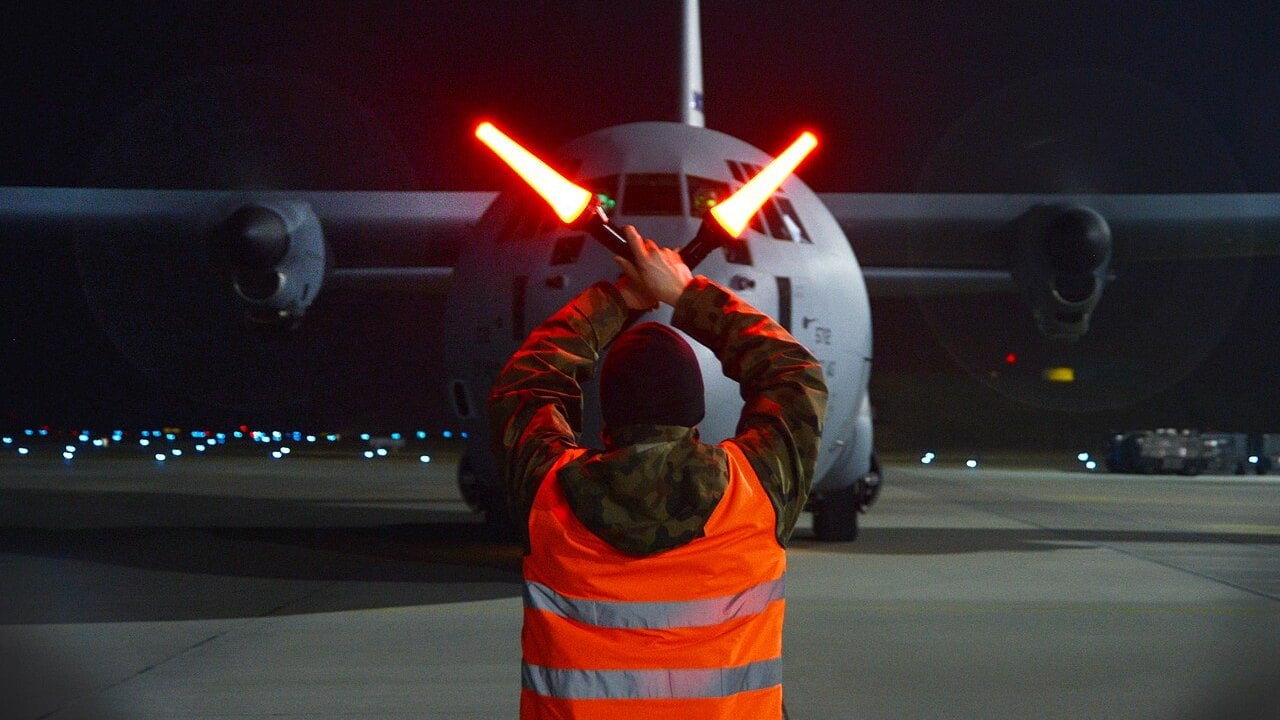
The last 50 metres of a flight are some of the hardest. The captain of an airliner sits several metres above the ground and well ahead of the nosewheel, cannot see the wingtips without leaning, and has to stop a jet weighing tens of tonnes so precisely that a jet bridge can meet the door. There are no instruments for that in the cockpit.
So the answer comes from outside. Either a person in a high-visibility vest waves two glowing wands, or a box on the terminal wall flashes the aircraft type, a shrinking distance count and, finally, a big STOP. Here is how aircraft marshalling and visual docking guidance actually work, and why both are built around the pilot in the left seat.
Datos rápidos
- Marshalling standard: ICAO Annex 2 (Rules of the Air), Appendix 1
- US equivalent: FAA Aeronautical Information Manual, 4-3-26 Hand Signals
- Marshaller kit: Fluorescent vest; fluorescent wands, bats or gloves by day; illuminated wands at night or in low visibility
- VDGS also called: Stand entry guidance or nose-in docking guidance
- Azimuth guidance: Keeps the aircraft on the stand centreline
- Stopping guidance: Tells the pilot where to stop (PAPA, mirror or electronic countdown)
- Advanced systems: APIS++ (FMT), Safedock (Safegate), Honeywell A-VDGS
- Designed for: The pilot in the left seat
One language, written down by ICAO
Marshalling is the oldest answer. The International Civil Aviation Organization sets out the standard signals in Appendix 1 of Annex 2, the Rules of the Air. In Annex 2 the person giving them is formally a “signalman”; a note adds that the word may also be read as marshaller. The annex lists more than two dozen signals, from “identify gate” to “connect ground power”.
Annex 2 is strict about who may do it. A signalman must wear a distinctive fluorescent identification vest so the crew knows who is in charge, and must use daylight-fluorescent wands, table-tennis bats or gloves by day and illuminated wands at night or in low visibility.
Before a single signal is given, the marshaller must check that the area the aircraft will move through is clear. ICAO explains why in a note: on many aircraft, the path of the wingtips, engines and other extremities cannot always be monitored visually from the flight deck. The marshaller is the crew’s eyes on the ground.
Reading the wands
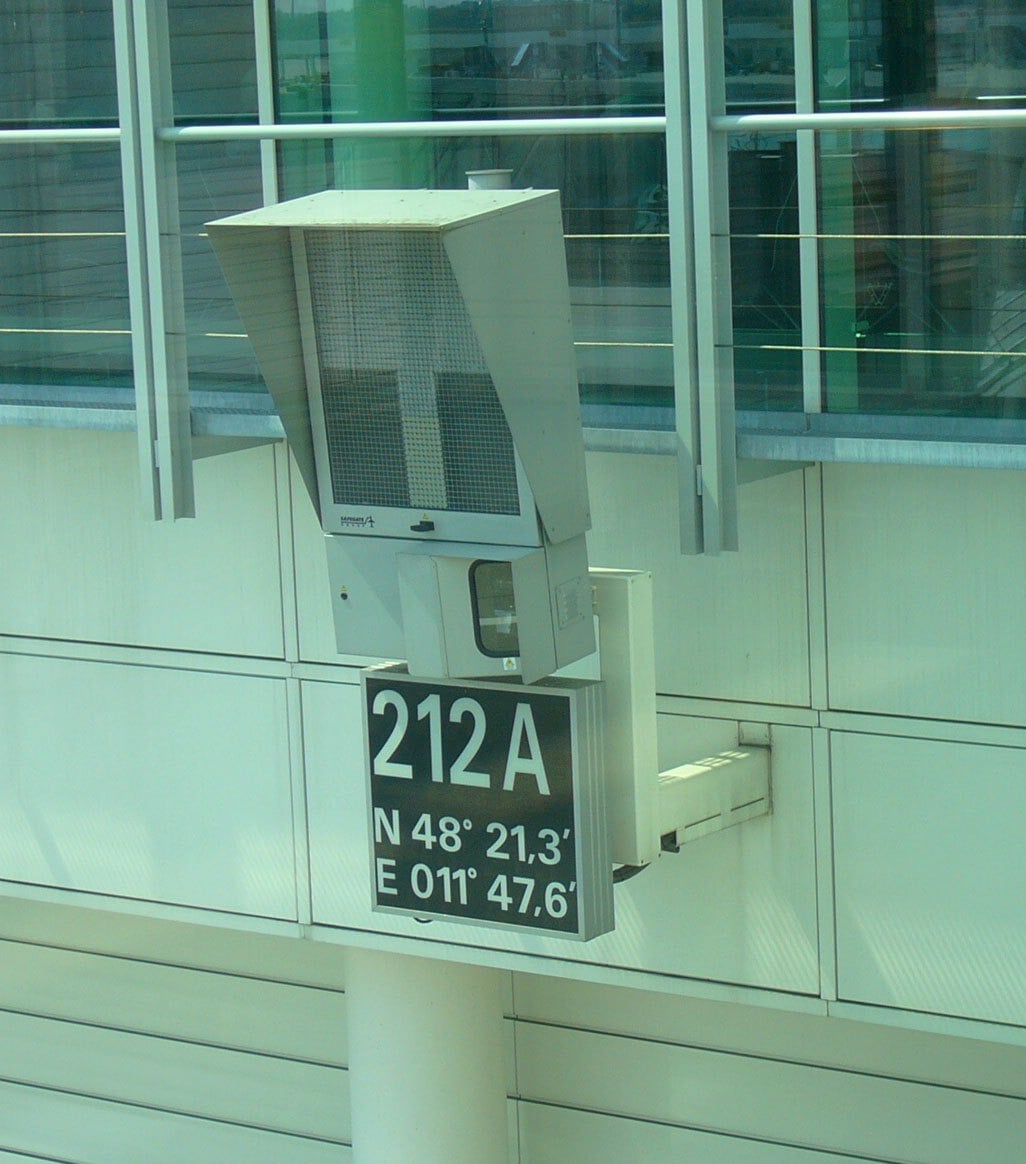
The signals are designed to be readable from the flight deck at a glance. For “straight ahead”, the marshaller bends both arms at the elbows and moves the wands up and down from chest height to head. To turn the aircraft left, from the pilot’s point of view, the right arm points out at 90 degrees while the left hand beckons; the speed of the beckoning tells the pilot how fast to turn.
“Slow down” is a patting gesture, wands moving between waist and knees. A normal stop is a slow sweep of both extended arms up until the wands cross above the head. An emergency stop is the same crossed-wands picture, done abruptly. Then come the hand signals for brakes, chocks and engine shutdown, the last a slicing motion across the throat.
The AOPA Air Safety Institute’s safety tip on the most common marshalling signals and what each one asks the pilot to do.
There is a catch. Despite decades of effort, the signals are not identical everywhere. The US Federal Aviation Administration publishes its own set of hand signals in the Aeronautical Information Manual, section 4-3-26, and military services and aircraft carriers use their own variations. Within the ICAO standard, though, a pilot landing anywhere in the world should see the same gestures.
The glowing sign at the gate
At busy airports with jet bridges, the marshaller is increasingly replaced by a visual docking guidance system, or VDGS. The UK Civil Aviation Authority’s Visual Aids Handbook, CAP 637, explains that these systems provide guidance where accurate aircraft parking is required, which is usually where airbridges are used. They are also called stand entry guidance or nose-in docking guidance systems.
Every system has to solve two problems: keeping the aircraft on the stand centreline, called azimuth guidance, and telling the pilot exactly where to stop. The simplest solves them with two separate devices. AGNIS, Azimuth Guidance for Nose-in Stands, shows two vertical light bars at about flight-deck height. Two green bars mean the aircraft is on the centreline; if one shows red, the pilot steers away from the red and towards the green.
AGNIS gives no stopping information, so it is usually paired with PAPA, the Parallax Aircraft Parking Aid. It is a board with a horizontal slot and a white fluorescent tube mounted behind it. As the aircraft rolls forward, perspective makes the tube appear to slide along the slot, and when it lines up with the marking for the aircraft type, the pilot stops. No electronics, no moving parts: just geometry. Some stands instead use a mirror that lets the pilot watch the nosewheel roll up to a painted stop mark.
Airline captain Captain Joe explains how pilots park precisely at the gate using docking guidance systems.
Lasers, radar and the word STOP
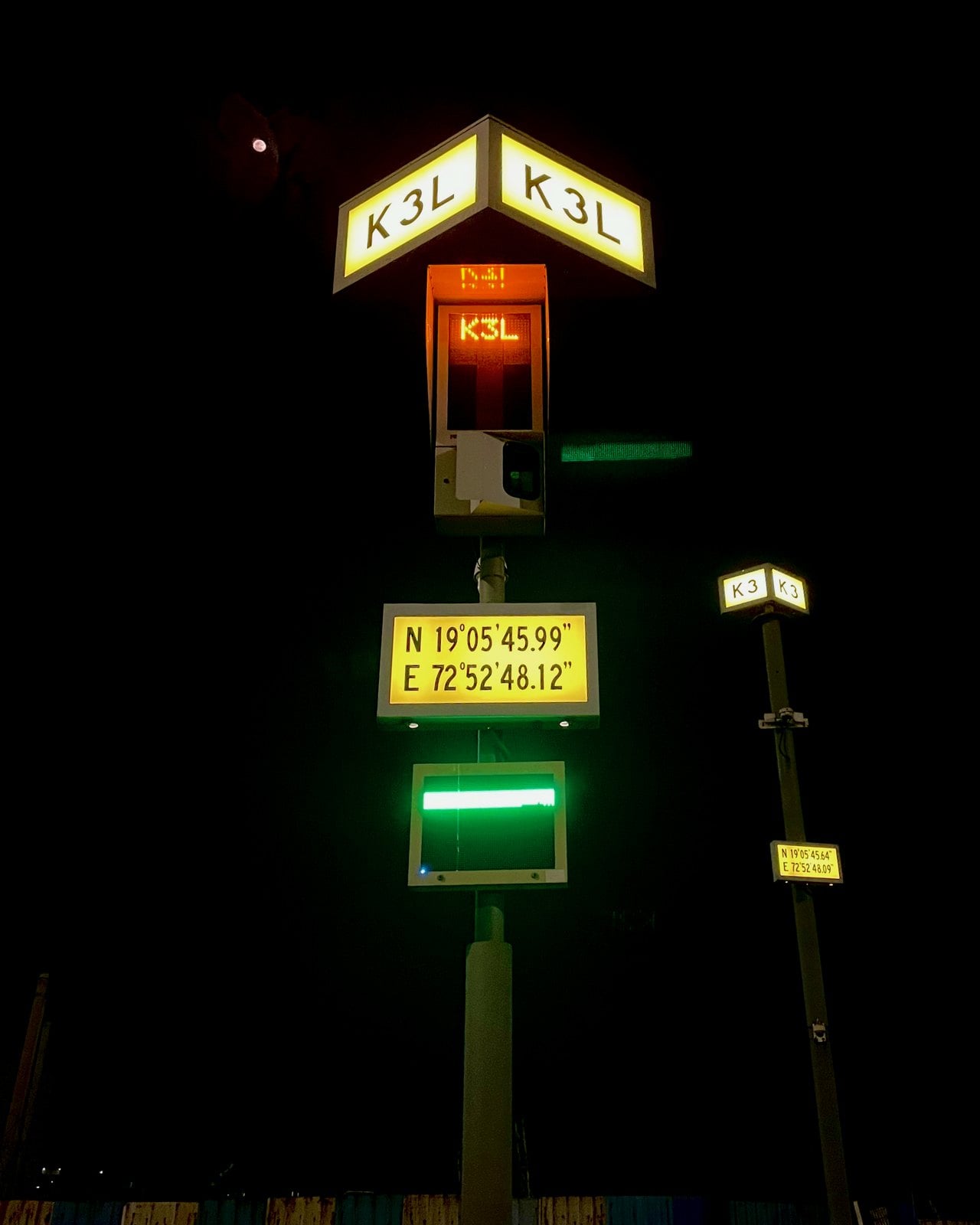
Major airports now use advanced systems, A-VDGS, that combine both jobs on one electronic display. CAP 637 says some of them identify the aircraft type automatically and set the guidance accordingly. FMT’s APIS++ uses a moiré pattern for azimuth guidance and a yellow progress strip that counts down the last 16.2 metres to the stop position. Safegate’s Safedock shows azimuth guidance, distance to stop, aircraft type and the door in use on a single display.
Many of these systems measure the approaching aircraft with lasers. For APIS++, CAP 637 tells pilots to check two things before entering the stand: the correct aircraft type and the correct stand number. If the type is wrong, the azimuth guidance is not working, or the display shows STOP, the docking must be aborted.
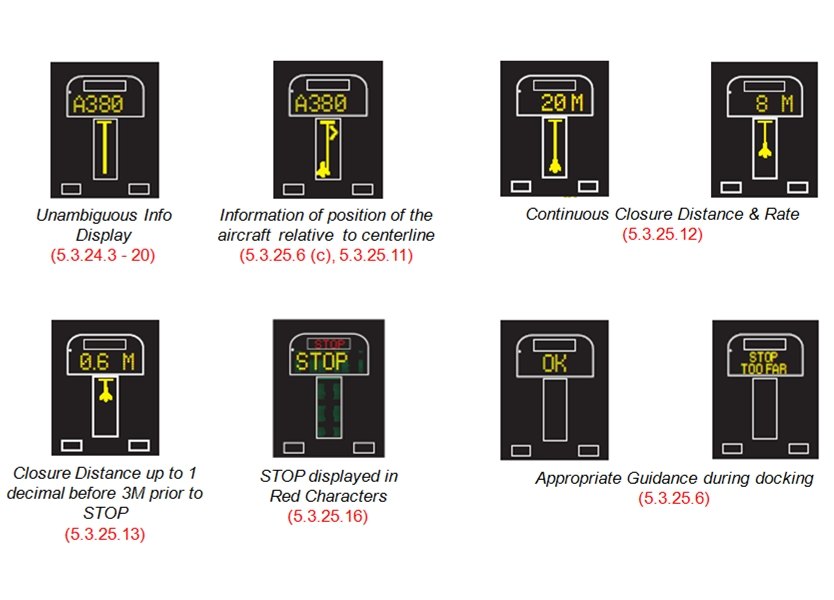
The sign is not a free pass, though. CAP 637 warns pilots not to assume a stand is safe just because its guidance system is lit, and says an aircraft should not be taxied onto an equipped stand when the system is switched off, unless a marshaller is guiding it.
Not to be confused with a stop bar
One more red light causes confusion. A stop bar is something else entirely: a row of red lights set into a taxiway, usually at a runway holding position, that works like a traffic light at airports approved for low-visibility operations. Pilots must never cross a lit stop bar. The docking display’s STOP, by contrast, simply means the nosewheel is where it belongs.
Both, in the end, solve the same problem as the person with the wands. The marshaller at the gate and the laser on the wall are there because the pilot, sitting high up in the nose, cannot see the bit of the aircraft that matters most for the last metre of every flight.
Manufacturer Safegate Group shows its Safedock system guiding aircraft onto the stand.
After that, the jet bridge swings out to meet the door and the 25-minute race of the aircraft turnaround begins. Next time you land, look out of the front left window. Somebody, or something, is telling the captain exactly when to stop.
Sources: ICAO Annex 2 Rules of the Air (Appendix 1, Marshalling Signals), UK Civil Aviation Authority CAP 637 Visual Aids Handbook, FAA Aeronautical Information Manual 4-3-26, FMT, Safegate, Honeywell


0 Comments