
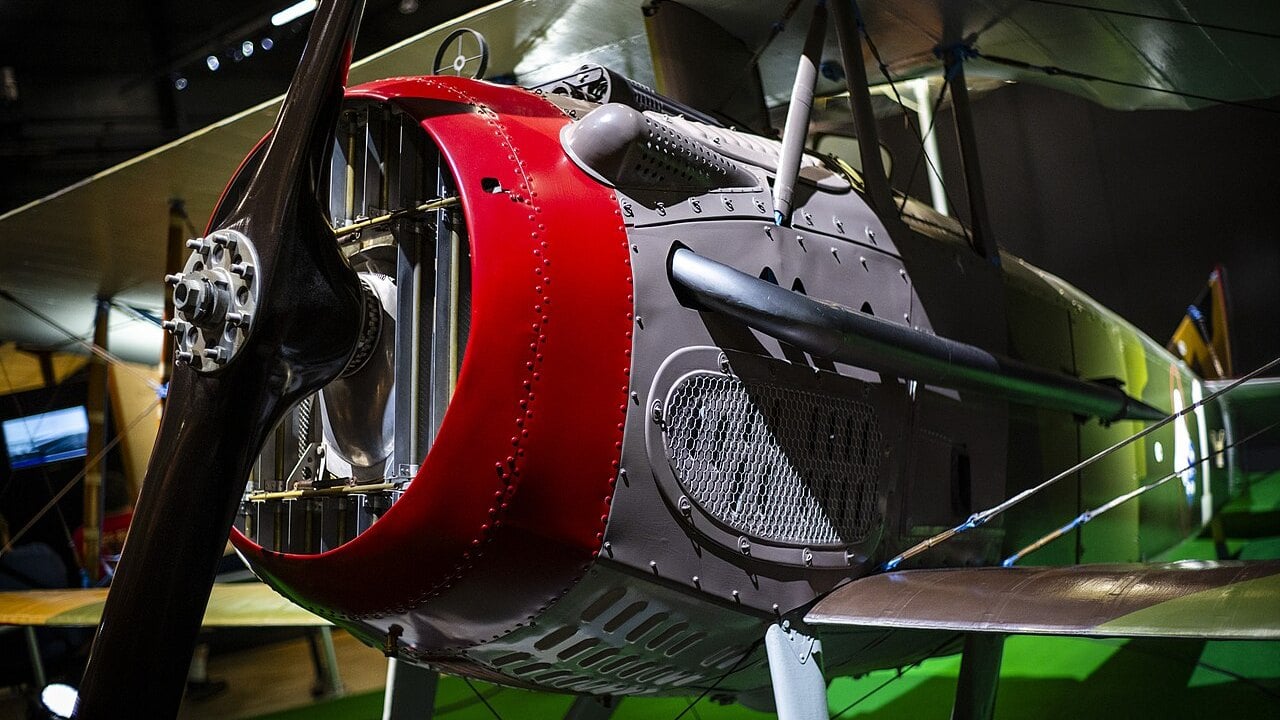
In early July 1918, Eddie Rickenbacker was in Paris on leave when he heard that new fighters had finally arrived for his squadron. He went straight to the American aerodrome at Orly, found three of them on the field, asked a mechanic whether the nearest one had been tested, and flew it away without waiting for anybody’s permission.
He fully expected a court martial. Instead, his commanders let him keep the aircraft. It was a SPAD XIII, the French fighter that Rickenbacker, René Fonck and almost every Allied fighter pilot of 1918 wanted under them.
With 8,472 built, the SPAD XIII was one of the most-produced fighters of the First World War, and one of the best. Yet today only a handful of originals survive.
Datos rápidos
- Aeronave: SPAD XIII (S.XIII) C.1 single-seat biplane fighter
- Diseñador: Louis Béchereau, SPAD, France
- Primer vuelo: Spring 1917 (4 April 1917 according to the National Air and Space Museum)
- Motor: Geared Hispano-Suiza 8B V-8, 200 to 235 hp
- Armamento: Two Vickers machine guns, 400 rounds each
- Velocidad máxima: About 135 mph with the 220 hp engine
- Construido: 8,472 by SPAD and eight other firms; about 10,000 more cancelled
- US use: 893 accepted; 15 of 16 US fighter squadrons by the Armistice
A name that outlived its founder
The SPAD name began with Armand Deperdussin, who founded the Société pour les Appareils Deperdussin in 1910. When the firm ran into financial trouble in 1914, the aviation pioneer Louis Blériot took it over and renamed it Société pour l’Aviation et ses Dérivés, neatly keeping the same initials.
Its designer, Louis Béchereau, had come to a firm conclusion: the air-cooled rotary engines powering most French aircraft had reached their limit. The future, he believed, lay in a water-cooled engine of at least 150 horsepower. Just such an engine was being tested at the time, a new V-8 from Hispano-Suiza designed by the Swiss-born engineer Marc Birkigt.
Béchereau built his next fighter around it. The result, the SPAD VII, reached French squadrons in the autumn of 1916, and more than 5,500 were built.
Bigger, stronger, two guns
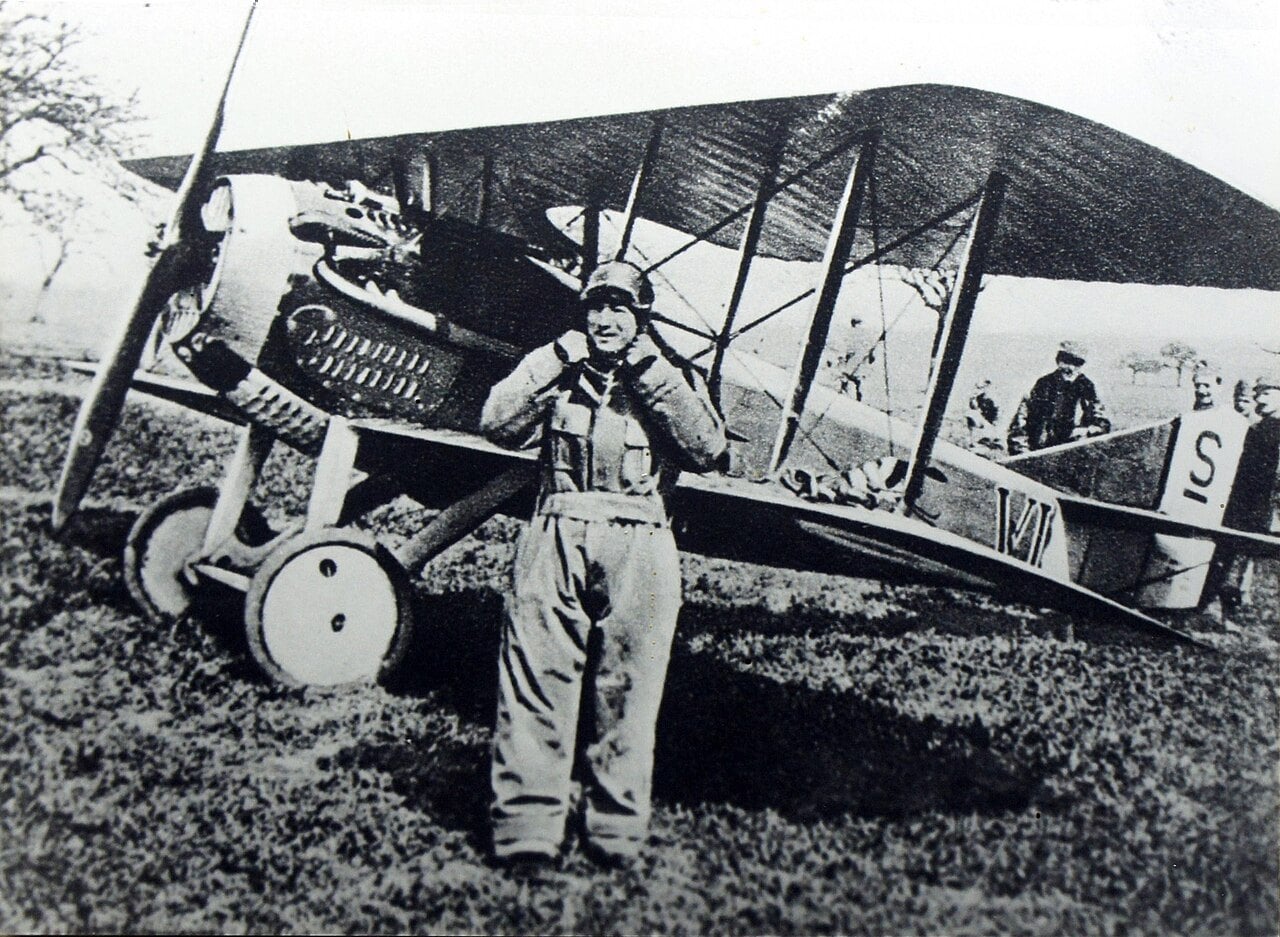
By 1917 German fighters were catching up, and Béchereau answered with an enlarged SPAD VII. The SPAD XIII had a geared Hispano-Suiza 8B engine of 200 horsepower, later 220 and 235 horsepower, and two Vickers machine guns instead of one, each with 400 rounds. The pilot could fire them one at a time or together.
The prototype flew in the spring of 1917, and by the end of May production aircraft were reaching the front. With the 220-horsepower engine it could reach about 135 mph, roughly 10 mph faster than the new German fighters. It was not the most nimble fighter of the war, but it was fast, robust and could dive at high speed, which made it one of the best dogfighters of its day.
The French Memorial Flight association’s SPAD XIII in the air.
The geared engine brought headaches, and technical problems held back full production until late 1917. Even in 1918, Rickenbacker recorded patrols where several SPADs could not take off because of minor engine troubles. Pilots accepted the trade. Speed and strength kept them alive.
The standard Allied fighter
SPAD and eight other French manufacturers, including the Kellner et ses Fils piano works near Paris, turned out 8,472 SPAD XIIIs before production ended in 1919. By the end of the war almost every French fighter squadron flew them. The British, Italians, Belgians and Russians used them too.
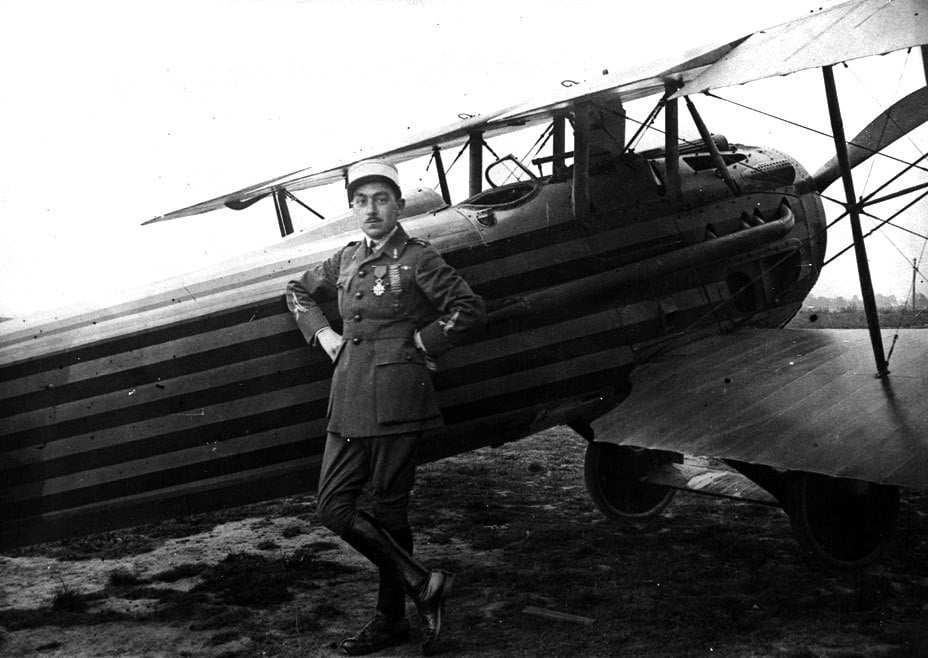
The SPAD XIII carried the greatest names of French fighter aviation, among them Georges Guynemer, Charles Nungesser and René Fonck, whose 75 victories made him the highest-scoring Allied ace of the war. Some squadrons painted them in personal colours, like the bold stripes on Henri Hay de Slade’s SPAD of escadrille SPA 159, so that his pilots could find their leader in the air.
How the Americans got their SPADs
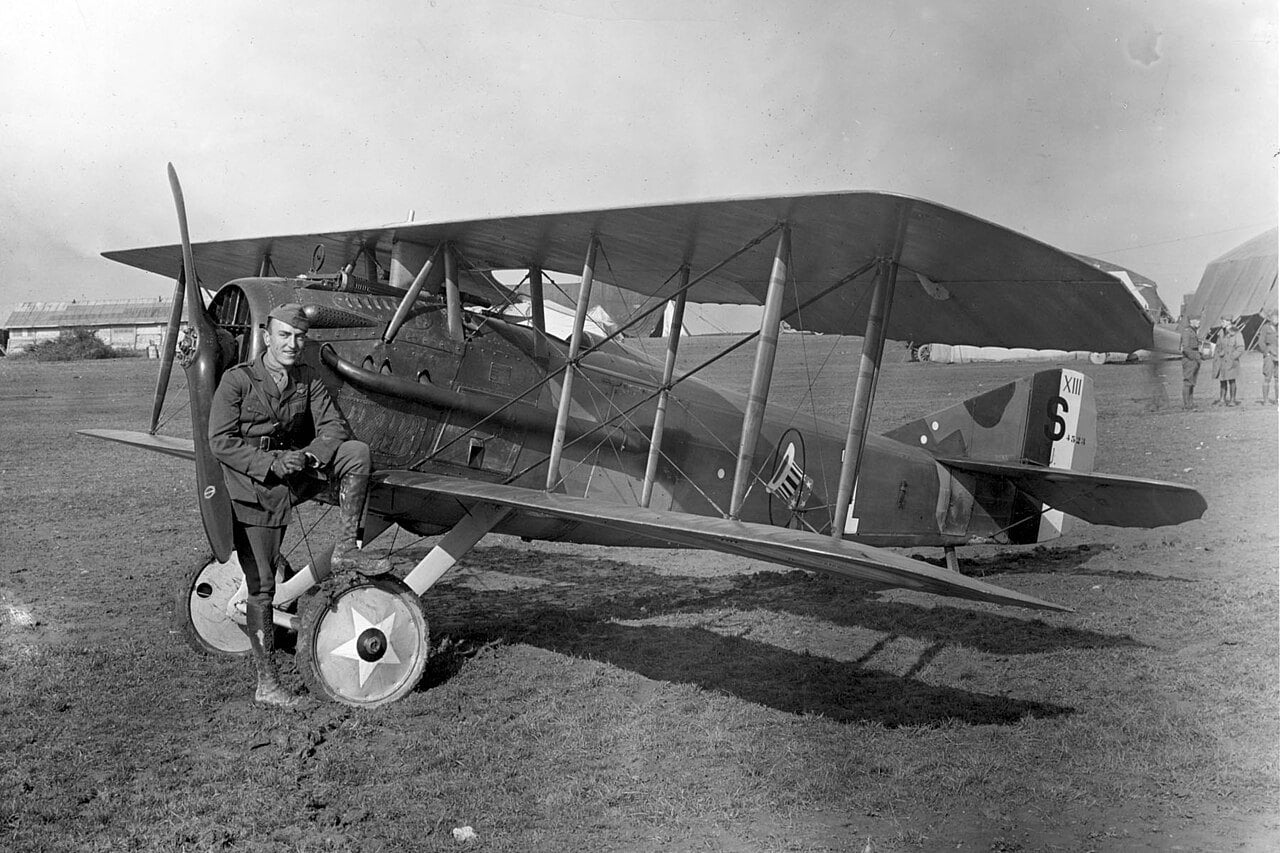
The United States entered the war without a combat-ready fighter of its own, so the US Army Air Service flew French machines. Its first pursuit squadrons went into action in the Nieuport 28, which the French had already left behind. Rickenbacker never trusted its wings in a hard manoeuvre.
The SPADs finally arrived in the summer of 1918, and Rickenbacker did not wait to be issued his. Of the machine he flew away from Orly, he later wrote with unusual tenderness.
The new fighters changed the 94th’s war. Over the Château-Thierry sector that summer, the Americans were up against some of the best German airmen, and Rickenbacker found that his SPAD could outclimb the Fokkers and dive without fear of shedding its wings. He judged that the new aircraft greatly increased the squadron’s efficiency, and the results followed.
The Air Service accepted 893 SPAD XIIIs from France, and by the Armistice they equipped 15 of its 16 fighter squadrons. Rickenbacker, whose 26 victories made him America’s ace of aces, flew one, and so did the balloon-buster Frank Luke.
Eddie Rickenbacker speaking at the Air Force Museum in 1961, from the National Museum of the US Air Force archive.
The ones that survived
When the war ended, contracts for another 10,000 SPADs, 6,000 of them for the United States, were cancelled. Surplus SPADs were exported to countries such as Japan and Poland or sold to civil operators, and the wooden, fabric-covered fighters slowly disappeared.
One that did not was Smith IV, built by the Kellner piano works in August 1918 and flown by Lieutenant A. Raymond Brooks of the 22nd Aero Squadron, who named it after the college his sweetheart attended. It was the fourth of his aircraft to carry the name, and it replaced a SPAD that Brooks had crashed. He scored one of his six victories in it, and other pilots scored five more.
After the Armistice, Major Robert L. Walsh of General William Mitchell’s staff proposed shipping two SPAD XIIIs home, and Smith IV was one of them. It toured the United States in Liberty Bond drives and went to the Smithsonian in December 1919. Fully restored in the 1980s, it now hangs in the National Air and Space Museum, which notes that only four SPAD XIIIs remain.
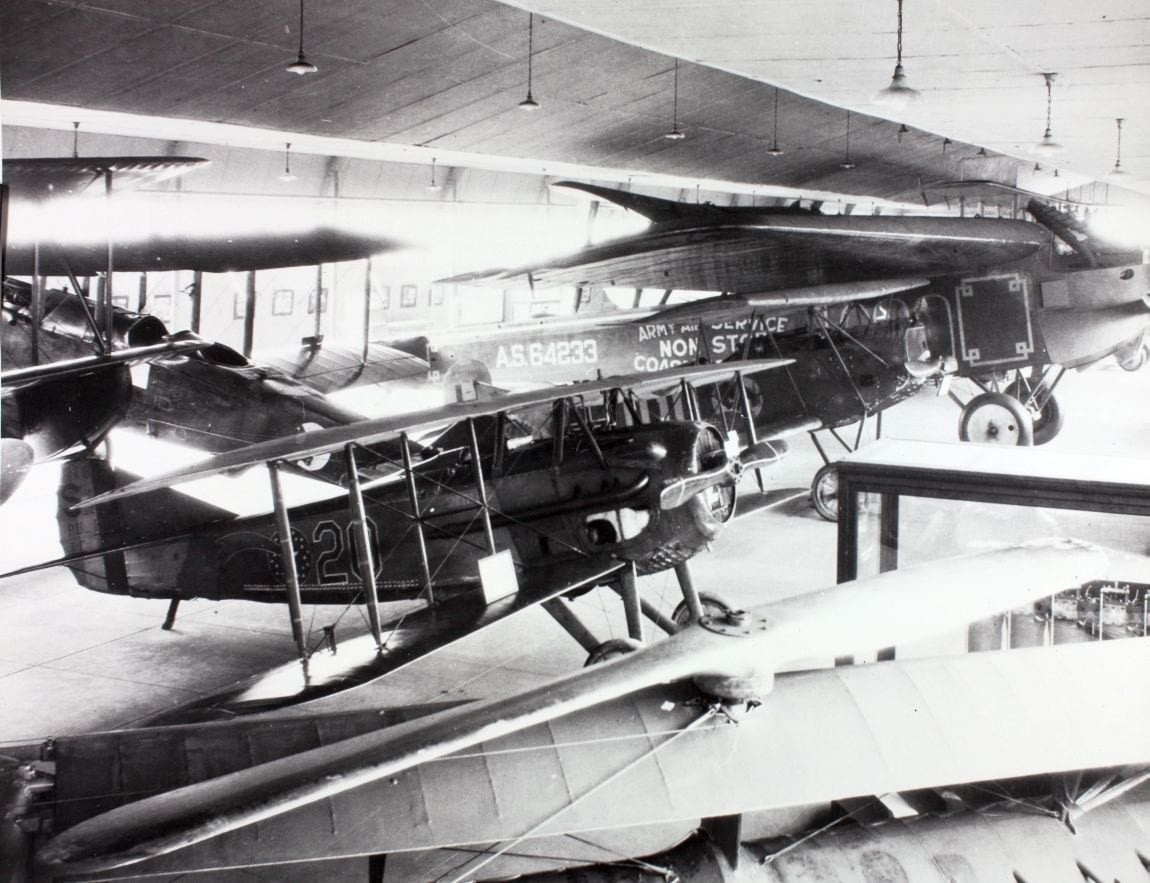
Another, built by Kellner in October 1918, never saw combat. It is displayed at the National Museum of the US Air Force in Dayton in Rickenbacker’s markings. In France, the Memorial Flight association still flies a SPAD XIII over the country where the type was born.
C-SPAN’s American Artifacts looks at the SPAD XIII in the National Air and Space Museum’s early aviation collection.
Today the Fokker D.VII gets the glory as the fighter the Armistice named. But in 1918 it was the SPAD XIII that most Allied aces climbed into each morning, and that Rickenbacker was prepared to risk a court martial to fly.
Sources: National Air and Space Museum, National Museum of the US Air Force, The Museum of Flight, Eddie Rickenbacker (Fighting the Flying Circus, 1919)
0 Comments