
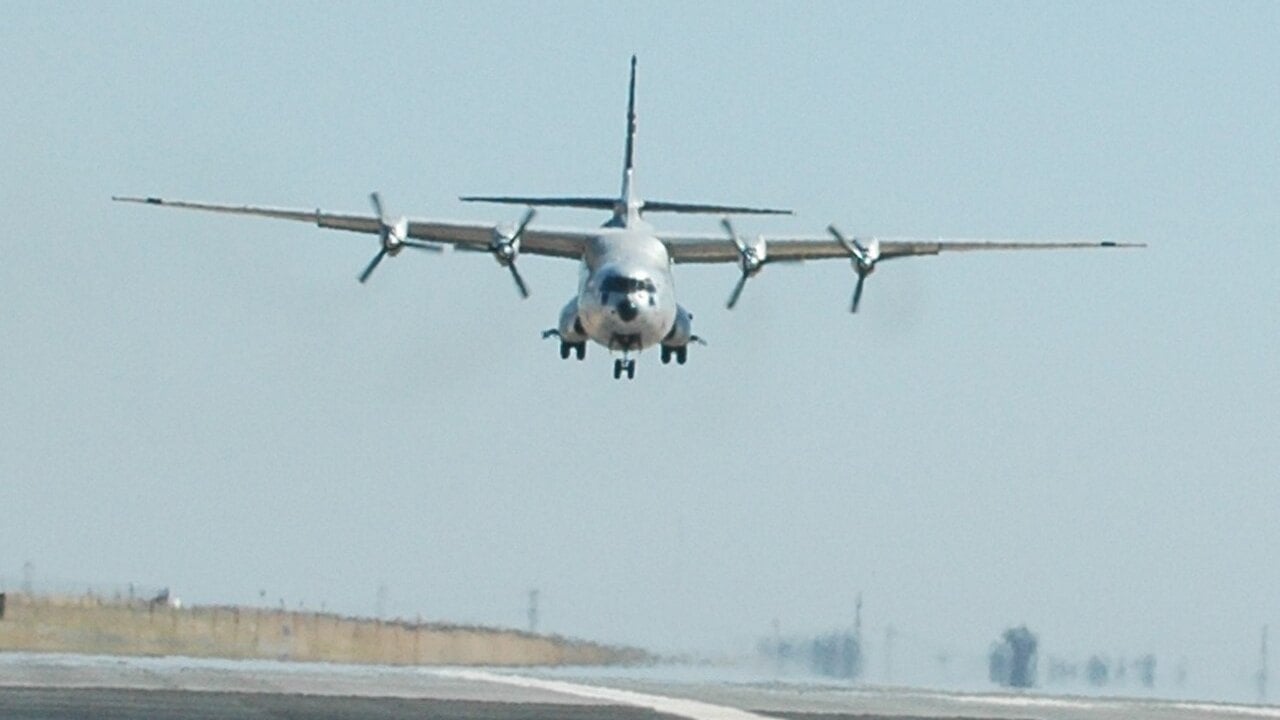
On 30 August 2008, crowds at the Travis Air Expo in California watched a huge, grey, four-engined turboprop drift down onto the runway. It had flown in from Alaska, with a spare engine in its hold for good measure. Fire trucks sprayed it with an arc of water, and then its crew shut down the engines for the last time.
It was the last flying Douglas C-133 Cargomaster, and it had just come home. Travis had sent its last Cargomaster away 37 years earlier, in July 1971.
Few people outside the airlift world remember the C-133. Yet for more than a decade it was the aircraft that carried America’s intercontinental ballistic missiles, its space rockets and the loads nothing else in the US Air Force could lift.
Datos rápidos
- Aeronave: Douglas C-133 Cargomaster strategic transport
- Primer vuelo: 23 April 1956, with no prototype
- Motores: Four Pratt & Whitney T34 turboprops
- Construido: 50 (35 C-133A, 15 C-133B); production ended 1961
- Tamaño: About 157 ft long, almost 180 ft wingspan
- Registro: 117,900 lb lifted to 10,000 ft, 16 December 1958
- Loads: Atlas and Titan ICBMs; space boosters; Apollo capsules
- Jubilado: 1971, replaced by the C-5 Galaxy; last flight 30 August 2008
Straight into production
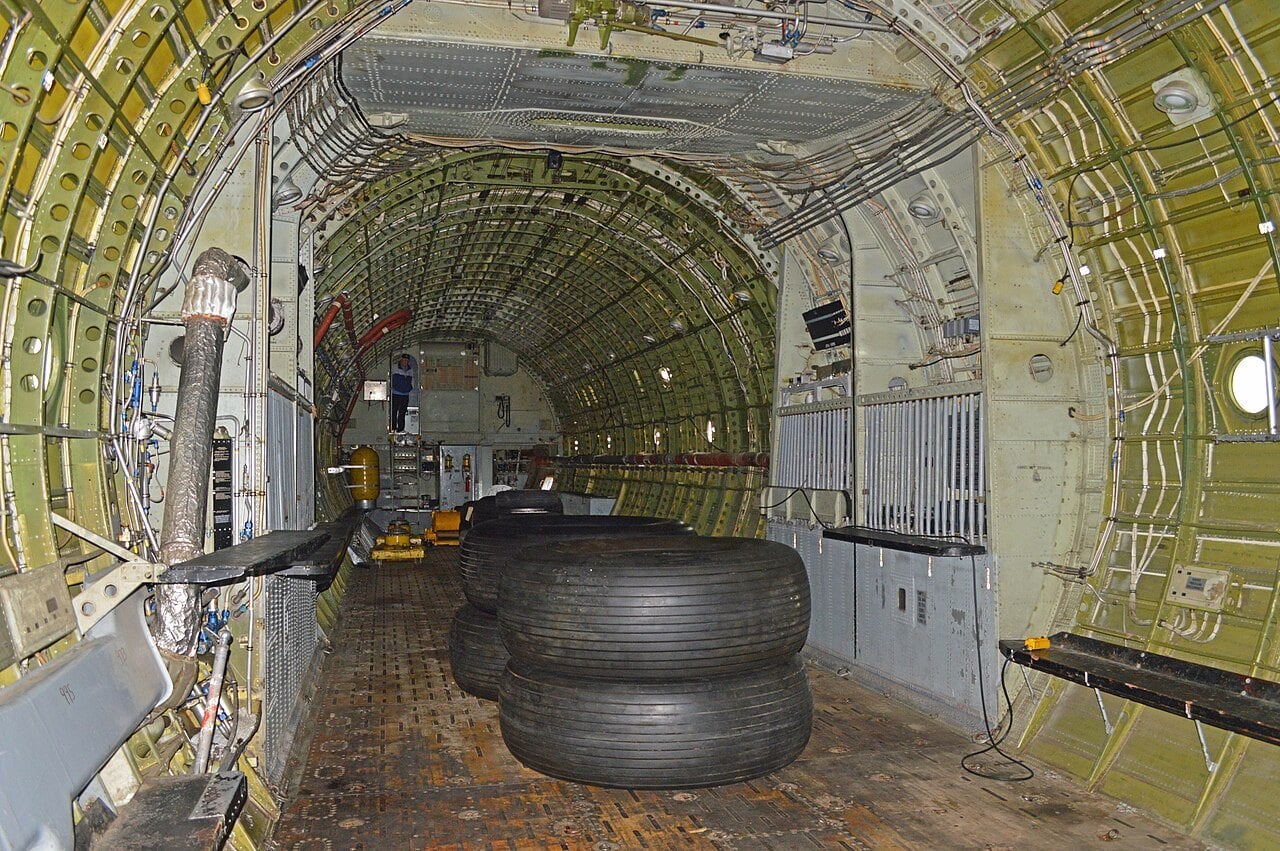
In the early 1950s, the Air Force’s heavy hauler was the piston-engined Douglas C-124 Globemaster II. The service wanted a new strategic transport with a huge hold that could be loaded through big doors at the rear and on the side.
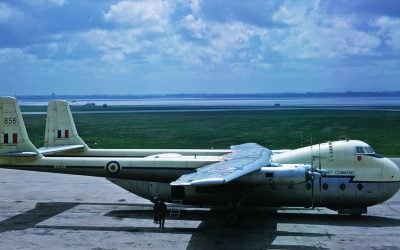
Douglas answered with the C-133: a high wing, landing gear tucked into blister fairings on the fuselage sides, and four Pratt & Whitney T34 turboprops. It was the largest turboprop transport the Air Force ever used, about 157 feet long with a wingspan of almost 180 feet.
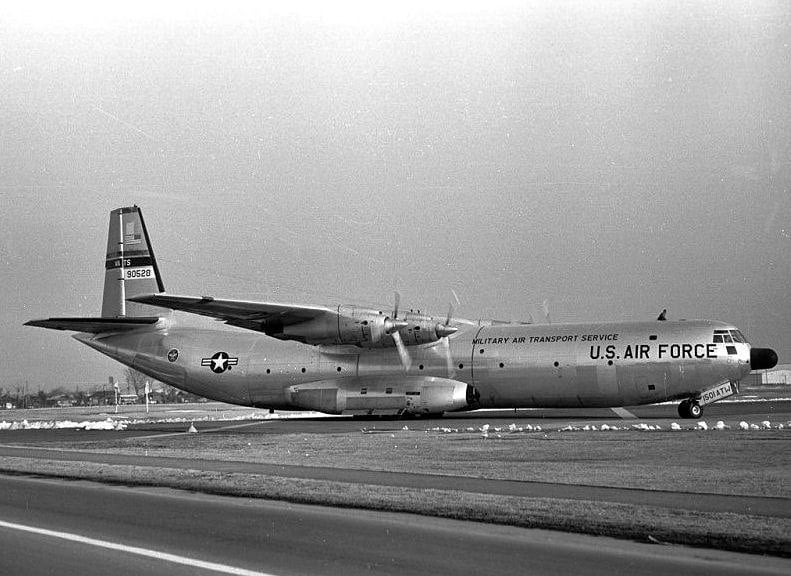
Remarkably, there was no prototype. The C-133 became the first Air Force aircraft to go straight into production, and the first C-133A flew on 23 April 1956. Douglas built 35 C-133As and 15 C-133Bs before production ended in 1961, just 50 aircraft in all.
The missile mover
The Cargomaster entered service with the Military Air Transport Service in 1957 and 1958, flying from just two bases, Travis in California and Dover in Delaware. Two of them set transatlantic speed records for transport aircraft on their first flights to Europe.
Its real job turned out to be the missile age. The C-133 could carry ballistic missiles such as the Atlas and Titan faster and more cheaply than trucking them over the highways.
A 1960 film of an Atlas missile being unloaded from a C-133B Cargomaster.
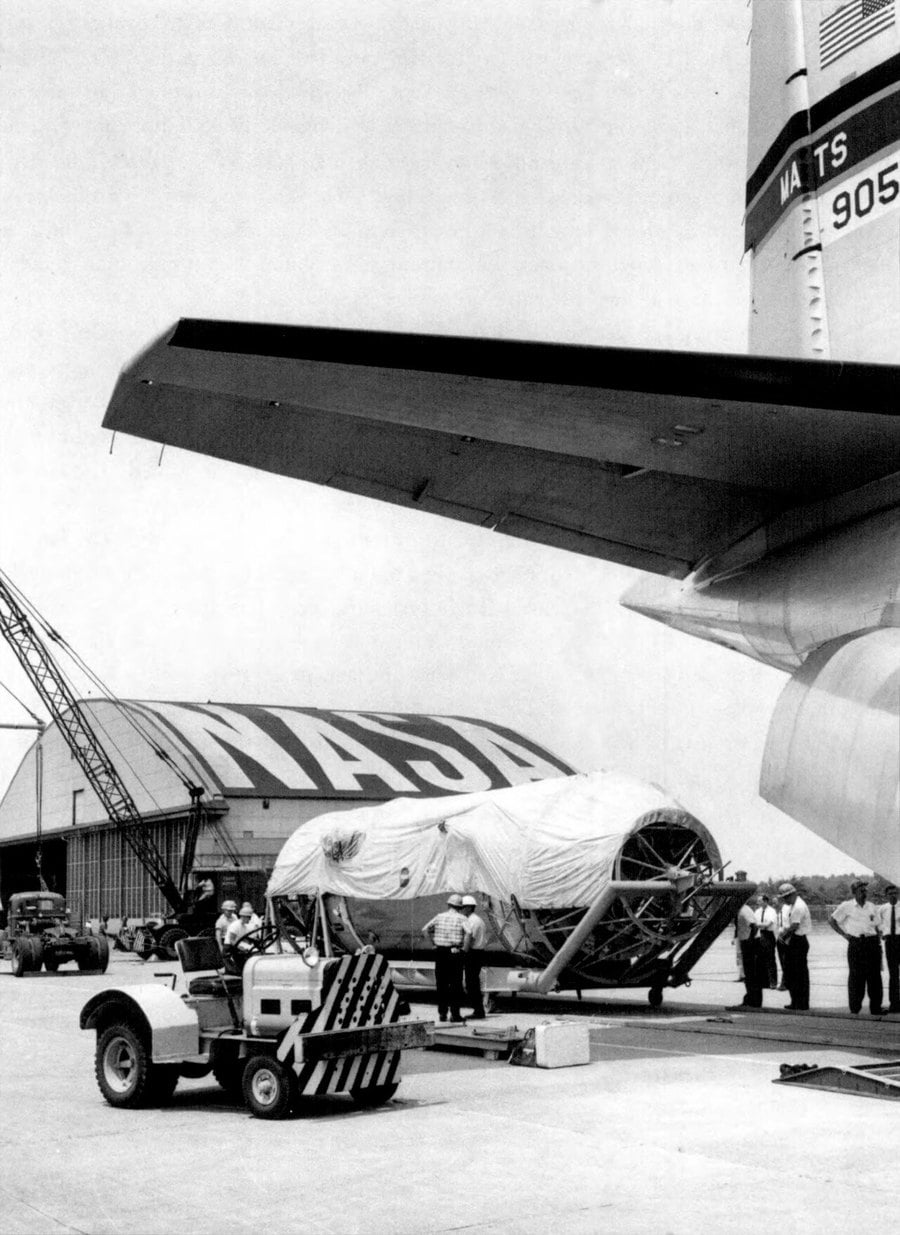
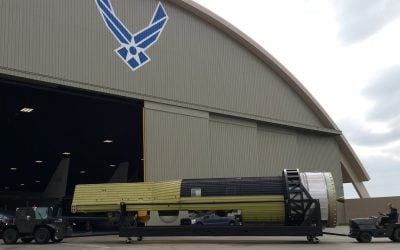
NASA used it too. Cargomasters carried rocket boosters for the Mercury, Gemini and Apollo programmes and, after splashdown, brought Apollo command modules back across the country. They hauled trucks, tanks, artillery and even a CH-47 Chinook helicopter.
On 16 December 1958, a C-133A lifted a payload of 117,900 pounds to 10,000 feet, a world record for propeller-driven aircraft. That same aircraft is now on display at the National Museum of the US Air Force in Dayton, Ohio.
Archive footage from the San Diego Air and Space Museum of an Atlas being loaded and carried by a C-133.
A hard-working, troubled giant
The C-133 earned respect, but not always affection. Of the 50 built, ten were lost. Investigators traced problems to the complex electrical system that controlled propeller pitch, to stall behaviour that gave crews very little warning, and, late in the type’s life, to fatigue cracks in a structure that had been trimmed to save weight.
Each problem brought a fix: a time delay on the propeller controls, a small stall strip on one wing so that both wings stalled together, and metal bands around the fuselage to stiffen it. The airframes were kept flying well beyond their original planned life, but by the end of the 1960s they were worn out.
Crews respected the aircraft rather than loved it. Writing in Air & Space/Smithsonian, John Sotham found that its crews were proud of it and determined to make it work, even though many were apprehensive about flying it. One former crew chief summed it up: the C-133 had a bad reputation, but it always got them home.
Through the Vietnam War the Cargomasters kept flying, because there was still nothing else that could carry their loads. That changed with the arrival of the Lockheed C-5 Galaxy. In 1971 the C-133s were retired, and most were cut up within months of arriving at Davis-Monthan Air Force Base in Arizona.
The Alaskan survivor
One escaped. C-133A serial 56-1999 had rolled out at Douglas on 26 December 1957 and served with the Air Force from Travis. After retirement, it was bought by Maurice Carlson for the Cargomaster Corporation, registered N199AB in 1975 and put to work in Alaska, hauling loads for the trans-Alaska pipeline and flying on behalf of the state government.
Never certified for normal civil operations, it could fly only as a government aircraft. For more than 30 years it flew cargo around Alaska, until the work began to dry up. Its owners then donated it to the museum at Travis.
In August 2008, pilots Mike Congdon and Tom Carlson flew N199AB south in two legs, from Anchorage to McChord Air Force Base in Washington and then on to Travis. Even on that final trip it worked for a living, carrying a pair of T34 engines for the museums. By the time it shut down at Travis it had logged about 18,250 flight hours.
The last flight of a C-133 Cargomaster, arriving at Travis Air Force Base in August 2008.
Today Cargomasters can be seen at Dayton, at Dover’s Air Mobility Command Museum and at Travis, where 56-1999 has been restored in Air Force markings. Its successors, from the C-5 to the C-17 Globemaster III, carry bigger loads further. But the job of strategic airlift, with a cavernous hold and doors at the back, began with the Cargomaster.
Sources: National Museum of the US Air Force, 60th Air Mobility Wing History Office (Travis AFB), Air & Space Forces Magazine, John Sotham (Air & Space/Smithsonian), Skippy’s Cage
0 Comments