
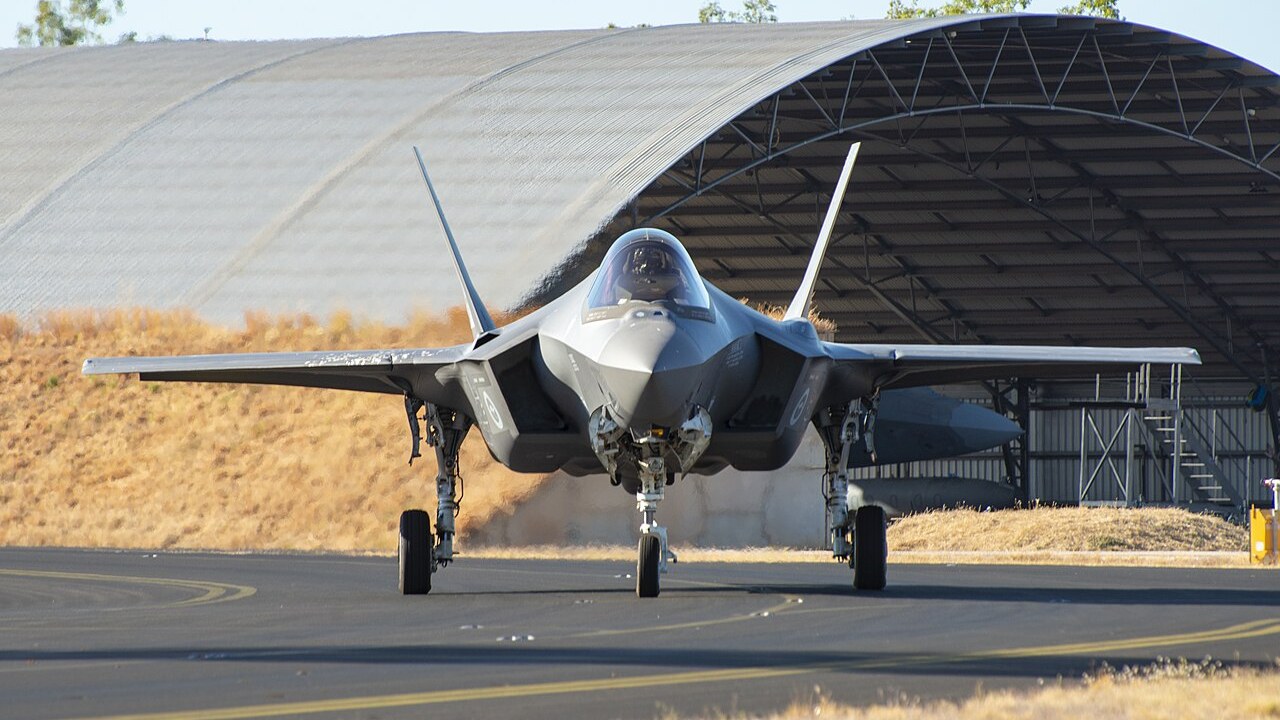
Somewhere in a freight system, an email arrived that said, in effect: do not send this box through Hong Kong. Nobody at the other end read it. The box contained a cockpit canopy and a weapons-bay door from an F-35 Lightning II, and it went through Hong Kong anyway.
That is the new detail Bloomberg reported on 7 October 2026, two weeks after it first revealed that Chinese authorities had taken possession of the parts. The shipment, from a Royal Australian Air Force F-35A, was supposed to reach San Francisco via South Korea and Taiwan. It ran late leaving Australia and was rerouted through Hong Kong to save time. The warning that should have stopped that reroute was sitting unread.
Quick Facts
- Parts: an F-35 cockpit canopy and a weapons-bay door, coated with radar-absorbing material
- Origin: a Royal Australian Air Force F-35A
- Shipped: late May 2026, to the US for possible repair or disposal
- Planned route: Australia to San Francisco via South Korea and Taiwan
- Actual route: rerouted through Hong Kong, where Chinese authorities took the parts
- The warning: an email from freight forwarder DSV, working for Lockheed Martin, that a UPS employee missed (per Bloomberg)
- Status: parts not returned; Pentagon and State Department investigating
The Email Nobody Saw
According to Bloomberg, which cited a person briefed on the case, the warning came from DSV, the freight forwarder handling the shipment for Lockheed Martin. US arms export rules, the International Traffic in Arms Regulations, barred the parts from passing through certain countries, and DSV sent an email saying so. A UPS employee did not notice it.
Bloomberg's source suggested a reason that will sound familiar to anyone who has worked in a large company: the DSV message may have arrived through a different computer system from the one the UPS agent was using. In other words, the safeguard existed. It just landed in the wrong inbox.
UPS has reported the incident to the State Department's Directorate of Defense Trade Controls, the office that enforces those export rules. The State Department says it is investigating.
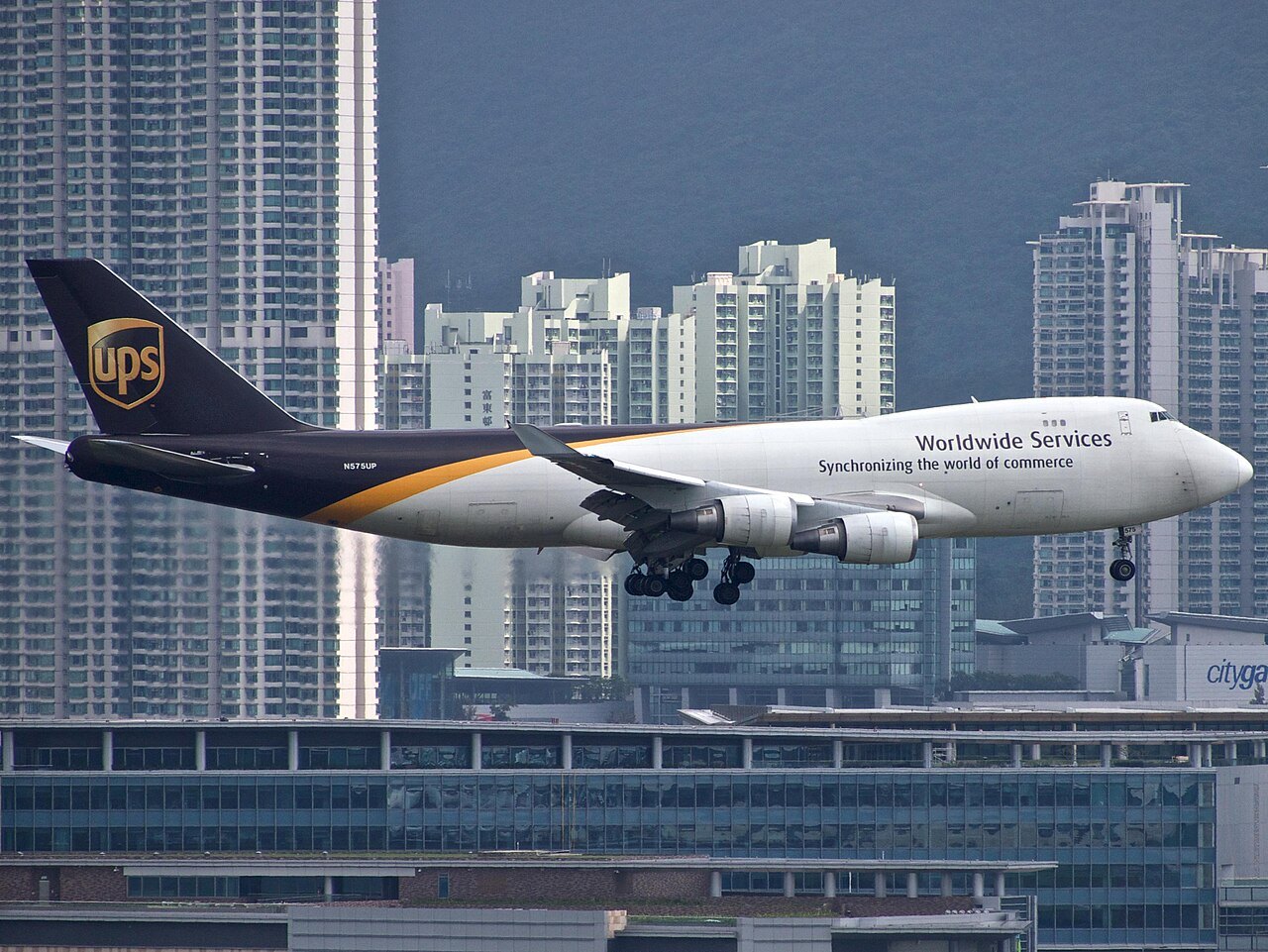
What Exactly Went Missing
The two components are not a jet's crown jewels, and nobody is pretending they are. The Pentagon calls them unserviceable, and they were on their way to the US for possible repair or disposal. Australia's defence minister was blunt about it when the story first broke in September.
The concern is what they are made of. Both parts carry radar-absorbing material, the coatings that help an F-35 stay hard to see on radar. Even a worn canopy and a used bay door give an engineer something real to study: material samples, edge treatments, how a moving panel is shaped to sit flush with the airframe. We looked at that question in detail in what China actually has when the diversion first came to light.
The Defense Department says it is working with US authorities and industry partners to get the parts back. So far, China has not returned them. Its foreign ministry said in September that it was not aware of the situation.
Washington Wants Answers
On 29 September, Pentagon officials gave staff from the House Foreign Affairs and Armed Services committees an hour-long closed-door briefing on the case. Erica Plath, the deputy assistant secretary of defense for logistics, told the briefing her team was working on safeguards to stop it happening again.
On Capitol Hill, the reaction has been sharp. Senator Mark Warner asked for the Pentagon briefing. Senator Tom Cotton called for a review of the supply chain. And Senator Kevin Cramer asked the question everyone has been thinking: whether China had planned to intercept the shipment all along.
There is no public evidence that it did. Everything reported so far points to a routing shortcut and a missed message, not espionage. But that is hardly reassuring. If one late box and one unread email can deliver stealth-coated hardware to Hong Kong, the weak point is not the jet. It is the paperwork around it.
Lockheed Martin, which manages much of the F-35's international spare-parts network, told Bloomberg it had nothing to add or correct to the account. The company has said before that its logistics decisions are not made on its own and that it chooses carriers with government requirements in mind.
Bloomberg Television's report on the missed email is below.
Sources: Bloomberg, Anadolu Agency, Seeking Alpha, The Star, Associated Press

0 Comments