
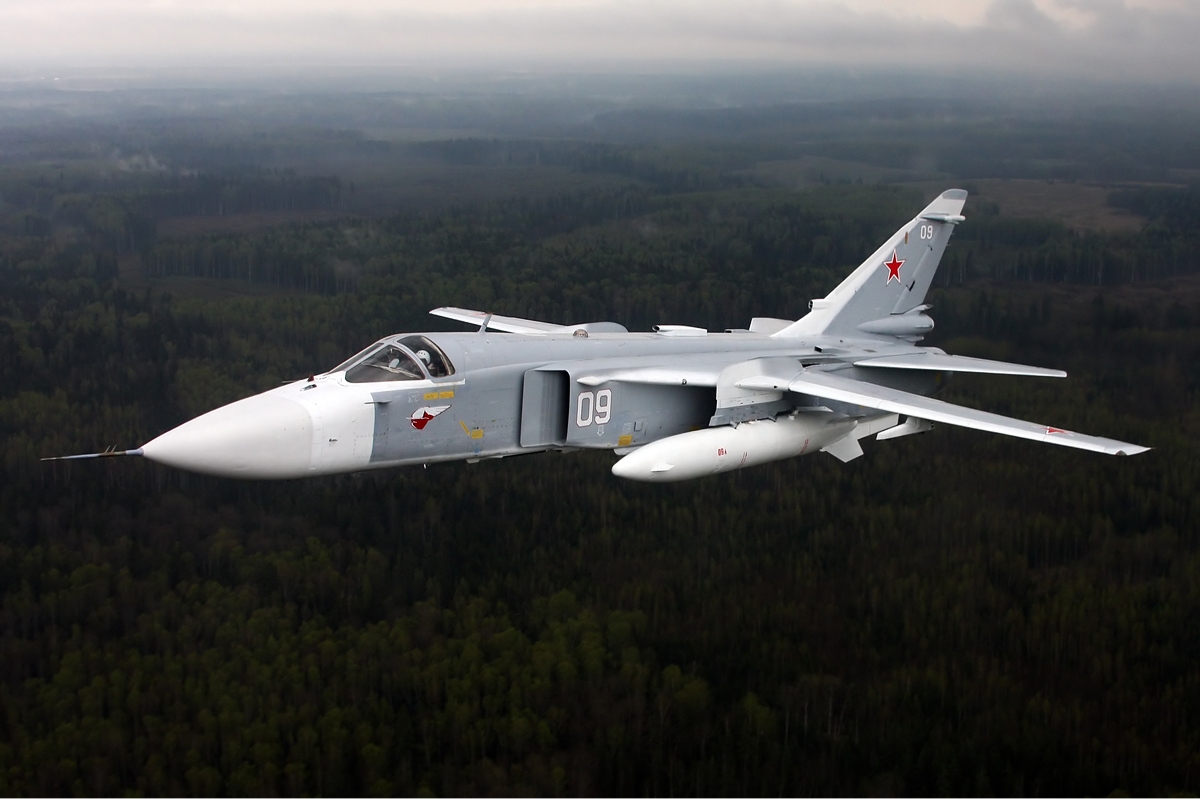
The video is short, silent and shot from the nose of the drone. A hardened airfield apron slides into frame. Then an aircraft, parked, wings swept forward, with a large white 49 on the intake. Then the picture ends.
Ukraine’s Defence Intelligence directorate, HUR, published the footage on Telegram on 7 September and said its Active Operations Department had struck a Russian aircraft in occupied Crimea overnight. The agency did not name the type. It did not have to.
“A gift for Ukraine’s Military Intelligence Day,” the department wrote. “Crimea has already appreciated it!”
Informations clés
| What was hit | A Russian Su-24M bomber, tail number 49, according to HUR footage |
| Où | Saky air base, occupied Crimea, per OSINT analysis |
| Quand | Overnight into 7 September 2026 |
| OMS | HUR Active Operations Department, using drones |
| Dommage | Still being assessed, per HUR |
| Type confirmation | HUR did not specify the aircraft type; Su-24M identification comes from the footage and media analysis |
| Also struck | Railway bridge over the North Crimean Canal near Vladyslavivka, 6–7 September |
| Occasion | Ukraine’s Military Intelligence Day, 7 September |
What is actually confirmed
Worth separating the layers here, because they are not equally solid.
HUR itself confirmed only that its operators struck a Russian aircraft in Crimea and that the damage is still being assessed. The Su-24M identification and the tail number 49 come from reading the footage HUR released. The location, Saky air base, was attributed by the open-source community Falcon Insight Map rather than announced by Kyiv. Russia has said nothing.
None of that makes the strike doubtful. It does mean the specifics are analytical rather than official, and should be read that way.
Why a 1975 bomber still matters
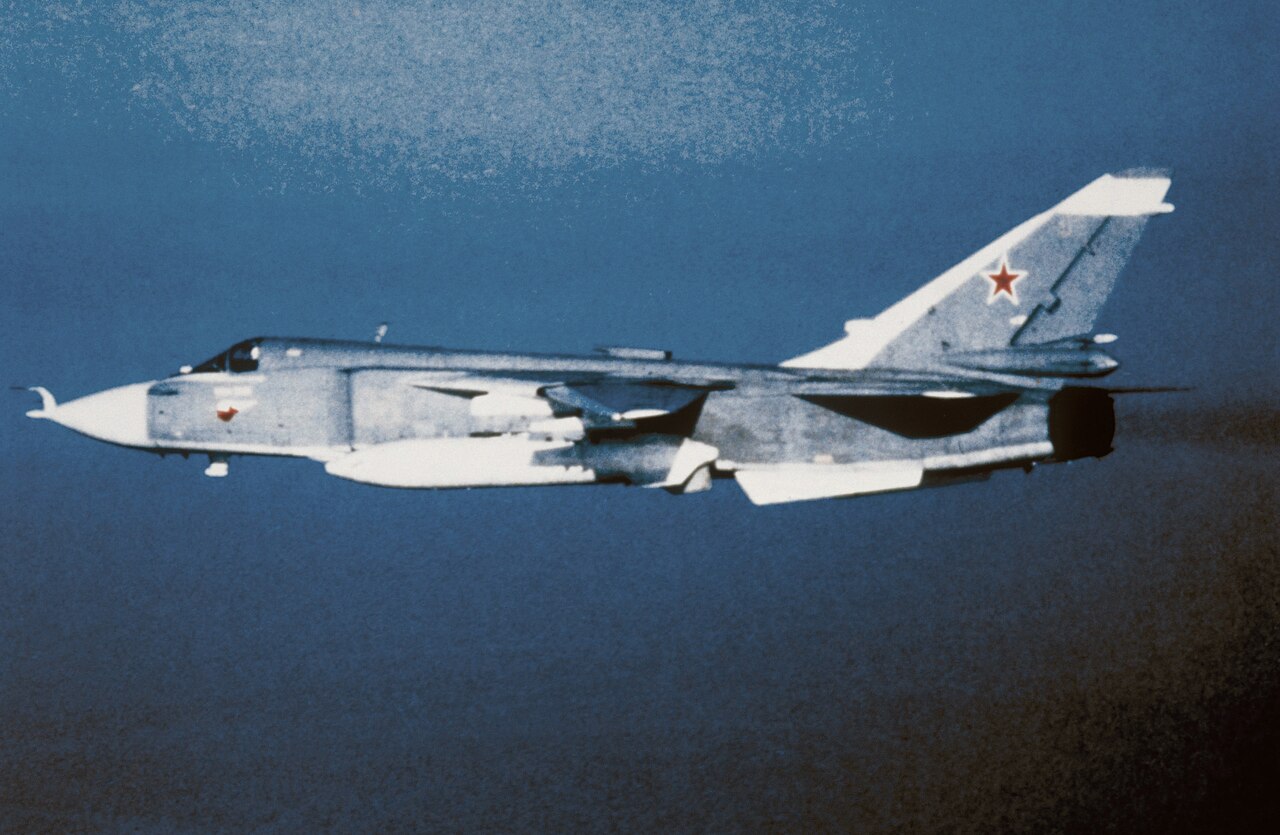
The Su-24 is a Soviet supersonic front-line bomber with variable-sweep wings that entered service in 1975. The Su-24M was the main production upgrade, and in one of the war’s stranger symmetries, both sides fly it: Ukraine uses its own Su-24Ms to launch Storm Shadow and SCALP cruise missiles.
For Russia, the type remains a workhorse for standoff strike. That is precisely why parked examples in Crimea are worth a drone. An aircraft destroyed on the ground costs the same as one shot down and is enormously cheaper to achieve.
Saky knows this better than most airfields. In July, the National Guard’s Omega Special Operations Centre hit a Su-24M there with a Hornet one-way attack drone launched from more than 185 kilometres away. The base was also the target of the large 2022 attack that first demonstrated Crimea was not a sanctuary.
The footage HUR released of the 7 September strike. The aircraft’s number is visible in the final frames.
A pattern, not an incident
The aircraft was not the only thing hit. On 6 September and overnight into the 7th, Ukrainian forces struck a railway bridge over the North Crimean Canal near Vladyslavivka, a junction the General Staff described as a key route for Russian military logistics. Days earlier HUR said its Group 13 unit had hit a Bastion coastal missile system on the peninsula during an operation in August.
Read together, those are not opportunistic strikes. They are an attempt to make Crimea expensive to operate from: aircraft, coastal missile batteries and the rail links that feed both.
The timing was the flourish. HUR marked its own professional holiday by putting a drone through a bomber and posting the video. Whether the Su-24 flies again will not be known for some time, and possibly never publicly.
Foire aux questions
What aircraft did Ukraine strike in Crimea on 7 September 2026?
Where in Crimea was the Su-24 hit?
Was the Russian Su-24 destroyed?
What is the Sukhoi Su-24?
Has Saky air base been attacked before?
Why did Ukraine carry out the strike on 7 September?
Sources: HUR Active Operations Department via Telegram; Militarnyi; UNITED24 Media; Ukrinform; Falcon Insight Map; Ukraine’s General Staff.

0 Comments