
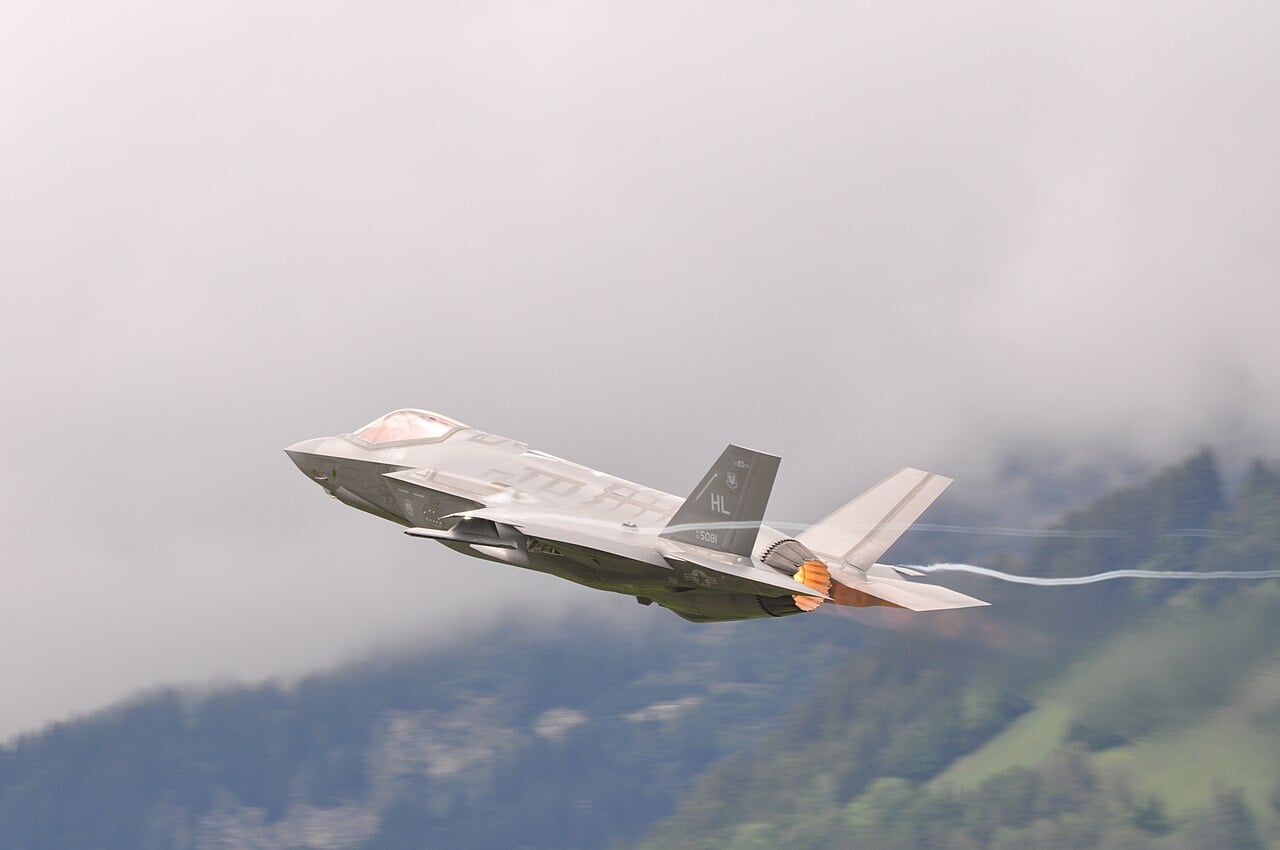
Shortly before Christmas 2024, a document arrived at the Swiss Federal Department of Defence (VBS) from Washington. It was a non-paper — the diplomatic instrument governments use to float a position without formally committing to it. Its message was simple: the F-35 deal could cost more than Switzerland had been told, and the United States government would be paying more too.
Two weeks later the Swiss defence establishment began to come apart. On 8 January 2025, Darko Savic — head of the Air 2030 programme at the federal armaments office armasuisse, which included the F-35 purchase — handed in his resignation. A week after that, Federal Councillor Viola Amherd announced she would step down at the end of March. Army chief Thomas Süssli and air force commander Peter Merz followed.
Until now, nobody outside the department knew the non-paper existed. As the Tages-Anzeiger first reported, the newly published report of the National Council’s oversight committee reveals not only that the document landed in Bern before those resignations, but something considerably more awkward: the Americans had already told Savic, in writing and in plain terms, that Switzerland was never going to get a guaranteed price.
Informations clés
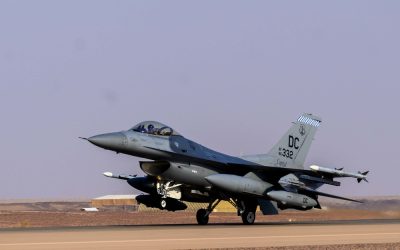
L'accord : 36 Lockheed Martin F-35A Lightning II, headline figure roughly CHF 6 billion
Décision: Federal Council selected the F-35A in June 2021; a 2020 referendum approved the wider fighter programme with 50.1% in favour
The clause: “Note 55”, a negotiated annex that the oversight committee says merely suggested a fixed price
L'avertissement : US non-paper received by the VBS shortly before Christmas 2024
The confirmation: US letter of 24 February 2025 describing the fixed price as a “misunderstanding”
The verdict: GPK-N calls Amherd’s stewardship of the six-billion-franc programme “inadequate”
A Clause Written to Win a Vote
The sequence matters. In June 2021 the Federal Council picked the F-35A. Swiss opponents had just launched a popular initiative to stop the purchase, and the government wanted extra reassurance on price to carry the political argument.
In October 2021, according to the committee, Savic exchanged emails and calls with the Americans and asked them for fixed-price wording. His stated reason was disarmingly candid: it would “significantly ease the political process in Switzerland”. He got a special annex — the now-notorious Note 55. Shortly afterwards he told a technical briefing for journalists that Switzerland was benefiting from a fixed price. He was the first official to say it in public, and the narrative spread upward through armasuisse, the armed forces, the air force, the general secretariat, and finally to the minister herself.
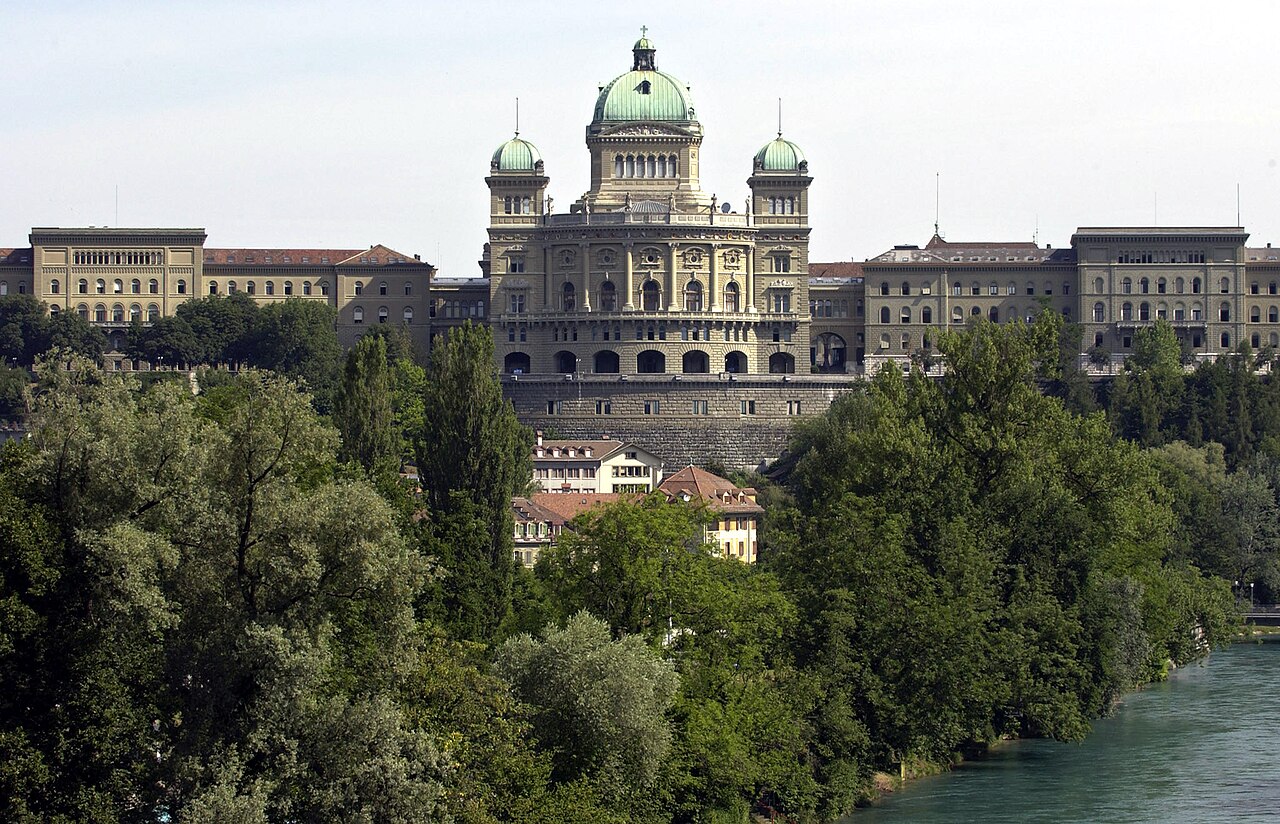
One Man, One Inbox, No Mandate
What the report adds is the part that had stayed hidden. During those same negotiations, the Americans stated — the committee’s word is “unmistakably” — that Switzerland would receive no guaranteed price, that such a promise would conflict with US law, and that it would be unfair to other partner nations.
Savic was the only person on the Swiss side who received those messages. The committee found no indication that he passed the central American statements on internally. He ran the negotiations largely alone, and he had never been given a mandate from above to conduct them. For a federal administration built on the four-eyes principle, the committee calls this “not comprehensible”, and says critical scrutiny of the negotiations was made “practically impossible” inside armasuisse.
He did not operate in a vacuum. Savic reported directly to the then head of armaments, Martin Sonderegger, although he was not formally subordinate to him. “The more closely individuals were involved,” the committee writes, “the more the question arises as to what extent the ambiguity was deliberately accepted.”
Fifteen Places Where It Said “Estimated”
The awkward truth is that the contract never hid what it was. In arms deals with the American state, the price is fixed only when the US government concludes its own contract with the manufacturer — not earlier, in the agreement with the buyer. Washington is legally bound to make neither profit nor loss on foreign military sales, so it passes on the price it negotiates per production lot. A blanket Swiss fixed price was never on offer.
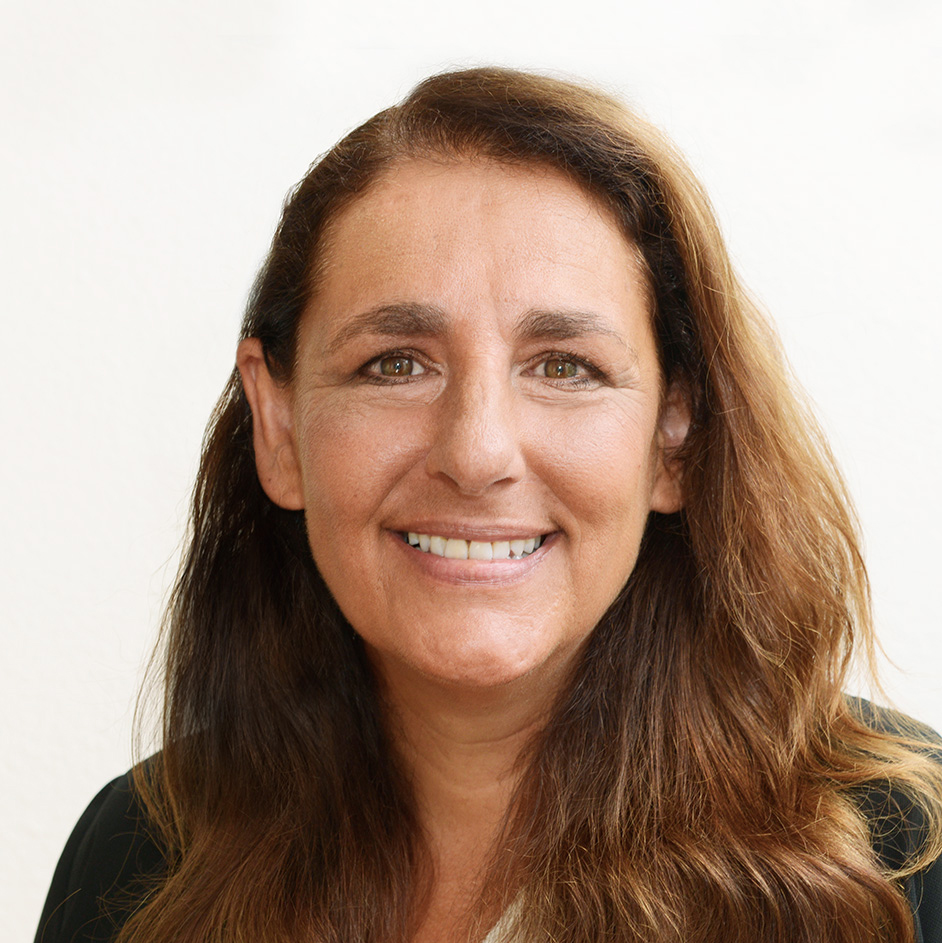
Despite the special clause, the Letter of Offer and Acceptance referred to “estimated costs” in at least fifteen places. Nobody outside armasuisse read the document all the way through. Neither did Amherd. In her column in the same paper, SP National Councillor Jacqueline Badran notes that the committee could identify at most two people who had read the contract in full, that some business-relevant discussions took place on Threema, and that documents were not filed and retained as the law requires.
Thomas Burgherr, an SVP National Councillor and committee member, put the commercial reality more bluntly. “Every master carpenter would have known better,” he said. “Nobody today offers a fixed price for a kitchen that will only be delivered in five years.”
Instead of using its own legal service, the department leaned on the Zurich commercial law firm Homburger, at rates of up to CHF 890 an hour. Homburger submitted around twenty deletion recommendations in early November 2021 to soften American risk clauses; according to the committee, none of them succeeded. armasuisse later commissioned Homburger to write an opinion on the very fixed price it had helped negotiate, which the committee considers “inexpedient” given the potential conflict of interest. A second opinion from the American firm Arnold & Porter was also arranged through Homburger.
The Warnings That Were Called Marxist
People had said so out loud. As early as 2022 the Swiss Federal Audit Office concluded there was no legal certainty of a fixed price in the sense of a lump sum. Badran writes that the audit office was dismissed as “Marxist” for its trouble, and that no country in the world had ever been granted such a price, because the United States would never shift the price risk onto its own taxpayers and is not permitted to.
At the closing meeting with the audit office, Savic, the VBS chief of staff, the programme director and air force commander Merz all lined up behind the fixed-price clause. One person told the committee under questioning that they had not believed in the fixed price but had defended it to parliament and the public anyway.
What Happens Now
The first verbal American hints of higher costs came in August 2024. The non-paper followed in December. The definitive confirmation arrived on 24 February 2025, in a letter in which the US government described the fixed price as a misunderstanding. Only after that did Amherd brief the full Federal Council — and by the time the public learned of the cost increase, it was summer.
The department has still not disowned the fixed-price story. It says only that it has “taken note” of the report. The Federal Council has until December to respond. Amherd declines to comment, pointing out that she gave evidence to the parliamentary bodies. Savic did not respond to the paper’s enquiry; like most of those involved, he no longer works in the federal administration.
That last detail is the one Burgherr keeps returning to. “In any company, a case like this would have consequences,” he said. “At the federal level, nobody is prepared to take responsibility.” Badran, for her part, argues an apology is owed — to the public as much as to the critics who were shouted down — and warns that the sequel is already written: a cost explosion in maintenance.
Swiss Radio and Television covered the committee’s central finding when the report landed:
Foire aux questions
What was the US non-paper that Switzerland received before Christmas 2024?
Was there ever a fixed price for the Swiss F-35 purchase?
Why can the United States not offer a fixed price for the F-35?
Who is Darko Savic and what role did he play in the F-35 affair?
Did Viola Amherd resign because of the F-35 cost increase?
What happens next in the Swiss F-35 fixed-price case?
Sources: Tages-Anzeiger (Adrian Schmid; and the column by Jacqueline Badran), report of the Geschäftsprüfungskommission of the Swiss National Council, Schweizer Radio und Fernsehen (SRF), Blick, 20 Minuten, Watson, Republik.
0 Comments