
In March 2026, Israel said it had destroyed Iran’s F-14 Tomcat fleet at Isfahan. Three months later Iranian state television showed a Tomcat coming home from a mission. Six months later, social media is still confidently announcing that the last Tomcats on earth are gone.
This is not unusual. It is close to the normal life cycle of a battle damage claim.
Counting what an air strike actually destroyed is one of the hardest problems in warfare, and it has been getting people wrong for eighty-five years. The pattern repeats with striking consistency: a confident number goes out within days, a careful number arrives months later, and the two are rarely close. Here is why.
Informations clés
| The problem | Battle damage assessment (BDA): working out what a strike actually destroyed, as opposed to what aircrews and sensors believed it destroyed |
| Butt Report, 1941 | Of RAF crews claiming to have attacked a target, only one in three got within five miles. Over the Ruhr, one in ten |
| Desert Storm, 1991 | Aircrews claimed around 80 mobile Scud launchers destroyed. The Gulf War Air Power Survey could confirm none |
| Kosovo, 1999 | Initial claim 120 tanks; revised official figure 93; a leaked internal assessment reported 14 |
| Isfahan, 2026 | Israel said the F-14 fleet was destroyed. Satellite imagery supported two, more likely three |
| Why it is hard | Decoys, dispersal, wrecks that look intact, intact aircraft that look like wrecks, and imagery taken days apart |
| The reliable rule | The first number is the least reliable one, and it is the one that travels |
1941: the report that proved the bombers were missing
The first serious reckoning came from a civil servant, not an airman. In August 1941 David Bensusan-Butt of the War Cabinet Secretariat examined 633 target photographs taken by RAF bombers and compared them with what the crews had claimed.
The findings, published on 18 August 1941, were brutal. Of the crews who reported attacking their target, only about one in three had got within five miles of it. Over French ports the figure was two in three. Over Germany as a whole, one in four. Over the Ruhr, where the industrial haze and the flak were thickest, one in ten. On a moonless night, one in fifteen.
The crucial point is that the crews were not lying. They had flown into darkness and flak, aimed at what they believed was the target, and come home convinced. The camera disagreed. Bomber Command’s leadership disputed the report; the eventual answer was better navigation aids and the Pathfinder Force, plus a shift in doctrine towards area bombing.
1991: the launchers that were never there
Fifty years on, with precision weapons and infrared sensors, the Great Scud Hunt produced the same result in a different form.
Iraq’s mobile Scud launchers were the political target of the war: every missile that reached Israel risked widening the conflict. The coalition planned roughly 4,750 anti-Scud sorties. Aircrews came home claiming around 80 mobile launchers destroyed, and special forces teams claimed another twenty or so.
The Gulf War Air Power Survey, commissioned by the Air Force in 1991 and published in 1993, went looking for the wreckage. It found no evidence that any mobile launcher had been destroyed. Most or all of the kills, it concluded, were high-fidelity decoys or vehicles with a similar signature, fuel tanker trucks prominent among them.
A pre-war trial had already hinted at the difficulty: given precise coordinates, aircraft acquired a launcher less than half the time. At night, from altitude, through a targeting pod, a tanker truck and a transporter-erector-launcher are the same shape and the same heat.
1999: 120 tanks, then 93, then 14
Kosovo produced the most public collision between an early number and a late one.
On 10 June 1999, Defense Secretary William Cohen and General Henry Shelton announced that NATO air power had destroyed 120 tanks and self-propelled guns, 220 armoured personnel carriers and 450 artillery pieces in Kosovo.
Then NATO sent people to look. The Munitions Effectiveness Assessment Team, about 200 personnel drawn from several nations and services, worked through some 2,000 mission reports generated by roughly 3,000 strike sorties. It required two independent sources before validating a kill: the aircrew report plus cockpit video, a forward air controller, imagery or other intelligence. Around half the reports failed that test. Of 1,102 validated strikes, 25 had hit decoys.
The revised official figures, issued that September, were 93 tanks and self-propelled guns, 153 APCs and 389 artillery pieces. In May 2000 Newsweek published a piece titled “The Kosovo Cover-Up” reporting an internal assessment of just 14 tanks, a figure that sat suspiciously close to what the Yugoslav army itself had claimed.
Which number is right is still argued about. That is the point. Three separate figures, all produced by serious people looking at the same war, spanning almost an order of magnitude.
What makes counting so hard
Strip away the eras and the same handful of problems recur.
Decoys work, and they are cheap. Iraq fielded high-fidelity Scud replicas. Serbia used inflatable tanks, heated stovepipes and burning tyres to generate convincing infrared signatures. A decoy does not have to fool an analyst studying an image for an hour; it has to fool a pilot at 15,000 feet with eleven seconds to decide.
Things move. This is the trap at Isfahan. Commercial imagery showed five F-14s on the base on 22 February. After the 7 March strike, two or three were destroyed, and two more were simply no longer there. Absent from a photograph is not the same as destroyed, but it looks identical in a headline.
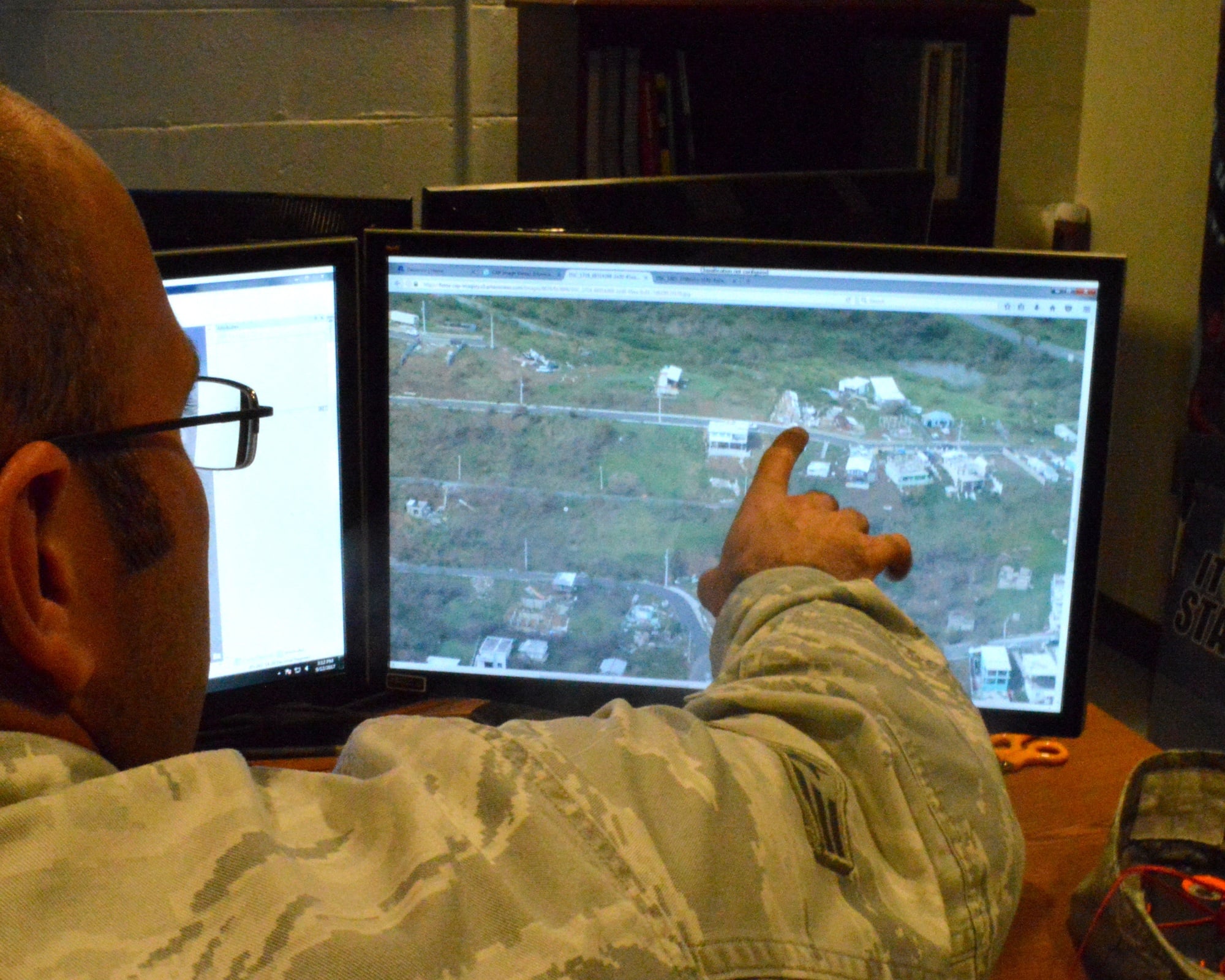
Wrecked and intact look alike from above. An airframe gutted by fire can retain its planform. A scorch mark can mean a destroyed aircraft, a destroyed fuel bowser or a burnt patch of dispersal. The War Zone’s read of the Isfahan imagery hedged exactly here: two Tomcats confirmed, a third indicated by a large scorch mark whose wreckage could not be assessed with confidence.
Damaged is not destroyed, and repairable is not written off. Iran has kept Tomcats flying for forty-seven years without a spare-parts pipeline. A fleet that survives sanctions on cannibalisation and improvisation is precisely the fleet most likely to put a damaged aircraft back in the air.
Everyone in the chain has an incentive. Not to lie, usually, but to lean. Aircrew want the mission to have worked. Commanders want the campaign to be working. Governments want a result. The defender has the mirror incentive to hide damage. The careful count arrives months later, from people with no stake in the answer, and by then nobody is reading.
Reading the next claim
None of this means claims are worthless. NATO really did destroy a great deal of Serbian equipment. Israel really did destroy Tomcats at Isfahan. The problem is precision, not direction.
Three questions separate a solid claim from a soft one. Who counted, and did they have to show two independent sources? The MEAT standard is the gold standard precisely because it threw out half the reports. What is the imagery baseline? A single post-strike photograph tells you what is there now, not what was there before. Does the claim distinguish destroyed from damaged from missing? If it does not, it is a headline rather than an assessment.
Clark had a point, even if he also wanted the numbers. The strategic effect of an air campaign is rarely captured by a tally of burned vehicles. But the tally is what gets published, shared and remembered, which is why it is worth knowing how it is made.
When the next post announces that the last of something has been wiped out, the useful reflex is not disbelief. It is to note the date, and wait for the second number.
Foire aux questions
What is battle damage assessment?
Why are initial battle damage claims usually too high?
What did the Butt Report find in 1941?
How many Scud launchers did the coalition destroy in the 1991 Gulf War?
How many Serbian tanks did NATO destroy in Kosovo in 1999?
How many Iranian F-14 Tomcats were actually destroyed at Isfahan?
Do military decoys really work against modern sensors?
Sources: Gulf War Air Power Survey; US Air Force Crossbow counter-Scud study; Air & Space Forces Magazine; Newsweek; The War Zone; The Aviationist; 19FortyFive; Butt Report (18 August 1941); Afterburner reporting

0 Comments