
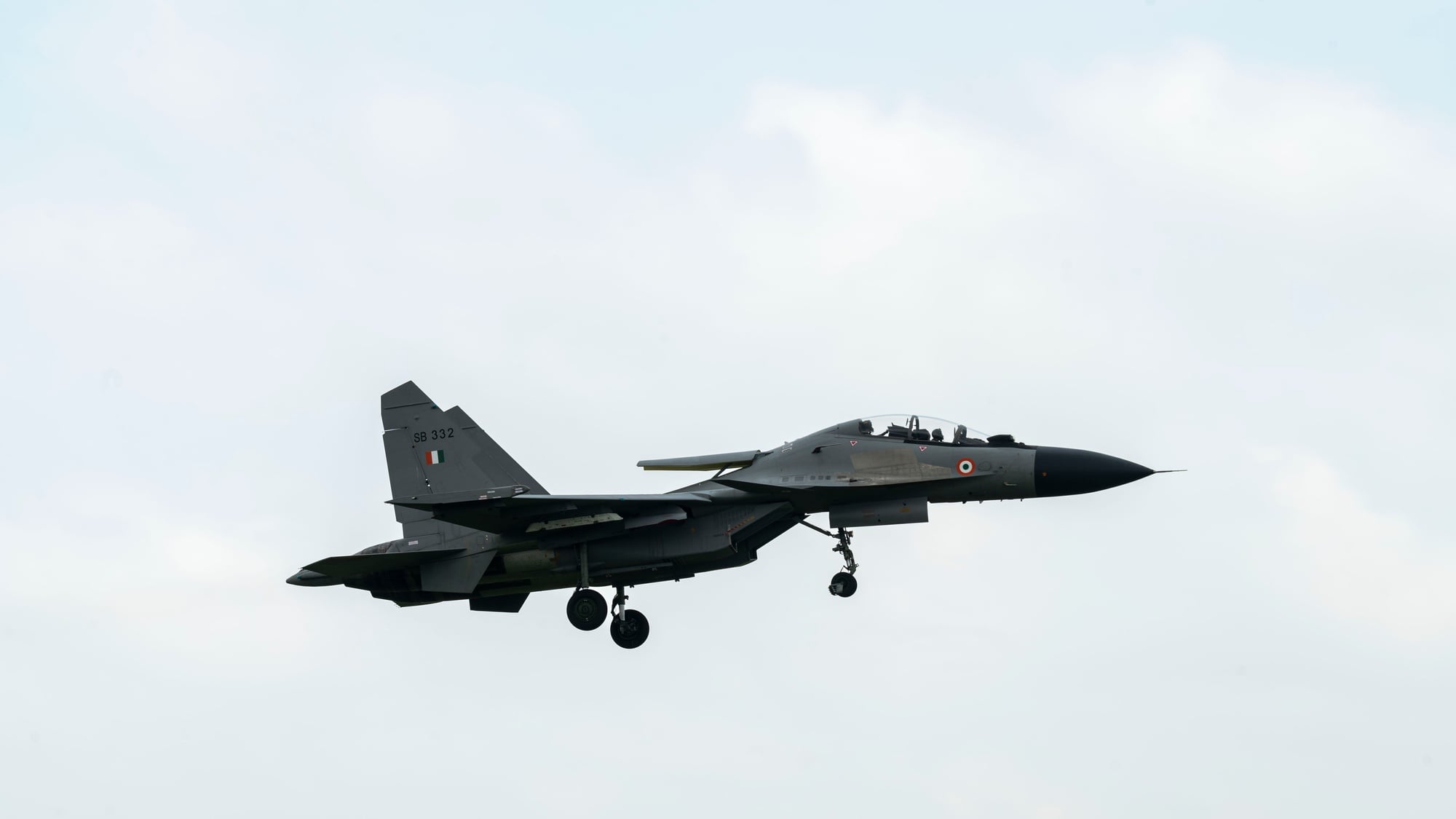
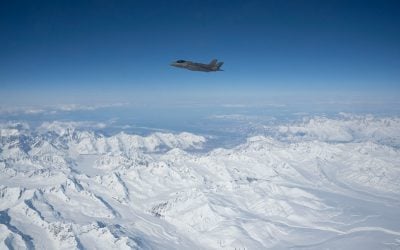
Line up the world’s major air forces and count the seats. The United States Air Force flies the F-22, the F-16 and the F-35 with one pilot. The F-35 has no two-seat variant in any version, for any customer. France flies mostly single-seat Rafales. China’s J-20 is single-seat. The direction of travel for fifty years has been to put one person in the aeroplane and let the computers absorb the difference.
The Indian Air Force went the other way. Slightly more than half of its combat aircraft carry two crew.
The reason turns out to be one aircraft, and the explanation people usually give for it is wrong.
Informations clés
The type: Sukhoi Su-30MKI, roughly 260 in service across 13 squadrons, sanctioned strength 272
Seats: Every single one is a two-seater. No single-seat MKI was ever built or ordered
Share of the combat fleet: Around 46 per cent
Share of all twin-seat IAF combat aircraft: About 83 per cent
Twin-seat share of the whole combat fleet: Roughly 55 per cent
Twin-seat share if you remove the Su-30MKI: About 18 per cent, which is entirely ordinary
The back-seater: A Weapon Systems Officer. Since 2002 the role has been filled by navigators trained for WSO duties
Formalised: October 2022, when the IAF created its Weapon Systems Branch, its first new operational branch since Independence
The statistic that explains itself away
Start with the arithmetic, because it does most of the work. Counting combat aircraft and leaving out the Hawk advanced jet trainers, something like 55 per cent of the IAF’s front-line fleet has two seats. That is a genuinely unusual number.
But the Su-30MKI alone accounts for roughly 83 per cent of those twin-seat airframes. Take it out of the calculation and the remainder, the Jaguars, the MiG-29s, the Mirage 2000s, the Rafales and the Tejas, is about 18 per cent twin-seat, which is what you would expect from any air force that keeps a sensible number of conversion trainers.
India does not have a twin-seat doctrine. India has a very large fleet of one particular twin-seat aeroplane.
Where the second seat came from
Here is the part that gets told wrong. The usual version is that India studied the problem, decided two crew were better, and specified an all-twin-seat fleet. There is no evidence for that. No statement from Sukhoi, Irkut, UAC, Rosoboronexport, HAL, the IAF or the Ministry of Defence explains any such decision.
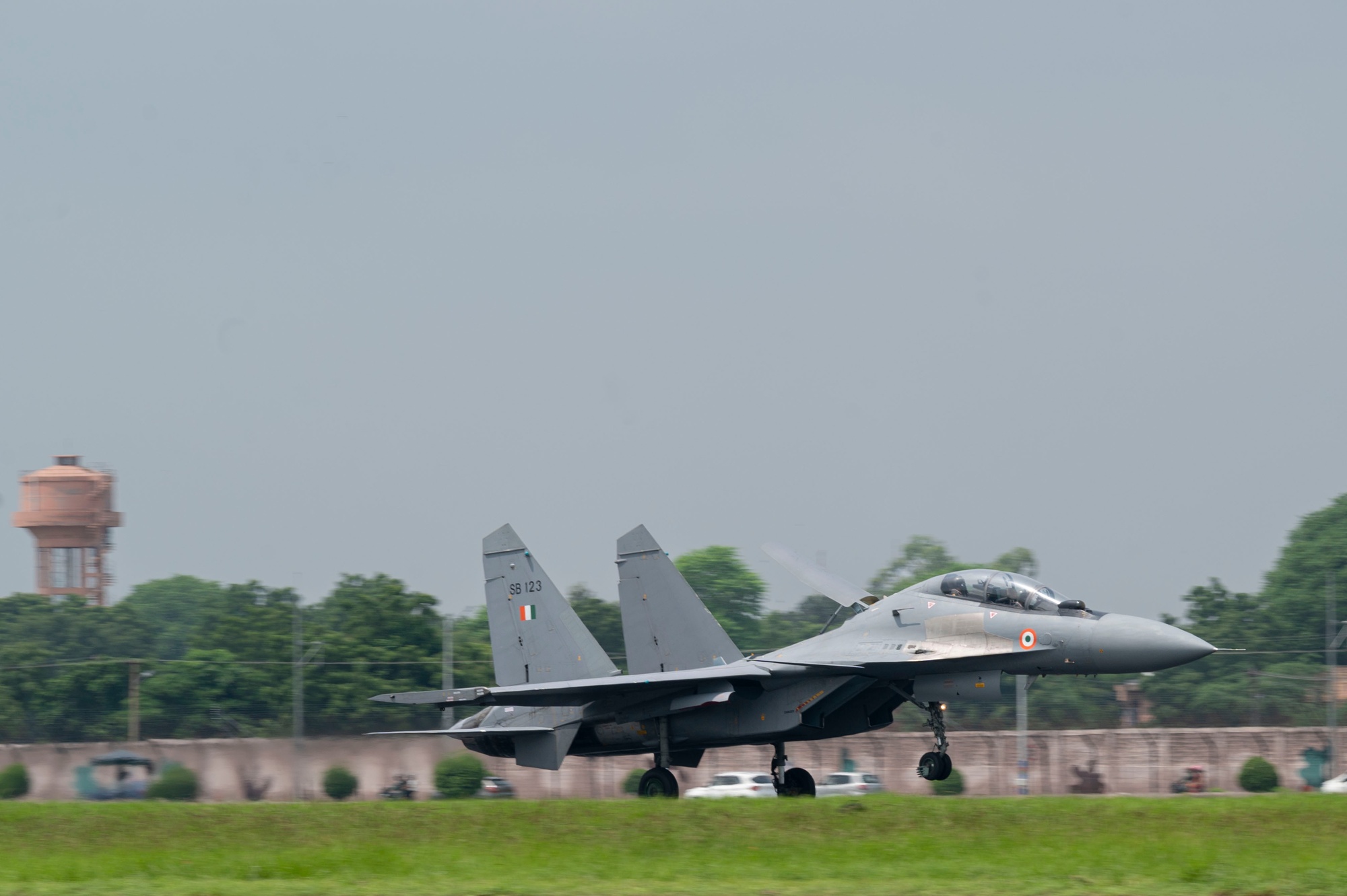
What actually happened is that the aircraft India bought in November 1996 was a development of the Su-27UB, which was already a two-seater. The Su-30 lineage began in 1986 with prototypes converted from Su-27UB airframes, built for a Soviet requirement to intercept bombers and cruise missiles at great distances from base. In group missions with four Su-27s, only the Su-30 would run its radar, assigning targets to the others by datalink. It was conceived as a two-man mini-AWACS, because the Soviet Union was enormous and its radar coverage was thin.
India inherited that layout rather than choosing it. And the point sharpens when you note that a single-seat Su-30 did exist: the Su-30KI, developed in single-seat configuration for Indonesia and subsequently offered more widely. India did not take it. Why, publicly, nobody has ever explained.
Background on how the MKI came to be the aircraft it is, including the Indian-specified avionics that made it distinct from anything Russia flew itself.
What the back-seater actually does
This is where honesty is required. Every detailed description online of the Su-30MKI crew division, the one that says the WSO handles radar management, beyond-visual-range engagement, electronic warfare and sensor fusion while the pilot flies, traces back to enthusiast sites and forum posts. No IAF or Ministry of Defence document describes the rear-seat task split. It is almost certainly broadly correct. It is not sourced.
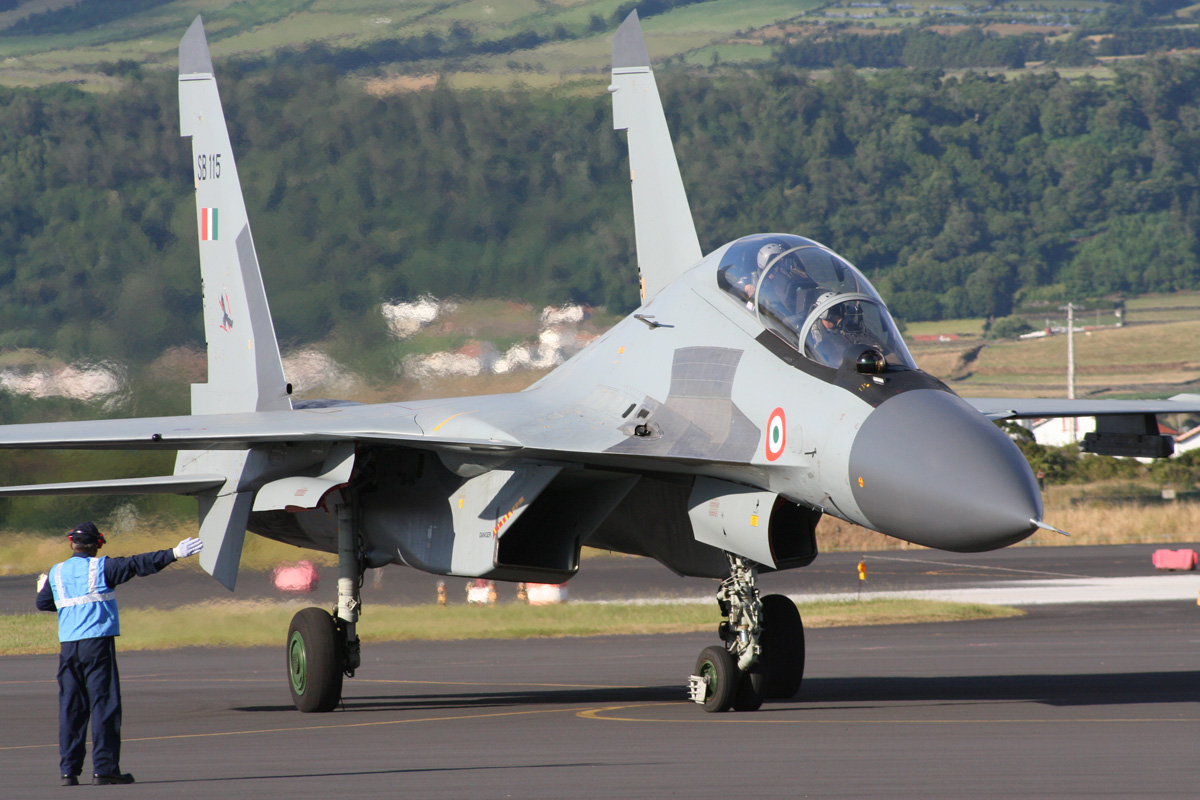
What is documented is the hardware and the institution. The two cockpits are identical, on K-36DM zero-zero seats with the rear seat raised, and Indian aircraft carry a Sextant package of six 127mm displays plus one larger 152mm screen. The systems that crew manages are real and Indian: the Astra beyond-visual-range missile, integrated and fired from the MKI; the DRDO Tarang radar warning receiver; a dual-colour infrared missile approach warning system developed with Israel’s Elisra under a project whose cost the Comptroller and Auditor General recorded rising from 193 to 273.8 crore rupees. The N011M Bars radar is now being replaced under the Super Sukhoi programme by the indigenous gallium nitride Virupaksha AESA, first powered on in February 2026.
The clearest documented statement of the workload argument comes from a retired officer writing in a defence journal rather than from doctrine, which is worth saying plainly.
The economics, which the IAF has stated out loud
In October 2022 the IAF created the Weapon Systems Branch, the first new operational branch since Independence, covering surface-to-surface missiles, surface-to-air missiles, remotely piloted aircraft and weapon system operators in twin and multi-crew aircraft. The Ministry of Defence named the Su-30MKI explicitly as the platform the flying stream would operate. The first cohort commissioned at the Air Force Academy at Dundigal in December 2024.
The rationale the then Chief of the Air Staff gave was not about tactics. It was about money and manpower, against a documented shortfall of nearly 600 officers, more than 400 of them pilots.
Read that carefully, because it inverts the usual assumption. The IAF is not saying two crew make a better fighter. It is saying that if you are going to put two people in the aeroplane, it is considerably cheaper for the second one to be a weapon systems officer than a second fully qualified pilot. The second seat was a given. The branch is what India built to fill it affordably.
What two crew bought: the BrahMos story
The best argument for the configuration is a weapon. BrahMos-A is an air-launched supersonic cruise missile weighing two and a half tonnes, the heaviest store an Indian Su-30 has ever carried. It is gravity-dropped from the fuselage before its two-stage engine lights.
Getting it onto the aircraft is a genuinely good story. Russia quoted around 200 million dollars, roughly 1,300 crore rupees, to do the integration. BrahMos chief A. S. Pillai told HAL his budget was 80 crore. The HAL board voted to absorb the design and development costs, waive profit and contingency, and do it anyway. Designers at Nashik had to build a watertight numerical master geometry of the aircraft from two-dimensional drawings, then solve safe separation with wind tunnel work and computational fluid dynamics, keeping the structural changes inside the centre-of-gravity envelope without altering the airframe’s vibration characteristics.
It worked. On 22 November 2017 a Su-30MKI launched a BrahMos-A against a sea target in the Bay of Bengal, 260 km away. The Ministry of Defence release named the crew: two officers, Wing Commander Prashant Nair and Wing Commander K. P. Kiran Kumar.
Maritime strike is the mission that most obviously rewards a second crew member: very long transits over water, an extended-range weapon, a target picture that changes while you are still hours from it. No. 222 Squadron, the Tigersharks, was re-raised at Thanjavur in January 2020 for exactly this. Two Su-30MKIs flew an eight-hour sortie over the Arabian Sea in June 2023, refuelled by Il-78 tankers.
The Su-30MKI display at Aero India 2023, filmed by India’s national broadcaster. The thrust-vectoring manoeuvres are flown from the front seat; almost everything that makes the aircraft dangerous is managed from the back.
Two myths worth killing
The Su-30MKI did not beat F-15s at Cope India in 2004. It was not there. The US Air Force’s own account of the exercise lists the Indian line-up as Su-30K, Mirage 2000, MiG-29, MiG-27 and MiG-21 Bison. The MKIs stayed home because their Bars radar frequencies were classified. The exercise genuinely did go badly for the six deployed F-15Cs, who were outnumbered, operating in what the Americans called the enemy’s own backyard, and constrained by Indian rules of engagement. It fed directly into a shake-up of USAF red-air training. But the aircraft that did it was the Su-30K, not the MKI.
The Su-30MKI is not India’s nuclear delivery aircraft. The 2026 edition of the Nuclear Notebook in the Bulletin of the Atomic Scientists assesses India’s airborne nuclear leg as three or four squadrons of Mirage 2000H and Jaguar IS, and does not mention the Su-30MKI at all. It also states that despite rumours to the contrary, none of India’s cruise missiles have been confirmed to have nuclear missions.
The cost of the second seat
It has not been free. The Comptroller and Auditor General found licence-production costs rising from 22,122 crore rupees to 39,606 crore, an increase of 79 per cent. A separate CAG report recorded fleet serviceability between 55.5 and 59.7 per cent against a prescribed norm of 75, with aircraft-on-ground running between 10.9 and 15.3 per cent. That figure gets quoted constantly, usually without the caveat that the underlying data covers 2006 to 2010, not the year the report was tabled.
And two crew means two lives in every airframe. Thirteen Su-30MKIs and five aircrew have been lost since induction in 2002. The most recent, at Karbi Anglong in Assam in March 2026, killed both men aboard.
Which way India is actually going
Here is the detail that settles the argument. India’s next-generation fighter, the Advanced Medium Combat Aircraft being developed by ADA and DRDO, is specified single-seat. The Tejas Mk1A and Mk2 are single-seat. The Rafale fleet is 28 single-seaters to eight twins.
So the Weapon Systems Branch, founded in 2022 and celebrated as the first new IAF branch in seventy-five years, may turn out to be an institution built around one generation of one aeroplane. When the Su-30MKI eventually goes, India’s twin-seat majority goes with it, and the IAF will look much like everybody else.
Which is the honest answer to the question. India did not decide that two heads are better than one. India bought a very good two-seat aeroplane in very large numbers, discovered that the second seat was genuinely useful for maritime strike and long-range work, and then built a career path to fill it economically. Everything else is reverse-engineered explanation.
Sources: Press Information Bureau and Ministry of Defence, Government of India; Indian Air Force; Comptroller and Auditor General of India reports 35 of 2014, 38 of 2015 and 3 of 2019; The Tribune; ThePrint; Indian Defence Review; Bulletin of the Atomic Scientists Nuclear Notebook 2026; US Air Force; Air Force Magazine.
0 Comments