
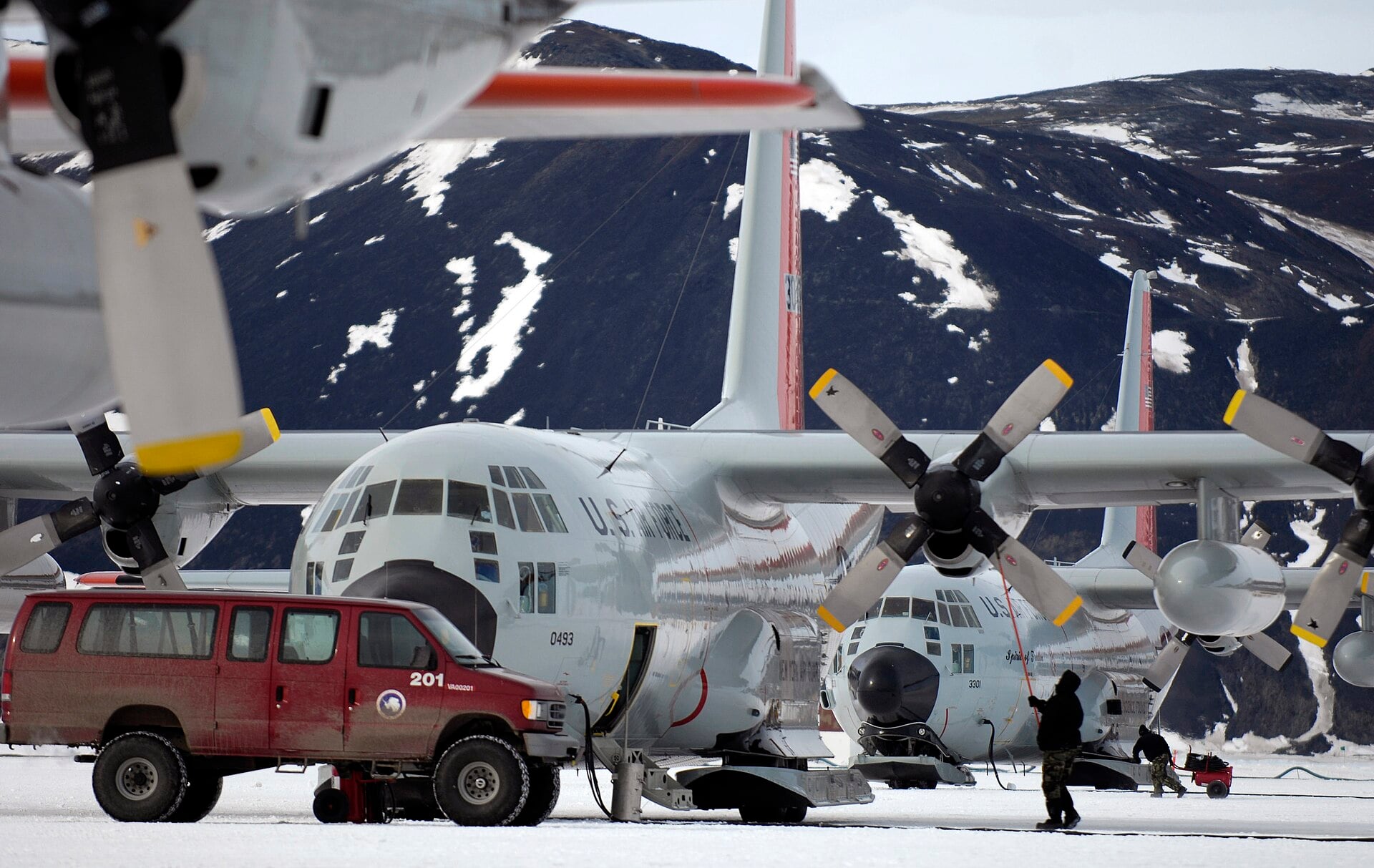
About six kilometres from McMurdo Station, under a shifting crust of snow on the Ross Ice Shelf, there is a Lockheed Super Constellation. It has been there since 8 October 1970. Nobody died in the accident that put it there, nobody ever came to take it away, and the airfield that grew up beside it was named after the aeroplane. Its name was Pegasus.
That is the shape of American aviation in Antarctica in one image: improbable machines, extreme distances, and a habit of leaving things exactly where they stopped because hauling them out costs more than building new. The umbrella name for the whole seventy-year effort is Operation Deep Freeze, and it is still running today.
Informations clés
| Opération | Deep Freeze, US military support to the United States Antarctic Program |
| Began | Operation Deep Freeze I, November 1955 to April 1956, under Rear Admiral George J. Dufek |
| First Pole landing | 31 October 1956, 8:34 p.m. local, Douglas R4D Que Sera Sera, LCDR Conrad “Gus” Shinn |
| Temperature that day | Minus 58 degrees Fahrenheit on the surface, roughly minus 50 Celsius |
| Current workhorse | Ski-equipped Lockheed LC-130H Hercules of the New York Air National Guard’s 109th Airlift Wing |
| Heavy lift | Boeing C-17 Globemaster III, staging from Christchurch, New Zealand |
| Pegasus | Lockheed C-121J Super Constellation, BuNo 131644, crash-landed 8 October 1970; 80 aboard, none seriously hurt |
| Pegasus Field | Closed 8 December 2016, replaced by Phoenix Airfield (NZFX) from February 2017 |
Que Sera Sera, and the First Landing at the Pole
Operation Deep Freeze I ran from November 1955 to April 1956, built to prepare American bases for the International Geophysical Year. Rear Admiral Richard E. Byrd, a veteran of four previous Antarctic expeditions, was officer in charge. Task Force 43, under Rear Admiral George J. Dufek, did the logistics. Walt Disney designed the task force emblem and was made an honorary member of the expedition for it.
The landmark flight came the following season. On 31 October 1956 a Douglas R4D, the Navy designation for the DC-3, flew 800 miles from McMurdo Sound to the geographic South Pole with seven men aboard. Lieutenant Commander Conrad “Gus” Shinn was at the controls, Dufek and Captain Douglas Cordiner were along to see the conditions for themselves, and the aircraft carried fifteen JATO bottles bolted to its belly for the takeoff nobody was sure it could manage.
Shinn was not sentimental about the aeroplane. In his own official report on Deep Freeze I he had written of R4D Bureau Number 12418 that it flew in a perpetual skid and needed six to eight degrees of aileron tab correction in level flight, before concluding:
Somewhere along the line a painter had lettered a name on her nose: Que Sera Sera. Whatever will be, will be. She touched down at the Pole at 8:34 p.m. local time, the first aircraft ever to land there and the first time any American had stood on the spot. No one had been there at all since Robert Falcon Scott, forty-four years earlier.
The surface temperature was minus 58 degrees Fahrenheit. Dufek was first out of the door.
Within three minutes Cordiner’s nose and cheeks were going white with frostbite. Radioman William Cumbie’s hands froze to a shovel handle and he had to kick it loose. The snow was so hard they needed an alpine axe to plant the flag. Getting airborne again took all fifteen JATO bottles fired in four banks; the aircraft would not move at all on engine power alone, and lifted off at sixty knots with every warning light on the panel illuminated.
Why Antarctic Flying Breaks Aeroplanes
The difficulty is not the cold on its own. It is the combination. There is almost no infrastructure, so every litre of fuel at an inland site arrived by air. There are almost no visual references, so a whiteout removes the horizon, the surface and any sense of height in one go. The polar plateau sits around 9,200 feet, which thins the air just when an overloaded aircraft needs it most. And the runway is frozen water, which behaves differently every week of the season.
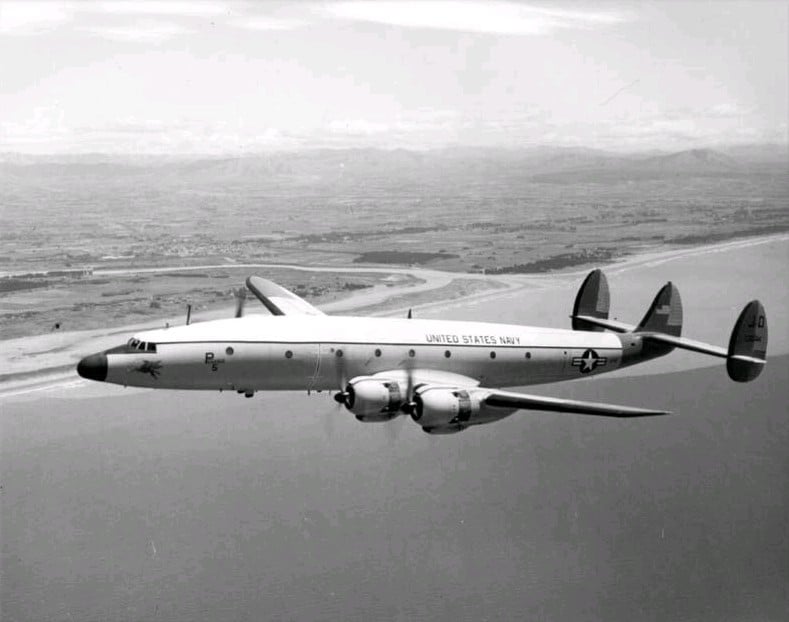
The answer the Americans settled on was skis. The Lockheed C-130 Hercules in its LC-130 form carries retractable skis wrapped around the main and nose wheels, so it can land on a prepared snow skiway and then be dragged into the air again with JATO if the snow is sticky. It is not elegant. It works, and it has worked for more than sixty years.
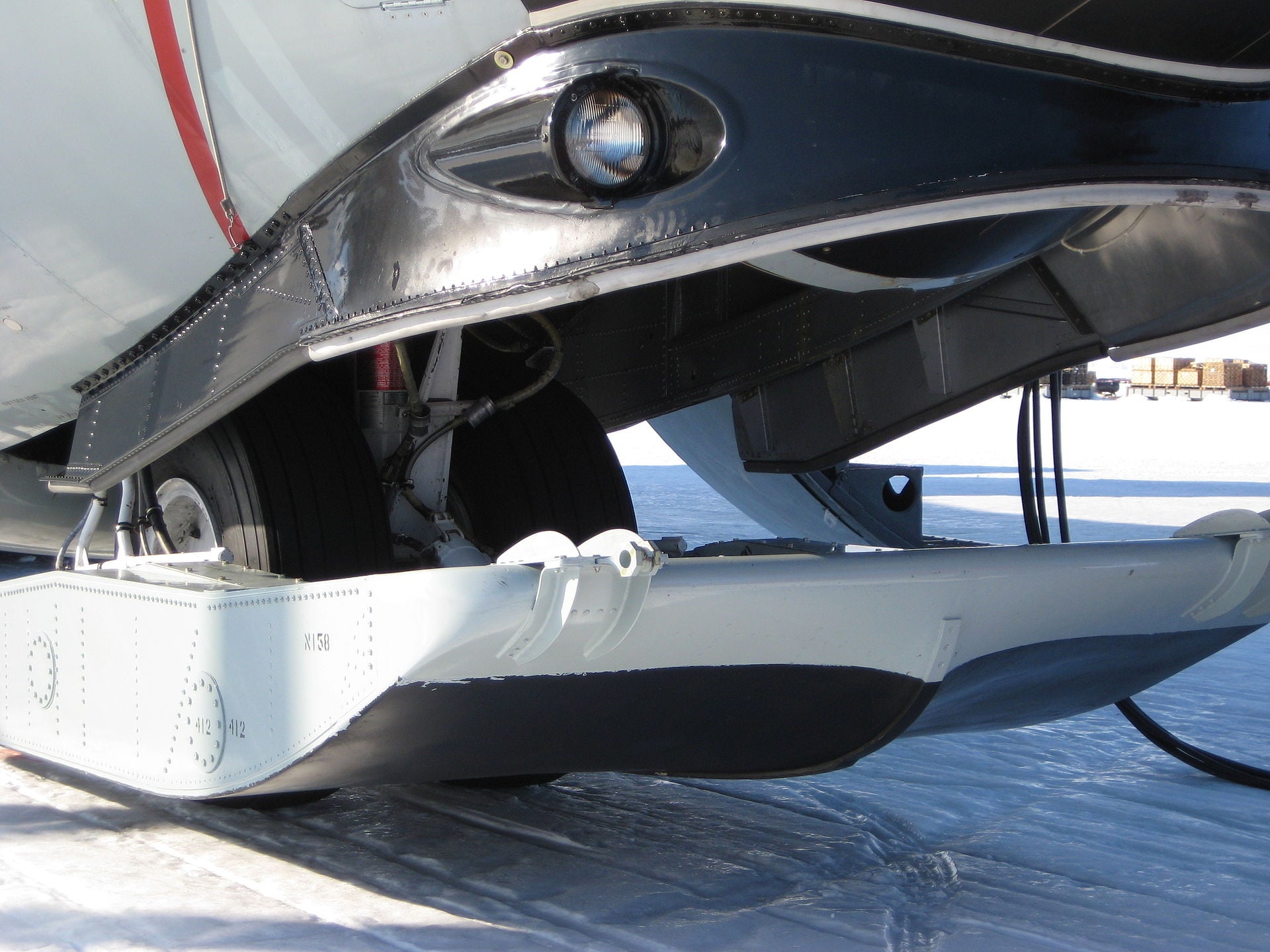
Ski operations are unforgiving of complacency. The casualty list for American Antarctic aviation is short by the standards of military flying but long by the standards of a science programme: a PBM Mariner lost with three crew during Operation Highjump in December 1946, a P2V Neptune destroyed in a storm at McMurdo in October 1956 with three killed, another Neptune lost on takeoff from Wilkes Station in November 1961 with five dead, a DC-3 that killed six on landing in February 1966, and an LC-130 that crashed 860 miles from McMurdo in December 1987, killing two and injuring nine.
Pegasus: The Constellation That Named an Airfield
Which brings us back to the Super Constellation in the snow. Pegasus was a Lockheed C-121J, Bureau Number 131644, flown by the Navy’s Antarctic Development Squadron Six. On 8 October 1970 she came in to McMurdo in deteriorating weather and made a forced landing on unprepared terrain. Eighty people were on board. None of them was seriously injured.
The aircraft was written off where it lay and never recovered. It is still there, usually buried, occasionally dug out by visitors who want a photograph of a 1950s airliner sitting on the Ross Ice Shelf. When a blue-ice runway was developed nearby for wheeled aircraft, it took the wreck’s name: Pegasus Field, ICAO code NZPG, two 10,000-foot ice runways.
Pegasus Field outlived the aircraft by forty-six years and then lost its own fight with the ice. Warmer summers, combined with dark dust blowing in from nearby Black Island and soaking up sunlight, melted the surface faster than it could be maintained. The last flight left on 8 December 2016. Phoenix Airfield, NZFX, took over from February 2017.
From Navy Blue to Air National Guard Grey
For four decades Deep Freeze was a US Navy operation. The end came from an unlikely direction. The 109th Airlift Wing of the New York Air National Guard, based at Schenectady, had spent years flying ski-equipped C-130s to Distant Early Warning radar sites in Greenland. In 1988 the wing was told those sites were closing, which left it with a specialist capability and no mission.
At the same time the Navy, with an ageing LC-130 fleet and long depot maintenance periods, needed emergency search and rescue cover in Antarctica. The Guard said yes, then pointed out that sitting on alert doing nothing was a waste and asked whether it could carry cargo to the Pole as well. The Navy resisted, then agreed. That small opening became a full handover: the decision was made in February 1996, the transition ran through the late 1990s, and by 1999 the Navy was out. Estimated saving, between five and fifteen million dollars a year.
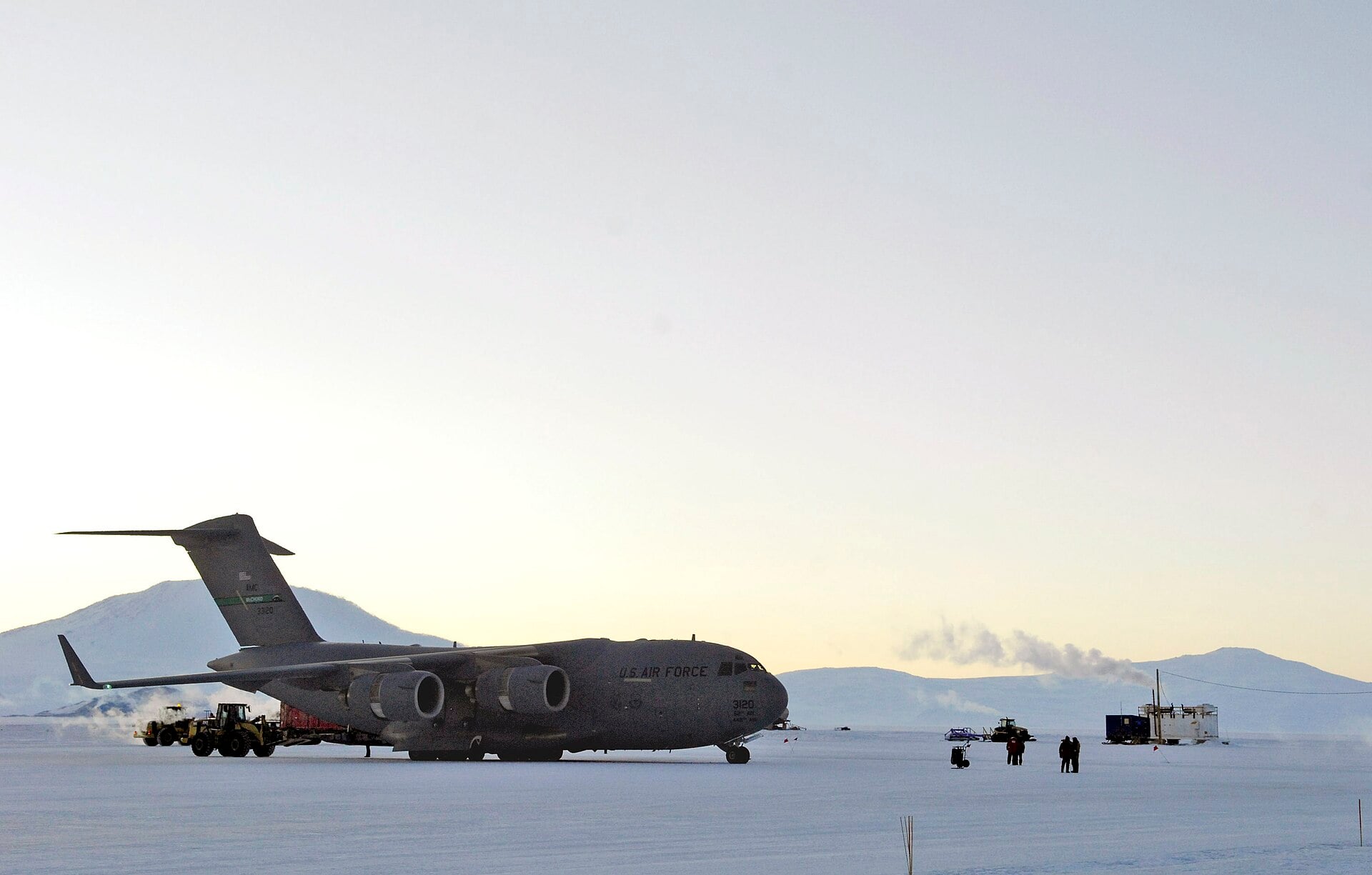
The modern shape of the operation is a division of labour. C-17 Globemaster IIIs fly the long leg from Christchurch to McMurdo, moving people and heavy freight onto a prepared ice runway. The 109th’s LC-130s then take over for everything inland, landing on snow at the South Pole and at remote field camps that no wheeled aircraft can reach. Command sits with a joint task force under Pacific Air Forces, and the whole thing is paid for by the National Science Foundation.
Seventy Years, Still Running
Operation Deep Freeze is now the longest-running sustained military airlift commitment the United States has anywhere, and it has never fired a shot. Its purpose is entirely scientific and its constraints are entirely physical. The 2021-22 season delivered a hundred people and nearly fifty thousand pounds of food to McMurdo by air, which sounds modest until you remember every pound of it crossed 2,400 miles of Southern Ocean first.
Gus Shinn, the man who put Que Sera Sera on the Pole, died on 15 May 2025 at the age of 102. The R4D he complained about so bitterly is preserved at the National Naval Aviation Museum in Pensacola. Pegasus is still on the ice shelf, and will be for a very long time.
Foire aux questions
What is Operation Deep Freeze?
Which aircraft first landed at the South Pole?
What is the Pegasus wreck in Antarctica?
Why did Pegasus Field close?
What aircraft fly Operation Deep Freeze today?
Why did the US Navy hand Deep Freeze to the Air National Guard?
Has anyone been killed flying in Antarctica for the US programme?
Why do Antarctic aircraft use JATO bottles?
Sources: Joseph E. Oglesby, “First Landing At The Pole”, U.S. Naval Institute Proceedings, November 1957; Wikipedia (Operation Deep Freeze, Pegasus Field, Conrad Shinn); Ellery D. Wallwork and Kathryn A. Wilcoxson, Operation Deep Freeze: 50 Years of US Air Force Airlift in Antarctica, Air Mobility Command Office of History; Naval History and Heritage Command; Pacific Air Forces.
0 Comments