
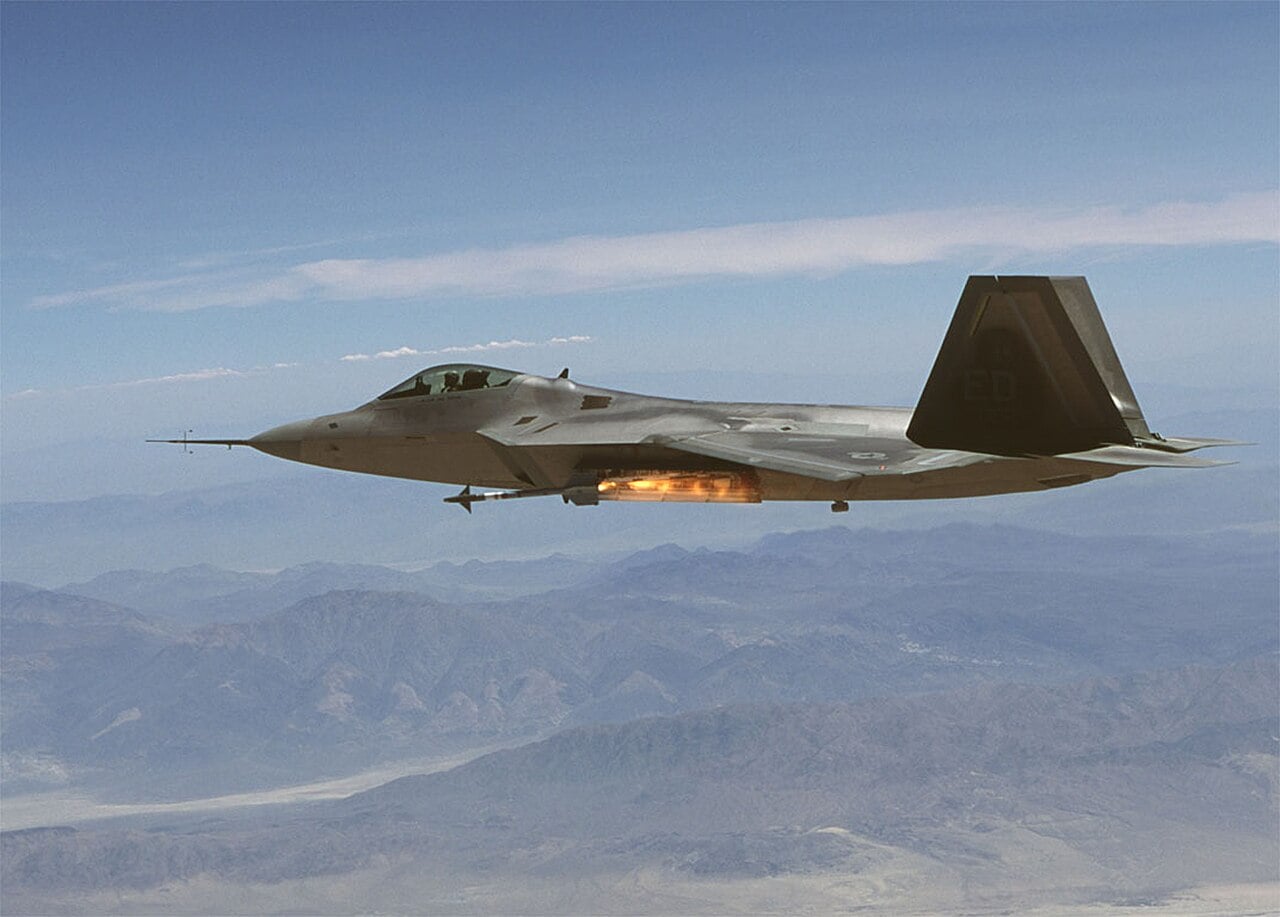
A radar-guided missile announces itself. It has to: something has to illuminate the target, and the moment that happens the target knows it is being shot at.
An infrared missile says nothing at all. It emits no signal, because it is not looking for a reflection. It is looking at heat the target cannot stop producing.
That silence is why the heat-seeker has been the most lethal air-to-air weapon of the modern era. Between 1984 and 2009, roughly 90 per cent of all American air combat losses were caused by infrared-homing missiles.
Informations clés
Qu'est-ce que c'est : a passive guidance system that homes on the infrared light a target emits. Missiles using it are called heat-seekers
Key property: entirely passive. It transmits nothing, so it gives no warning that it is tracking
The sensor: the seeker head, in the nose of the missile
Early seekers: sensitive to 3–5 micrometres, the exhaust band. Tail-chase only. Called single-colour seekers
All-aspect seekers: add the 8–13 micrometre band, which the atmosphere absorbs less, letting the missile see the warm airframe from any angle
Cooling: modern seekers are chilled, often by compressed argon, because the sensor’s own heat would drown the signal
NATO brevity code: “Fox Two” on launch
Lethality: about 90 per cent of US air combat losses from 1984 to 2009 were to IR-guided missiles
Everything Hot Glows, and Aircraft Are Very Hot
All objects above absolute zero radiate. The hotter they are, the more they radiate and the shorter the wavelength at which they do it. A jet exhaust is extremely hot, so against a cold sky it is not a subtle target. It is the brightest thing for miles, just not in a part of the spectrum your eye can see.
German researchers established the useful numbers during the Second World War. Measuring piston-engine aircraft, they found the great majority of infrared output fell between 3 and 4.5 micrometres. They also established that exhaust gas cools quickly once it leaves the aircraft, so it does not trail behind as a false target, and that air is generally more transparent to infrared than to visible light — with sharp dropouts where water vapour and carbon dioxide absorb.
Their conclusion was that a seeker could track a three-engine bomber at five kilometres to about a tenth of a degree. They were right. They simply ran out of war before they could build one.
The Problem Is Not Seeing Heat. It Is Knowing Which Way to Turn.
A bare infrared detector tells you only that something warm is in front of it. It does not tell you whether that something is left or right, and a missile that cannot answer that question cannot steer.
The classic solution is to spin a patterned disc — a reticle — in front of the detector. As the seeker rotates, the target’s image is alternately passed and blocked, and the detector output becomes a pulsing signal rather than a steady one. The timing of those pulses relative to the spin encodes the direction. Steady modulation means the target is dead ahead; a phase shift means it is off to one side, and the missile knows which way.
This was the breakthrough that made practical seekers possible, and it arrived alongside conical scanning and miniaturised vacuum tubes during the 1940s. Everything before it was laboratory work.
Why the Early Ones Were So Bad
The first generation entered service in the mid-1950s and was disappointing in a way that is easy to forget now.
The AIM-4 Falcon, which had started life as a rearward-firing bomber defence weapon before being redirected into a fighter missile, achieved a 9 per cent kill ratio across 54 firings during Operation Rolling Thunder in Vietnam. It had no proximity fuse, so it had to physically strike the target.
The deeper limitation was geometric. A 3–5 micrometre seeker sees the exhaust plume, which means it can only see the target from behind. Launch from anywhere else and the engines are masked by the airframe within seconds, and the lock is gone. Early heat-seekers did not win dogfights so much as finish them, and only if you had already manoeuvred into the six o’clock position.
All-Aspect Changed the Geometry
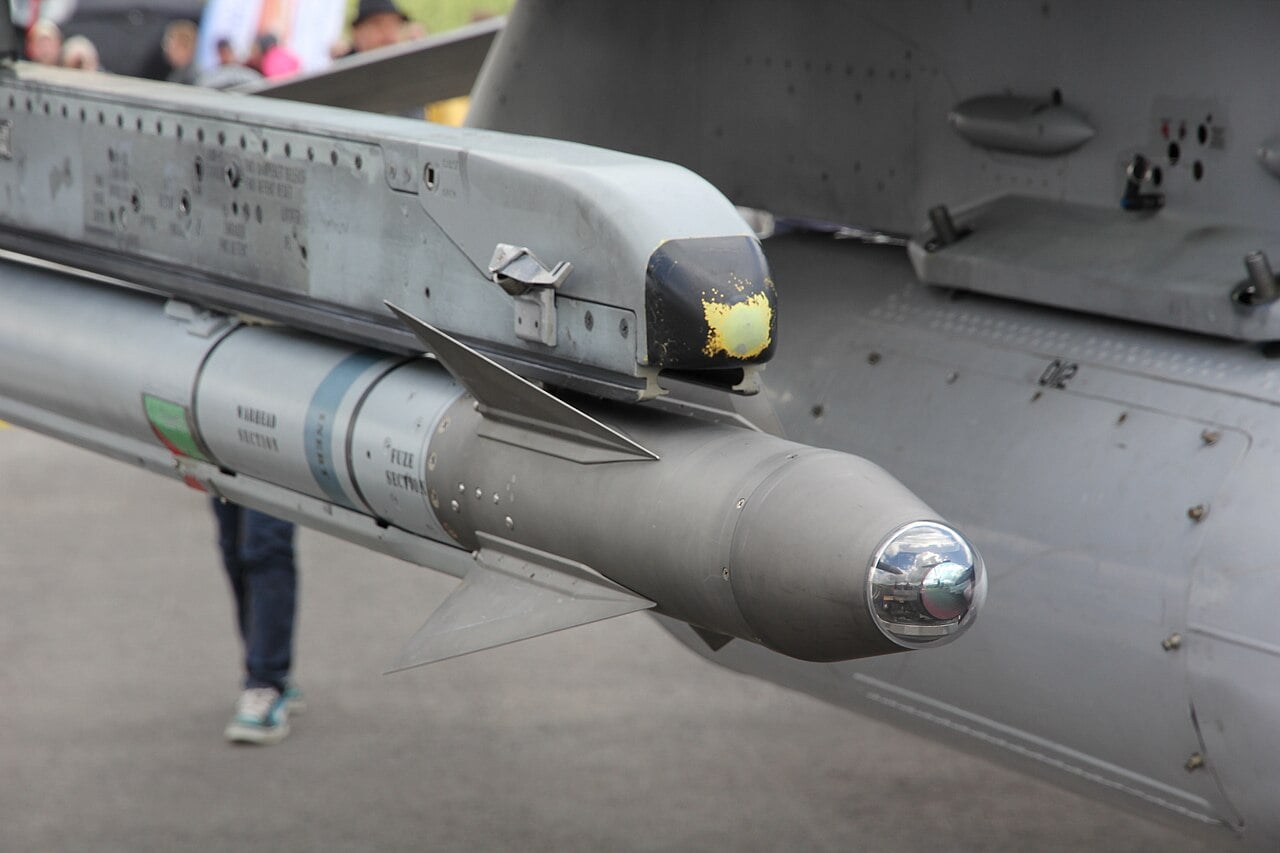
The fix was to look at a second, longer band: 8 to 13 micrometres.
That range matters for two reasons. The atmosphere absorbs it less, so signals survive further. And it is where cooler things glow — not the exhaust, but the airframe itself, heated by friction and by the engines inside it. A seeker sensitive to that band can see an aircraft coming towards it.
This is what “all-aspect” means, and it is one of the genuine step changes in air combat. Modern seekers combine detectors across multiple bands and are called two-colour systems. Once a missile can be fired from the front quarter, merging with an opponent stops being a manoeuvre and starts being a mutual risk.
The cost is sensitivity. The signal from a warm fuselage is far weaker than from an exhaust, and the seeker’s own background heat — or the aerodynamically heated window in front of it — will swamp it. So all-aspect seekers have to be cooled. The AIM-9M and the Stinger use compressed argon; the AIM-9J and early R-60 used a Peltier thermoelectric cooler. It is the same problem as noise in a camera sensor, solved the same way.
Flares, and Why They Stopped Working
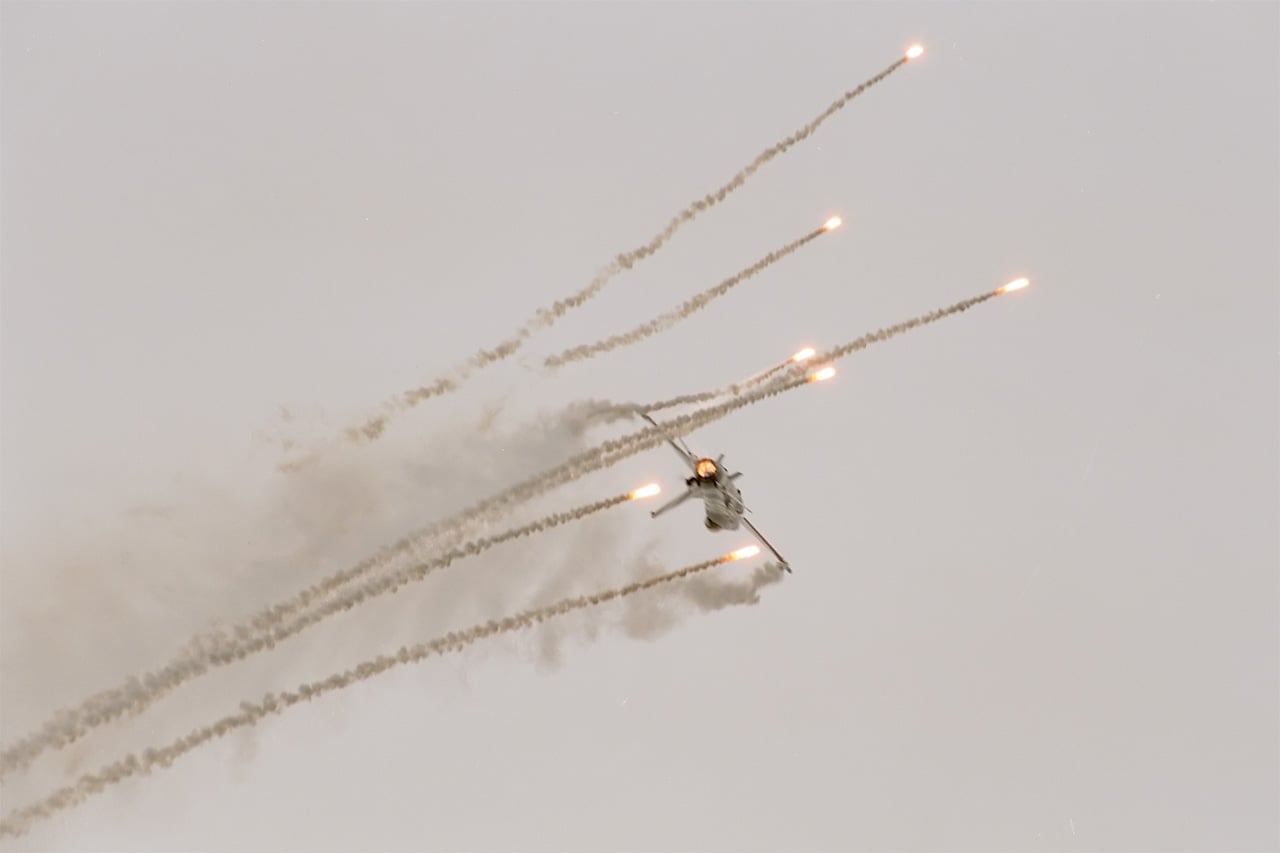
The countermeasure is beautifully simple. Eject something that burns hotter and brighter than your engines in the wavelength the seeker cares about, and the missile follows the brighter object.
It works, with two conditions. The pilot has to know the missile is there, and the flares have to come out in time. Against a passive weapon that gives no warning, neither is guaranteed.
And against current seekers, flares are increasingly futile. A modern imaging infrared seeker does not merely detect a hot spot — it resolves a picture, and an aircraft-shaped object and a burning magnesium pellet do not look alike. It can also track how the two objects separate and reject the one behaving like a decoy.
The Helmet Was the Last Big Change
The Soviet R-73 arrived with a capability Western air forces did not have: coupled to a helmet-mounted sight, it could be cued at a target far off the nose. The pilot looked at the target, and the missile was told where to look.
That is a fundamental change to what winning a turning fight means. If your opponent can shoot at something ninety degrees off his nose, out-turning him no longer saves you. The discovery caused real alarm in the West.
The intended answer was ASRAAM, a pan-European missile pairing R-73 agility with an imaging seeker, under a deal where the United States would adopt ASRAAM and Europe would adopt AMRAAM. ASRAAM bogged down as each partner nation prioritised a different metric, the Americans withdrew, and instead fitted the new seeker technology to yet another version of the Sidewinder — the AIM-9X. The same technologies turn up again in the Chinese PL-10 and the Israeli Python-5.
The Sidewinder, first fired in the 1950s, will have been in frontline service for close to a century by the time today’s aircraft retire. Very little of the original missile remains inside it. What has survived is the idea: point a cooled eye at the part of the spectrum where hot things glow, and let the target give itself away.
Sources: Wikipedia (Infrared homing), cross-checked against published technical accounts of the AIM-9 Sidewinder, AIM-4 Falcon and R-73 programmes.


0 Comments