
On 4 November 1977 the United Nations Security Council voted 15 to nothing to impose a mandatory arms embargo on South Africa. It was the first time the Council had ever imposed binding sanctions on a member state.
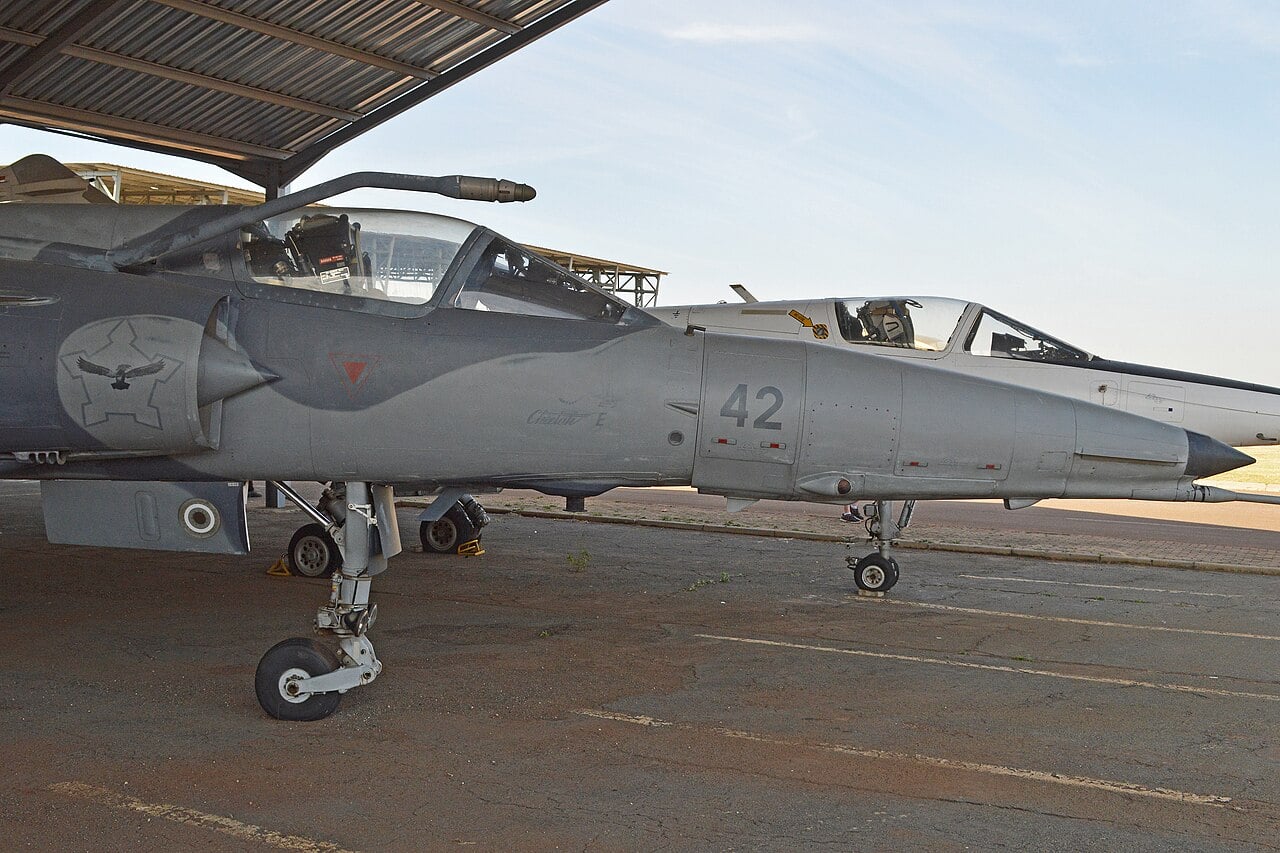
Nine years later South Africa rolled out a supersonic fighter it said it had built itself. It was called the Atlas Cheetah, and it was an elderly Dassault Mirage III with canards, a new nose, a new wing leading edge and a great deal of Israeli technology that nobody would discuss.
Almost fifty years on, one part of the story is documented in declassified files and one part still is not.
Informations clés
Mandatory UN arms embargo: UNSCR 418, 4 November 1977, under Chapter VII; lifted by UNSCR 919 on 25 May 1994
Programme: Project Cushion, Atlas Aircraft Corporation, Kempton Park
First airframe into conversion: Mirage IIID2Z number 845, April 1983
Premier vol : May 1985. Public unveiling of the two-seat Cheetah D: 16 July 1986
Variantes : 16 Cheetah D, 16 Cheetah E, 38 Cheetah C, one Cheetah R prototype
Moteurs : Atar 9C in the D and E; Atar 9K50C-11 in the Cheetah C
À la retraite: Cheetah E in 1992; Cheetah C and D in April 2008, replaced by the Saab Gripen
Historique de combat : none. No Cheetah is known to have flown an offensive combat sortie
The door closes
There had been a UN arms embargo on South Africa since 1963, but it was voluntary, and the two countries that mattered most as suppliers — France and Britain — abstained on it. France went on selling. The South African Air Force bought 58 Mirage III between 1963 and the mid-1970s, then 48 Mirage F1s from 1975.
Resolution 418 changed that. It was adopted under Chapter VII, which makes it binding, and its wording was deliberately broad.
Read that last clause again, because it is the one that hurt. South Africa had bought a licence to build up to a hundred Mirage F1s and their Atar engines at Atlas. The licence was now void. Atlas never got past assembling French-supplied kits.
Why the Mirage III and not the F1
By the early 1980s the SAAF had a problem over Angola. Its Mirage F1CZs had handled Angolan MiG-21s — Major Johan Rankin shot down two with cannon fire in 1981 and 1982 — but from 1984 the MiG-23ML arrived, and by 1987 two Cuban MiG-23 squadrons were operating from Menongue with something the South Africans did not have: a radar-guided missile that could be fired head-on.
South African Mirages carried only rear-aspect infrared missiles. To get a shot they had to get behind a faster aircraft. Add a layered Soviet surface-to-air missile belt around Cuito Cuanavale and Menongue, and the air campaign became expensive.
It is worth saying that the popular claim that the SAAF simply lost air superiority is contested by serious historians of the campaign, and the Cuban and Angolan claims should be treated with the same caution as the South African ones.
The solution had to be an upgrade, because nothing could be bought. The question was which fleet to cut up. Pulling the F1s out of service was impossible — they were the entire modern front line. The Mirage III fleet was obsolescent and mostly doing training and secondary work. So the Mirage IIIs went into the workshop.
What Atlas actually did
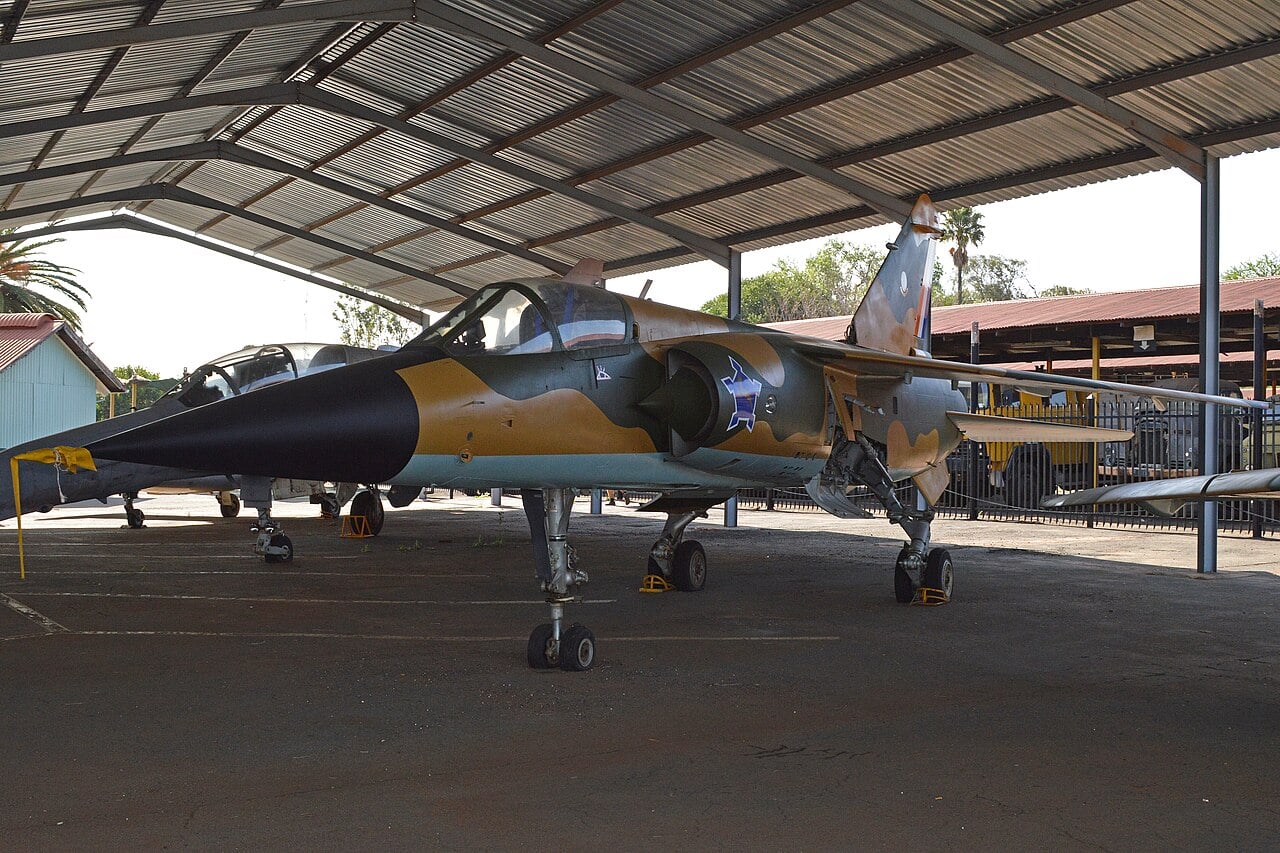
The first airframe went into conversion in April 1983. It flew in May 1985. The programme was revealed in July 1986, by which time two-seat Cheetah Ds were already in service with the combat flying school.
The changes were not cosmetic:
The airframe was stripped and refurbished to zero hours, with a new main wing spar. The wing got a drooped leading edge with a dogtooth on each side, which improves turn performance and low-speed handling on a delta. Fixed canards went on behind the intakes. Strakes were added to the nose for high angle-of-attack behaviour. Two extra pylons appeared at the wing roots. An in-flight refuelling probe was fitted. The nose was lengthened to take a new radar and avionics bay, and elevon control went to twin computers.
Atlas said roughly half of each airframe was replaced. That figure is repeated everywhere and has never been independently verified, so treat it as a manufacturer’s claim rather than a fact.
The Cheetah C, which arrived in 1993, went further: a one-piece wraparound windscreen, a cleaner refuelling probe, the wing fences deleted, new undercarriage, a new nose, and the Atar 9K50C-11 in place of the older 9C. Thirty-eight were built and they all went to 2 Squadron at Louis Trichardt.
One oddity worth recording: in about 2001 a Cheetah D flew with a Russian Klimov SMR-95, a derivative of the MiG-29’s RD-33. Cost and centre-of-gravity problems killed it.
The part nobody would talk about
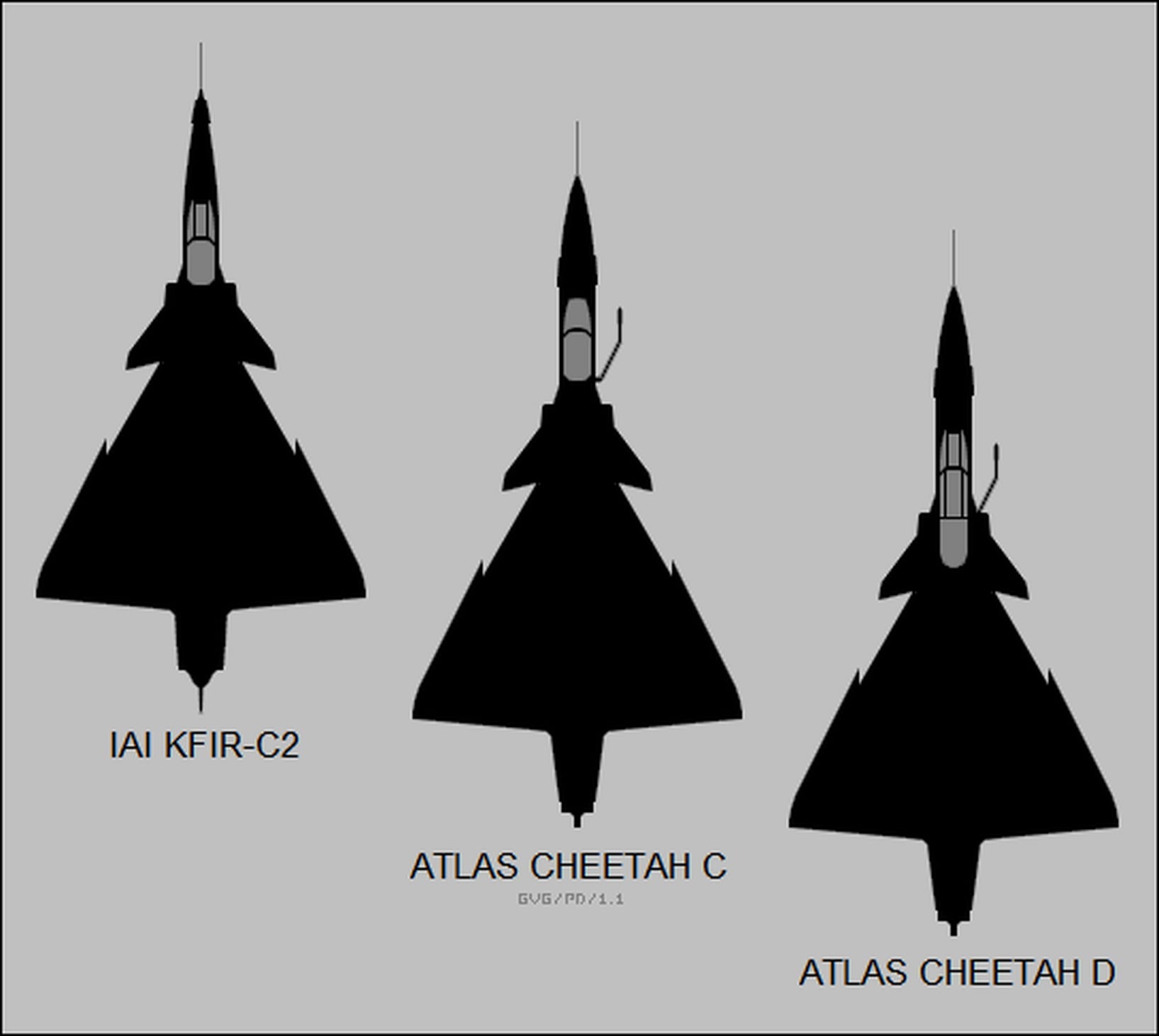
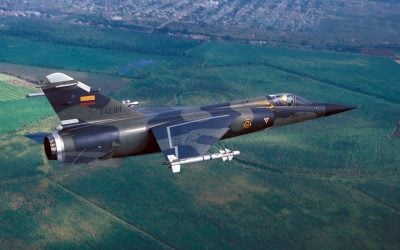
Look at a Cheetah C next to an IAI Kfir and the family resemblance is not subtle.
Here is what is documented. In 1975 Israel and South Africa signed a military cooperation agreement, signed on the Israeli side by Shimon Peres and on the South African side by P.W. Botha. Armscor maintained a permanent office in Tel Aviv. All of that comes from roughly seven thousand pages of declassified South African defence, foreign ministry and Armscor records published by the historian Sasha Polakow-Suransky in 2010.
Israeli hardware was on SAAF Mirages before the Cheetah existed. South African Mirage III flight manual supplements list Israeli-made external fuel tanks, and the Cheetah C flight manual lists a tank designed by IAI for the Kfir. The Israeli Python 3 missile entered SAAF service as the V3S. After Israel cancelled the Lavi programme in August 1987, Atlas recruited Israeli engineers.
Then there is the arithmetic, which is the most persuasive argument of all. Thirty-eight Cheetah Cs were built on single-seat airframes. The SAAF had sixteen Mirage IIICZ and seventeen IIIEZ single-seaters, and sixteen of the EZs had already become Cheetah Es. There is no plausible pool of thirty-eight surplus South African single-seat Mirage III airframes. They came from somewhere.
The defence journal DefenceWeb states the position flatly in its Cheetah fact file.
What does not exist, still, is a released contract, a bill of sale, or a serial-number provenance trail. No admission has ever come from IAI, the Israeli government, Armscor, Denel or the South African Air Force about Cheetah airframes specifically. The cautious formulation has barely moved in forty years.
So: technology transfer and engineering help, documented. Airframe sourcing from Israel, very strongly evidenced and never admitted. Those are two different confidence levels and it is worth keeping them apart.
What the Cheetah is pas is a licence-built Kfir. Different engine, different avionics, different detail planform. The relationship is real and it is closer than South Africa ever said, but it is not a licence.
The war it missed
Here is the irony at the centre of the story. The Cheetah was built because of Angola, and it never fought there.
There is no evidence that any Cheetah flew an offensive combat sortie. The air war was fought by Mirage F1CZs and F1AZs, Buccaneers, Canberras and Impalas. By the time the Cheetah C was in squadron service in 1993, the Border War was over, apartheid was ending and the embargo was about to be lifted. The aircraft spent its career on home air defence.
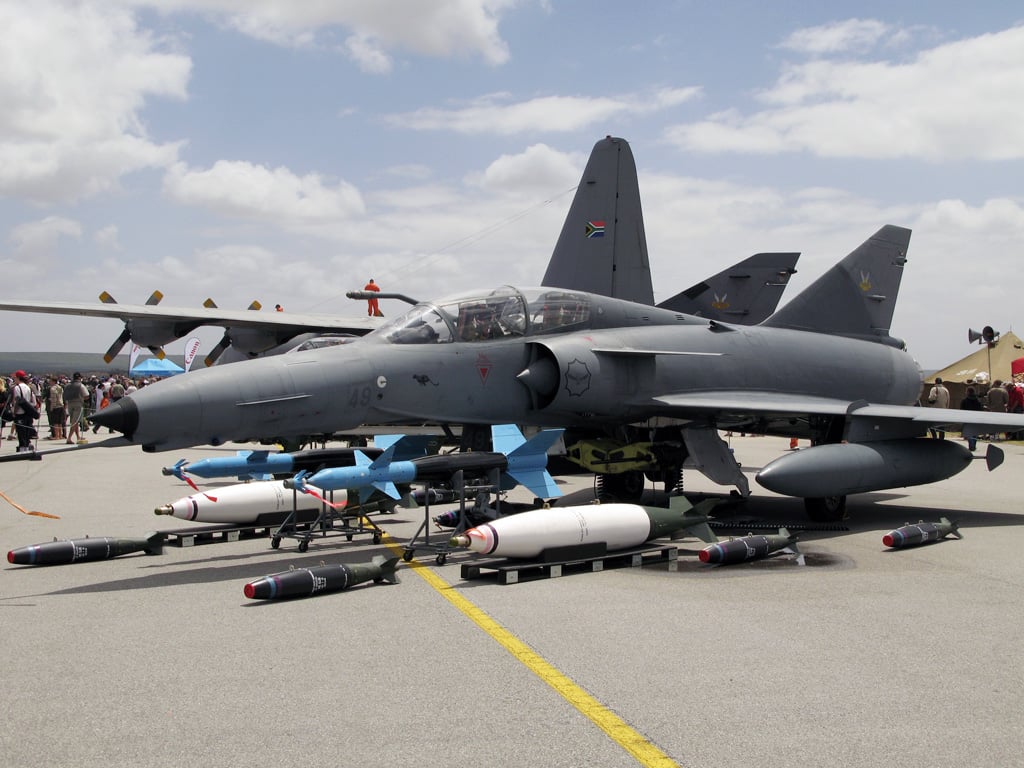
A Cheetah C display at the South African Air Force Museum air show.
Where they all went
The Cheetah E was withdrawn in 1992. In 2003 Chile bought five of them, purely as a spares source for its own ENAER Panteras, and never flew a single one.
The Cheetah C and D were retired in April 2008, four years earlier than planned, on cost grounds, as the first Saab Gripens arrived.
Ecuador signed in Quito in November 2010 for ten Cheetah Cs and two two-seaters. The first three arrived on 31 May 2011 and the fleet was formally taken on charge in February 2012. Ecuador flew them until 28 July 2024, when they were grounded for want of spares — which, given how the aircraft came into existence, has a certain symmetry to it.
Draken International announced in December 2017 that it was buying nine Cheetah Cs and three Ds from Denel for around 35 million dollars, to fly as adversary aircraft for the US Air Force. It did not work. Three airframes reached the United States and none of them ever flew, blocked by ejection-seat support. Draken lost the adversary contract in 2021 and bought F-16s instead. It sued Denel in Florida in August 2025; the parties told the court in August 2026 that they had settled in mediation.
So nothing much flies. Denel has kept a couple of Cheetah Ds as systems test aircraft. One Cheetah E sits at the SAAF Museum at Swartkop. Ecuador’s are on the ground.
SAAF Mirage F1 operations during the Angolan Border War — the campaign that created the requirement the Cheetah was built to meet.
What to be careful about
The Cheetah is not a licence-built Kfir. Different engine, different avionics, different detail. Technology transfer and probably airframes, but not a licence.
No Cheetah fought over Angola. The type is repeatedly credited with combat it did not fly.
The Cheetah E was not a pre-production variant. The two-seat D flew and entered service first; the E was an interim operational interceptor.
The Mirage IIID2Z had the Atar 9C, not the 9K50. This one is wrong almost everywhere.
Chile never flew its Cheetahs and Draken never flew its either.
The embargo dates. 1963 was voluntary. Mandatory from 4 November 1977. Lifted 25 May 1994, after the elections, not on the day of them.
The radar designation is not settled. The Cheetah C’s Elta set is cited variously as the EL/M-2032 and the EL/M-2035, and it is sometimes wrongly attributed to Elbit. Nobody outside the programme has published a definitive answer.
What can be said cleanly is this. A country that could not buy an aeroplane took a twenty-year-old French fighter apart, put it back together with canards and a new nose and a foreign radar, and fielded a credible fourth-generation-ish interceptor in about a decade — and then never had to use it, because by the time it was ready the world it had been built for no longer existed.
Sources: UN Security Council Resolutions 181, 418 and 919; SIPRI UN arms embargoes database; Sasha Polakow-Suransky, The Unspoken Alliance, Pantheon 2010; Deon Geldenhuys, Isolated States, Cambridge University Press 1990; John W. Golan, Lavi, University of Nebraska Press 2016; Leopold Scholtz, “The air war over Angola, 1987–1988”, Journal for Contemporary History 34(1), 2009; Dick Lord, Vlamgat, 30° South 2008; Leon Engelbrecht, DefenceWeb fact file, 15 February 2010; DefenceWeb reporting on the Ecuador delivery (2011) and the Denel–Draken settlement (31 August 2026); Joseph Trevithick, The War Zone, 13 December 2017; Flight International, 29 November 1995.
A video summary of the Cheetah programme and how it came about.
0 Comments