

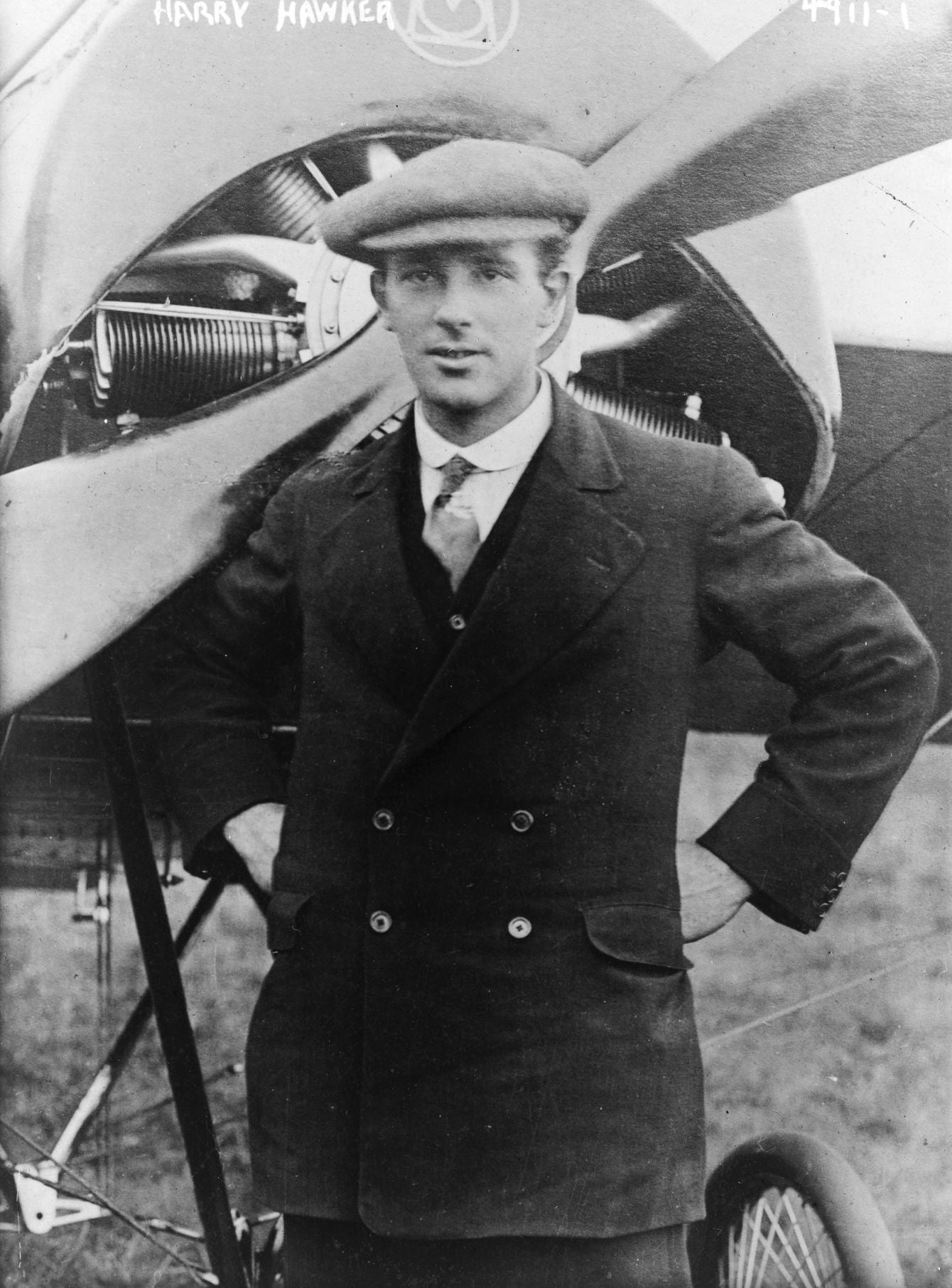
Hawker Aircraft built the Hurricane, the Typhoon, the Tempest, the Hunter and the Harrier. The name is stamped on some of the most important aeroplanes Britain ever produced.
It is not the name of a British aristocrat or an engineer knighted for it. It belonged to a blacksmith’s son from Melbourne who left school at eleven to work in a garage, and who was dead at 32.
Harry Hawker learned to fly in three lessons. He was the first person to deliberately put an aeroplane into a spin and get it out again. And in 1919 the world spent six days believing he had drowned in the Atlantic.
Informations clés
Nom: Harry George Hawker, MBE, AFC
Né: 22 January 1889, Moorabbin, Victoria, Australia
Décédé: 12 July 1921, Burnt Oak near Hendon, aged 32
Job: Chief test pilot, Sopwith Aviation Company
Licence: Royal Aero Club certificate No. 297, September 1912, after three lessons
First record: Michelin Cup for endurance, 24 October 1912, a flight of 8 hours 23 minutes
Best known for: The first intentional spin and recovery, in 1914
Héritage: Co-founded H.G. Hawker Engineering in 1920, renamed Hawker Aircraft in 1933
Eleven Years Old, Five Shillings a Week
Hawker was born in 1889 at Moorabbin in Victoria, second son of George Hawker, a blacksmith. At eleven he was working at a Melbourne garage building engines for five shillings a week. He moved to the Tarrant Motor and Engineering Company, qualified as a mechanic, and by 1907 was working as a chauffeur and mechanic in western Victoria.
In 1910 he travelled to Diggers Rest, outside Melbourne, to watch the first public demonstrations of powered flight in Australia. That settled it. He went to England in May 1911 to work in aviation.
It did not go smoothly at first. He took jobs with Commer, then Mercedes, then Austro Daimler, and spent every spare hour at Brooklands, which was where British aviation actually happened. In June 1912 he got a job as a mechanic with the Sopwith Aviation Company.
He talked Tom Sopwith into teaching him to fly. He went solo after three lessons.

The Spin
By October 1912, a month after getting his licence, Hawker won the Michelin Cup with an endurance flight of 8 hours 23 minutes. In June 1913 he set a series of altitude records. In August that year he won a £1,000 consolation prize in the Daily Mail Circuit of Britain waterplane race.
But the thing he did in 1914 mattered more than any of it.
Spinning was killing pilots. An aeroplane that dropped a wing and began to rotate went down, and the men in them did not come back, and nobody could satisfactorily explain why. It was treated as something close to a curse.
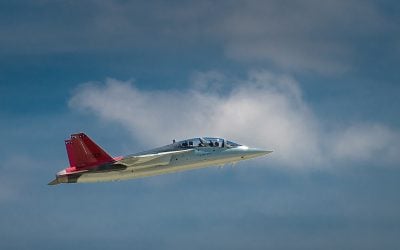
Hawker put an aeroplane into a spin on purpose and flew it out again, then showed other people how. The technique he demonstrated is not quite the one taught today, but the important part was not the method. It was the demonstration that a spin was a recoverable flight condition rather than a death sentence.
A modern tribute marking a century since Hawker’s intentional spin.
The Atlantic
In 1919 the Daily Mail was offering £10,000 to the first crew to fly the Atlantic in 72 consecutive hours. Hawker and his navigator, Kenneth Mackenzie Grieve, took off from Mount Pearl in Newfoundland on 18 May in a Sopwith biplane built for the attempt and named, with no great imagination, Atlantic.
Somewhere around the twelfth hour the engine cooling system was giving persistent trouble. They had a choice: press on over empty ocean and burn what power they had left, or turn and fly diagonally across the shipping lanes in the hope of finding something.

They fired Very light distress signals, flew two miles ahead of the ship and put the aeroplane down in the water. The Mary picked them up.
The Mary had no working radio.
For six days nobody on land knew anything. Two men had gone out over the Atlantic and not arrived, and there was no reason to assume anything except the obvious. It was only when the steamer reached the Butt of Lewis in Scotland on 25 May that a signal station asked the passing ship whether it was Hawker aboard, and got back a single word: yes.
The Daily Mail gave them £5,000 anyway. Hawker named his second daughter Mary, after the ship.
The 1919 transatlantic race, and what it cost the men who tried it.
How a Mechanic’s Name Ended Up on a Hurricane
In September 1920 Sopwith Aviation was liquidated. The war contracts were over and there was a real fear that the government would come after wartime aircraft manufacturers with a retrospective tax bill large enough to destroy them.
Tom Sopwith, Harry Hawker, Fred Sigrist and Bill Eyre each put in £5,000 and started again. To avoid any claim attaching to the new company, they could not call it Sopwith. So they called it H.G. Hawker Engineering, after the test pilot. It became Hawker Aircraft in 1933.
Hawker had less than a year to enjoy it. On 12 July 1921 he was practising at Hendon for the Aerial Derby in a Nieuport Goshawk when the aircraft crashed at Burnt Oak, near Edgware. He was 32.
The medical examination suggested he had suffered a haemorrhage and had been trying to get the aircraft back on the ground. Fire in the air and spinal tuberculosis were both considered contributing factors. The King sent a message of condolence saying the nation had lost one of its most distinguished airmen.
Inside the Hawker Hurricane factory. The name on the aircraft belonged to a man who had been dead for nearly twenty years.
What Is Left
He is buried at St Paul’s Church, Hook, in Chessington. Australia Post put him on a stamp in 1978. Moorabbin Airport was renamed Moorabbin (Harry Hawker) Airport in 1989. Kingston University named a building after him in 2007. His old primary school has a house named Hawker.
And every Hurricane that flew in the Battle of Britain, every Typhoon over Normandy, every Hunter and every Harrier, carried the surname of an Australian blacksmith’s son who built engines for five shillings a week and learned to fly in three lessons.
Sources: Muriel Hawker, H. G. Hawker, airman: his life and work, 1922; L. K. Blackmore, Hawker: A Biography; Flight, 29 May 1919; The New York Times, 13 July 1921; Australian Dictionary of Biography; The Automobile, September 2007
0 Comments