

Defence conferences usually produce communiqués. This one produced a shopping list.
NATO's 32 chiefs of defence met in Copenhagen on 18 and 19 September for the alliance's annual Military Committee Conference, and the message they sent afterwards was aimed squarely at the defence industry: the allies are ready to buy at scale, and what they now want from manufacturers is speed, scale and predictability.
For an industry that has spent three decades being told to expect lean years, that is a substantial change of tone.
Informations clés
Événement: NATO Military Committee Conference, Copenhagen, 18 and 19 September 2026
Attending: The 32 allied chiefs of defence
Strategic commanders: General Alexus Grynkewich (SACEUR) and Admiral Pierre Vandier (SACT)
Chair: Admiral Giuseppe Cavo Dragone, Chair of the NATO Military Committee
Message to industry: Allies are ready to buy at scale; industry must deliver with speed, scale and predictability
Succession: General Carsten Breuer, Germany’s Chief of Defence, elected next Chair, taking office in summer 2027 for three years
Agenda: Collective deterrence and defence, innovation and technology, and accelerated adoption of new capabilities
Next plenary: Brussels, January 2027
From Committing Budgets to Delivering Capability
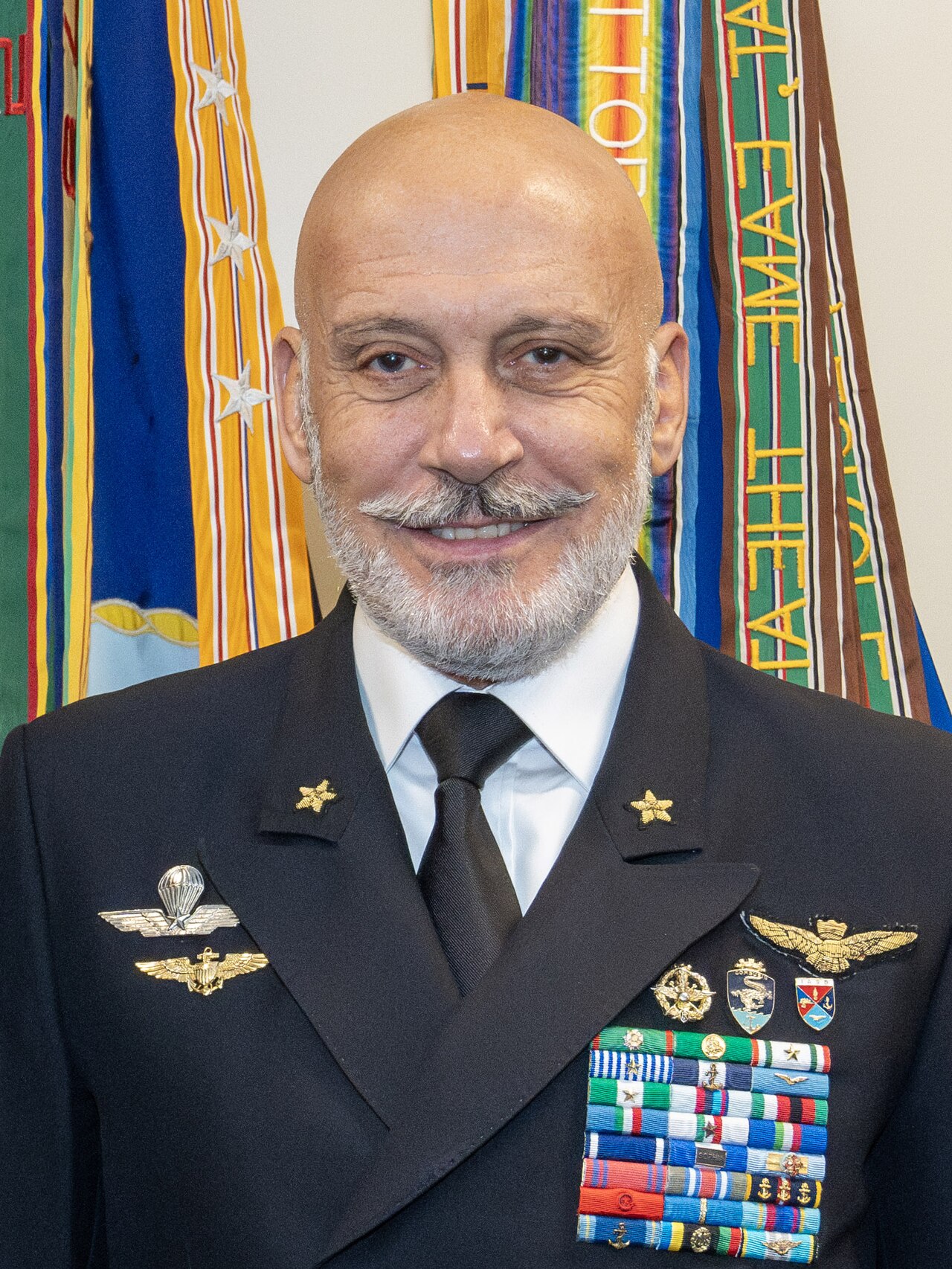
The framing came from Admiral Giuseppe Cavo Dragone, who chairs the Military Committee, and it was explicitly about closing the gap between what was promised at the Ankara Summit in July and what actually arrives on a flight line.
That sentence contains the whole problem. Announcing a spending target is a political act and can be done in an afternoon. Turning it into aircraft, missiles and trained crews takes a decade, an industrial base with spare capacity, and a customer prepared to sign orders long enough for a factory to justify expanding.
The Ankara Summit commitments were aimed at exactly that: expanding manufacturing capacity, removing barriers to defence trade between allies, launching what NATO calls its Front Door for Industry, and agreeing a formal Strategy for Industry-NATO Cooperation.
The Blunt Part
Most of Cavo Dragone's language was the careful register of alliance communication. His assessment of Russian behaviour was not.
That list is not abstract. It is a description of the last few weeks in European airspace: fighters scrambled over the Baltic, drones closing an airport in Luxembourg for a night, unattributed incursions along the eastern flank. He also went out of his way to commend allied forces for what he called swift, professional and effective responses.
Why the Air Domain Feels This First
Of all the capability areas NATO discusses, air is where the delivery problem bites hardest, for a simple reason: lead times.
A combat aircraft ordered today arrives years from now. The pilots to fly it take longer still, and the training pipeline is itself constrained by aircraft availability. Air defence interceptors, the commodity every European nation suddenly wants more of, are produced on lines that were sized for a world in which nobody expected to fire many.
This is why the phrase “speed, scale and predictability” matters more than it reads. Predictability is the one industry actually asks for. A manufacturer will build a second production line for a ten-year order book. It will not build one for a good speech.
A Changing of the Guard
The conference also settled the succession. Allied nations elected General Carsten Breuer, Germany's Chief of Defence, as the next Chair of the Military Committee. He takes the post in summer 2027 for a three-year mandate.
That a German officer will chair NATO's senior military body through the late 2020s says something in itself about where the alliance's centre of gravity has moved. Germany is building NATO's forward presence in Lithuania, is constructing border infrastructure in eastern Poland, and spent this week rehearsing the reinforcement of a Swedish island in the middle of the Baltic.
The host's own chief of defence, General Michael Wiggers Hyldgaard of Denmark, closed on the same theme.
The Military Committee meets twice a year in Brussels and once a year in a member capital. The next plenary is in Brussels in January. By then the alliance will have a rather clearer idea of whether industry took the hint.
Sources: NATO statement on the Copenhagen Military Committee Conference, with quotes from Admiral Giuseppe Cavo Dragone and General Michael Wiggers Hyldgaard; UK Defence Journal; NATO official channels.
0 Comments