
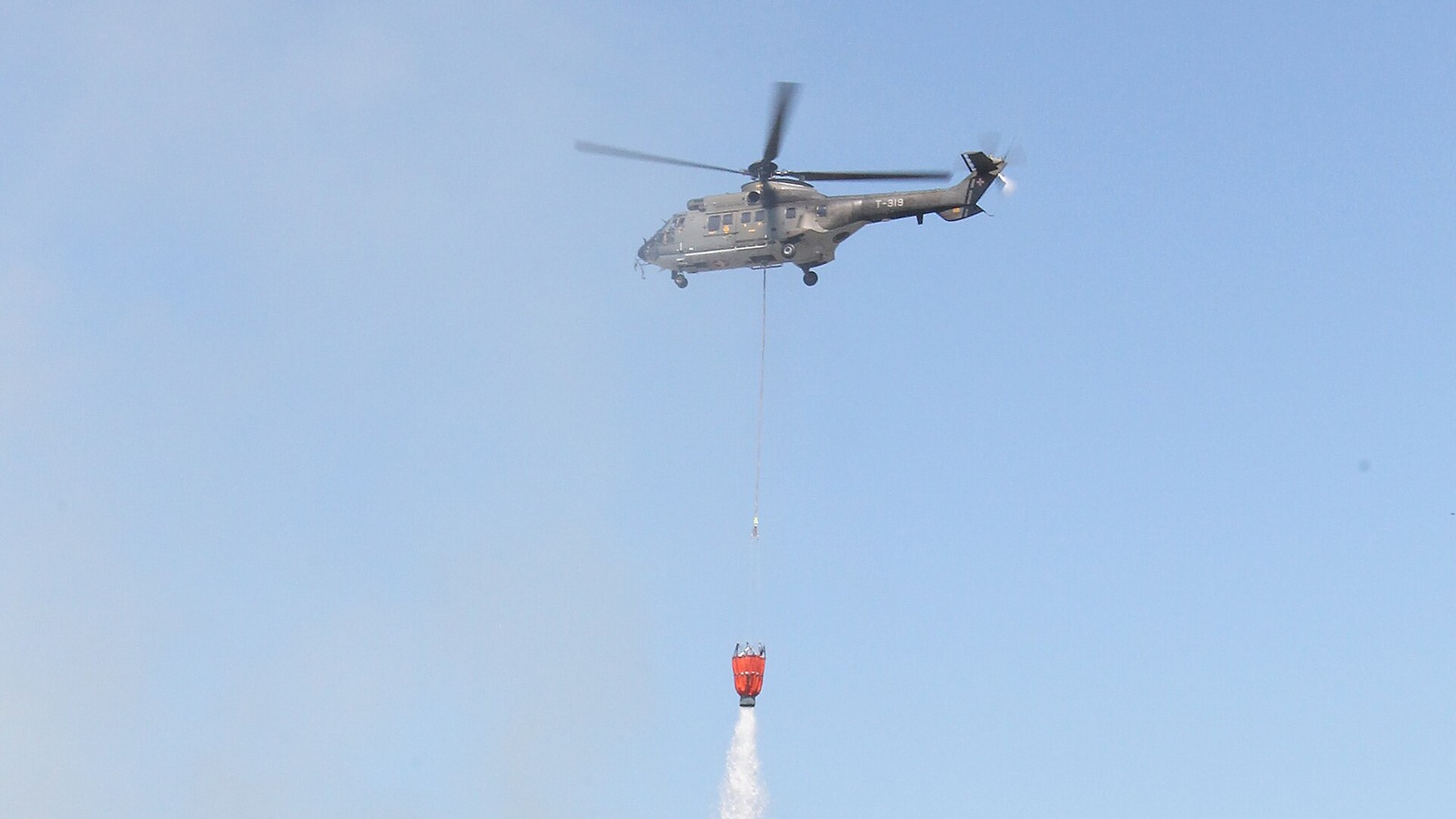
The Dome Fire had been burning in Yosemite National Park for five days. On Sunday afternoon a Eurocopter AS332L1 Super Puma was working it the way heavy helicopters do: dipping a bucket, climbing out, running in low over the trees, releasing, turning back for another load.
Shortly before three o'clock local time, it went down southeast of Ostrander Lake. Both crew members were killed.
The helicopter was operated by Fly Precision, an Oregon-based contractor. One of the pilots has been named in local reporting as Greg King; the second has not been identified while family are notified. The National Transportation Safety Board and the Federal Aviation Administration are both investigating, and nothing about the cause is known.
Informations clés
| Ce qui s'est passé | A firefighting helicopter crashed while conducting water-bucket drops |
| Quand | Sunday 20 September 2026, shortly before 15:00 local |
| Où | Yosemite National Park, California, southeast of Ostrander Lake |
| Aéronef | Eurocopter AS332L1 Super Puma |
| Opérateur | Fly Precision, based in Oregon |
| Victimes | Both crew members killed |
| The fire | The Dome Fire, around 3,000 acres, burning since 15 September |
| Investigation | NTSB, with FAA assistance; cause not yet established |
The most demanding flying most people never see
Aerial firefighting looks, from a distance, like a delivery job. It is not.
A bucket drop puts a helicopter into the exact combination of conditions that rotorcraft handle worst, over and over, for hours. The aircraft operates low and slow, frequently out of ground effect, in terrain that generates its own turbulence. It flies heavy, because water is heavy: a full bucket under a Super Puma is a substantial slung load swinging on a line, and the aircraft's handling changes the instant it is released. The air is hot, which costs engine and rotor performance, and it is full of smoke, which costs visibility. Fires happen at altitude, which costs performance again.
Then the crew turns around and does it again, and the margins narrow slightly each time, because everybody is tired and the fire has moved.
Pilots do this work by choice and they are very good at it. That does not make it safe, and the accident record for aerial firefighting has never pretended otherwise.
L'avion
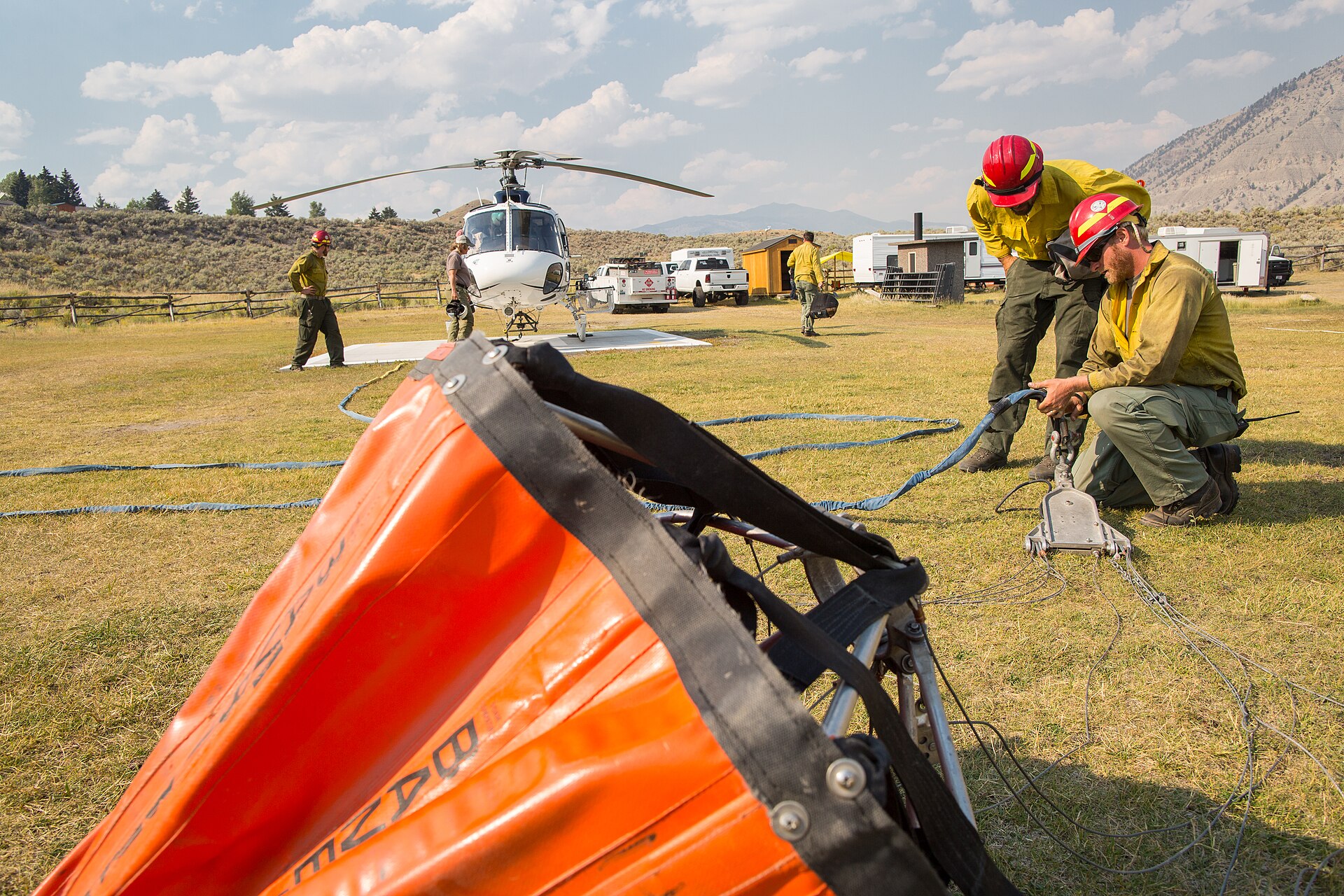
The AS332 Super Puma is a four-bladed, twin-engine medium helicopter, an enlarged and re-engined development of the Aerospatiale SA 330 Puma powered by Turbomeca Makila turboshafts. It first flew on 13 September 1978. Two fuselage lengths were planned from the start, and the L series is the stretched one; the L1 is a later development of it.
Nearly half a century on, the type still does offshore transport, search and rescue, military lift and, with a bucket on a long line, fire work. It is a capable machine with a long service history. None of which tells us anything about what happened on Sunday, and it would be wrong to guess.
What the investigation will look at
The NTSB will take months, and the sequence is well established: the wreckage and its distribution, engine and gearbox teardown, rotor and drive continuity, the bucket and its long line, fuel state and loading, weather and density altitude at the time, the crew's duty hours, radio and dispatch records, and any video. In a remote part of a national park with an active fire nearby, simply reaching the site is a task in itself.
Until that work is done, anything said about cause is speculation, and the people who do this flying deserve better than speculation.
A bad season in a dangerous speciality
This is not an isolated event. Aerial firefighting has taken repeated losses this year, including the collision of two firefighting helicopters west of Athens in August. The work concentrates risk in a way few other civil flying jobs do, and it does so in aircraft that are often decades old, flown by crews on seasonal contracts, over terrain with no good options if something breaks.
The Dome Fire started on 15 September near Mariposa and had grown to roughly 3,000 acres by the weekend. It is, by the standards of a Californian fire season, not an especially large one. That is worth stating plainly: two people died on a routine mission on a medium-sized fire, doing work that most of the public never thinks about until an aircraft does not come back.
Local coverage of the crash and the response in Yosemite National Park.
Sources: FLYING Magazine, CNN, NBC News, KTVU, KMPH, AVweb, the National Transportation Safety Board, the Federal Aviation Administration.
0 Comments