

Le Lockheed U-2 was built around one idea: fly high enough and nobody can touch you. At 70,000 feet in the mid-1950s, that was true. No Soviet fighter could climb that high and stay there, and the first generation of Soviet missiles could not reach it either.
It stayed true for less than four years. Between May 1960 and September 1967, surface-to-air missiles shot down seven U-2s on reconnaissance flights over hostile territory: one over the Soviet Union, one over Cuba and five over mainland China. Every one of them was brought down by the same family of weapon, the Soviet S-75, known in the West as the SA-2 Guideline, or a Chinese copy of it.
A popular Instagram post tells this story and gets the count right. It gets a few other things wrong, and it leaves out the most surprising part: most of the U-2s shot down by enemy fire were not flown by Americans at all.
Informations clés
- U-2s shot down by enemy action: 7, between 1960 and 1967
- Over the Soviet Union: 1 (Francis Gary Powers, 1 May 1960)
- Over Cuba: 1 (Major Rudolf Anderson, 27 October 1962)
- Over mainland China: 5, all flown by Taiwanese pilots of the 35th “Black Cat” Squadron
- Weapon in every case: SA-2 Guideline (S-75 Dvina) or a Chinese-built derivative
- Pilotes tués : 4 of 7 (Anderson, Chen Huai, Lee Nan-ping, Huang Jung-pei)
- Pilots captured: 3 (Powers, Yeh Changti, Chang Liyi)
- U-2s built: 104 of the original generation
Why Altitude Stopped Being Enough
The U-2 first flew in 1955 and began flying over the Soviet Union for the CIA in 1956. The Soviets tracked those early flights on radar and could do nothing about them, which was the whole point. Fighters such as the MiG-19 could zoom up toward the U-2’s altitude for a few moments, but they could not fly or fight up there.
The S-75 changed that. It was a large, two-stage missile guided by radar commands from the ground, with a proximity-fused warhead designed to detonate near its target rather than hit it. Against a slow, fragile aircraft with enormous glider wings, a near miss was enough. All seven U-2 shootdowns came from that missile or its Chinese derivatives.

1. Francis Gary Powers, Soviet Union, 1 May 1960
The most famous loss came first. On 1 May 1960, CIA pilot Francis Gary Powers took off from Peshawar in Pakistan in U-2C 56-6693 on a planned flight across the whole Soviet Union to Bodø in Norway. Near Sverdlovsk, the Soviets fired a salvo of three S-75 missiles. One exploded behind the U-2 at about 70,500 feet, close enough to wreck it. In the confusion, the same salvo also shot down a Soviet MiG-19 trying to intercept, killing its pilot, Sergei Safronov.
Powers got out of the falling aircraft, parachuted down and was captured. Washington, assuming he was dead, put out a cover story through NASA about a weather research aircraft that had gone missing after its pilot reported oxygen trouble. Nikita Khrushchev let the Americans commit to that story, and then produced the pilot, his equipment and the wreckage.
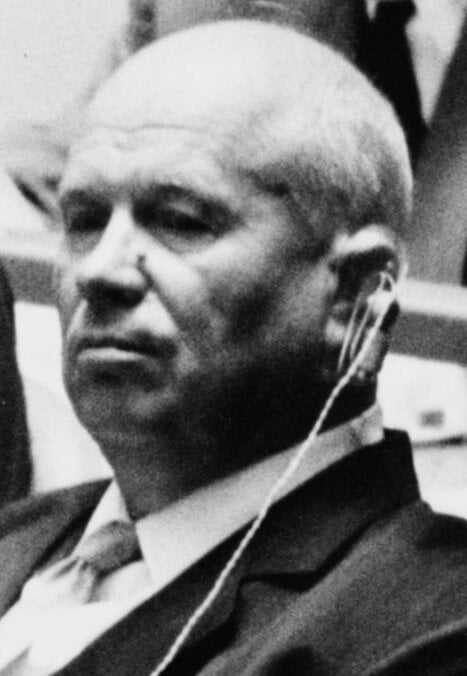
The Paris summit between Eisenhower and Khrushchev collapsed within a day of opening on 16 May. Eisenhower said the overflights had been suspended and would not resume, and U-2 flights over the Soviet Union never did. Powers was sentenced to three years in prison and seven of hard labour, served one year and nine months, and was exchanged for the Soviet intelligence officer Rudolf Abel on the Glienicke Bridge in Berlin on 10 February 1962. Our full account is here: Francis Gary Powers: The U-2 Shot Down Over the Soviet Union.

For decades, Powers was treated in parts of the American press as a man who should have done more to destroy his aircraft or himself. The verdict came late. In 2012 the US Air Force awarded him the Silver Star posthumously.
2 to 6. The Black Cats Over China, 1962 to 1967
After Sverdlovsk, the CIA kept flying the U-2 over Asia, but with pilots who were not American. From Taoyuan in Taiwan, the Republic of China Air Force’s 35th Squadron, the “Black Cats”, flew CIA-supplied U-2s over the People’s Republic, photographing airfields, missile sites and China’s nuclear programme. The squadron flew around 220 operational missions. China, supplied with S-75s by the Soviet Union and later building its own copies, shot down five of the aircraft.
9 September 1962, Major Chen Huai. Shot down near Nanchang in Jiangxi province. Chen was pulled from the wreckage alive but died in hospital. He was the first U-2 pilot lost over China.
1 November 1963, Major Yeh Changti. Shot down over Jiangxi. He bailed out, was captured, and was officially declared dead in Taiwan. He was in fact alive in Chinese custody.
7 July 1964, Lieutenant Colonel Lee Nan-ping. Shot down over Fujian, across the strait from Taiwan. Lee was killed.
10 January 1965, Major Chang Liyi. Shot down near Baotou in Inner Mongolia, on an infrared photography mission against China’s nuclear weapons facilities a few months after its first atomic test. He parachuted onto a farm and was captured.
8 September 1967, Captain Huang Jung-pei. Shot down near Jiaxing in Zhejiang province by a Chinese-built missile. Huang was killed.
Yeh and Chang spent years in custody. In 1982 China released them to Hong Kong, but Taiwan’s government refused to take them back, and the CIA settled them in the United States. Chang was finally allowed home to Taiwan in 1990. Counting accidents and training losses, the Black Cats lost 13 U-2s and 10 pilots; the last overflight of the mainland was flown in March 1968. We tell their story in full in Black Cat Squadron: Taiwan’s U-2 Pilots Over Mao’s China.
7. Rudolf Anderson, Cuba, 27 October 1962
Between the second and third Chinese losses came the one that nearly started a nuclear war. On 27 October 1962, at the height of the Cuban Missile Crisis, US Air Force Major Rudolf Anderson was flying U-2F 56-6676 over eastern Cuba when Soviet forces fired two S-75 missiles at him near Banes. Fragments from a missile burst pierced his helmet and pressure suit, and he was killed, either instantly or within seconds.
Anderson was the only person killed by enemy fire during the crisis. President Kennedy chose not to retaliate, and Anderson was posthumously awarded the first Air Force Cross. His body was returned by Cuba on 4 November 1962. More in Le seul homme tué par des tirs ennemis lors de la crise des missiles de Cuba.
What the Viral Version Gets Wrong
Powers’ altitude. The post says Powers was flying at “roughly 60,000 feet”. The missile that brought him down detonated at about 70,500 feet, close to the U-2’s operating ceiling. That matters: the whole shock of 1 May 1960 was that a missile could reach the aircraft at the altitude it was built to hide in.
A salvo, not a single missile. The post credits “a Soviet SA-2”. The Soviets fired three, and the one that got Powers exploded behind him rather than hitting him directly. The same salvo killed a Soviet MiG-19 pilot.
Whose missions they were. The post groups all seven losses as Cold War reconnaissance missions as if they were American flights. The five aircraft lost over China belonged to the CIA, but they were flown by Taiwanese pilots of the Republic of China Air Force. Three of them died and two spent years as prisoners.
The rest holds up: seven is the right count, Powers did spend 21 months in Soviet custody before the Abel exchange in 1962, the incident did end U-2 overflights of the Soviet Union, and Rudolf Anderson was killed over Cuba on 27 October 1962. The U-2 itself survived all of it. Its successors, from the A-12 to reconnaissance satellites, took over the deep penetration flights, and over time the U-2 shifted largely to stand-off missions flown along borders, which it still flies today.
Foire aux questions
How many U-2 spy planes were shot down?
Who flew the U-2s shot down over China?
How high was Francis Gary Powers flying when he was shot down?
What happened to Francis Gary Powers after he was shot down?
Who was the U-2 pilot killed during the Cuban Missile Crisis?
What missile shot down the U-2?
Did the U-2 stop flying after the shootdowns?
Sources: Central Intelligence Agency, “May Day Over Moscow: The Francis Gary Powers Story”; NPR, “50 Years After A Cold War Drama, A Silver Star” (15 June 2012); Wikipedia, “1960 U-2 incident”, “Lockheed U-2”, “Black Cat Squadron”, “Rudolf Anderson” and “Chang Liyi”; Roadrunners Internationale, “U-2 Black Cat Squadron in Taiwan”.


0 Comments