
An aircraft does not care how high the runway is. It cares how thick the air is. On a hot afternoon at a mountain airport, the air can be so thin that the aircraft behaves as if it were taking off thousands of feet higher than the altimeter says. It accelerates slowly, needs more runway and climbs as if it were heavily loaded. Pilots have a name for the altitude the aircraft "feels": density altitude.
It is one of the least intuitive ideas in flying, and one of the most important. A runway that is perfectly adequate on a cold morning can be too short by mid-afternoon, with nothing changed except the temperature.
Informations clés
- Definition: pressure altitude corrected for non-standard temperature
- Goes up with: higher temperature, lower air pressure and, to a lesser degree, humidity
- Effects: less lift, less engine and propeller performance, longer takeoff, slower climb
- FAA example: a 1,000 ft takeoff run at sea level grows to about 3,300 ft at 6,000 ft and 100°F
- Humidity rule of thumb (FAA): add 10 percent to the computed takeoff distance
- Classic hot-and-high airports: Quito, Mexico City, La Paz
- Highest international airport: El Alto, La Paz, at 13,325 ft
What Density Altitude Actually Means
Aviation uses a standard atmosphere as its yardstick: a set of temperatures and pressures that the air is assumed to have at each altitude. Real air rarely matches it. On a hot day, the air is warmer and less dense than the standard says it should be at that height. Density altitude converts that into a number pilots can use: it is the altitude in the standard atmosphere where the air would have the same density as the air you are actually in.
The US Federal Aviation Administration defines it more formally as pressure altitude corrected for non-standard temperature. In practice, three things push it up: heat, height and humidity. Pilots call it the "three H's". Hot air is less dense than cold air, the air gets thinner the higher you go, and humid air is slightly less dense than dry air, because water vapour is lighter than the nitrogen and oxygen it displaces.
Why Thin Air Hurts
Everything that makes an aircraft fly depends on air. A wing makes less lift in thin air, so the aircraft needs a higher true airspeed to get off the ground. A propeller or helicopter rotor, which is just a rotating wing, bites less air. And an engine without a turbocharger produces less power, because there is less oxygen in each breath it takes.
The effects add up quickly. The FAA's density altitude pamphlet gives an example using the Koch chart: an aircraft that needs 1,000 feet of runway at sea level under standard conditions would need about 3,300 feet at a pressure altitude of 6,000 feet and a temperature of 100°F. That is an increase of 230 percent. Its rate of climb would fall by 76 percent.

Pilots work these numbers out before take-off, from charts like the one above or from the aircraft's own performance tables. For high humidity, the FAA suggests adding 10 percent to the computed take-off distance and expecting a lower climb rate.
Hot and High
The worst case has its own name: hot and high. Airports such as Quito and Mexico City combine high elevation with warm weather, and aircraft taking off from them are at a significant disadvantage. They need longer take-off runs, which can exceed the runway available. They climb more slowly, which matters when there are mountains around the airport. Helicopters may have to operate in parts of their flight envelope that leave little margin if an engine fails.
Hot-and-high conditions can even trap aircraft. Wikipedia records cases where aircraft landed at high-altitude airports in cold temperatures and then became stranded when the day warmed up and the air thinned.
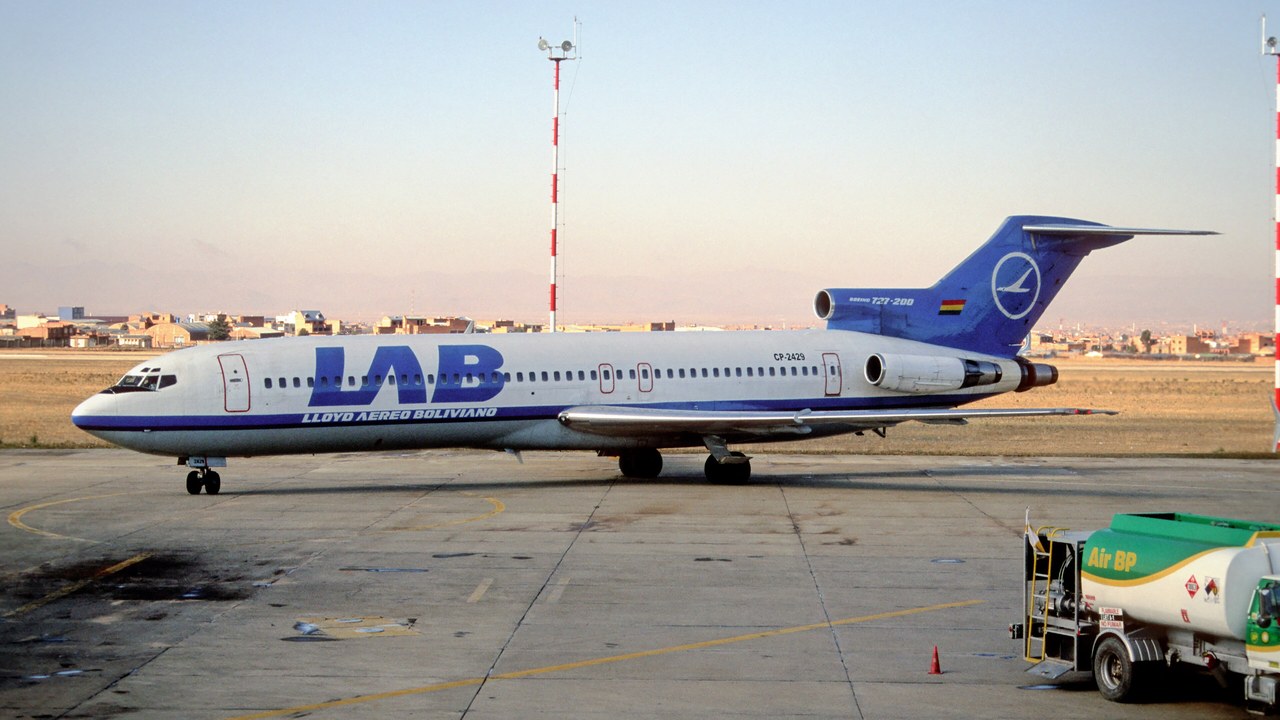
The airport at El Alto, serving La Paz in Bolivia, is the extreme example. At 13,325 feet, it is the highest international airport in the world. Lloyd Aéreo Boliviano, Bolivia's former flag carrier, flew Boeing 727s from there. Boeing even produced a version of the 727 with rocket boosters next to the main landing gear, mainly for hot-and-high operations at Mexico City and La Paz. They were intended only as an emergency fallback if an engine failed on take-off.
How Pilots Fight Thin Air
There are only a few options, and none of them is free:
- Reduce weight. Carry less fuel, fewer passengers, less cargo. For a combat aircraft, that can mean a smaller weapons load.
- Fly at a cooler time. Take-offs can be scheduled for early morning or evening, when the air is denser.
- Use the wind and the slope. A headwind and a downhill runway both shorten the take-off run.
- Add thrust. More powerful engines help. Some jet engines inject water to increase thrust temporarily, and rockets or extra jets can be strapped on for take-off.
Rocket-assisted take-off, known as JATO, was common in the 1950s and 1960s, when military jet engines were not powerful enough to get heavily loaded aircraft off short runways. It is seldom used today. A well-known later example was the Blue Angels' C-130 Hercules support aircraft, "Fat Albert", which used JATO bottles in its air show displays.

Fighter Jets Feel It Too
Jet fighters have far more thrust than a light aircraft, but they are not immune. A jet engine's thrust also falls as the air gets thinner and warmer, and a wing still needs a higher true airspeed to lift off. That is why take-off distances grow on hot days, and why air show pilots at high-elevation venues adjust their routines. We looked at exactly that in our preview of the Pikes Peak Regional Airshow, where the F-35A demo team flew from Colorado Springs at about 6,200 feet.
The lesson is the same for every pilot, from a student in a trainer to a fighter pilot: check the temperature as carefully as the elevation. The runway does not get shorter on a hot day, but the aircraft behaves as if it had.
The AOPA Air Safety Institute video below explains the "triple-H effect" of heat, height and humidity.
Sources: Wikipedia (Density altitude; Hot and high; El Alto International Airport); US Federal Aviation Administration, Density Altitude pamphlet FAA-P-8740-2; US Navy photo caption via Wikimedia Commons; AOPA Air Safety Institute, "Density Altitude - The Triple H Effect"


0 Comments