
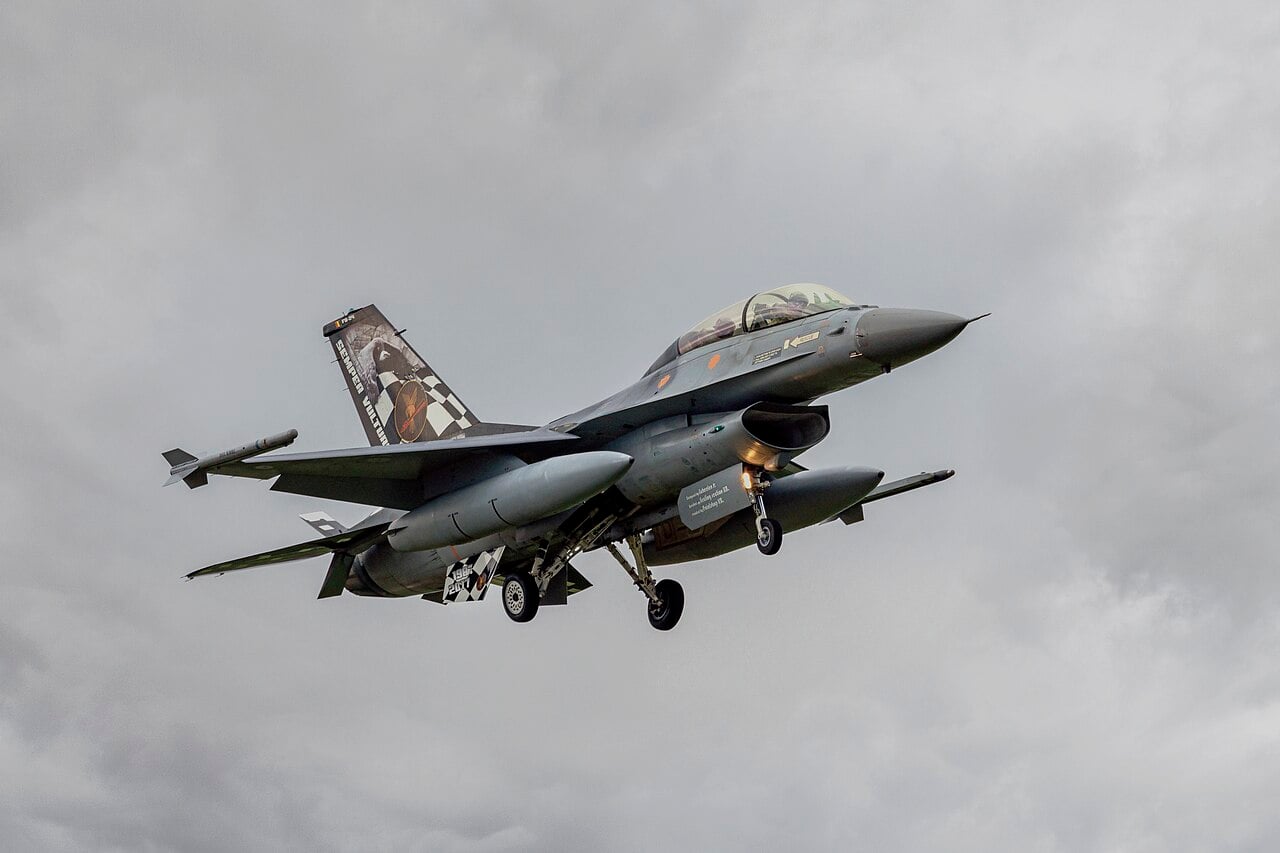
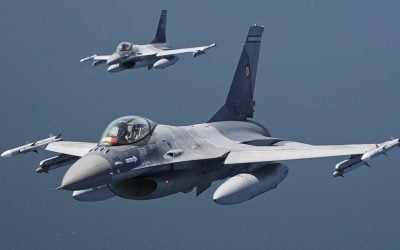
Two weeks ago the number was three. On Thursday evening in Brussels, over a bilateral meeting on the sidelines of the EU summit, Belgian Prime Minister Bart De Wever more than tripled it. Belgium, he said, will hand Ukraine ten F-16 fighters before 2026 is out.
The reason the jets can finally move has nothing to do with Ukraine and everything to do with Florennes. Belgium cannot give away its Vipers until their replacements land, and the replacement, the F-35A, has arrived years late. Now the stealth fighters are trickling in, and the old Falcons are being released.
The next day, Volodymyr Zelenskyy said a second European fighter is on its way: Sweden's Gripen. For a Force aérienne ukrainienne that spends its nights hunting drones and cruise missiles, it was a good two days in Brussels.
Informations clés
- Annoncé : 15 October 2026 in Brussels, by Prime Minister Bart De Wever after meeting Volodymyr Zelenskyy; widely reported on 16 October
- New figure: 10 Belgian F-16s for Ukraine in 2026
- Earlier 2026 figures: 7 jets (3 operational, 4 for spare parts), said Defence Minister Theo Francken on 18 June; 3 jets, announced by Zelenskyy on 29 September
- Long-term pledge: All 53 Belgian F-16s by 2029
- Why it slipped: Late F-35A deliveries; Belgium now has seven F-35As at home and eight in the United States for training
- Also on 16 October: Zelenskyy said Ukraine expects Swedish Gripen deliveries soon
Three, seven, ten: untangling the numbers
Belgian F-16 arithmetic has become a sport of its own this year, so it is worth laying out exactly who said what. On 18 June, ahead of a NATO defence ministers' meeting, Defence Minister Theo Francken said Belgium would deliver seven F-16s in 2026: three to fly combat missions and four to be cannibalised for spare parts.
On 29 September, Zelenskyy announced an agreement for three jets by the end of 2026 under an accelerated procedure, the story Afterburner covered in Belgium to Give Ukraine Three F-16s by the End of 2026. Those three matched the operational half of Francken's seven.
Then came Thursday. De Wever's words, as reported by Ukrainska Pravda, The Brussels Times and Interfax-Ukraine, were simply that Belgium will deliver ten this year. Some Ukrainian headlines, including UNN's, called them "additional" jets, but the body of those reports, like every other account, describes ten fighters in total by the end of 2026, not ten on top of the three. What De Wever did not say is how many of the ten will fly and how many will become parts donors. Until Brussels clarifies, ten is the ceiling for this year, not a guaranteed count of combat-ready aircraft.
The F-35 bottleneck
Belgium chose the F-35A in 2018 and expected its first jets in 2023. They did not reach Florennes Air Base until October 2025. Every month of that slip was a month in which the Belgian Air Component needed its F-16AM/BM fleet for its own NATO duties, and a month in which Kyiv waited.
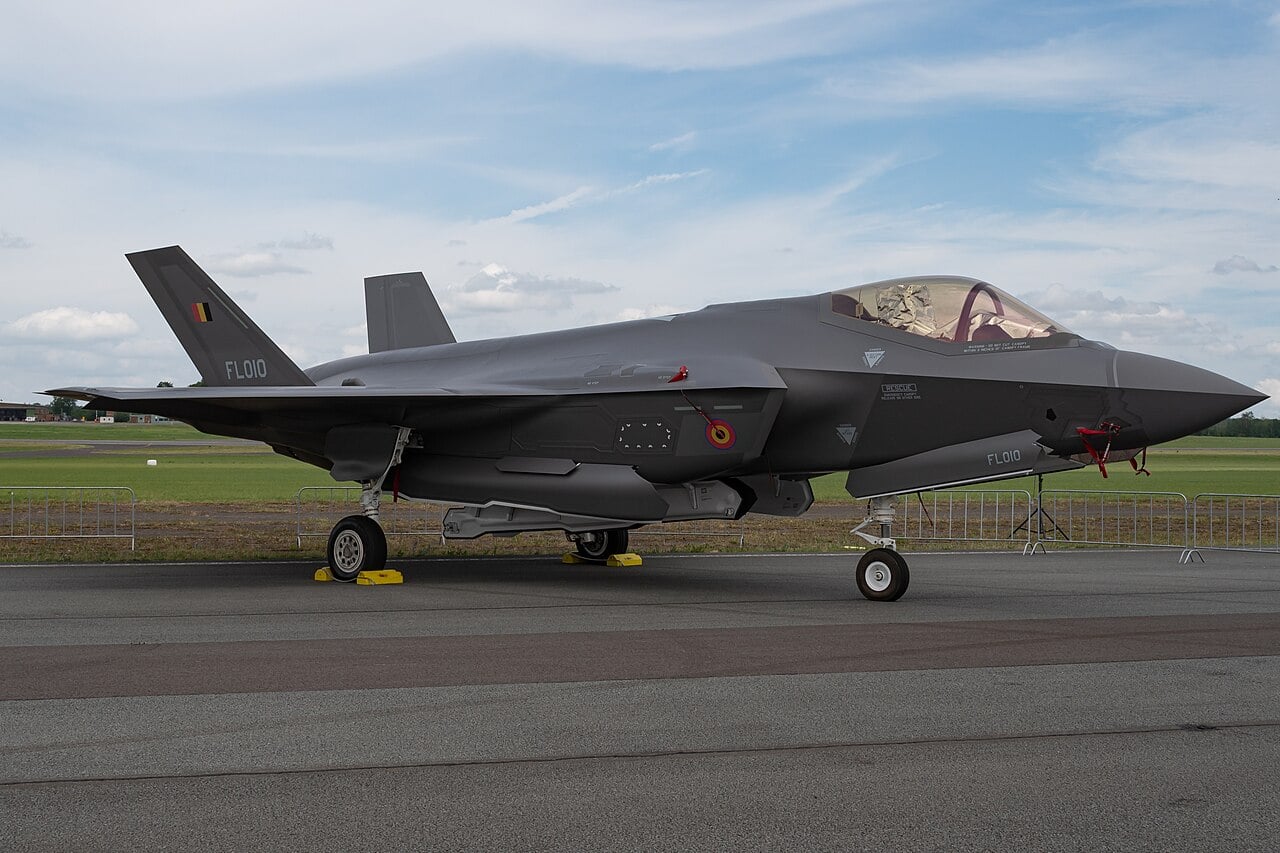
The pipeline is now moving. Three more F-35As left the United States on 15 September and crossed the Atlantic via the Azores, bringing the number of Belgian F-35As at home to seven, with eight more at Luke Air Force Base in Arizona for pilot and maintenance training. One further jet is expected before the end of the year. Belgium has ordered 34 in total, and plans to open a second F-35 base at Kleine-Brogel in 2027.
That is the context for De Wever's "starting to arrive". The F-35s are the key that unlocks the F-16s, and Brussels is now turning it faster than it planned in the summer.
AP footage of Volodymyr Zelenskyy touring a Belgian air base with F-16s in May 2024, when Belgium first pledged 30 jets to Ukraine.
Why Kyiv wants every airframe
Ukraine's F-16s rarely fight Russian jets. Their daily job is air defence: chasing Shahed-type drones, including the newer jet-powered versions, and cruise missiles over Ukrainian cities. Zelenskyy made the point himself after meeting De Wever, saying the F-16s are now helping greatly against jet-powered Shaheds and that Ukraine is working with Belgium to receive additional fighters as soon as possible.
The two leaders also discussed ammunition for the jets, including rounds made by Belgian manufacturer FN Herstal. That matters as much as the airframes: Ukrainian F-16s have been using their 20 mm cannon against drones, and a fighter without ammunition is just an expensive decoy.

Spare parts are the quiet half of the story. Four of the airframes in Belgium's original 2026 allocation have already been withdrawn from Belgian service to support Ukrainian maintenance training, according to Defense News as cited by Aviation A2Z. Every donated F-16, flying or not, helps keep Ukraine's mixed fleet of Danish, Dutch and Norwegian F-16s, which the first Belgian jets are due to join this year, in the air.
And then there is the Gripen
On 16 October, after talks with Swedish Prime Minister Ulf Kristersson, Zelenskyy thanked Sweden for the agreements on Gripen fighters and said Ukraine expects deliveries soon. In his words, the Swedish jets will complement Ukraine's F-16s, particularly in shooting down jet-powered Shaheds. He gave no date and no number.
The long-term plan, set out in a letter of intent signed in October 2025, envisages 100 to 150 Gripen E aircraft over 10 to 15 years. A firm contract for the first 16 Gripen Es followed, which Afterburner reported at the end of June 2026, and Swedish media have reported that older Gripens could come first. Whatever the mix, Ukraine's Western fighter force is steadily becoming a European one.
For now, Belgium's promise is the one with a deadline attached. Ten jets in ten weeks is a tall order for a programme that has slipped for two years. But for the first time, the aircraft that were holding everything up are actually parked at Florennes, and that changes the odds.
Sources: Ukrainska Pravda, The Brussels Times (Belga), Interfax-Ukraine, UNN, Kyiv Post, Euromaidan Press, Militarnyi, Aviation A2Z, LIGA.net, VRT
0 Comments