
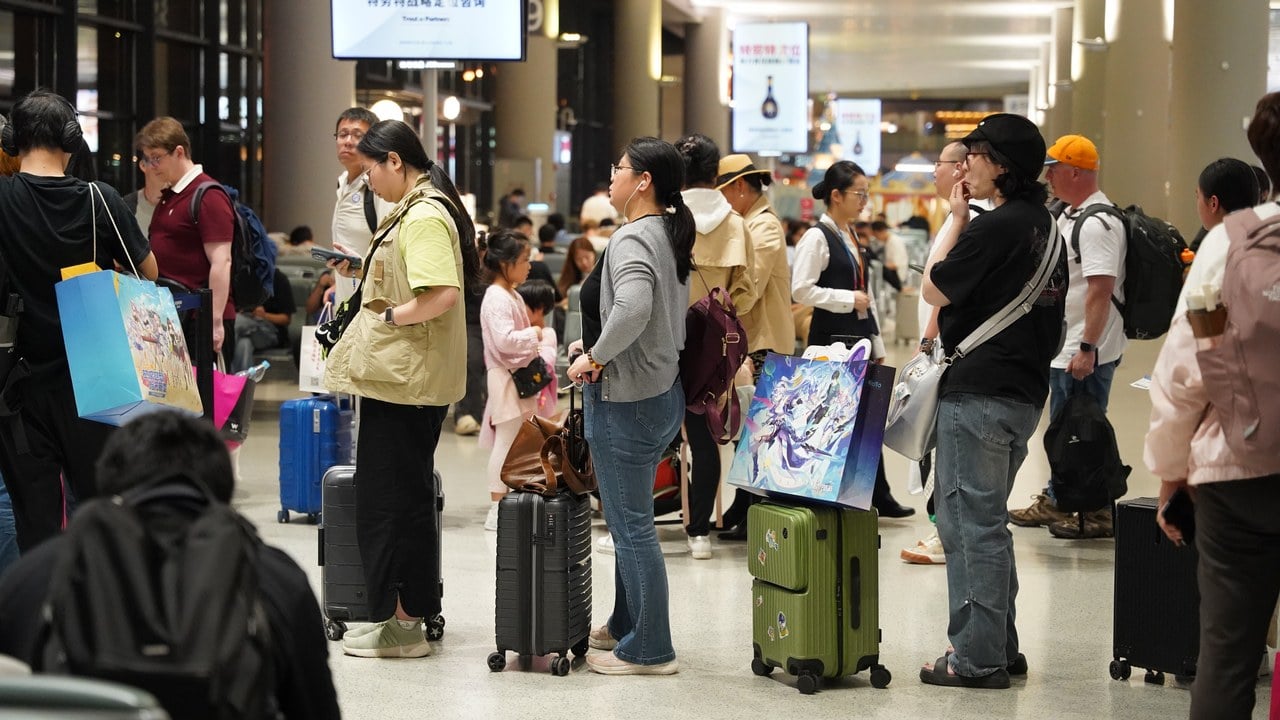
The gate agent picks up the microphone, and the whole departure lounge goes quiet. “Ladies and gentlemen, this flight is oversold. We are looking for volunteers willing to take a later flight…” Half the room studies the floor. The other half starts doing mental arithmetic.
That announcement is not a mistake, and it is not an accident. The airline sold more tickets than the aircraft has seats on purpose, because it expected some of those ticket holders not to turn up. Airline overbooking is legal on both sides of the Atlantic, and it is regulated in surprising detail.
What almost every article on the subject gets wrong is the difference between giving up your seat and being bumped. In law they are two completely different things, and the money attached to them is completely different too. Here is how the system works, who gets left behind, and what the official texts say you are owed.
Informations clés
- US rules: 14 CFR Part 250 (Oversales), flights departing the US on aircraft with 30+ seats
- US volunteers: Any amount agreed; restrictions must be disclosed first
- US involuntary, domestic: 1-2 hours late: 200% of one-way fare, max $1,075; over 2 hours: 400%, max $2,150
- US involuntary, international: 1-4 hours late: 200%, max $1,075; over 4 hours: 400%, max $2,150
- EU rules: Regulation (EC) No 261/2004 (EU261), Articles 4, 7, 8 and 9
- EU involuntary: €250 (up to 1,500 km), €400 (1,500-3,500 km or intra-EU over 1,500 km), €600 (other flights)
- How rare: 0.25 involuntary bumps per 10,000 US passengers, Q4 2024 (DOT)
- EU reform: Agreed 2026, compensation levels kept, due to apply from mid-2027
Why airlines sell seats they do not have
Every scheduled flight carries a predictable number of “no-shows”: passengers with flexible tickets who rebook, travellers stuck in traffic, business flyers who hold two reservations and use one. An aircraft that pushes back with ten empty seats that were all paid for is, from the airline’s point of view, flying around ten seats it could have sold twice.
So airlines use their booking history to forecast how many people will not show up on a given flight, and sell roughly that many extra tickets. The US Department of Transportation (DOT) puts it plainly on its consumer page: airlines oversell their flights to compensate for no-shows, and the practice of bumping is not illegal. It is the same yield-management logic that decides how airline tickets are priced.
Most days the forecast is right, and nobody notices. On the days it is wrong, the airline needs a few people to stay behind, and that is where the rules kick in.
TED-Ed’s animated explainer by Nina Klietsch on the probability maths behind why airlines sell more tickets than they have seats.
Volunteer first: the auction at the gate
The idea of paying volunteers instead of picking victims came from an economist, Julian Simon, who was the first to suggest that airlines should offer travellers incentives to give up their seats on overbooked flights rather than arbitrarily removing passengers. Today the volunteer-first principle is written into law in both the United States and the European Union.
In the US, 14 CFR Part 250 requires every carrier to ask for volunteers before it uses any other boarding priority. A volunteer is someone who willingly accepts the airline’s offer “in any amount” in exchange for the seat. There is no legal minimum and no maximum: the price of your seat is whatever you and the gate agent agree.
There is one important protection. Before you volunteer, the airline must tell you whether you are actually at risk of being bumped involuntarily, and what it would have to pay you if you were. If it offers travel vouchers, it must disclose the restrictions, such as blackout dates or fees, before you decide.
The EU’s Regulation (EC) No 261/2004, known as EU261, works the same way. Under Article 4, an airline that reasonably expects to deny boarding must first call for volunteers to surrender their reservations in exchange for benefits agreed with the passenger. Volunteers also get the regulation’s right to a refund or rerouting on top of those benefits.
Who gets bumped when nobody volunteers
If not enough people take the deal, the airline may deny boarding to others against their will. In the US, each carrier must publish its own boarding priority rules, written so the average passenger can understand them, and they may not unreasonably discriminate against anyone.
Part 250 lists the factors an airline may use. They include the time you checked in, whether you had a seat assignment before reaching the gate, the fare you paid, your frequent-flyer status, and a passenger’s disability or status as an unaccompanied minor. In practice that means the last person to check in on the cheapest ticket, with no status and no seat number, is the most exposed.
There is also a line the airline cannot cross. Since a DOT rule that took effect in April 2021, a US carrier may not deny boarding to, or remove, a passenger who checked in on time and whose boarding pass has been scanned and accepted at the gate, unless there is a safety, security or health risk or the passenger is behaving unlawfully or disruptively. Once you are through the gate, your seat is yours.
What the US owes you: the 200 and 400 percent rule
Involuntary denied boarding compensation in the US is set as a multiple of your one-way fare to your destination or first stopover, capped at a dollar figure. It depends on how late the airline’s replacement flight gets you there. The current figures in the Code of Federal Regulations are:
Domestic flights: no compensation if the airline gets you there within one hour of your original arrival time. Between one and two hours late: 200 percent of the fare, up to $1,075. More than two hours late, or no alternative offered: 400 percent of the fare, up to $2,150.
International flights departing the US: the same, but the bands are one to four hours (200 percent, up to $1,075) and more than four hours (400 percent, up to $2,150).
The airline must pay on the day and at the place the bumping happens, in cash or an immediately negotiable check, or within 24 hours if your replacement flight leaves first. It may offer vouchers instead, but only if they are worth at least as much, and it must tell you that you can refuse them and take the money. It must also refund any unused ancillary fees, such as a seat you paid for, and DOT reviews the caps every two years against inflation.
The rules do not cover everything. Part 250 applies to flights departing the US on aircraft with 30 or more seats. You lose your claim if you missed the check-in deadline, if the airline swapped in a smaller aircraft for operational or safety reasons, or, on aircraft with 60 or fewer seats, if weight and balance limits forced it to leave people behind.
What Europe owes you: flat rates by distance
EU261 ignores the fare and pays by distance instead. It applies to every flight departing an EU airport, and to flights arriving in the EU from outside if the airline is a European carrier. A passenger denied boarding against their will must be compensated immediately under Article 7: €250 for flights of 1,500 km or less, €400 for flights within the EU over 1,500 km and other flights of 1,500 to 3,500 km, and €600 for all other flights.
The airline may halve that amount if it reroutes you and you arrive within two, three or four hours of your original schedule, depending on the distance band. On top of the cash, you get a choice between a full refund within seven days or rerouting, plus free meals and refreshments, a hotel if you need one, and transport to it.
Those rules are about to be updated. In June 2026 the European Parliament and Council agreed the first overhaul of EU air passenger rights in more than two decades, and both institutions approved it in July. According to the European Commission, the €250, €400 and €600 compensation levels are kept. Euronews reports the new rules apply from mid-2027; until then, the 2004 text is the law.
How often does it really happen?
Less often than the horror stories suggest. Wikipedia’s summary of US data says that in 2018, 351,904 passengers on the 17 major US airlines gave up or lost their seats, of whom 10,938 were bumped involuntarily. In the fourth quarter of 2024, DOT reported an involuntary bumping rate of 0.25 per 10,000 passengers.
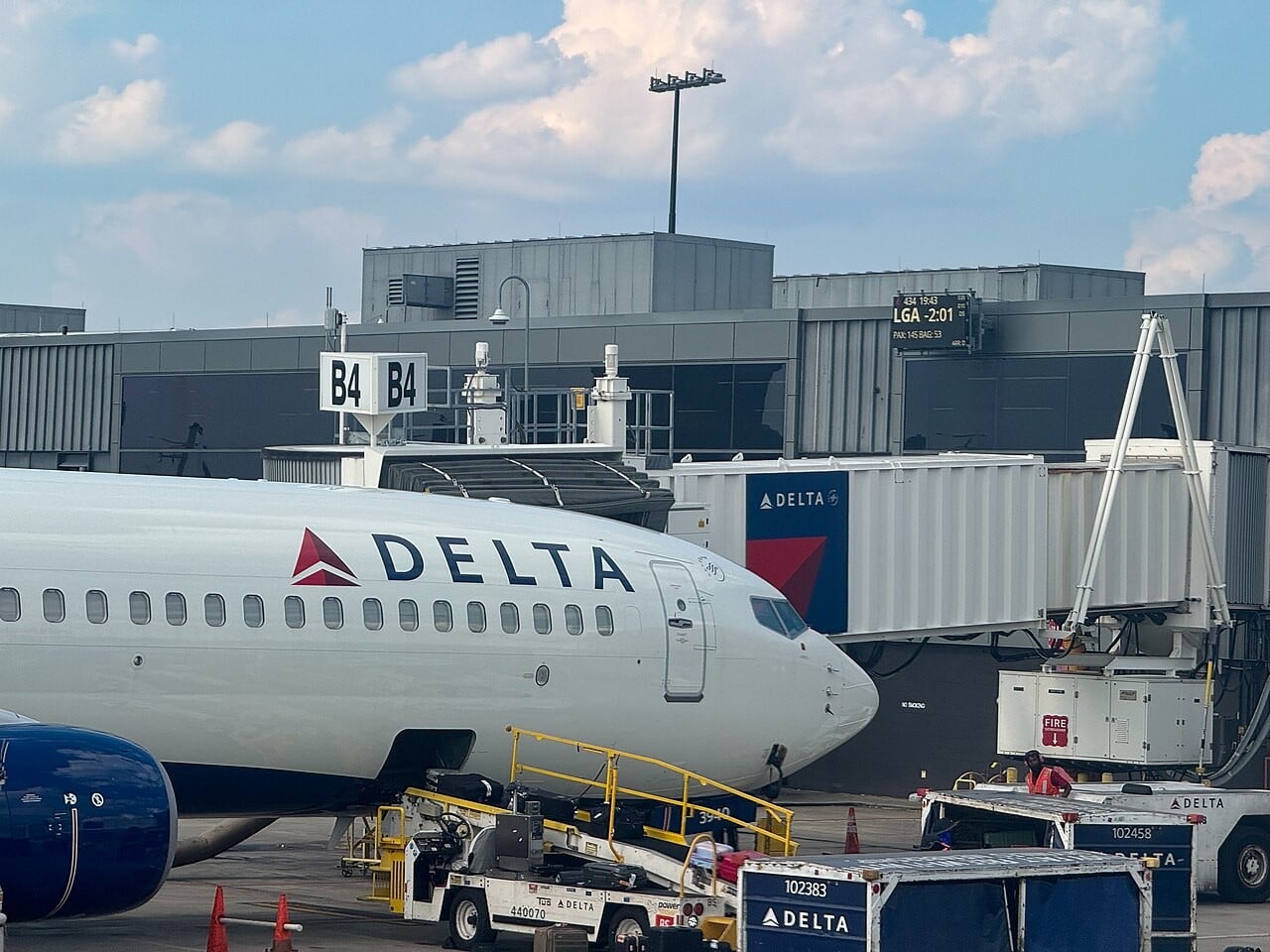
The airlines are not all alike. DOT’s Air Travel Consumer Report for the first half of 2025, as reported by View from the Wing and AviationA2Z, showed Delta Air Lines bumping nobody involuntarily, while American Airlines involuntarily denied boarding to 7,163 passengers in the same six months.
The industry’s attitude changed sharply after 9 April 2017, when a passenger refused to give up his seat on a full United Express flight at Chicago O’Hare to make room for four airline crew members, and was injured as airport security officers forcibly removed him. Volunteer offers of $400 and then $800 in vouchers had found no takers. United later said the flight had not been oversold, but sold out.
The fallout was immediate. United raised the maximum voucher it could offer bumped passengers to $10,000, Delta raised the limit its supervisors could offer from $1,350 to $9,950, and Southwest announced it would stop overbooking. In January 2021, DOT finalised the rule protecting passengers who are already through the gate, implementing a 2018 act of Congress.
CNBC International explains why airlines overbook flights and what it means for passengers.
How to play the overbooking game
If you can be flexible, an oversold flight is an opportunity: the volunteer price is negotiable, and in the US there is no ceiling. Ask what the airline would pay you if it bumped you involuntarily, and do not accept vouchers until you have seen their restrictions. If you cannot be flexible, check in early, pick a seat in advance and get to the gate on time.
And if you are bumped against your will, remember the one fact the gate agent may not volunteer: in the US the law says cash, and in Europe the law says immediately. Overbooking is a bet the airline makes with your seat. When it loses, the rules make sure it pays.
Sources: eCFR, 14 CFR Part 250 (Oversales); EUR-Lex, Regulation (EC) No 261/2004; US Department of Transportation (Bumping and Oversales); Bureau of Transportation Statistics; European Commission; Euronews; View from the Wing; AviationA2Z; Wikipedia (Overselling; United Express Flight 3411 incident; Julian Lincoln Simon)


0 Comments