
In early November 1956, on the deck of HMS Eagle in the eastern Mediterranean, a deck officer raised his flag and a grey jet with rockets under its wings shot off the catapult towards Egypt. It was a Hawker Sea Hawk, and for the next few days it and its sister squadrons would do most of Britain’s close-in ground attack work in the Suez campaign.
The Sea Hawk was never the fastest jet of its day. It had straight wings when swept wings were becoming the fashion, and a centrifugal-flow engine when that technology was already a dead end. Yet it was so well behaved, so sturdy and so easy to land on a pitching deck that it outlived its more glamorous contemporaries and fought its last war in 1971, half a world away, in Indian hands.
This is the story of Hawker’s first jet: the aircraft that turned the company from piston fighters to jets, and pointed the way to the Hunter.
Informations clés
- Taper: Single-seat carrier-based jet fighter and fighter-bomber
- Fabricant: Hawker; most built by Armstrong Whitworth, Coventry
- Premier vol : 2 September 1947 (P.1040 prototype VP401)
- Moteur: One Rolls-Royce Nene, about 5,000 to 5,200 lb thrust
- Vitesse maximale : About 600 mph
- Armement: Four 20 mm Hispano cannon, plus bombs and rockets on later versions
- Construit: More than 500
- Opérateurs : Royal Navy, West Germany, the Netherlands, India
- Combat: Suez 1956; Indo-Pakistani wars of 1965 and 1971
- À la retraite: 1983, Indian Navy
From Fury to “trouser legs”
Hawker came late to jets. Until late 1944 its design office under Sydney Camm was busy with the Hurricane, Typhon et Tempest. In November 1944 Camm’s team proposed the P.1035: essentially the Fury fighter, the land-based sibling of the Sea Fury, with its piston engine removed and a Rolls-Royce Nene turbojet installed in the middle of the fuselage.
Within a month the design had changed in one clever way. Instead of a long tailpipe, the P.1040 split the exhaust into two short pipes emerging from the wing roots, quickly nicknamed the “trouser legs”. The short jet pipes reduced thrust losses, the intakes moved into the thickened wing roots, and the space freed in the rear fuselage held fuel. With tanks fore and aft of the engine, the centre of gravity barely moved as fuel burned, and the aircraft had more range than many early jets.
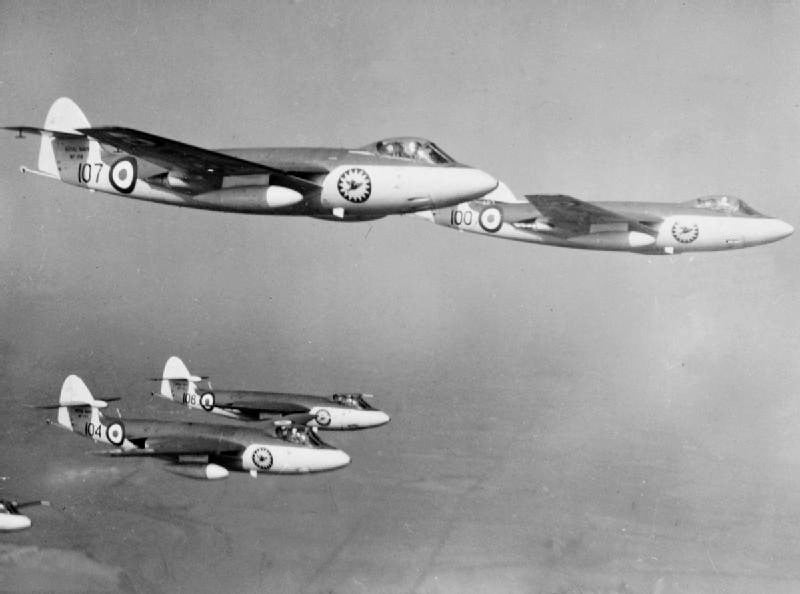
It was also the first Hawker design with a nosewheel. The Royal Air Force lost interest after the war, reportedly because the design offered too little over the Gloster Meteors et de Havilland Vampires already in service, so in January 1946 Hawker offered the design to the Royal Navy. In May 1946 the Admiralty ordered prototypes to specification N.7/46.
The first prototype, VP401, flew from Boscombe Down on 2 September 1947 with Bill Humble at the controls. The navalised second prototype had folding wings and an arrester hook, and carrier trials aboard HMS Illustrious in 1949 led to a longer wingspan and a longer hook. On 22 November 1949 the Royal Navy ordered 151 production aircraft, now named Sea Hawk.
A Short History of the Hawker Sea Hawk, from the P.1040 prototype to the last Indian Navy aircraft.
Super-priority and a Coventry production line
The Korean War suddenly made carrier aircraft urgent. In 1951 Winston Churchill’s government gave the Sea Hawk “super-priority” status to speed production. Because Hawker was also developing the Hunter, only 35 F1s were built at Kingston before the line moved to Armstrong Whitworth in Coventry. The first production Sea Hawk F1 flew on 14 November 1951, and 806 Naval Air Squadron received the first operational aircraft in 1953.
The basic recipe never changed much. A single Nene of about 5,000 pounds of thrust, later 5,200 in the Nene 103, gave a top speed of around 600 mph. Armament was four 20 mm Hispano cannon. What did change was the job. The F2 added powered ailerons to cure a tendency to aileron oscillation, then the FB3, FGA4, FB5 and FGA6 turned the fighter into a fighter-bomber able to carry bombs, rockets and drop tanks.
Suez: the Sea Hawk’s war
Operation Musketeer, the Anglo-French intervention at Suez, began on 31 October 1956. The Royal Navy brought six Sea Hawk squadrons: two aboard the fleet carrier HMS Eagle and two each on the light carriers HMS Albion and HMS Bulwark. RAF Hunters based in Cyprus did not have the range for the job, so the Sea Hawks, with Westland Wyverns and escorted by Sea Venoms, became Britain’s strike force over the Canal Zone.
They attacked airfields, vehicles, railways and anti-aircraft positions, often through heavy flak. Several came back badly damaged, and according to the Thunder & Lightnings history of the type, two were lost to ground fire. Our story La dernière guerre aérienne à l'ancienne covers the whole campaign.
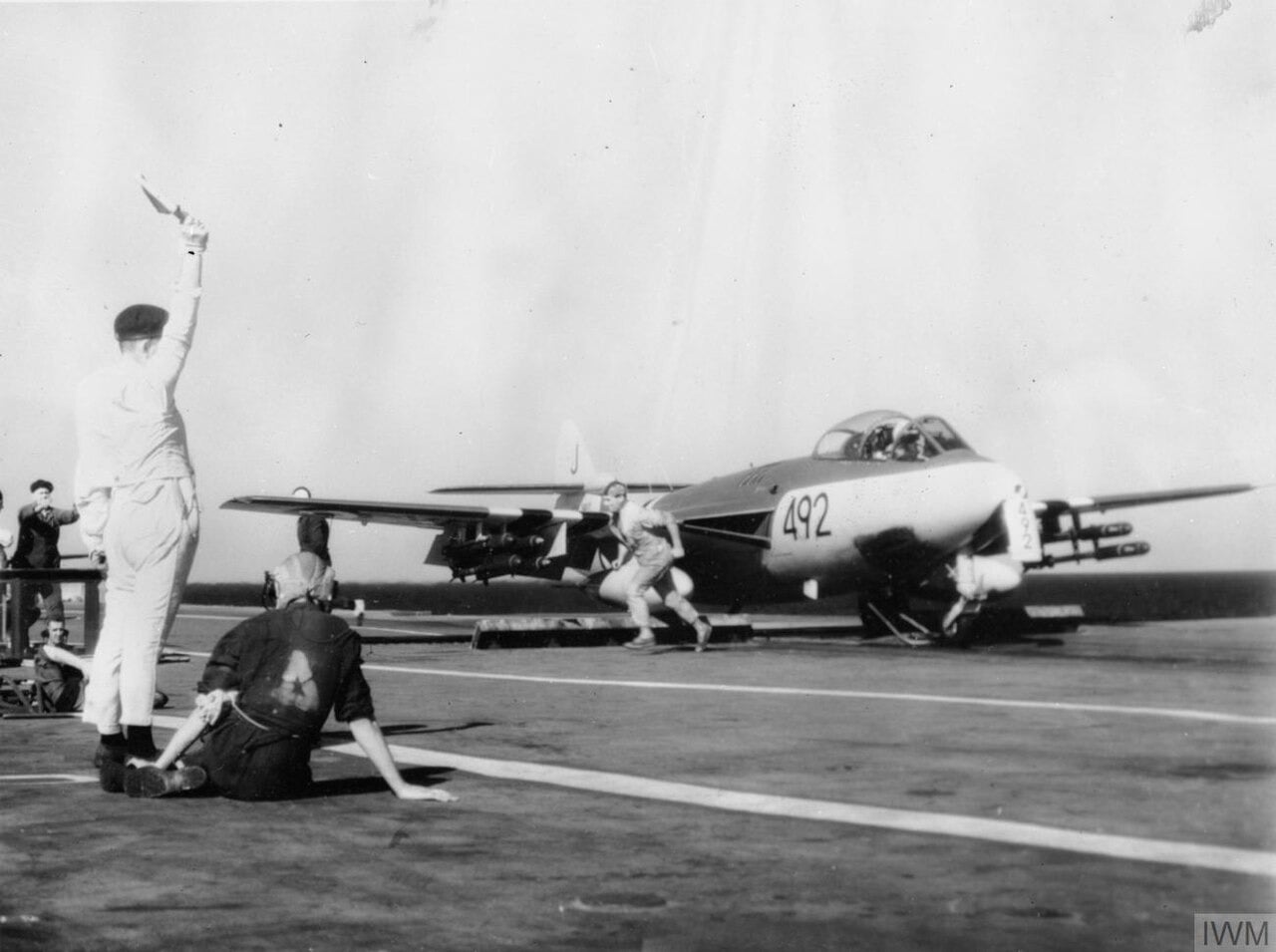
Suez was the Sea Hawk’s first and last combat with the Fleet Air Arm. In 1958 the Supermarine Scimitar et de Havilland Sea Vixen began replacing it, and on 15 December 1960 the last front-line squadron, 806 NAS, disbanded at Brawdy. Civilian-operated Sea Hawks kept flying as fleet requirements aircraft until 1969.
Archive footage of Royal Navy Sea Hawk operations in the 1950s.
A second career abroad
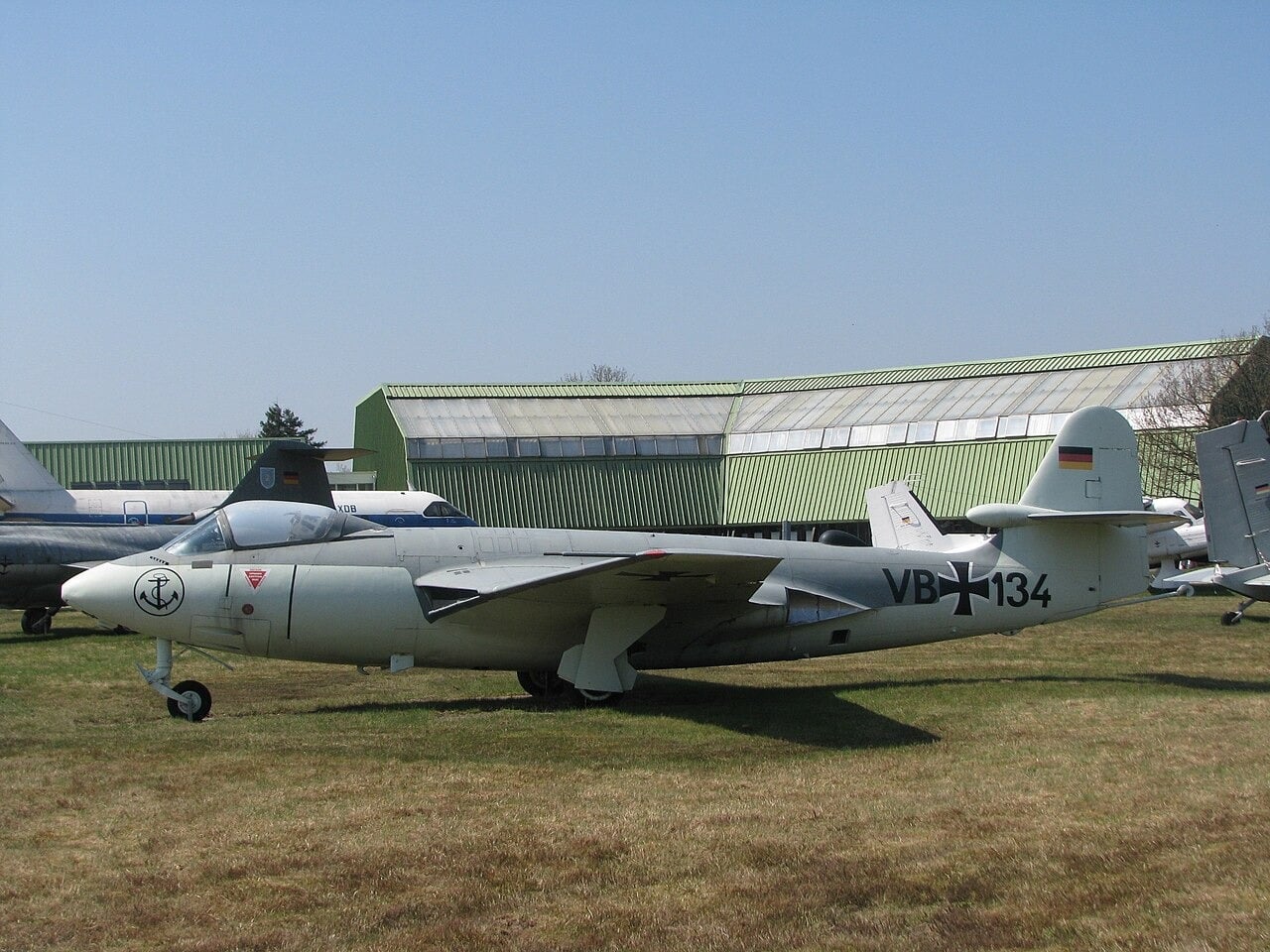
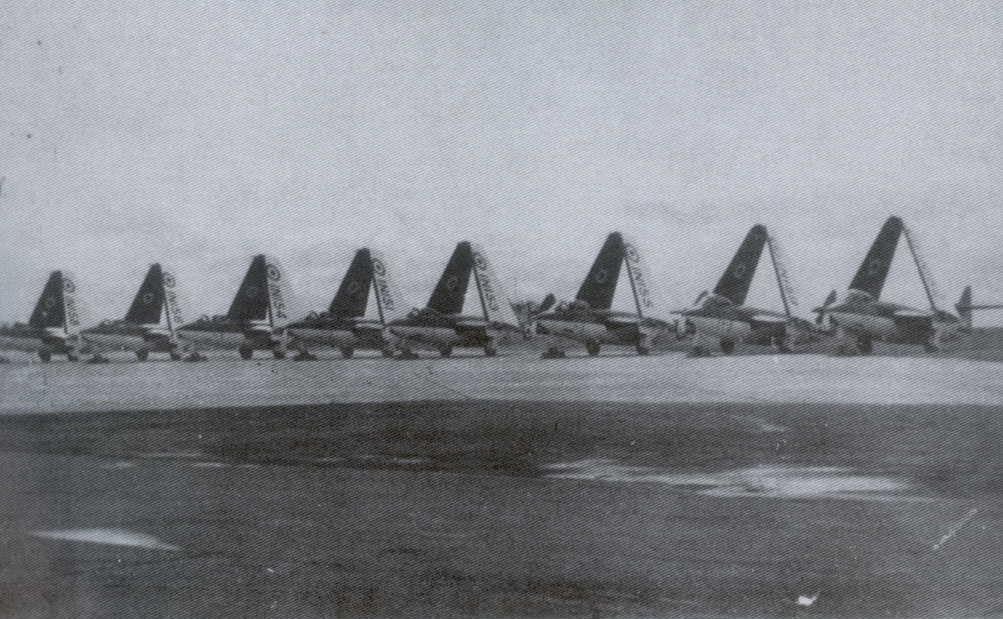
Retirement in Britain was only half the story. In the mid-1950s West Germany bought 64 Sea Hawks for its new navy, half of them Mk 100 day fighters and half Mk 101s with a search radar pod under one wing, both with a taller fin. They served with German Naval Aviation until the Chasseur stellaire F-104 replaced them in the mid-1960s.
The Netherlands took 22 Mk 50s for its naval air service, paid for with NATO funds and later armed with Sidewinder air-to-air missiles. They flew from the carrier HNLMS Karel Doorman before moving ashore, and the last were withdrawn in October 1964.
India became the last and most loyal operator. From 1960 its Sea Hawks flew from INS Vikrant, and the fleet grew with refurbished British and ex-German airframes. In the 1971 war Vikrant’s Sea Hawks struck ports and shipping in what was then East Pakistan. Indian accounts credit them with sinking or disabling numerous vessels without losing an aircraft. The Indian Navy finally retired the type in 1983, replacing it with the Busard de mer.
WV908 and the survivors
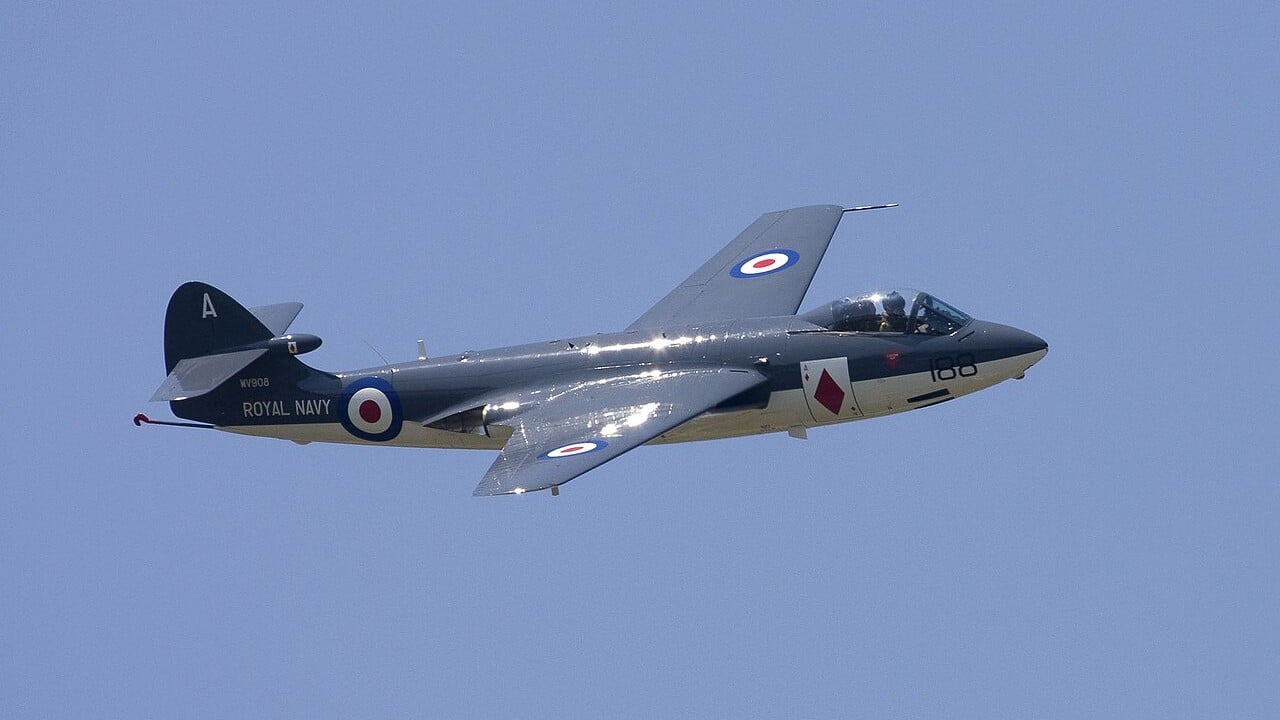
More than 500 Sea Hawks were built, and dozens survive in museums in Britain, Germany, the Netherlands, Malta and India. The most famous is WV908, built at Coventry in 1954 as an FGA4 and later converted to FGA6. Restored by volunteers at Culdrose, it joined the Royal Navy Historic Flight at Yeovilton in 1982 and last displayed in 2010.
In June 2022 the charity Navy Wings announced it would stop work on its grounded Sea Vixen and return WV908 to flight instead.
A Royal Navy Historic Flight Sea Hawk display, set to music.
The Sea Hawk never broke a speed record or won a dogfight that history remembers. What it did was teach Hawker how to build jets, give the Royal Navy a reliable strike aircraft at its moment of need, and serve three more navies after Britain had moved on. For a straight-winged aeroplane with trouser-leg exhausts, that is not a bad epitaph.
Sources: Wikipedia (Hawker Sea Hawk), Thunder & Lightnings, Navy Wings via Vintage Aviation News and European Airshows, Australian Aviation
0 Comments