
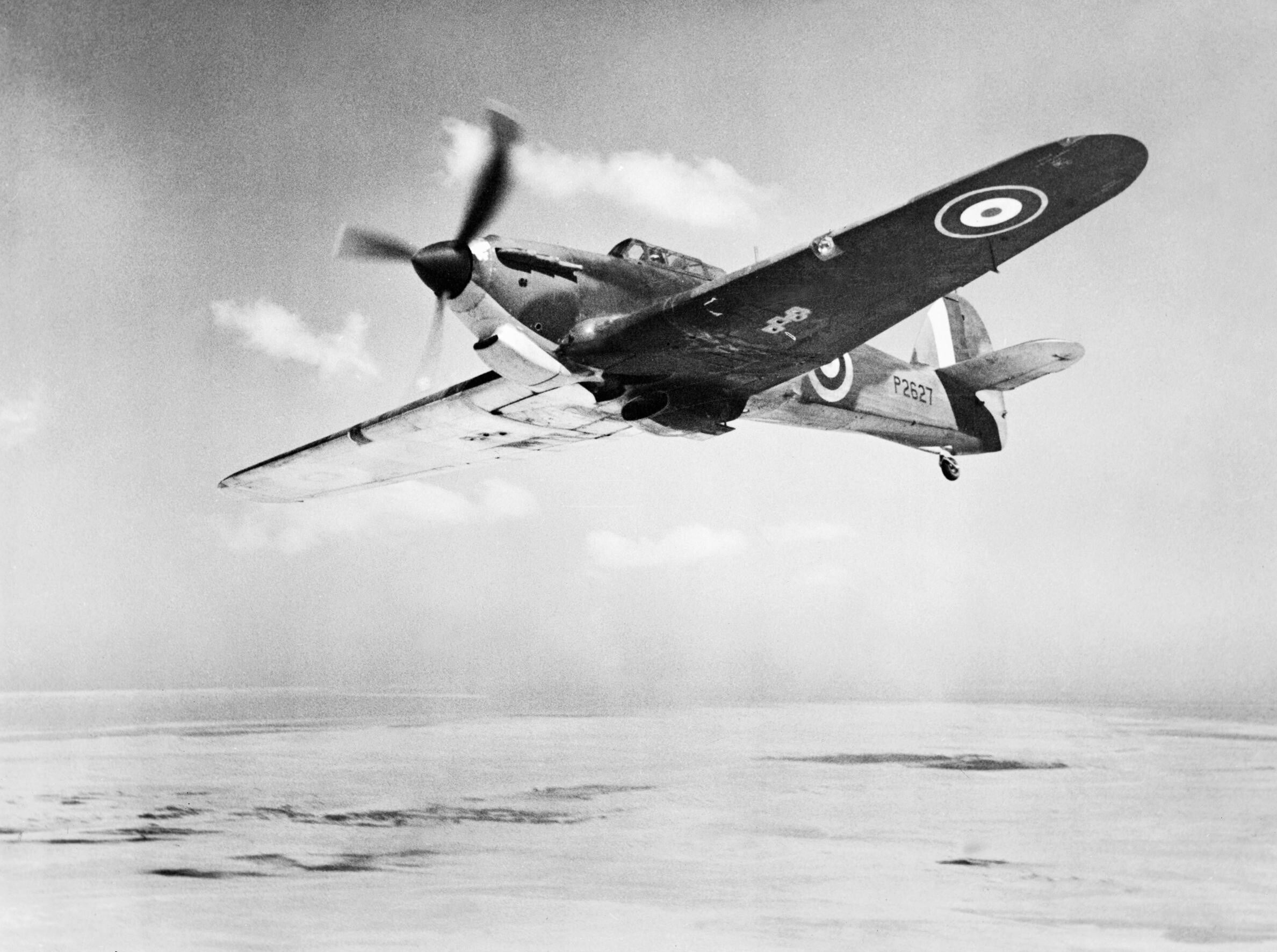
Hawker Hurricane
The workhorse of the Battle of Britain
Overshadowed by the Spitfire, yet credited with the majority of RAF victories in the summer of 1940 — a rugged, easy-to-repair fighter that carried Britain through its most dangerous hour and went on to fight in every theatre of the war.
The true workhorse of the Battle of Britain
When people picture the Battle of Britain they picture the Spitfire. But the fighter the Royal Air Force actually had most of in 1940 — and the one credited with the majority of its air-to-air victories — was the Hawker Hurricane. Designed by Sir Sydney Camm at Hawker against Air Ministry Specification F.36/34, it was a deliberately conservative aircraft: a modern monoplane wing, retractable undercarriage and the new Rolls-Royce engine wrapped around a proven, traditional airframe.
Power came from the Rolls-Royce Merlin, the V-12 that would also drive the Spitfire, Lancaster and Mustang. The prototype K5083 first flew on 6 November 1935, and the type entered RAF service in December 1937 with No. 111 Squadron — Britain’s first monoplane fighter and, in the words of the Imperial War Museum, the first RAF production aeroplane to fly at over 300 miles an hour.
Its genius was its ruggedness. The fuselage was a steel-tube Warren truss overlaid with wooden formers and skinned in doped Irish linen — “old-fashioned” by 1940, but easy to mass-produce and, crucially, easy to repair. Bullets and even cannon shells often passed clean through the fabric rear fuselage without wrecking the structure, and squadron riggers could patch battle damage on the airfield overnight. Through the attrition of 1940 that kept far more Hurricanes in the fight, day after day. It went on to serve as a “Hurribomber,” a 40mm tank-buster, a night fighter and a carrier-borne Sea Hurricane, in theatres from Malta and the Western Desert to Burma and the Arctic.
01The Hawker Hurricane versus the Spitfire: which fighter really won the Battle of Britain?
The Spitfire was faster, climbed better at altitude and got the glory. But in the summer of 1940 the Hurricane was the aircraft Fighter Command had most of — roughly 32 squadrons to the Spitfire’s 19 — and it is credited with the majority of the RAF’s air-to-air victories, a figure commonly cited at around 55–60%. The RAF Museum records that Hurricanes destroyed more enemy aircraft in the battle than all other air and ground defences combined, while the IWM notes that over half of the aircraft shot down were credited to Hurricanes rather than Spitfires.
These are RAF claims, which historically ran higher than confirmed Luftwaffe losses, so the exact percentage should be read as indicative rather than precise. The tactical division of labour helps explain it: the RAF generally sent the steady, hard-hitting Hurricanes against the bomber formations while the nimbler Spitfires took on the escorting Bf 109s. Not “better” than the Spitfire — but arguably more important to winning the battle.
What makes it special
A rugged airframe — and a steady gun platform
The Hurricane’s steel-tube Warren-truss frame with a fabric-covered rear fuselage was, by 1940, technically dated — yet it was exactly what a nation fighting for survival needed. It used established industrial skills so it could be built fast, it shrugged off battle damage, and shot-up machines could be patched and re-doped overnight. Its wide-track landing gear made it forgiving on rough airfields, and its steadiness made it an excellent, stable platform for concentrating eight machine guns on enemy bombers.
Rolls-Royce Merlin power
The Hurricane was among the first aircraft built around the Rolls-Royce Merlin, the legendary V-12 that defined British air power in the war. The Mk I’s Merlin II/III of about 1,030 hp gave it 300+ mph performance and the climb to reach incoming raids; later marks used the more powerful Merlin XX (~1,280 hp), keeping the airframe useful in ground attack and second-line roles long after it was outclassed as a front-line interceptor.
The most versatile fighter of the war
Few WWII aircraft were stretched into so many roles. The Hurricane became the bomb-carrying “Hurribomber” for ground attack; the 40mm tank-buster Mk IID in the North African desert; a night fighter; and, at sea, the carrier-borne Sea Hurricane and the catapult-launched “Hurricat” flown off CAM merchant ships to defend Atlantic and Arctic convoys.
02The Hawker Hurricane’s fabric-and-tube airframe: why old-fashioned construction was a wartime advantage
While the Spitfire used a modern stressed-skin aluminium structure, the Hurricane kept a Warren-truss box girder of high-tensile steel tube, braced with duralumin, overlaid with wooden formers and stringers and skinned in doped Irish linen fabric over the rear fuselage, with metal panels forward. Early wings were fabric-covered; metal-skinned wings were phased in during Mk I production. This mixed structure was easy to build with the tooling and skills British industry already had, which allowed high production when it mattered most. And it was easy to repair: rifle-calibre rounds and even cannon shells frequently passed straight through the fabric without destroying structure, so riggers could patch and re-dope damage on the airfield overnight rather than writing the aircraft off.
03The Hawker Hurricane’s many roles: Hurribomber, 40mm tank-buster and Sea Hurricane
As it was overtaken as a pure interceptor, the Hurricane was reinvented again and again. The “Hurribomber” carried bombs for ground attack across multiple theatres. In the Western Desert the Mk IID slung two Vickers 40mm Class “S” cannon to become a dedicated low-level tank-killer, first used at Bir Hakeim in June 1942 by No. 6 Squadron — nicknamed “The Flying Can Openers.” The Mk IIC served as a night fighter. At sea, the Sea Hurricane flew from carriers, and the catapult-launched “Hurricat” was fired off CAM ships on one-shot missions against Fw 200 Condors — after which the pilot had to ditch or bail out.
Full specifications
Baseline figures are for the Hawker Hurricane Mk I as flown in the summer of 1940: Rolls-Royce Merlin III, metal-skinned wings, constant-speed propeller and eight .303 in Brownings. Grey text gives the main differences for the Merlin XX marks — the twelve-gun Mk IIB, the cannon-armed Mk IIC and the rocket-carrying Mk IV. Hurricane figures vary between sources, partly because early Mk Is with fabric wings and two-blade propellers were far slower than the 1940 standard aircraft quoted here; where sources disagree the range is shown rather than one tidy number.
Dimensions & weights
- Crew
- 1 (pilot)
- Length
- 9.84 m (32 ft 3 in)
- Wingspan
- 12.19 m (40 ft 0 in), unchanged across every land-based mark
- Height
- 4.0 m (13 ft 1 in), tail down on the wide-track inward-retracting undercarriage
- Wing area
- 23.92 m² (257.5 sq ft). A big, thick, generous wing — the reason the Hurricane turned well, carried heavy loads and forgave rough grass strips
- Empty weight
- 2,308 kg (5,085 lb); Mk IIC about 2,630 kg (5,800 lb)
- Loaded weight
- 2,994 kg (6,600 lb) fully armed and fuelled; Mk IIC about 3,480 kg (7,670 lb)
- Max takeoff weight
- 3,080 kg (6,790 lb); Mk IIC with bombs or drop tanks up to about 3,670 kg (8,100 lb)
- Internal fuel
- ~441 l (~97 imp gal / ~116 US gal) in two wing tanks plus a 28 imp gal reserve tank in the fuselage directly ahead of the instrument panel. That reserve tank was the aircraft’s worst feature: when it was hit it flooded the cockpit with burning fuel, and a grim number of Guinea Pig Club burn cases came out of Hurricanes. A fireproof bulkhead and self-sealing covering were retrofitted during 1940
Performance
- Max speed
- 519 km/h (322 mph) at 5,330 m (17,500 ft), Mk I on 100-octane fuel with a constant-speed propeller. Mk IIC about 543 km/h (337 mph) at 6,700 m (22,000 ft). For comparison the Bf 109E did roughly 570 km/h (354 mph): the Hurricane was the slowest of the three main fighters over England in 1940 and could not escape a 109 that wanted to fight
- Cruise speed
- 476 km/h (296 mph) maximum continuous cruise at 6,100 m (20,000 ft); economical cruise nearer 340 km/h (211 mph)
- Rate of climb
- 14.1 m/s (2,780 ft/min) at sea level; about 6.5 minutes to 4,570 m (15,000 ft). With the original two-blade fixed-pitch propeller the same airframe needed roughly half again as long
- Service ceiling
- 10,970 m (36,000 ft); above roughly 6,000 m (20,000 ft) the Mk I fell away badly against the Bf 109E, which is exactly where the escorting fighters usually were
- Range
- ~740 km (~460 mi) on internal fuel; in practice a Fighter Command interception sortie was about an hour and a half, and pilots regularly landed with minutes of fuel left
- Ferry range
- ~1,450 km (~900 mi) with two 44 imp gal drop tanks; Mk II with 90 imp gal tanks considerably further, at the cost of any usable combat performance
- Takeoff run
- 370 m (1,210 ft) at normal loaded weight from firm grass. Short-field behaviour was outstanding for the period and mattered enormously on improvised strips in France, the desert and Burma
- Landing run
- 400 m (1,310 ft) with brakes on grass. The wide-track undercarriage made the Hurricane markedly easier to land than the narrow-track Spitfire, which cut training accidents
- Wing loading
- 125 kg/m² (25.6 lb/sq ft) at loaded weight — lower than the Spitfire and much lower than the Bf 109E, which is why a Hurricane could out-turn both
Propulsion & systems
- Engine
- Rolls-Royce Merlin III 27-litre (1,647 cu in) liquid-cooled supercharged V-12, driving a universal propeller shaft that would take either de Havilland or Rotol units. Mk II onward used the two-speed supercharged Merlin XX; Canadian-built aircraft used the licence-built Packard Merlin 28 or 29
- Power
- 1,030 hp (768 kW) at 3,000 rpm at 4,950 m (16,250 ft); 1,310 hp (977 kW) at +12 lb boost on 100-octane fuel for five minutes at low level, a wartime clearance that gave the 1940 Hurricane a real step in performance. Merlin XX: 1,185 hp (884 kW)
- Propeller
- Three-blade constant-speed de Havilland or Rotol, 3.43 m (11 ft 3 in). The first squadron Hurricanes had a Watts two-blade fixed-pitch wooden propeller, which was a compromise at every speed: acceptable in level flight, poor on takeoff and worse in the climb. Two-pitch propellers came first, then the emergency programme of spring 1940 converted the front-line force to constant-speed units in a matter of weeks. It transformed the aircraft — several thousand feet of ceiling, a third off the time to height and a far shorter takeoff — and it was finished only just before the Battle of Britain began
- Construction
- Steel-tube fuselage, fabric covered and this is the central fact about the Hurricane. Sydney Camm built it in the Hawker biplane tradition: a Warren-girder frame of bolted high-tensile steel tubes, wooden formers and stringers to give it shape, and doped Irish linen over the top. It was a generation behind the Spitfire’s stressed-skin monocoque, and it cost speed. What it bought was decisive in 1940. The Hurricane needed roughly 10,300 man-hours against something like 15,200 for a Spitfire, existing factories and existing skills could build it immediately, and a damaged aircraft could be patched with fabric and dope by a squadron working party overnight instead of being sent away for a new skin panel. Cannon shells and rifle-calibre rounds frequently punched clean through the fabric rear fuselage without finding anything to detonate against. The wings were fabric-covered on early aircraft too, but metal stressed-skin wings were introduced from 1939 and were standard by the Battle of Britain
- Armament
- 8 × 7.7 mm Browning (.303 in) machine guns with 334 rounds per gun, grouped in two tight batteries of four in the thick wing. Mk IIB: twelve .303s. Mk IIC: four 20 mm Hispano cannon. Mk IID: two 40 mm Vickers S guns. Mk IV: eight RP-3 rockets or two 40 mm guns on a universal wing
- First flight
- 6 November 1935 prototype K5083, flown by P. W. S. “George” Bulman from Brooklands — four months before the Spitfire
- Service entry
- December 1937 with No. 111 Squadron at Northolt, the RAF’s first monoplane fighter, first with eight guns and first able to exceed 300 mph
- Built
- ~14,500 (commonly given as 14,487 to 14,533) including about 1,400 built by Canadian Car and Foundry. Production ran from 1937 to 1944 at Hawker, Gloster and Austin in Britain, with a Yugoslav and a Belgian licence line before 1940
- Unit cost
- ~GBP 4,000–5,000 (1939–40 airframe-and-engine figures, hedged: contemporary costings were quoted on different bases and rarely agree). Roughly comparable Spitfire figures run higher, and the labour gap was larger than the money gap — the point of the Hurricane was that Britain could have a great many of them, quickly
- Cost per flight hour
- ~USD 10,000–15,000 (hedged; modern warbird operating cost, not a wartime figure). Direct fuel and oil are a small part of it. The dominant cost is the Merlin: a full overhaul runs into the high hundreds of thousands of dollars and is due every few hundred hours, and insurance, hangarage and airshow-standard maintenance on a fabric-covered airframe do the rest. Owners quote very different numbers depending on what they include
04The Hawker Hurricane’s cost: why no reliable price exists
The Hurricane was a wartime state product, built in the tens of thousands under conditions where per-unit accounting bears little resemblance to a modern flyaway price. Histories agree it was significantly cheaper to build than the Spitfire — its simpler, older construction was part of the point — but a firm, documented pound figure for a single Hurricane is not reliably recorded in credible sources. Informal figures of roughly £4,000–5,000 circulate but could not be verified and should not be taken as fact. A meaningful cost-per-flight-hour, in the modern sense, simply did not exist in 1940s military accounting. Treat any precise price attached to a Hurricane as an estimate.
Armament & payload
“Eight guns in a fabric aeroplane”: the fighter that did most of the shooting in 1940
The Hurricane carried the heaviest fighter battery in the world when it entered service in 1937, and it is the aircraft that did most of the killing in the Battle of Britain. Hurricane pilots were credited with somewhere around 55 to 60 per cent of the German aircraft destroyed by RAF fighters that summer — more than the Spitfire, and more than every other British type combined. The reasons are unglamorous and worth stating plainly: there were simply more of them, roughly 32 Hurricane squadrons against about 19 of Spitfires, and Fighter Command controllers frequently put the Hurricanes onto the bomber formations while the faster, higher-flying Spitfires went for the escorting Bf 109s. That is a division of labour, not a verdict on quality. The Hurricane was some 30 mph slower, fell away badly above 20,000 ft and was outclassed by the Bf 109E in a straight fight; what it was, was available in numbers, steady as a gun platform, able to out-turn anything it met, and repairable overnight. Everything below is the equipment that made that record.
Machine guns
Eight .303 in Browning Mk II machine guns, four in each wing, with 334 rounds per gun — about 14 seconds of continuous fire. Because the Hurricane’s wing was thick and the guns sat close inboard in two tight blocks, the fire arrived as a dense cone rather than the Spitfire’s wider spread, and the airframe was famously steady when the triggers went. Harmonisation started at 400 yd on the pre-war “Dowding spread” and was pulled in to around 250 yd during 1940 once squadrons found that concentration mattered more than area. The limitation was the round itself: rifle-calibre bullets struggled against armour and self-sealing tanks, and killing a Heinkel or a Do 17 often took a great many hits.
Cannon (Mk IIC)
Four 20 mm Hispano Mk II cannon, initially with 60-round drums and later belt-fed at about 91 rounds per gun, firing roughly 600 rounds per minute each. A one-second burst weighed more than a three-second burst of .303s, and it finally gave the Hurricane the ability to destroy an armoured aircraft, a locomotive or a coastal barge outright. The price was weight and a few miles per hour. The IIC became the most-produced mark, at roughly 4,700 aircraft, and it defined the Hurricane’s second career: night fighting, night intruding over occupied France, and ground attack everywhere from the Western Desert to Burma.
Bombs (Hurribomber)
From late 1941 the Mk IIB and IIC carried underwing racks for two 250 lb bombs, and shortly afterwards two 500 lb — a maximum load of ~1,000 lb (~450 kg), unremarkable now, substantial for a single-engined fighter then. The same racks took 44 or 90 imp gal drop tanks, so a squadron could swap radius for firepower on the day. Hurribombers flew cross-Channel “Rhubarb” sweeps against trains, shipping and airfields, and did the same work far more usefully in North Africa, Italy and Burma, where they were attacking targets that could not shoot back with a Bf 109.
Anti-tank guns (Mk IID)
Two 40 mm Vickers S guns in underwing fairings, 15 rounds each, with a pair of .303s loaded with tracer for ranging. No. 6 Squadron RAF took them into the Western Desert in mid-1942 and painted a tin-opener on the nose; they worked at Gazala, Bir Hakeim and El Alamein and later in Burma. The technique was a shallow dive from very low level onto the thinner side and rear armour of a Panzer III or IV, firing two or three ranging bursts and then the 40 mm. It was effective and it was brutally exposed: the aircraft was slow, heavy, unmanoeuvrable with the guns fitted, and flying straight and level at a hundred feet over an alerted army. Extra armour was added around the cockpit and radiator, and losses were still heavy.
Rockets (Mk IV)
The Mk IV introduced a “universal” wing that could take bombs, the 40 mm guns or eight RP-3 rocket projectiles on rails, with either 60 lb high-explosive or 25 lb solid armour-piercing heads. Rockets were cheap, needed no recoil structure and hit very hard, but they were inaccurate: dispersion was large, the trajectory dropped steeply, and hitting a tank with one took skill and luck. Postwar analysis of rocket attacks found far fewer armoured kills than were claimed at the time. Against trains, barges, trucks, bunkers and parked aircraft they were genuinely destructive, and that is where they earned their place, in Burma, Italy and the Balkans.
Naval & special fits
The Sea Hurricane Mk IB and IIC added an arrestor hook and catapult spools and flew from escort carriers, most famously on the Malta convoy Operation Pedestal in August 1942. The Mk IA needed neither, because it was never expected to land. These were the CAM-ship “Hurricats”: worn-out Hurricanes bolted to a cordite rocket catapult on the bow of an ordinary merchant ship, launched into the mid-Atlantic when a Fw 200 Condor appeared, with no deck anywhere within range. The pilot shot down the shadower if he could and then ditched or took to his parachute beside the convoy and hoped to be picked up out of the sea. Eight operational launches produced six enemy aircraft destroyed for one pilot lost. Tropicalised aircraft, meanwhile, wore the bulky Vokes desert filter under the nose, which cost several miles per hour and was worth every one of them in sand.
Three typical Hurricane fits
- Day interceptor (Mk I, Battle of Britain, 1940)
- Eight .303 Brownings, 334 rpg, clean wing. No external stores at all: ~441 l (~97 imp gal) internal fuel, constant-speed propeller, armoured windscreen and a pilot back-armour plate retrofitted through 1940. Scramble, climb, one or two firing passes at a bomber formation, and home — a typical sortie ran to about an hour and a half, and fuel, not ammunition, usually ended it.
- Night intruder (Mk IIC, 1942–43)
- Four 20 mm Hispano plus two 250 lb bombs or two 44 imp gal drop tanks. Flame-damped exhausts, matt black finish on the night-intruder aircraft, and a choice on the day between reaching further into occupied France or hitting harder when it got there. This is the fit that kept the Hurricane useful long after it had stopped being a competitive day fighter.
- Desert tank-buster (Mk IID, North Africa, 1942)
- Two 40 mm Vickers S guns, 15 rounds each, plus two .303s with tracer for ranging. Vokes filter, additional armour around the cockpit and the vulnerable underslung radiator, no bombs and no drop tanks. Short radius, low level, and an aircraft that handled like a loaded truck — flown by No. 6 Squadron against Rommel’s armour.
Fit was entirely mark-dependent, and the Hurricane’s long service is really the story of that flexibility. The same fuselage carried eight rifle-calibre guns over Kent in 1940, four cannon over the Channel in 1942, two 40 mm anti-tank guns over the desert and rockets over Burma in 1944. Ammunition loads, harmonisation ranges and drop-tank sizes varied between squadrons and theatres, so the figures above are representative rather than universal.
Variants
From the RAF’s first monoplane fighter to a rocket-armed ground-attack aircraft
- Hurricane Mk I (1937–41)
- ~4,200 built. Merlin II or III, eight .303s, fabric wings on early aircraft and metal wings from 1939. This is the Battle of Britain aircraft: about 1,715 Hurricanes flew with Fighter Command during the battle, more than every other British fighter type put together, and Hurricane pilots were credited with the majority of the German aircraft the RAF destroyed. Claims on both sides were overstated, so the exact share is arguable; the numerical dominance of the type is not.
- Hurricane Mk IIA / IIB / IIC (1940–44)
- ~7,000 built, the bulk of production. Two-speed supercharged Merlin XX and a slightly longer nose. The IIA kept eight .303s, the IIB went to twelve plus bomb racks, and the IIC (roughly 4,700 aircraft, the most-produced single mark) carried four 20 mm cannon. The IIC became the standard night fighter, night intruder and fighter-bomber once daylight air superiority over Europe had passed to other types.
- Hurricane Mk IID (1942–43)
- ~300 built. Dedicated anti-tank aircraft with two 40 mm Vickers S guns and added armour, used by No. 6 Squadron and others in North Africa from mid-1942 and afterwards in Burma. A specialist weapon that worked where the RAF held the sky and nowhere else.
- Hurricane Mk IV (1943–44)
- ~520 built. Merlin 24 or 27, extra armour and the universal wing, able to carry eight RP-3 rockets, two 40 mm guns, bombs or tanks. The final RAF production version, and by then a ground-attack machine outright — it fought mainly in Burma, Italy and the Balkans.
- Sea Hurricane (1941–43)
- ~800 conversions. Mk IA catapult fighters for CAM ships, flown one-way over the Atlantic; Mk IB and IIC with arrestor hooks for escort and fleet carriers. Fleet Air Arm Sea Hurricanes provided much of the fighter cover for Operation Pedestal in August 1942, the convoy that got the tanker Ohio into Malta.
- Canadian Mk X / XI / XII (1940–43)
- ~1,400 built. Canadian Car and Foundry at Fort William built Hurricanes with Packard-built Merlin 28 or 29 engines, in a plant whose chief engineer was Elsie MacGill — the first woman in the world to work as an aircraft designer, and the person who put the Hurricane into mass production in Canada. Many were shipped straight back across the Atlantic to the RAF.
- Soviet lend-lease aircraft (1941–44)
- ~3,000 delivered. Nearly 3,000 Hurricanes went to the USSR, mostly by Arctic convoy, making it one of the most numerous Western types in Soviet service. Soviet pilots were blunt about its speed and often re-armed it with 20 mm ShVAK cannon and 12.7 mm Berezin guns; it nevertheless equipped regiments through the hardest period of the war, including the defence of Murmansk.
Survivors: roughly a dozen Hurricanes are airworthy worldwide today, with several more under long-term restoration to flying condition — regular fliers include the RAF Battle of Britain Memorial Flight aircraft and machines with Shuttleworth and other private operators. A further number are preserved statically in museums in Britain, Canada, Belgium and elsewhere, among them airframes with genuine Battle of Britain combat histories, and others rebuilt around wreckage recovered from Russia and from crash sites in Britain. Production totals in this section are rounded and vary between sources, particularly where airframes were rebuilt or converted between marks and counted twice.
From drawing board to last of the many
Camm’s monoplane
Sydney Camm designs the Hurricane at Hawker against Air Ministry Specification F.36/34, wrapping a modern wing and the new Rolls-Royce engine around a proven airframe.
First flight
Prototype K5083 first flies at Brooklands on 6 November, with Hawker test pilot P.W.S. “George” Bulman at the controls.
Enters RAF service
Joins No. 111 Squadron at Northolt in December — Britain’s first monoplane fighter and first RAF aircraft to exceed 300 mph.
The Battle of Britain
With about 32 squadrons to the Spitfire’s 19, Hurricanes form the backbone of Fighter Command and are credited with the majority of RAF victories.
To sea and to Russia
The Sea Hurricane and catapult-launched “Hurricat” defend convoys; No. 151 Wing RAF demonstrates Lend-Lease Hurricanes at Murmansk.
Tank-buster in the desert
The 40mm Mk IID enters combat at Bir Hakeim with No. 6 Squadron, hunting German armour at low level in the Western Desert.
Last of the many
Production ends after roughly 14,500 aircraft; Hurricanes still fly close-support sorties in Burma at Imphal and Kohima.
Retirement and survival
Withdrawn from front-line RAF service in 1947. A handful remain airworthy, notably two with the Battle of Britain Memorial Flight.
From the cockpit: twelve Hurricane stories
The real winner wasn’t the Spitfire
The unglamorous Hurricane shot down more of the Luftwaffe than everything else combined.
Read the full story
Patched overnight, back by dawn
The Hurricane’s old-fashioned fabric skin was a secret combat advantage.
Read the full story
The legless ace and his Canadian squadron
He had lost both legs in 1931, yet led 242 Squadron’s Hurricanes into the Big Wing.
Read the full story
One shot, no runway home
Merchant ships rocket-launched a single Hurricane — then the pilot ditched in the sea.
Read the full story
Flying reinforcements to a besieged island
Carriers dashed into the Mediterranean to launch Hurricanes onto embattled Malta.
Read the full story
The Flying Can Openers
Two 40mm cannon turned the Hurricane into a low-level tank killer over the desert.
Read the full story
126 kills in 42 days
Britain doubted them; then the Poles became the top-scoring squadron of the battle.
Read the full story
First blood from a merchant ship’s deck
A one-way catapult, no way home, and the first kill of the CAM-ship war.
Read the full story
The Hurribomber in the forgotten war
Written off in Europe, the Hurricane found a brutal second life over Burma.
Read the full story
The RAF wing that trained Stalin’s pilots
Four Britons became the first foreigners ever to receive the Order of Lenin.
Read the full story
“Downwind” Gillan — 408 mph in the dark
The RAF’s first 300 mph monoplane fighter set a record its own pilot laughed off.
Read the full story
“The Last of the Many” still flies
The very last Hurricane ever built flies on, beside a stablemate that rose from its own ashes.
Read the full story
The Hurricane in pictures
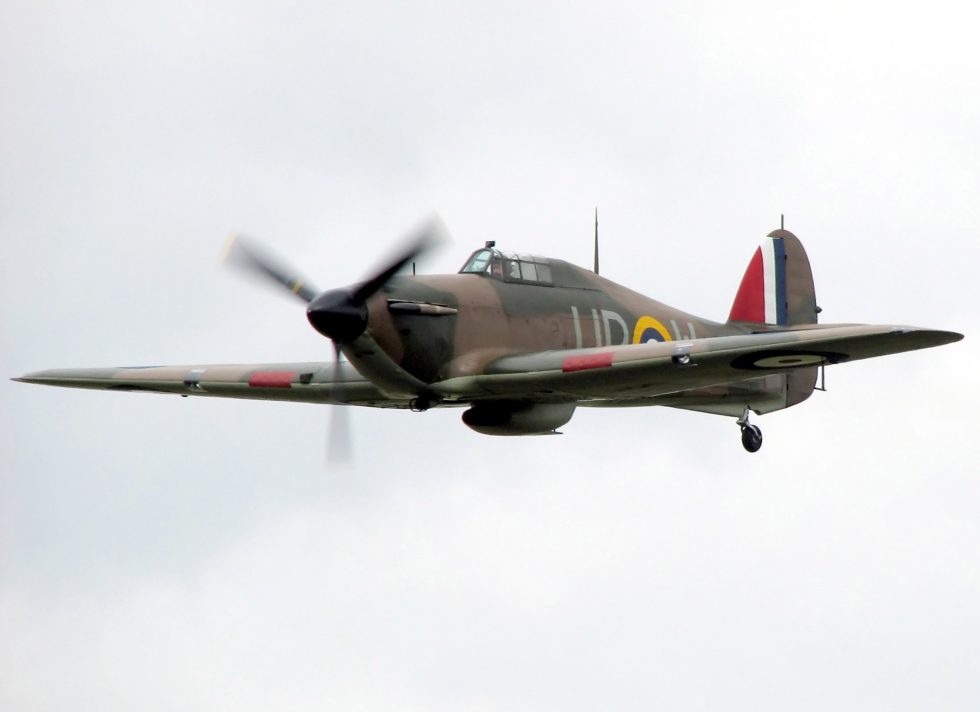
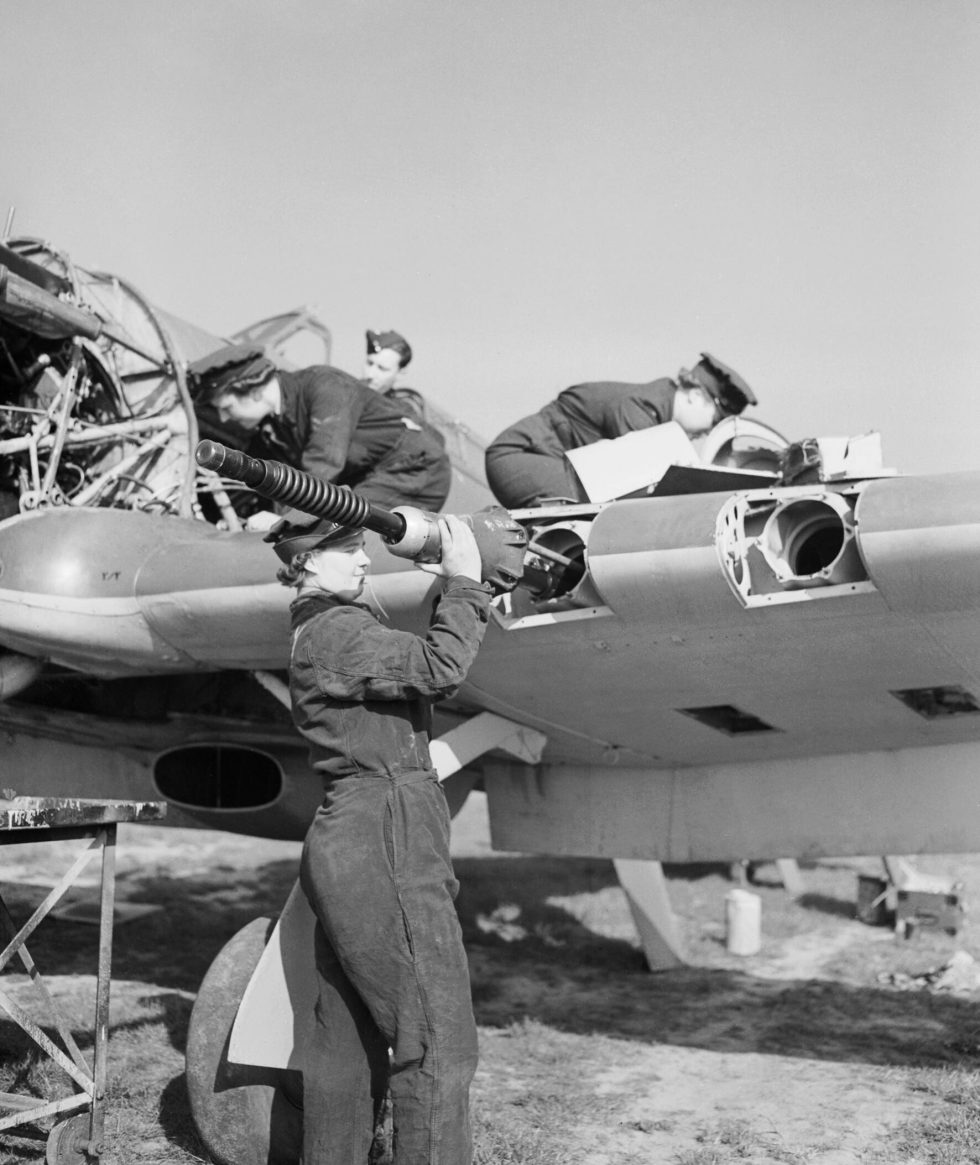
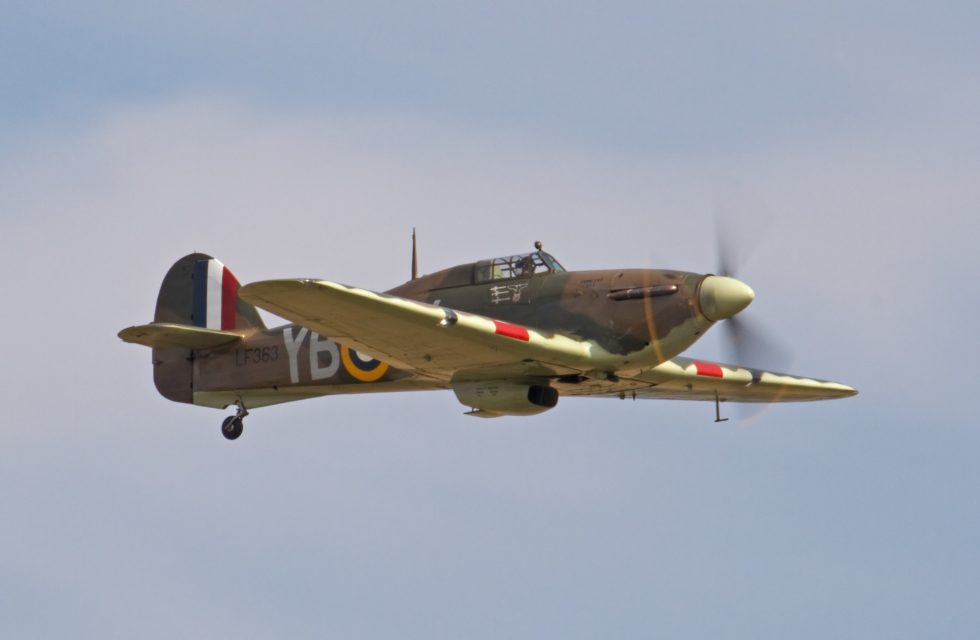
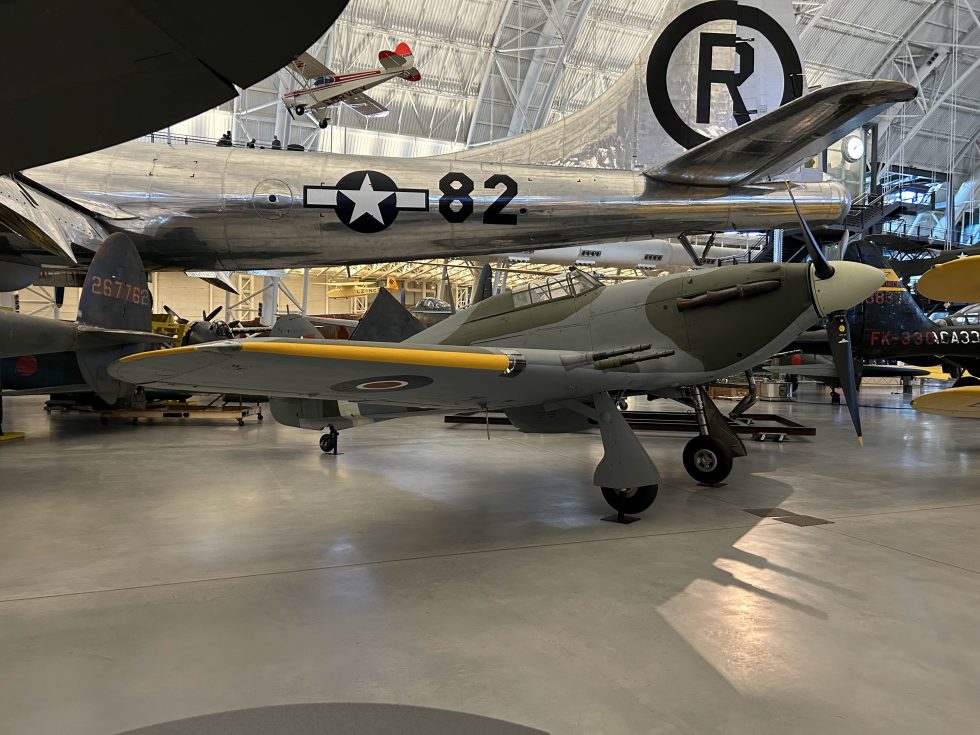
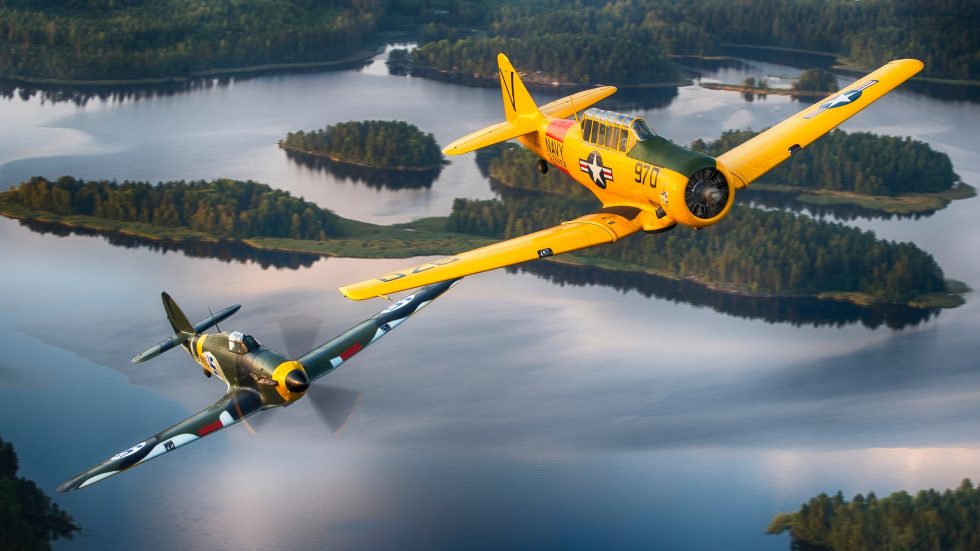
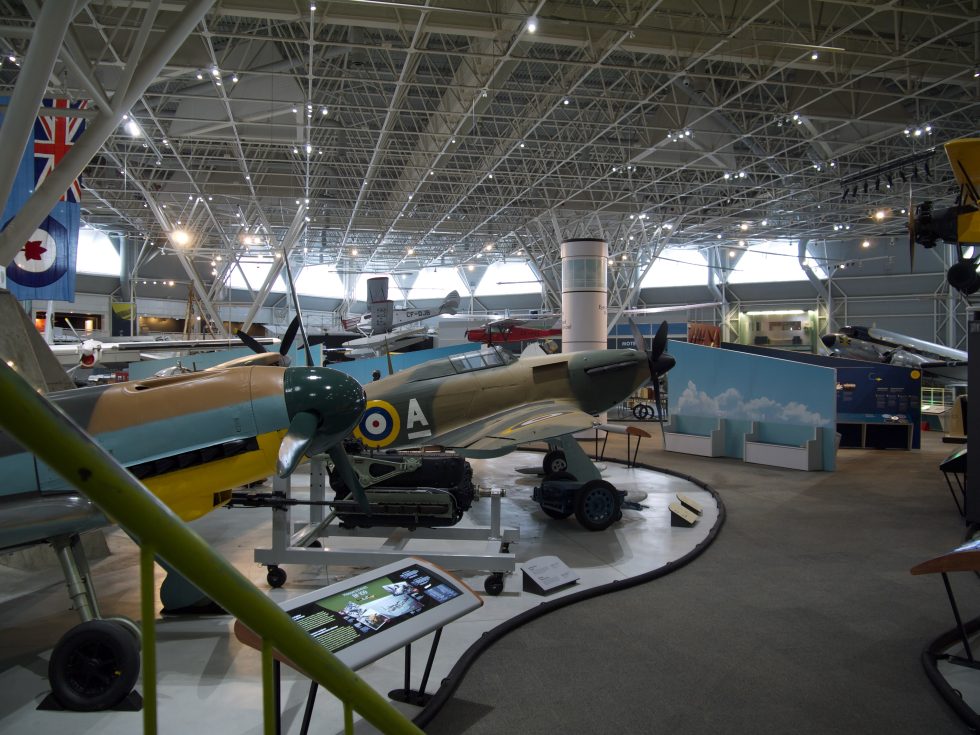
The Hurricane in motion
A hand-picked film of the Hawker Hurricane in flight is coming soon to this exhibit. In the meantime, explore the gallery above and the twelve stories from the cockpit.
Where the Hurricane flew
The record that defines it
The Hurricane’s reputation rests on one summer above all — 1940 — when it was the fighter the RAF had most of and did most of the fighting with. Beyond the Battle of Britain it fought in almost every theatre of the war, as fighter, ground-attack aircraft, tank-buster and convoy defender. The exact Battle of Britain kill share is best hedged: these are RAF claims, which ran higher than confirmed Luftwaffe losses.
Compare the combat record of every military aircraft. Figures as of July 2026.
Everything people ask about the Hawker Hurricane
Can I fly in a Hurricane?
How many Hurricanes were built?
Was the Hurricane better than the Spitfire?
What was the Hurricane made of?
Did the Hurricane serve outside Britain?
What guns did the Hurricane carry?
Is any Hurricane still flying?
What replaced the Hurricane?
You can’t fly the Hurricane.
These, you can.
Some legends only live in museums — others are fuelled and waiting. MiGFlug has put civilians in real military jet cockpits since 2004.
 Fly the L-39 AlbatrosThe world’s most-flown jet trainer — aerobatics included
 Fly the F-104 Starfighter“The missile with a man in it”
 Fly the MiG-21The Cold War’s most-produced jet
 Fly the T-33 Shooting StarAmerica’s first jet trainer
 Fly the DH VampireA piece of early jet history
 Fly the S.211Agile Italian jet trainer
 Fly the MB-326The classic Aermacchi jet
 Fly the MiG-15The Soviet legend of the Korean War
Continue the tour
Every fact, checked
- RAF MuseumService entry, squadron numbers, construction and the “more than all other defences combined” kill claim; No. 303 Squadron.
- Imperial War MuseumThe 32 vs 19 squadrons figure, “over half” of kills, the bomber/fighter tactic, the 300 mph “first,” and the Mk IID tank-buster at Bir Hakeim.
- Smithsonian National Air and Space MuseumDesigner, F.36/34 origin, dimensions and Mk IIC armament.
- HistoryNetConstruction, ease of build and repair, and the ~55%/42% split of Fighter Command victory claims.
- History of WarSea Hurricane and “Hurricat,” Everett’s Condor kill, and Operation Hurry to Malta.
- History HitDevelopment history: Camm, Specification F.36/34, the PV-12/Merlin and the type’s ruggedness.
- Warfare History NetworkNo. 151 Wing at Murmansk, the Lend-Lease demonstration and the Order of Lenin.
- RAF Battle of Britain Memorial FlightThe airworthy survivors PZ865 “The Last of the Many” and LF363.
- This Day in AviationThe 6 November 1935 first flight, test pilot Bulman and production totals.
- Australian War Memorial & Canada.caCommonwealth operator corroboration for the RAAF and RCAF.