
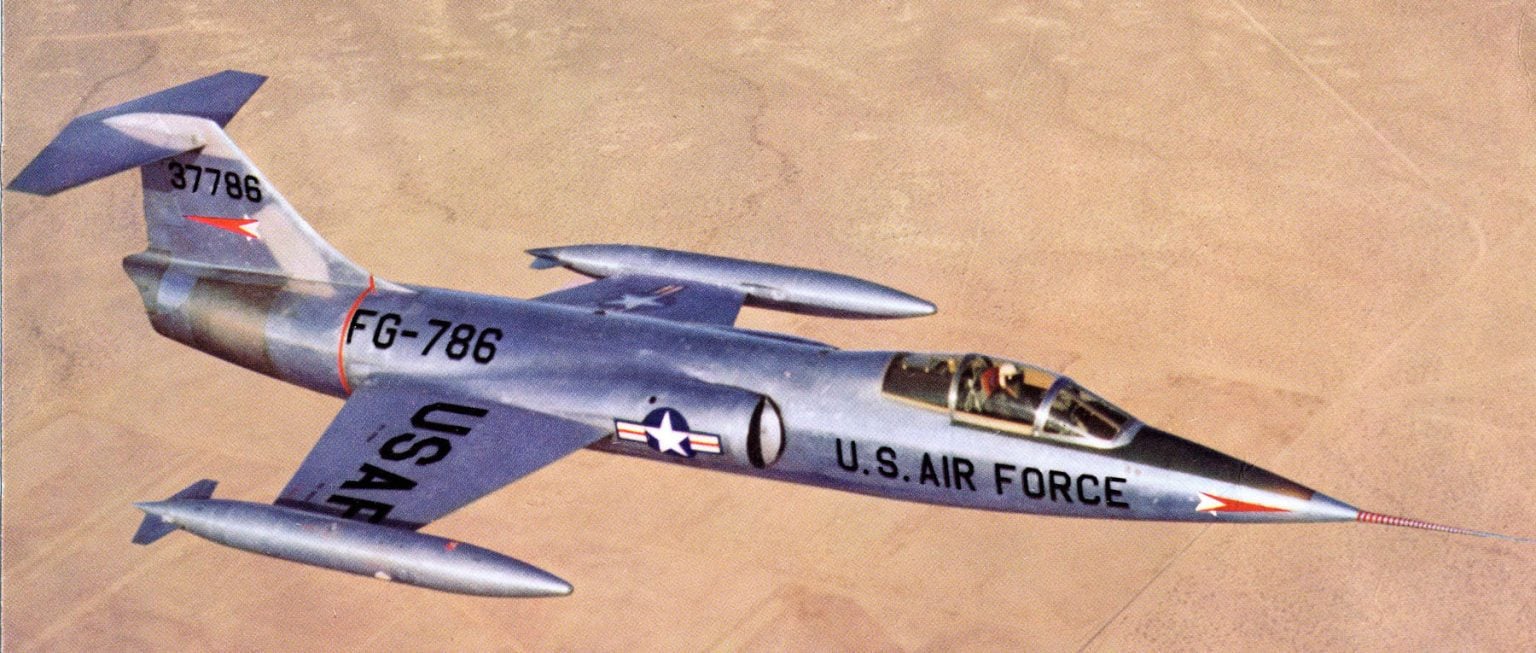
Lockheed F-104
“Starfighter”
The “missile with a man in it” — a needle-nosed Cold War dart with razor-thin wings, born to out-climb and out-run everything in the sky. It held the world speed, altitude and climb records at once, wore a fearsome “Widowmaker” reputation in German service, and remains one of the rarest jets a civilian can still fly supersonic.
The missile with a man in it
The F-104 was born from frustration. In late 1952 Lockheed’s legendary chief designer Clarence “Kelly” Johnson toured Korean War fighter squadrons and heard the same complaint again and again: pilots flying the F-86 Sabre against the MiG-15 wanted more speed, more altitude and faster climb — even at the cost of range, armament and manoeuvrability. Johnson returned to the Skunk Works and wrapped the smallest possible airframe around the most powerful engine available: one pilot, minimum fuel, a needle fuselage and a stubby, knife-thin wing.
The prototype XF-104 first flew on 4 March 1954, and the type entered USAF service in early 1958. For a few dazzling years it was the fastest, highest-climbing thing in the sky — the first aircraft ever to hold the world speed, altitude and time-to-climb records simultaneously, and the first to take off under its own power and exceed 100,000 feet. It looked like the future: a manned rocket with tiny razor wings and a thunderous J79 howl.
Then came the reckoning. West Germany, flying the heavier F-104G in punishing low-level, all-weather strike roles it was never designed for, lost roughly a third of its fleet, and the tabloids christened it the “Widowmaker.” Yet the aviators who flew it adored it — and today, flown as designed at altitude in clear skies, the Starfighter is still one of the most thrilling machines a civilian can ride. You can fly one with MiGFlug.
01The F-104 Starfighter’s two lives: American record-breaker, European workhorse
Early USAF interest in the Starfighter cooled quickly — the short-legged interceptor did not suit America’s needs, and only a few hundred A/C-models were built. The type found its real career abroad. The multirole F-104G became the backbone of a vast NATO and allied licence-production programme across West Germany, Italy, the Netherlands, Belgium, Canada and Japan, with around 2,578 built in total across all variants.
The family runs from the F-104A/B early US interceptor and trainer, through the F-104C/D USAF fighter-bomber, to the definitive European F-104G (more than a thousand of the total), the Japanese F-104J, and the ultimate F-104S — the all-weather Italian interceptor that soldiered on until 2004. One airframe, two utterly different reputations.
What makes the F-104 special
The razor wing
The Starfighter’s trapezoidal wing spanned barely 6.7 m — shorter than the fuselage is long — with only ~18 m² of area and an ultra-thin ~3.4% thickness ratio. The leading edge was so sharp it was covered on the ground to protect crews. It gave phenomenal low-drag, high-Mach performance; the trade-off was very high landing speeds and unforgiving low-speed handling, tamed by blown flaps (boundary-layer control).
The General Electric J79
A single afterburning turbojet producing roughly 15,600–15,800 lbf in reheat — enormous thrust for so light an airframe, giving a near 1:1 thrust-to-weight ratio and sustained Mach 2+ capability. Its distinctive howl is unmistakable, and it powered a blistering climb of around 48,000 ft/min.
T-tail & the downward-firing seat
A high-mounted stabilator kept the tailplane clear of the wing wake at speed. Because engineers feared a pilot could not clear the tall T-tail, early Starfighters used a downward-firing ejection seat — lethal at low altitude on take-off and landing. It was later replaced by upward-firing Martin-Baker seats.
02The F-104’s wing: brilliant fast, brutal slow
Everything about the Starfighter was optimised for high-Mach flight. The tiny, razor-edged wing produced almost no drag at speed and let the jet punch to Mach 2 and zoom toward the edge of space — but it generated little lift at low speed, forcing fast, nose-high approaches. To make it landable at all, Lockheed fitted a boundary-layer control system that blew engine bleed air over the flaps, cutting approach speed. It was a Mach-2 airframe that demanded respect every time it came home.
03The F-104’s record climb: a manned rocket
With its light airframe and thunderous J79, the Starfighter climbed like almost nothing before it — roughly 48,000 ft/min. That energy is what let it set the time-to-climb records of 1958 and, in December 1959, zoom past 100,000 ft under its own power. Three examples were even fitted with a Rocketdyne rocket in the tail (the NF-104) to train astronauts in space-edge handling, briefly turning the fighter into a part-time spacecraft.
Full specifications (F-104G)
Baseline: the F-104G, the multi-role NATO standard built by Lockheed, Canadair and a European consortium — ~1,127 of the 2,578 Starfighters completed, and the mark almost everyone outside the United States actually flew. Deltas for the F-104A/C day interceptor and the Italian F-104S/ASA in grey.
Dimensions & weights
- Crew
- 1 (2 in the F-104B/D/F and TF-104G)
- Length
- 16.66 m (54 ft 8 in)
- Wingspan
- 6.63 m (21 ft 9 in), 6.68 m (21 ft 11 in) over tip tanks
- Height
- 4.11 m (13 ft 6 in)
- Wing area
- 18.22 m² (196.1 sq ft)
- Wing planform
- Trapezoidal, 26° leading-edge sweep, 10° anhedral, aspect ratio 2.45
- Aerofoil
- Biconvex, 3.36% thickness-to-chord — leading edge 0.41 mm (0.016 in) thick, sharp enough that felt guards were fitted on the ground
- Empty weight
- 6,350 kg (14,000 lb)
- Combat weight
- 9,365 kg (20,640 lb)
- Max take-off weight
- 13,170 kg (29,038 lb) — F-104S cleared to 14,060 kg (31,000 lb)
- Wing loading, combat
- 514 kg/m² (105 lb/sq ft) — among the highest of any fighter of its generation
- Max external stores
- ~1,814 kg (~4,000 lb) on seven stations — F-104S ~3,400 kg (~7,500 lb) on nine; the F-104G figure is quoted as both 1,361 kg (3,000 lb) and 1,814 kg (4,000 lb) depending on source and clearance date
Performance
- Max speed
- Mach 2.0 — 2,137 km/h (1,328 mph) at 10,670 m (35,000 ft)
- Design optimum
- Above Mach 1.2; exceptionally steady above 1,110 km/h (600 kt) at very low level, which is what made it a strike aircraft at all
- Service ceiling
- 15,240 m (50,000 ft); absolute ceiling about 27,400 m (90,000 ft) — F-104A re-engined with the J79-GE-19 exceeded 22,250 m (73,000 ft)
- Initial rate of climb
- 14,630 m/min (48,000 ft/min)
- Take-off speed
- 352 km/h (190 kt); 370 km/h (200 kt) with tip tanks
- Approach speed
- 324 km/h (175 kt) on finals with blown flaps, touching down at 287–296 km/h (155–160 kt)
- Stalling speed, blowing off
- 348 km/h (216 mph) — the boundary-layer system cut approach speed by more than 55 km/h (30 kt), and losing it turned a landing into an emergency
- Combat radius
- ~680 km (~420 miles) — F-104S with four tanks up to ~1,250 km (~775 miles)
- Ferry range
- 2,620 km (1,630 miles) with four external tanks
- Load factor
- +7.33 g
- Thrust-to-weight
- 0.76 at combat weight, 0.54 at max take-off; lift-to-drag ratio 9.2
Propulsion & systems
- Engine
- One General Electric J79-GE-11A afterburning turbojet, licence-built in Europe, Canada and Japan (J79-GE-19 in the F-104S; Orenda J79-OEL-7 in the CF-104)
- Thrust
- 44.5 kN dry (10,000 lbf), 69.4 kN reheated (15,600 lbf) — J79-GE-19: 52.8 kN (11,870 lbf) dry, 79.6 kN (17,900 lbf) reheated
- Fuel
- ~3,390 l (~897 US gal) internal; up to ~6,750 l (~1,784 US gal) with two tip and two underwing tanks
- Radar & fire control
- Autonetics NASARR F15A-41B with air-to-air, ground-mapping, contour-mapping and terrain-avoidance modes (AN/ASG-14T1 ranging radar on the F-104A; FIAR R21G/H on the F-104S, R21G/M1 with frequency hopping and look-down on the ASA)
- Navigation
- Litton LN-3 inertial platform — the first inertial navigation system fitted to a production fighter
- Sighting & delivery
- Fixed optical sight with radar ranging; LABS low-altitude bombing system for the toss delivery of the centreline nuclear store
- Electronic warfare
- None as built (ALQ-70/72 jammers added on the Italian F-104S-ASA from the mid-1980s)
- Ejection seat
- Lockheed C-2 upward-firing rocket seat, 90 kt minimum (Stanley downward-firing seat on the prototypes and first 26 F-104As; Martin-Baker Mk GQ-7(A) zero-zero retrofitted across most European fleets)
- Deceleration
- 4.9 m (16 ft) drag chute plus anti-skid brakes; blown flaps fed by J79 bleed air, effective only above roughly 82% engine speed
- First flight
- 4 March 1954 (XF-104); 17 February 1956 (YF-104A, first with the J79)
- Service entry
- 26 February 1958 (F-104A, USAF); August 1961 (first F-104G deliveries to the Luftwaffe); mid-1969 (F-104S)
- Number built
- 2,578 of all marks, of which ~1,127 were F-104G
04The F-104’s cost: a bargain built by the thousand
Because most Starfighters were built under licence across Europe, Canada and Japan, unit prices varied widely by variant, year and country. Period figures for the F-104G cluster around US$1.4–1.7 million in early-1960s money — treat these as approximate. The bigger cost was political: the vast multinational F-104G programme, and the sales practices behind it, became one of the era’s notorious procurement scandals. No reliable modern cost-per-flight-hour figure exists in open sources for the handful of airworthy warbirds flying today.
Armament & payload
The Starfighter was armed as a bomber-killer and then asked to carry a hydrogen bomb at treetop height
The designed fit was minimal and deliberate: one rotary cannon and a pair of tail-chasing Sidewinders, enough to kill a bomber on a single supersonic pass and nothing more. When NATO bought the type as a strike aircraft, Lockheed hung a centreline pylon under it for a 907 kg nuclear store and two wing pylons for iron bombs — and the F-104G went to war with a conventional payload smaller than a Second World War medium bomber's. Italy went the other way, cutting the gun out of the F-104S to fit Sparrow guidance and giving the Starfighter the only radar-guided missile it ever carried. Fits varied enormously by mark and by operator: the same airframe design could be a gun-armed day fighter in Japan, a cannonless nuclear striker in Canada and a Sparrow interceptor in Italy.
Gun
- 1 × 20 mm M61A1 Vulcan six-barrel rotary cannon in the lower port fuselage, fed from a 725-round drum behind the pilot at 6,000 rounds per minute — a little over seven seconds of continuous fire.
- The F-104 was the first aircraft in the world to carry the M61. Its original linked feed misfed and spat ejected links into the intake; the linkless M61A1 developed for the F-104C went on to arm almost every American fighter since.
- Deleted in every two-seater (F-104B/D/F, TF-104G) and in the RF-104G, where three KS-67A cameras or extra fuel filled the gun bay.
- Deleted in the CF-104 as delivered because Canada bought the aircraft purely for nuclear strike; both the gun and the radar air-to-air modes were restored from 1972 when Canada left the nuclear role.
- Deleted in the F-104S interceptor (caccia intercettore) to make room for the Sparrow illuminator avionics, but retained in the F-104S fighter-bomber (caccia bombardiere).
Air-to-air
- 2 × AIM-9B Sidewinder on the wingtip rails — the standard fit. Those stations alternated between missiles and 645 l (170 US gal) tip tanks, so a Starfighter was usually armed or long-legged, rarely both.
- Up to four AIM-9 with underwing shoulder rails. A "catamaran" twin launcher under the forward fuselage was tried but sat so low that runway debris wrecked the seeker heads.
- AIM-9L all-aspect Sidewinder on the Italian F-104S-ASA from the mid-1980s, replacing the tail-chase-only AIM-9B.
- 2 × AIM-7E Sparrow semi-active radar homing on the F-104S — the only Starfighter with a beyond-visual-range weapon, and the reason its gun came out.
- Selenia Aspide 1A on the ASA, an Italian Sparrow derivative with better guidance and a larger motor. The Matra R.530 is sometimes listed as an F-104S option; Italian and Turkish operational armament was Sparrow, then Aspide and AIM-9L, and R.530 carriage is not corroborated in squadron service.
Air-to-surface guided
- None carried operationally. In more than four decades of front-line service no Starfighter mark went to a squadron with a production guided air-to-surface weapon.
- The strike role was flown entirely with free-fall stores: one nuclear bomb on the centreline, or iron bombs and rocket pods underwing.
- The gap was structural rather than accidental. There was no second crewman, no attack radar mode built for standoff weapons, and only 1,814 kg (4,000 lb) of external capacity to spend on anything.
- A single early aircraft was tested with a trapeze launcher for the MB-1 (AIR-2A Genie) nuclear rocket. It was never adopted, though NASA later used the same fitting to launch test rockets.
- The Italian F-104S-ASA/M rebuild of 1995–97 stripped out the remaining strike equipment altogether, ending the type's air-to-ground career eight years before it retired.
Bombs
- One 907 kg (2,000 lb) class "special store" on the centreline pylon — the Mk 28 or Mk 43 (B43) thermonuclear bomb — delivered by LABS toss so the aircraft could pitch up, release, roll out and run from the blast. Canadian CF-104s in Germany also carried the B57; certification differed by nation and by decade.
- Conventional: two 340 kg (750 lb) or 454 kg (1,000 lb) bombs on the wing pylons, or Mk 82 500 lb low-drag bombs.
- F-104S: cleared for up to seven 340 kg (750 lb) bombs across its nine stations, though two to four was the normal load.
- Napalm and fire-bomb canisters, plus practice bomb dispensers, were carried by USAF F-104Cs during their ground-attack sorties over Southeast Asia.
- Maximum external load ~1,814 kg (4,000 lb) on the F-104G and ~3,400 kg (7,500 lb) on the F-104S — light for a strike aircraft of its generation, and roughly a quarter of what a contemporary F-105 could lift.
Rockets
- LAU-3/A pods of nineteen 70 mm (2.75 in) folding-fin aircraft rockets on the wing pylons, the standard American fit.
- European operators used Matra and LAU-series pods of 68 mm SNEB rockets in the same role.
- Rocket pods and iron bombs were the staple ordnance of USAF F-104Cs over South Vietnam, where the type flew more than 5,000 combat sorties.
- Accuracy depended entirely on dive angle and a fixed optical sight; there was no weapon-delivery computer worth the name until the Italian ASA upgrade of the mid-1980s.
Pods & other stores
- Wingtip tanks of 645 l (170 US gal) and underwing tanks of 738 l (195 US gal), taking maximum fuel to ~6,750 l. Tip tanks were the normal cruise fit and cost the aircraft its missile rails.
- Dutch RF-104Gs carried the 350 kg Orpheus reconnaissance pod on the centreline from 1966 — five daylight cameras and an infrared linescanner in a Fokker-built pod.
- The RF-104G itself carried three KS-67A cameras in the deleted gun bay; 189 were built and many were later converted back to fighter standard.
- ALQ-70 and ALQ-72 jamming pods on the Italian F-104S-ASA, the type's only real electronic self-protection.
- West Germany trialled zero-length launch (ZELL), firing a nuclear-armed F-104G off a trailer on a rocket booster so alert aircraft could survive an attack on their airfield. It worked, and it was never adopted.
Three typical loadouts
- Bomber interception, F-104A, Air Defense Command, 1958
- 2 × AIM-9B Sidewinder on the wingtip rails, 725 rounds for the M61, no external tanks — a scramble profile that traded fuel, range and endurance for the fastest climb in the world.
- Quick reaction alert nuclear strike, F-104G, Luftwaffe, 1965
- 1 × B43 thermonuclear bomb on the centreline, 2 × 645 l tip tanks, 2 × 738 l underwing tanks, gun loaded — a single aircraft, alone, below Warsaw Pact radar cover in northern European weather, releasing by LABS toss.
- All-weather interception, F-104S-ASA, Aeronautica Militare, 1988
- 2 × Selenia Aspide under the wings, 2 × AIM-9L on the wingtip rails, 2 × 738 l underwing tanks, no gun — the only Starfighter that could shoot at something it had not seen with its own eyes.
Store clearances differed sharply between operators and changed repeatedly across each mark's life; figures here follow Bowman, Davies and Donald, with Italian fits from Aeritalia and Aeronautica Militare sources. Maximum external loads are cleared limits, not typical carriage — operational Starfighters rarely flew anywhere near them, because everything they hung on the wings cost speed, which was the only thing the aircraft had in surplus.
Variants
The Starfighter was redesigned once, and that redesign became the aeroplane nearly everyone actually flew
Kelly Johnson designed the F-104 in 1952 after interviewing Korean War fighter pilots who wanted less aeroplane, not more: something small, light and brutally fast that would climb to a bomber and kill it. The USAF took 153 F-104As and 77 F-104Cs, decided it actually wanted range and payload, and pushed most of the interceptors into the Air National Guard inside a year. Orders were cut from 722 to 170.
The type was rescued by a 1957 German staff requirement for one airframe to do fighter, fighter-bomber and reconnaissance work at once. Lockheed answered with the F-104G: 96 new forgings, strengthened wing, fuselage and tail, the powered rudder from the two-seaters, improved blown flaps with a manoeuvring setting, de-iced intakes, a bigger chute, NASARR multi-mode radar and the Litton LN-3 inertial platform. It was a substantially different aeroplane inside the same silhouette, and 1,127 were built — by Lockheed, by Canadair, and by a European consortium of Messerschmitt, Fiat, Fokker and SABCA that was the largest international manufacturing programme attempted to that date.
What follows is the main line. Watch how consistently the gun and the radar come and go as each customer bends an interceptor into whatever it actually needed — and note that the sales campaign behind those European contracts became one of the great corruption scandals of the Cold War.
- XF-104 / YF-104A (1954–1956, 2 + 17)
- Prototypes on the Wright J65 because the J79 was not ready; both were destroyed in crashes. The 17 YF-104As introduced the J79, the ventral fin and the boundary-layer control system that made the aircraft landable at all, and reached Mach 2 on 27 April 1956.
- F-104A / F-104B (1958, 153 + 26)
- The USAF day interceptor and its two-seat trainer. Set a world speed record of 2,259.5 km/h in May 1958 and, in an F-104C, an altitude record of 31,513 m in December 1959. Exported to Pakistan, Taiwan and Jordan — where the type saw the only air combat of its career.
- F-104C / F-104D (1958–1959, 77 + 21)
- Tactical Air Command fighter-bomber: five pylons, in-flight refuelling, improved AN/ASG-14T-2 radar, and a Mk 28 or Mk 43 nuclear weapon on the centreline. Flew more than 5,000 sorties in Vietnam, where its short legs and small payload told against it.
- F-104G (1960–1973, 1,127)
- The multi-role NATO rebuild described above, and the definitive Starfighter. Strengthened structure, powered rudder, NASARR F15A radar, LN-3 inertial navigation, external load raised over the interceptor marks and cleared for the 907 kg nuclear store on the centreline.
- RF-104G / TF-104G (1962–1966, 189 + 220)
- Reconnaissance version with three KS-67A cameras in place of the gun, and the combat-capable two-seat trainer with no gun, no centreline pylon and reduced internal fuel. Many RF-104Gs were later converted back to fighter standard.
- F-104J / F-104DJ (1962–1967, 210 + 20)
- Japanese licence build by Mitsubishi — a pure interceptor with gun and four Sidewinders and no strike fit whatsoever. Flown in the role it was designed for, in better weather; Japan lost about 15 per cent of its fleet, less than half the German rate.
- CF-104 / CF-104D (1961–1966, 200 + 38)
- Canadair-built nuclear striker with the licensed Orenda J79-OEL-7, an extra internal fuel cell, and both the gun and the radar air-to-air modes deleted. Both restored in 1972 when Canada gave up the nuclear role. Canada flew its aircraft roughly three times the hours of the German fleet and lost 110 of 238.
- F-104S (1969–1979, 246)
- Fiat's final production mark, for Italy and Turkey (40 aircraft): J79-GE-19, two extra ventral fins, nine hardpoints, R-21G/H radar with a continuous-wave illuminator, and the AIM-7 Sparrow. The interceptor lost its gun to the missile avionics; the fighter-bomber kept it.
- F-104S-ASA / ASA-M (1985–1997, 150 / 49 + 15 TF-104G)
- Frequency-hopping R21G/M1 radar with look-down capability, new IFF and weapon-delivery computer, AIM-9L and Aspide. The ASA-M added GPS, new TACAN and Litton LN-30A2 inertial navigation on refurbished airframes and removed all strike equipment — a fifty-year-old interceptor keeping a NATO air defence commitment alive.
- NF-104A (1963, 3)
- Demilitarised F-104As with a 26.7 kN Rocketdyne rocket motor in the tail for astronaut training, reaching 36,800 m. Chuck Yeager lost control of one in December 1963, ejected, and spent months in hospital with severe burns.
Retirement ran long and ended quietly. The USAF released its last F-104s in 1969 and the Air National Guard in 1975; Pakistan finished in 1972 and Spain the same year with a perfect record, having lost none of its 21 aircraft in 17,500 hours. Norway went in 1982, Belgium in 1983, the Netherlands in 1984, Canada, Denmark and Japan in 1986. The Luftwaffe and Marineflieger flew their last operational sortie on 16 October 1987, with test aircraft continuing to 22 May 1991. Greece finished in 1993, Turkey in 1995, Taiwan in 1997. Italy flew the F-104S-ASA/M until 31 October 2004 — forty-six years after the first Starfighter entered USAF service — and covered the gap to the Eurofighter with leased F-16s. No air force operates the type today. A small number remain airworthy in civil hands: Starfighters Inc, based at the Kennedy Space Center in Florida, flies ex-Italian aircraft on research, chase and high-altitude launch work, and is effectively the only place left where a Starfighter regularly leaves the ground under its own power. Production totals vary between sources; the 2,578 figure and the mark-by-mark counts here follow Donald and Bowman, and the Lockheed bribery findings follow the 1976 Church Committee report, which put the company's foreign payments at US$22 million and named recipients in West Germany, the Netherlands, Italy and Japan.
Half a century of the Starfighter
The idea
Kelly Johnson tours Korean War squadrons and conceives a minimalist, high-speed interceptor — speed and climb above all else.
First flight
The XF-104 prototype flies; a YF-104A exceeds 1,000 mph the following year.
Enters USAF service
The Starfighter joins the 83rd Fighter-Interceptor Squadron in January/February 1958.
Owning the sky
The F-104 holds the world speed, altitude and time-to-climb records simultaneously — the first aircraft ever to do so.
Past 100,000 ft
Capt. Joe Jordan zoom-climbs an F-104C beyond 100,000 ft — the first aircraft to do so under its own power.
The F-104G era
Licence production ramps across NATO and allied nations; West Germany alone takes more than 900.
Yeager’s NF-104 fall
Chuck Yeager loses control of a rocket-boosted NF-104A at ~104,000 ft and ejects — later dramatised in The Right Stuff.
Combat over the subcontinent
Pakistan Air Force F-104s see combat against India — an early supersonic night kill in 1965, tougher going by 1971.
Italy retires the last
Italy withdraws the F-104S/ASA-M after ~46 years; the type lives on as warbirds — and MiGFlug rides.
From the flight line: twelve Starfighter stories
“The Missile With a Man in It”
Kelly Johnson built exactly what Korea’s pilots asked for: raw speed and climb over all else.
Read the full story
Owning the sky in 1958
For one giddy stretch the F-104 held the world speed, altitude and climb records at once.
Read the full story
The German “Widowmaker”
West Germany lost roughly a third of its fleet — but the truth was more complex than a “bad jet.”
Read the full story
Starfighters Inc. — rockets & runways
At Kennedy Space Center, a private fleet keeps the F-104 flying for airshows and aerospace research.
Read the full story
Ride a Starfighter with MiGFlug
A real supersonic F-104 flight over Florida, from the historic Shuttle Landing Facility.
Read the full story
The NF-104 & Yeager’s fall
Three F-104s got a rocket in the tail to train astronauts — and nearly killed Chuck Yeager.
Read the full story
Pakistan’s supersonic duels
Among the first supersonic fighters in combat — a contested legacy still argued over today.
Read the full story
The Taiwan Strait clash
In 1967 ROCAF Starfighters tangled with mainland MiG-19s, each side claiming a kill.
Read the full story
The wing you could cut yourself on
The leading edge was so sharp that ground crews fitted guards to avoid injury.
Read the full story
The missile with a woman in it
Jacqueline Cochran borrowed an F-104 and became the first woman to fly Mach 2.
Read the full story
Italy’s 46-year Starfighter
While others retired the jet in the 1980s, Italy flew the F-104S on QRA until 2004.
Read the full story
Cult of the Zipper
“Zipper,” “Zip-104,” the “Widowmaker” — few jets inspire such fierce affection.
Read the full story
The Starfighter in pictures
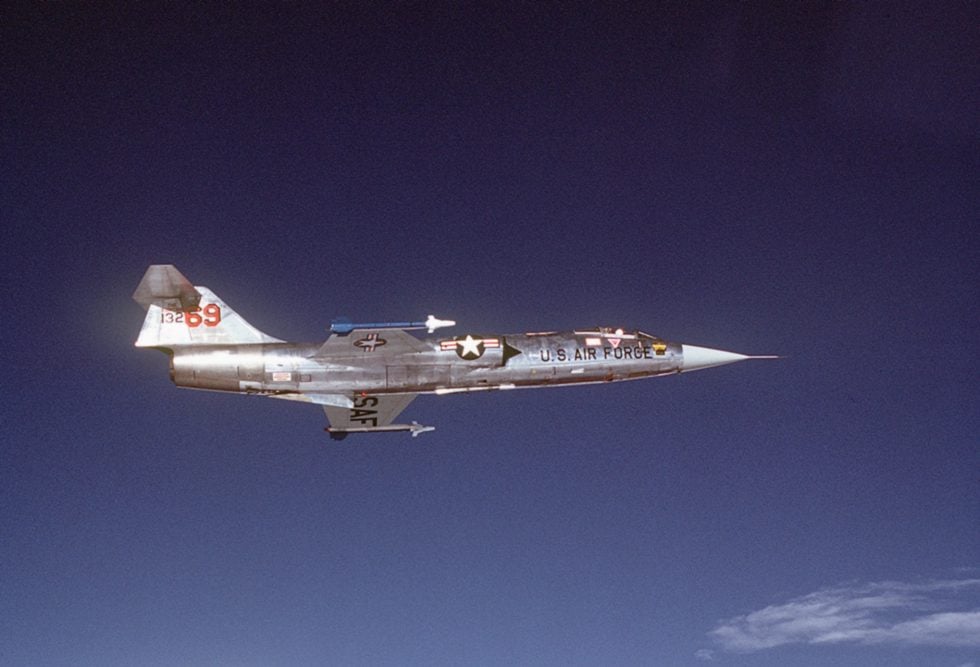
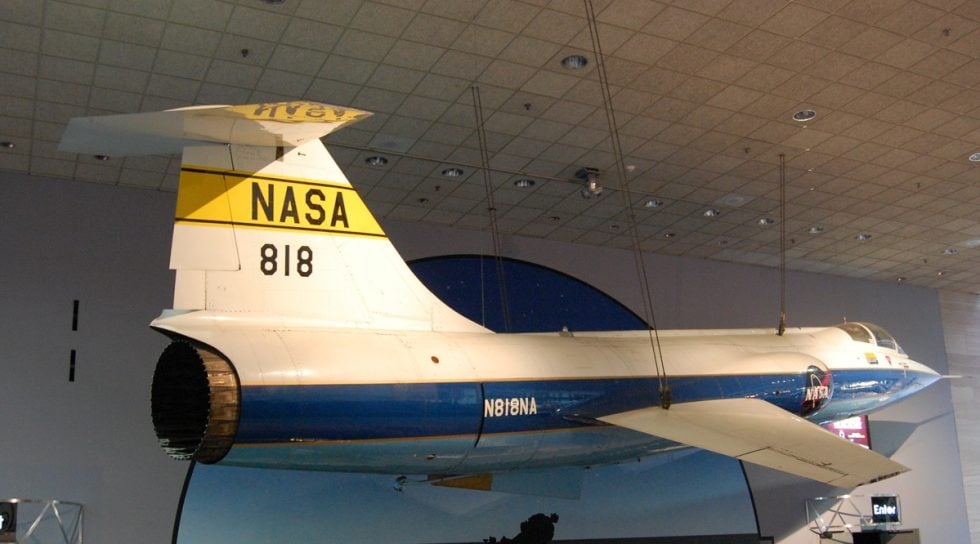
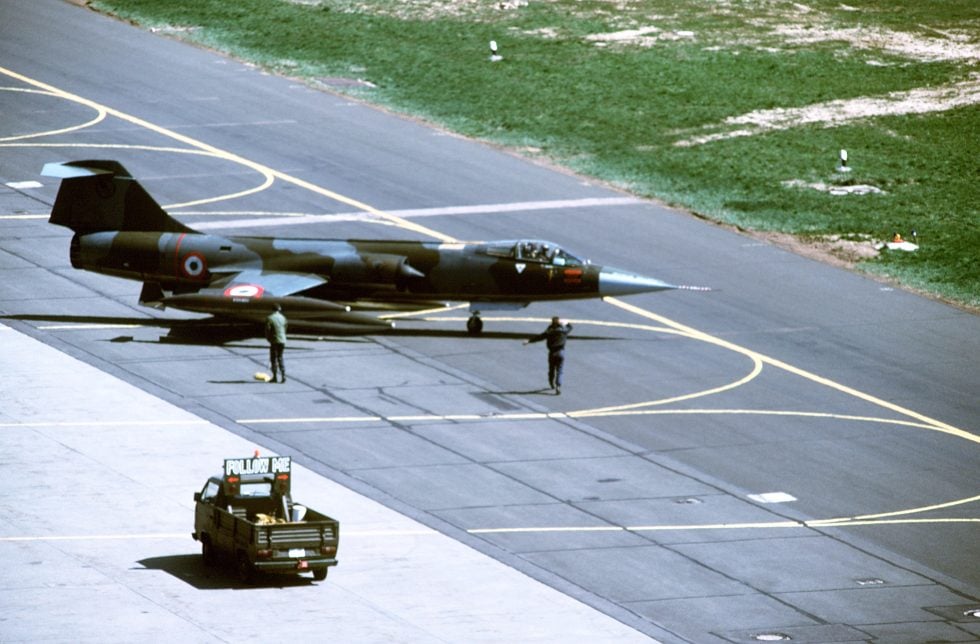
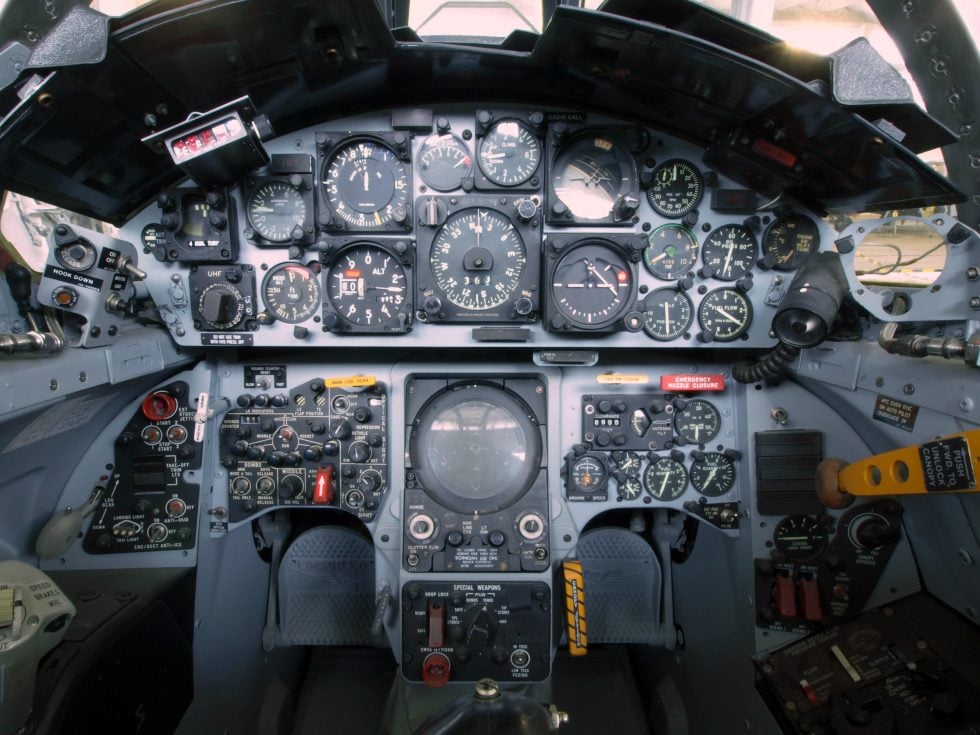
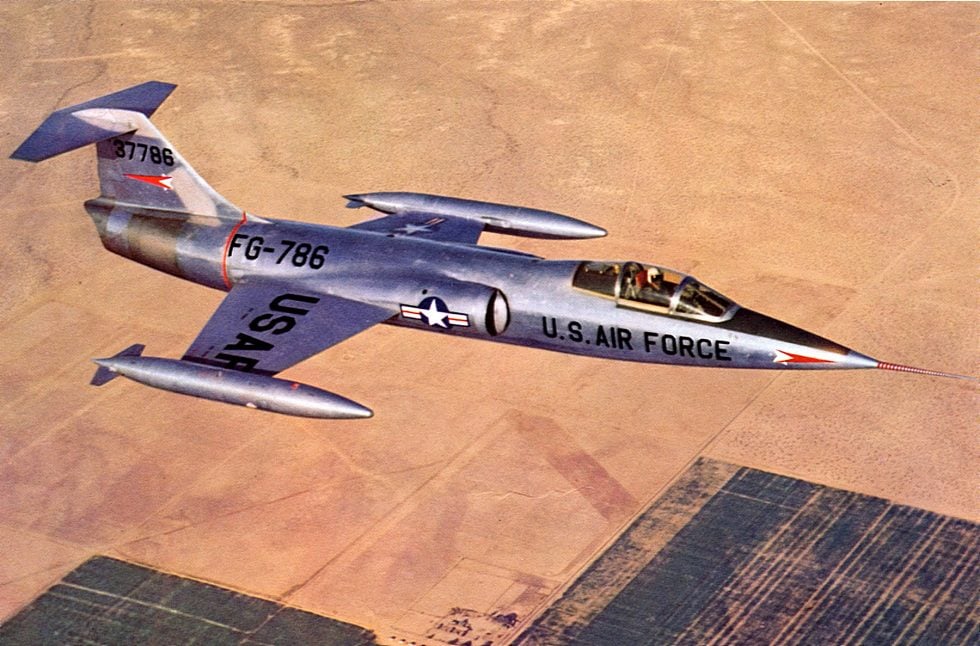
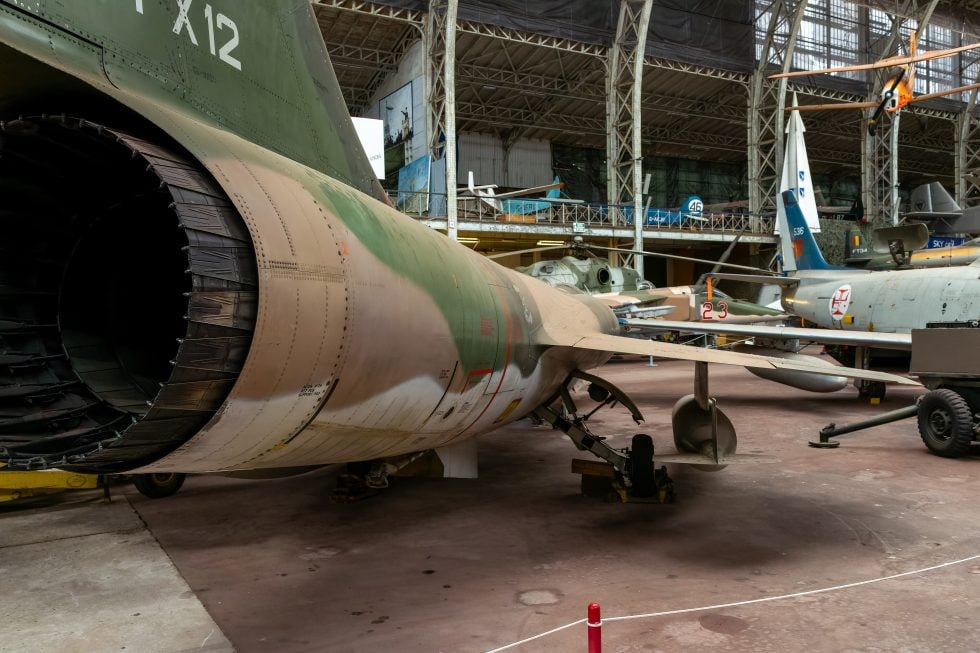
The F-104 Starfighter in motion
Megaprojects — one of the most-watched F-104 Starfighter films on YouTube.
Where the Starfighter flew
Records first, dogfights second
The Starfighter’s fame rests on speed and records, not air-to-air kills. Its combat career was modest and its tallies contested: Pakistan flew it against India in 1965 and 1971, Taiwan clashed with mainland MiG-19s in 1967, and USAF F-104Cs flew MiG-deterrent patrols over Vietnam without scoring an air-to-air victory. Always cite the 1965/71 and Taiwan Strait figures as claims, not settled scores.
Compare the combat record of every military aircraft. Figures as of July 2026.
Everything people ask about the F-104
Can I fly in an F-104 Starfighter?
How fast is the F-104?
Did it really break world records?
Was the “Widowmaker” reputation fair?
Is it still flyable anywhere?
How many were built?
What makes the F-104G different?
Why was it called “the missile with a man in it”?
You can actually fly the F-104.
Pick your cockpit.
Some legends only live in museums — others are fuelled and waiting. MiGFlug has put civilians in real military jet cockpits since 2004.
 Fly the L-39 AlbatrosThe world’s most-flown jet trainer — aerobatics included
 Fly the F-104 Starfighter“The missile with a man in it”
 Fly the MiG-21The Cold War’s most-produced jet
 Fly the T-33 Shooting StarAmerica’s first jet trainer
 Fly the DH VampireA piece of early jet history
 Fly the S.211Agile Italian jet trainer
 Fly the MB-326The classic Aermacchi jet
 Fly the MiG-15The Soviet legend of the Korean War
Continue the tour
Every fact, checked
- MiGFlug — F-104 Starfighter supersonic flight over FloridaThe flights, the fleet and the Shuttle Landing Facility operation.
- MiGFlug Afterburner — how Germany turned a masterpiece into the WidowmakerThe full context behind the Widowmaker reputation.
- HistoryNet — “The Missile With a Man In It”Development, records and the Starfighter’s two careers.
- International F-104 Society — records & operatorsDetailed record and operator data.
- The Aviationist — the NF-104 Aerospace TrainerThe rocket-boosted Starfighter and Yeager’s crash.
- The Aviation Geek Club — why the Luftwaffe dubbed it Widow MakerThe German loss record in context.
- The Columbia Star — the F-104 Starfighter, Part Two: CombatCombat use over Pakistan, Taiwan and Vietnam.
- Starfighters Inc. / Fly a Starfighter (Kennedy Space Center)The airworthy F-104 fleet behind MiGFlug’s flights.