
Shortly after midnight on Wednesday 11 November, phones across central and northern Lithuania lit up with red alerts telling residents to take shelter. A drone had crossed the border from Belarus and was flying north across the country. NATO fighters found it, closed in and fired. They missed.
By morning, Lithuania’s top officer had confirmed that air defence aircraft made two unsuccessful attempts to destroy the drone, and Prime Minister Mindaugas Sinkevičius said debris from a missile fired by a NATO fighter had been found near Biržai in the north of the country. The drone flew on into Latvia.
It was the latest and perhaps the most uncomfortable in a run of drone incidents over the Baltic states this year, and it set off air-threat warnings in Lithuania, Latvia and Estonia and precautionary restrictions in Finland.
Informations clés
- Quand: Night of Tuesday 10 to Wednesday 11 November 2026
- Où: Lithuania, then Latvia and Estonia; restrictions in Finland
- Quoi: One drone crossed Lithuania from Belarus, entering near Druskininkai and leaving near Pasvalys
- Interception: Two unsuccessful attempts by NATO air policing fighters; missile debris found near Biržai
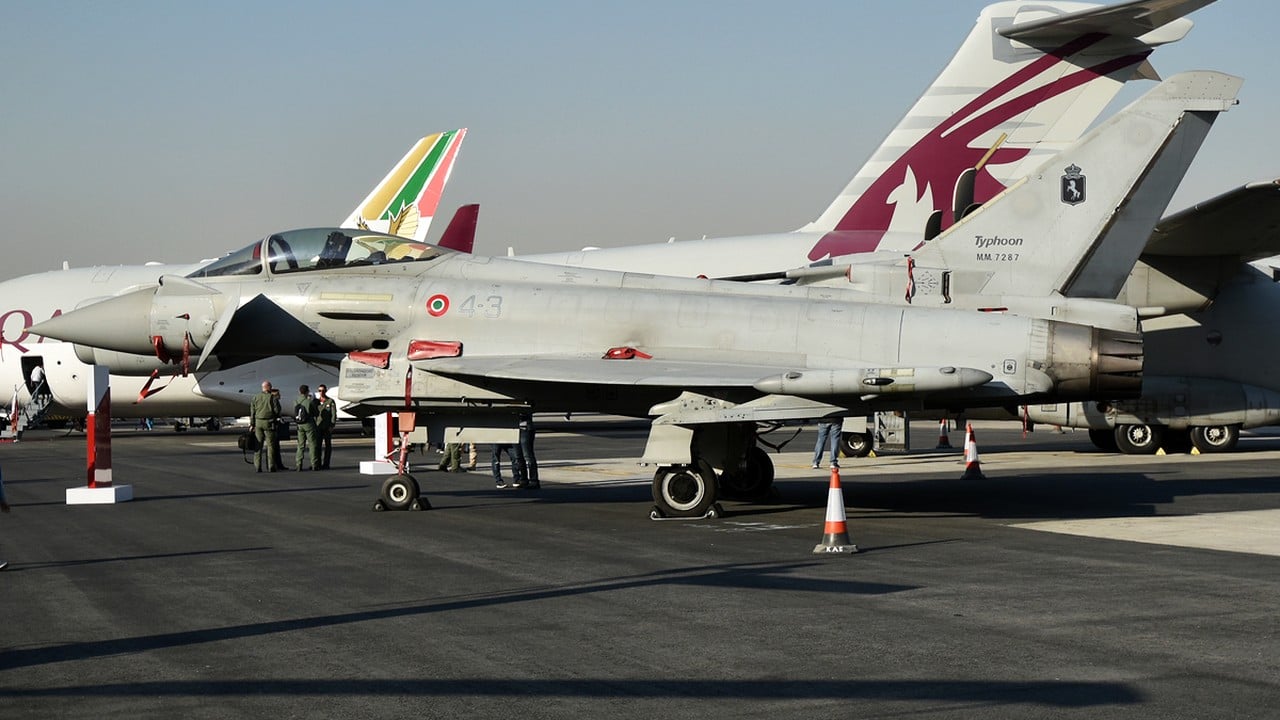
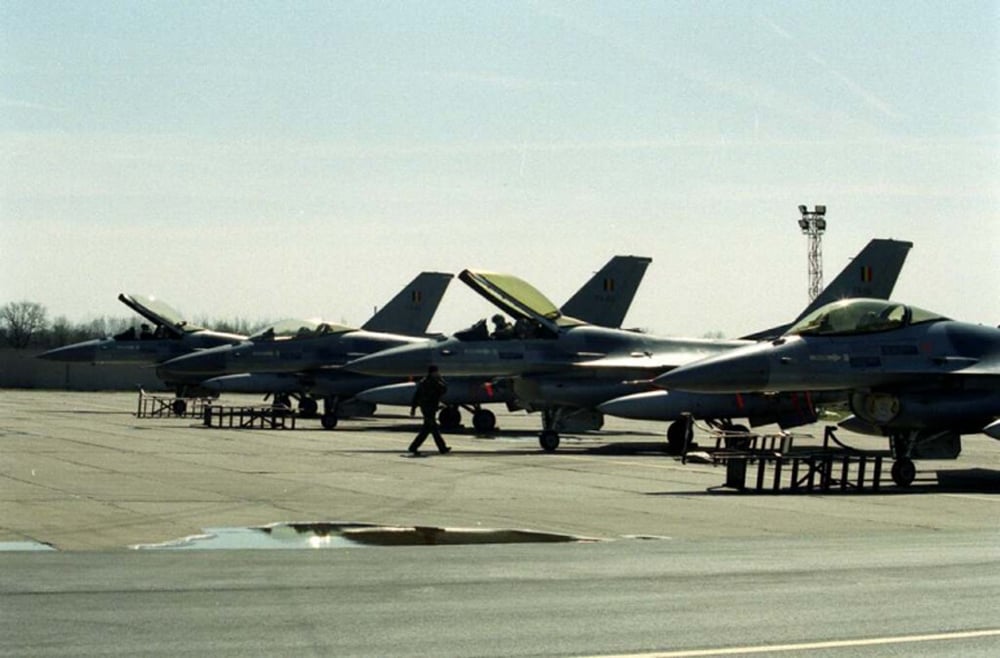
- Aéronef: Not identified by officials; the detachment is led by Italian Typhoons at Šiauliai with Belgian F-16s (AeroTime)
- Drones detected: Four in the region, plus dozens of radar tracks linked to balloons (Lithuanian PM)
- Origine: Unconfirmed; Lithuania’s defence minister said most likely Ukrainian and off course
- Airports: Vilnius and Kaunas closed during the night
A night of alerts
The night began with balloons. Vilmantas Vitkauskas, head of Lithuania’s National Crisis Management Centre, told LRT that around 21:30 on Tuesday 10 November the centre was warned of possible balloons that could disrupt air traffic, and Vilnius and then Kaunas airports were closed. According to Euronews, he said three flights and around 470 passengers were affected.
At 22:47, Defence Minister Robertas Kaunas told LRT, Belarus passed a warning over a technical line that unidentified objects were flying towards Lithuania. A yellow alert went out for the Vilnius and Utena regions. Those objects turned towards Latvia and Russia without entering Lithuanian airspace.
Then, after midnight, another drone did cross. Officials said it is believed to have entered from Belarus near Druskininkai in the south, may have briefly crossed into Poland, and then turned north through the Marijampolė, Kaunas and Panevėžys regions before leaving Lithuania near Pasvalys. AeroTime, citing the national LT72 alert system, reported red alerts between 00:38 and 02:02, with all alerts lifted by 02:49.
Two attempts, no kill
The fighters on duty belong to NATO’s Baltic Air Policing mission. AeroTime reported that the mission is currently led by four Italian Air Force Eurofighter Typhoons at Šiauliai Air Base, reinforced by six Belgian F-16. Officials have not said which aircraft or which country fired.
According to AeroTime, Rear Admiral Giedrius Premeneckas, chief of the Lithuanian Defence Staff, said the jets identified the drone near Kaunas but could not engage it there because of the risk to civilians. Euronews reported that one missile missed and fell to the ground, and that in Latvia the air policing fighters could not get into position for a shot before the drone crossed into Estonia and on into Russia.
Vitkauskas suggested two possible reasons for the misses. “The fighter jets came quite close to making contact,” he told LRT Radio, adding that it could have been due to poor weather, or that it may have been an area where shooting down a drone would have been unsafe.
LRT, Lithuania’s public broadcaster, reports on the two failed attempts by NATO fighters to shoot down the drone (in Lithuanian).
Whose drone?
That is still not settled. Defence Minister Kaunas told LRT the drones were most likely Ukrainian, aimed at the Russian port of Ust-Luga and other targets in Russia, and had drifted off course. Premeneckas was more cautious: Euronews reported him saying there was no confirmed information on the drone’s type and that it was not yet possible to tell whether it was Ukrainian or Russian. Diversion by electronic warfare, he said, was one possibility but remained an assumption.
The timing fits a large Ukrainian drone attack on northwestern Russia that night. AeroTime reported that the Leningrad region governor said a fire broke out in the Ust-Luga port area and three workers were injured. Officials in the Baltic states have not established any link between those strikes and the drones over their territory.
Further north, Finland’s Defence Forces set up a temporary airspace restriction area over the eastern Gulf of Finland at 02:09 and a maritime restriction at 02:15. In Latvia, the armed forces issued airspace threat warnings for Cesis, Smiltene and Gulbene after 03:00 and said drone interceptors, air defence units and NATO fighters had been activated. Estonia issued alerts for southern counties, and a military spokesperson told ERR that NATO fighters had been scrambled.
Not the first time
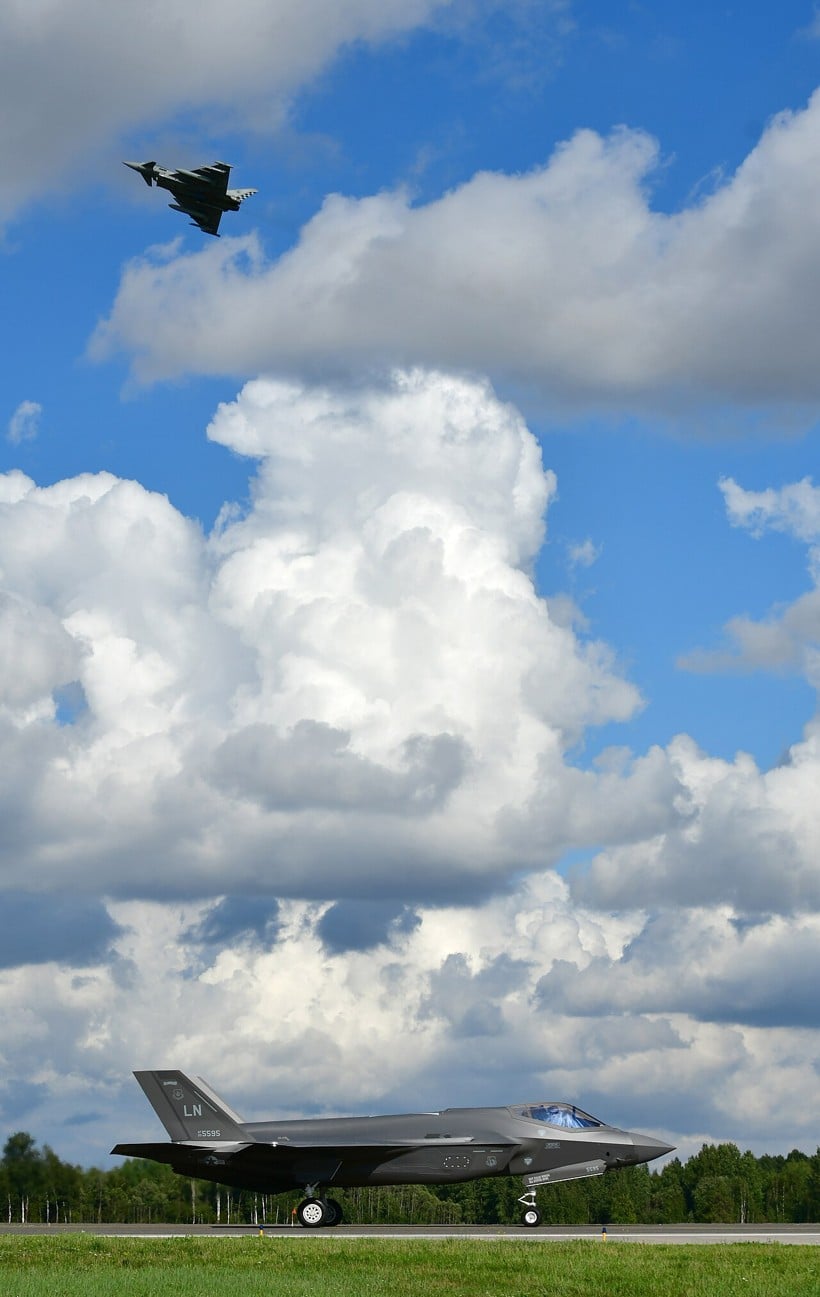
Lithuania has been here before. NATO jets shot down a drone over the country in September, and in October a suspected drone exploded in the north near Pasvalys after fighters were scrambled; it was later identified as a Ukrainian FP-1. In May, a Romanian F-16 on Baltic Air Policing duty shot down a suspected Ukrainian drone over Estonia.
Sinkevičius said the night’s events would be investigated thoroughly, and Lithuania is working with Poland, Latvia and Estonia to piece together what happened. For the air policing detachment, the question is simpler and harder: how to bring down a small drone at night over populated country before it slips across the next border.
Sources: LRT, Euronews, AeroTime, Finnish Defence Forces, Lithuanian National Crisis Management Centre
Header photo: Anna Zvereva / Wikimedia Commons, CC BY-SA 2.0
0 Comments