
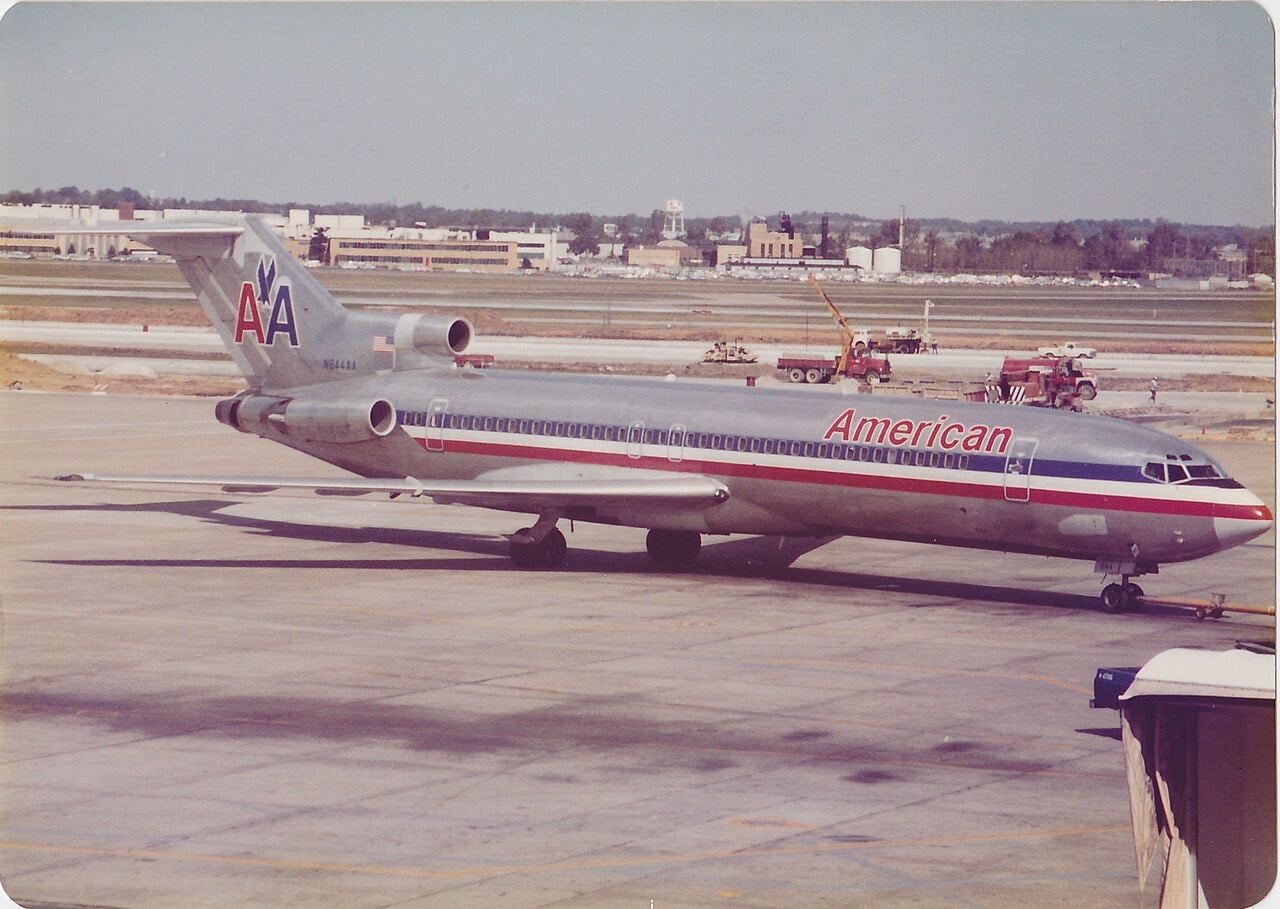
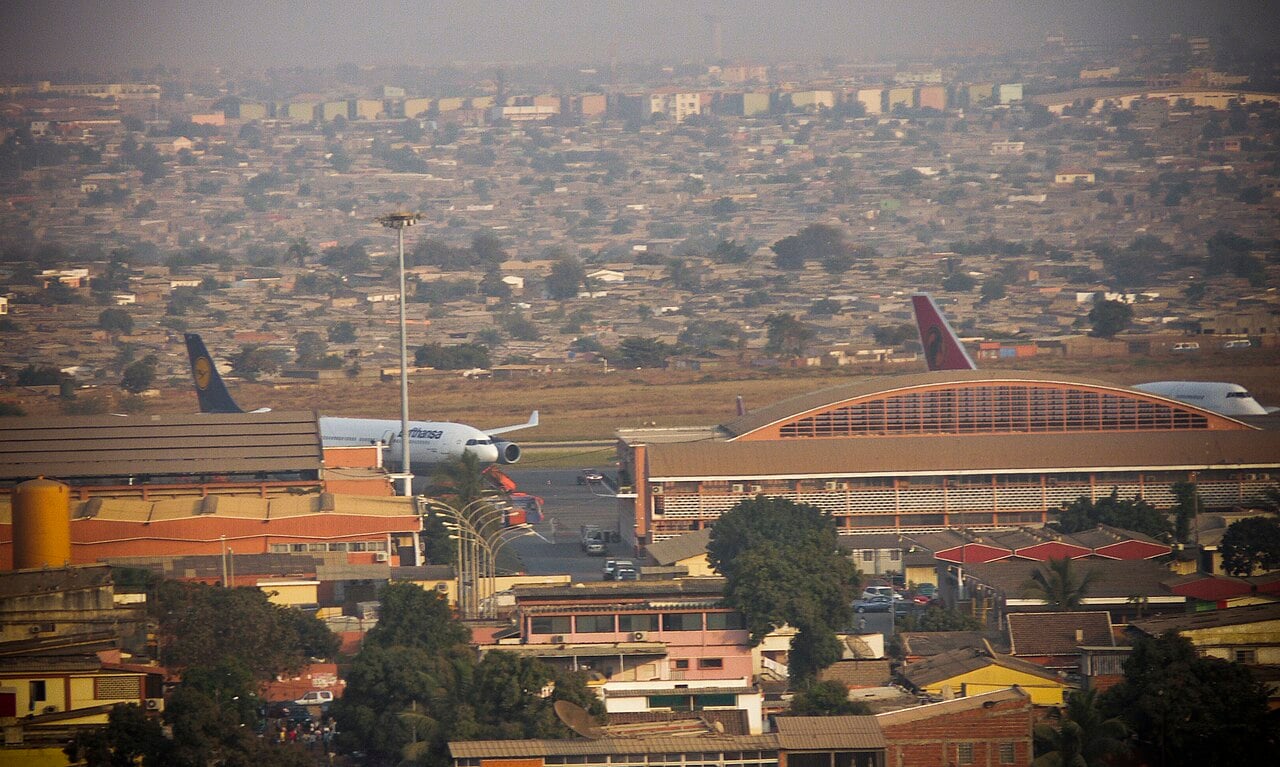
Shortly before sunset on 25 May 2003, a Boeing 727 began to move at Quatro de Fevereiro Airport in Luanda, Angola. There was no call to the tower. It manoeuvred erratically, entered a runway without clearance and, with its lights off and its transponder silent, took off to the south-west and headed out over the Atlantic. The aircraft, registration N844AA, has never been seen again. Neither have the two men believed to have been on board.
Informations clés
- Date: 25 May 2003, shortly before sunset
- Aéronef: Boeing 727-223, N844AA, built 1975 (c/n 20985), ex-American Airlines
- Où: Quatro de Fevereiro Airport, Luanda, Angola
- Believed aboard: Ben Charles Padilla, US flight engineer and mechanic; John Mikel Mutantu, Congolese mechanic
- Départ: No clearance, lights off, transponder off, heading south-west over the Atlantic
- Search: FBI, CIA and State Department; US embassies across Africa alerted
- Statut: Unsolved; no wreckage ever found
A Jet With a Paperwork Problem
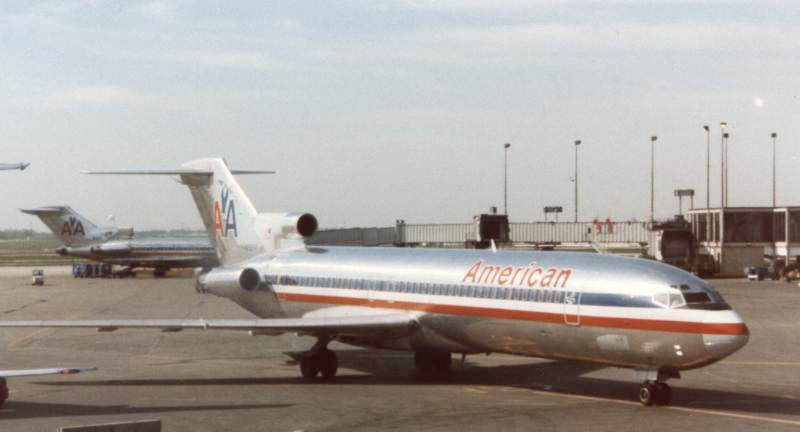
N844AA was built in 1975 and spent its career with American Airlines. After retirement it was one of three 727s owned by Maury Joseph’s Aerospace Sales and Leasing in Miami, which sold it to a venture that planned to use it to fly diesel fuel to diamond mines in Africa. Its cabin was stripped and fitted with ten 500-gallon fuel tanks and a few seats. It left Miami still in American Airlines livery in February 2002 and arrived in Luanda on 14 March 2002.
It never left. The buyers defaulted after two payments, and the jet sat at Luanda for about 14 months while navigation, landing and parking fees piled up. Angola’s civil aviation director later said it had been grounded because it lacked documents proving its conversion to a fuel tanker was legal. In April 2003 Joseph sent Ben Charles Padilla, a 50-year-old flight engineer and mechanic from Pensacola, Florida, to Luanda to settle the debts, hire mechanics and get the aircraft ready to be flown out.
Two Men, One Airliner
On 25 May, Padilla boarded the 727 with John Mikel Mutantu, a mechanic from the Republic of the Congo whom he had recently hired. Mutantu was not a pilot. Padilla was a certified flight engineer and aircraft mechanic with a private pilot’s licence, but he was not licensed to fly a 727, an aircraft that normally needs three trained crew, and had never flown anything that large. The 727 had reportedly taken on around 14,000 gallons of fuel.
Then it was gone. Some reports say a radio call was later heard asking for permission to land in the Seychelles; the original accounts of the departure say there was no communication at all. Nobody knows for certain who was at the controls.
A 727 Loose in 2003
Twenty months after 11 September 2001, a missing airliner full of fuel tanks set off alarms in Washington. The State Department alerted every US embassy in Africa and the FBI, CIA and other agencies joined the search. Officials were careful not to jump to conclusions.
Sightings came and went. In June 2003 a Canadian pilot reported seeing the aircraft in Conakry, Guinea, repainted with a Guinean registration; US officials later traced that aircraft and concluded it was not the right plane. General Mastin Robeson, then commanding US forces in the Horn of Africa, later said it was never clear whether the jet had been stolen for insurance, taken for criminal use or was part of a deliberate terrorist attempt. The FBI closed its case in 2005.
The N844AA case explained. Video: Half as Interesting.
What the Family Believes
Padilla’s family has never accepted that he flew off with the aircraft. His sister, Benita Padilla-Kirkland, told reporters at the time that he was not licensed to fly a 727 and that she believed he had been kidnapped. His brother Joe believes others already on board took the aircraft by force and killed both men.
Theories range from a crash into the Atlantic, to an Angolan missile, to a crash near Kinshasa, to the aircraft being broken up for parts. None has been proven. The FAA registration for N844AA was finally cancelled in January 2018.
A reconstruction of the departure from Luanda. Video: TheFlightChannel.
What the Viral Post Gets Right
The account going around is accurate: 25 May 2003, N844AA, a 727 that had sat unused at Luanda for months, Ben Charles Padilla and John Mikel Mutantu, a take-off without clearance and with lights off, neither man qualified to fly a 727, an international search and no trace found. Two details are worth adding. Padilla was a licensed flight engineer and private pilot, so he knew the aircraft well even if he was not rated to fly it. And his family has always believed he was not the one who took it.
Sources: Tim Wright, “The 727 That Vanished”, Air & Space Magazine (September 2010); The Charley Project, Ben Charles Padilla (citing the FBI); Associated Press via Lawrence Journal-World (25 June 2003); Voice of America (June 2003); The Guardian via Mail & Guardian (7 July 2003); Fox News (27 August 2003); CNN (24 June 2003); FAA registry data for N844AA; Fear of Landing (19 February 2016).



0 Comments