
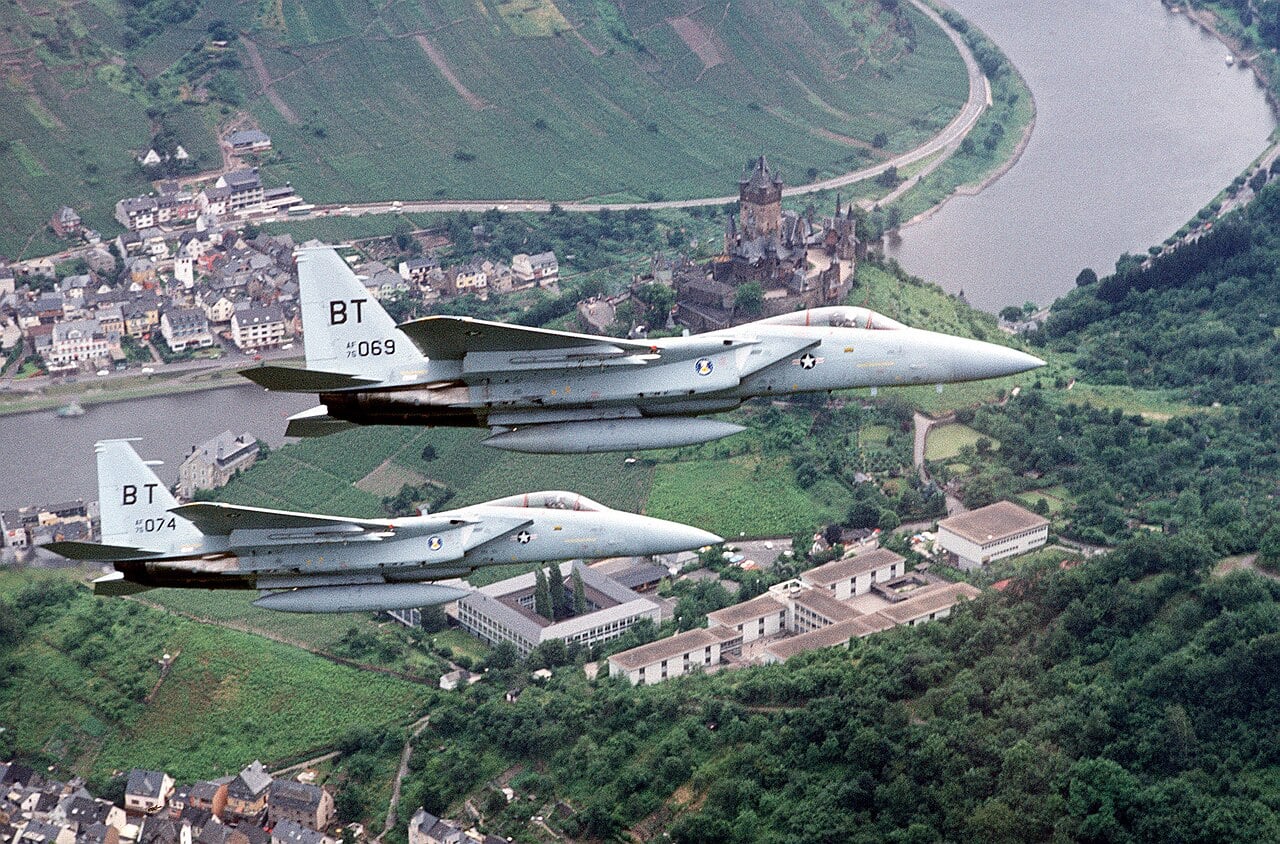
In the mid-1970s the F-15 Eagle was the most advanced fighter in the world, with a radar that could find a target far beyond visual range and an AIM-7 Sparrow missile that could hit it head-on. And yet, in its biggest test of the decade, its pilots solved their most pressing problem with a hunting rifle scope from a sporting-goods store. They called it the Eagle Eye. The story going around is true.
Informations clés
- Quoi: An off-the-shelf six-power rifle scope mounted next to the F-15’s head-up display
- Nom: Eagle Eye
- Quand: Installed for ACEVAL, flown at Nellis AFB from June to November 1977
- Pourquoi: The test rules required visual identification before a missile shot
- Combien: Seven scopes, bought for the test aircraft
- Who built the mounts: Air Force and McDonnell Aircraft engineers
- Later use: Reported in routine use by F-15 squadrons in 1998
The Rule That Blunted the Sparrow
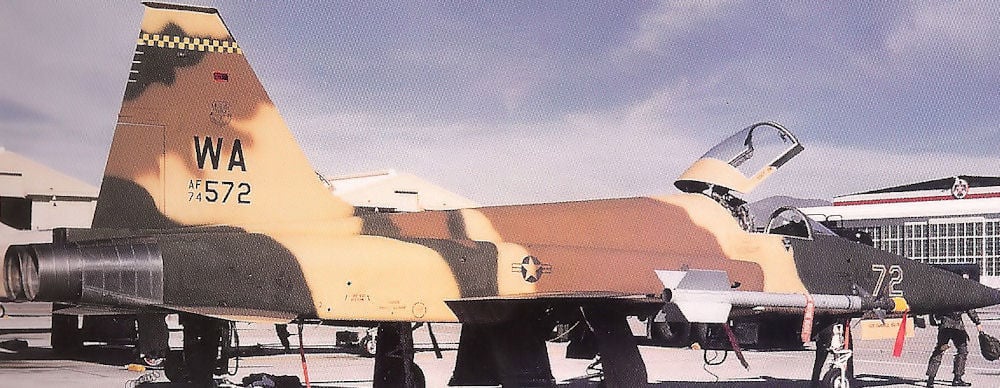
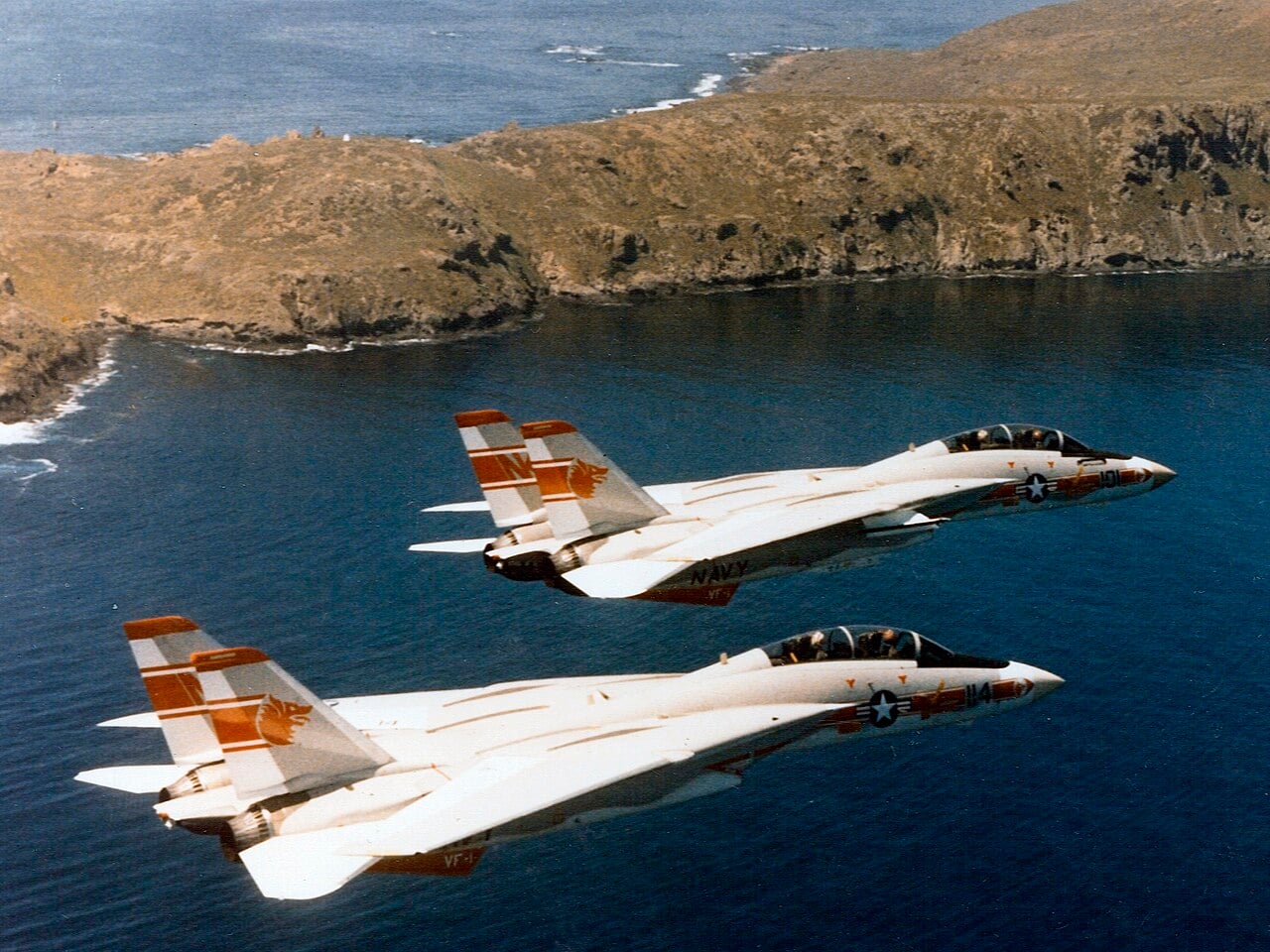
AIMVAL and ACEVAL were the largest air combat tests the US had flown. A joint Air Force and Navy test force at Nellis Air Force Base in Nevada pitted F-15s and F-14 against Air Force and Navy aggressors flying small, hard-to-see F-5Es. AIMVAL, which evaluated missile concepts, began on 3 January 1977 and ran for more than five months; ACEVAL, which looked at tactics and numbers, followed from June to November 1977. Together they flew almost 5,900 sorties.
There was a catch for the Eagles. Under the rules, every friendly fighter had to close to visual range and visually identify its target before firing. That reflected real rules of engagement, as in Vietnam, where pilots often had to see an aircraft before they were allowed to shoot it. But an F-5 head-on is a tiny dot. By the time an Eagle pilot could tell what it was, it was often already inside the Sparrow’s minimum range.
A Scope From the Gun Shop
The Navy had its own answer for the Tomcat: a television sight that extended its crews’ identification range. The Air Force’s was cheaper. According to Air Force historian Steven Fino, writing in Air University’s Air and Space Power Journal in 2017, it was installed just in time for ACEVAL.
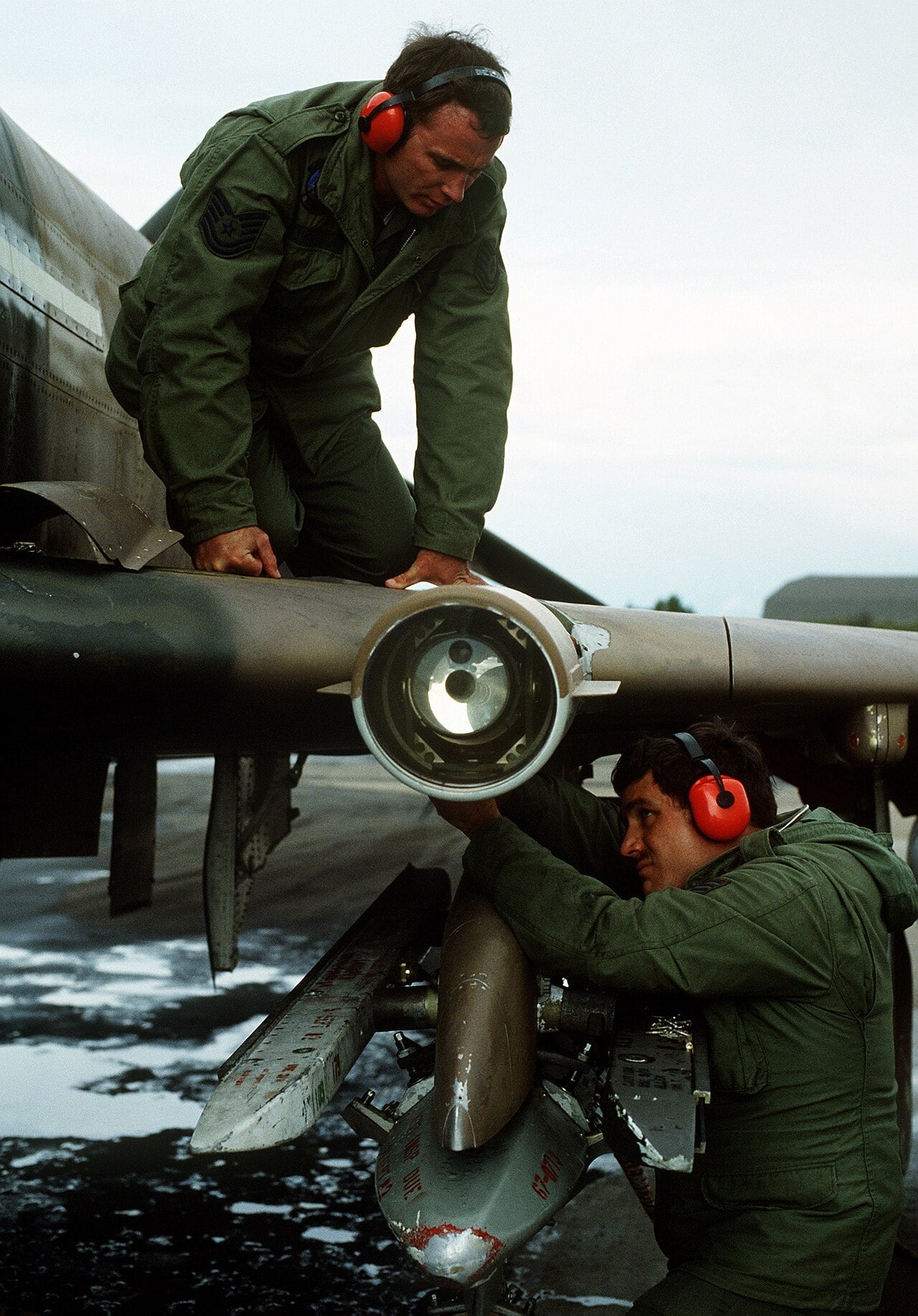
One of the original F-15 pilots, quoted by former Eagle pilot Paul Woodford in a 2021 interview, explained how it came about. The pilots talked to their Air Force and McDonnell engineers, had them design and produce mounting brackets, and bought seven scopes for the test aircraft. It was enough: with the scope, they could identify the F-5s in time to take head-on Sparrow shots before the targets got too close.
Still in Use Two Decades Later
The Eagle Eye did not disappear after the test. In July 1998 Aviation Week reported that F-15 pilots were routinely using commercial hunting-rifle scopes, mounted on the edge of the head-up display, to identify aircraft at long distances, at Kadena in Japan, in Europe and in the United States. Woodford, who flew F-15s from 1978, remembers pilots walking to their jets with a helmet bag in one hand and a rifle scope in the other. Today the job is done by targeting pods, helmet-mounted sights and electronic identification.
The F-15’s first air-to-air victory, seen from the cockpit. Video: Smithsonian Channel.
Half a century after AIMVAL and ACEVAL, the Eagle is still flying. Video: Imperial War Museums.
What the Viral Post Gets Right
All of it, with one detail on timing. The scope was off the shelf, six-power and mounted beside the head-up display; it was called the Eagle Eye; pilots worked with Air Force and McDonnell engineers on the brackets and bought seven scopes; and it let them identify targets in time for head-on Sparrow shots. The scope was installed for ACEVAL, in the second half of 1977, and the report of routine use comes from 1998.
Sources: Steven Fino, “The Coming Close Air Support Fly-Off: Lessons from AIMVAL–ACEVAL”, Air and Space Power Journal, Air University (Summer 2017); Paul Woodford, interview with Hush-Kit (27 May 2021) and his blog; Aviation Week, “Rifle Scope Augments Long-Distance Visual ID” (6 July 1998).
0 Comments