

Before an American airliner pushes back from the gate, two signatures have to be on one document. One belongs to the captain. The other belongs to someone most passengers have never heard of, who is not on the aircraft, may be hundreds of kilometres away, and has exactly the same legal power to keep the flight on the ground.
That person is the aircraft dispatcher, also called a flight dispatcher or, in much of Europe and Africa, a flight operations officer. Under the US rules for scheduled airlines, the dispatcher and the pilot in command share responsibility for whether, when and how a flight goes. Either of them can say no.
Here is what a flight dispatcher actually does, what the law says, what goes into a dispatch release, how the job differs from air traffic control, and why Europe does it differently.
Informations clés
- Job titles: Aircraft dispatcher (US), flight dispatcher, flight operations officer (Europe, Africa)
- Legal basis (US): 14 CFR 121.533: pilot in command and dispatcher jointly responsible for preflight planning, delay and dispatch release
- Release signed by: Captain and dispatcher, only if both believe the flight can be made safely (14 CFR 121.663)
- Certificate: FAA aircraft dispatcher certificate: minimum age 23, knowledge test and practical test
- Training route: Two years’ relevant experience, or an FAA-approved course of at least 200 hours
- Duty limit: No more than 10 consecutive scheduled hours; at least 24 hours off in any seven days
- Europe: Operational control required; licensed dispatchers not required under EASA rules
Joint responsibility: what the regulation actually says
The rule is short and blunt. Under 14 CFR 121.533, which covers US domestic airline operations, “the pilot in command and the aircraft dispatcher are jointly responsible for the preflight planning, delay, and dispatch release of a flight.” The airline as a whole holds operational control; inside it, those two people carry it for each flight.
The same section gives the dispatcher three standing duties: monitoring the progress of each flight, issuing the information needed for its safety, and cancelling or redispatching a flight if, in the dispatcher’s opinion or the captain’s, it cannot operate or continue to operate safely as planned. Note the “or”. Either opinion is enough.
What the dispatcher does not do is fly the aeroplane. The regulation is just as clear that the pilot in command is, during flight time, in command of the aircraft and crew and responsible for the safety of everyone on board, with full authority over the other crew members. The partnership covers the decision to go and the plan; once the wheels are turning, the captain commands.
Airline pilot Swayne Martin, filming with Envoy Air, shows how flight crews and dispatch work together on every flight.
The dispatch release: one document, two signatures
The physical product of all that shared responsibility is the dispatch release. Federal rules require the airline to prepare one for each flight, based on information from an authorised dispatcher, and both the captain and the dispatcher must sign it only if they both believe the flight can be made safely. The dispatcher may delegate the act of signing for a particular flight, but not the authority to dispatch.
Section 121.687 sets the minimum contents. The release must identify the aircraft and trip number; list the departure airport, any intermediate stops, the destination and the alternate airports; state the type of operation, such as IFR; give the minimum fuel supply; and, for ETOPS flights over remote areas, the diversion time the flight is dispatched for. Attached to it go the latest weather reports and forecasts for the destination, the stops and the alternates.
In practice a dispatcher builds that release from the operational flight plan: route, altitudes, winds, weight and balance, fuel, NOTAMs and weather. When a defect is deferred under the Minimum Equipment List, the dispatcher has to account for it in the release, which can mean recalculating fuel or performance, so the flight can still go legally. Fuel planning in particular sits squarely on the dispatcher’s desk, which is why Afterburner’s explainer on airline fuel reserves is really a description of their work.

Flight dispatcher vs air traffic controller
The two jobs are constantly confused, because both involve screens, radios and aircraft. They are completely different. An air traffic controller works for the air navigation service provider, in the US the Federal Aviation Administration, and is responsible for keeping every aircraft in a piece of airspace safely separated from every other, whichever airline it belongs to.
A dispatcher works for the airline and looks after that airline’s own flights from planning to arrival. The dispatcher files the flight plan with air traffic control; the controller then works the aircraft through the sky. A controller will never decide whether a flight has enough fuel for its alternate or whether a deferred defect allows it to fly. A dispatcher will never clear an aircraft to climb.
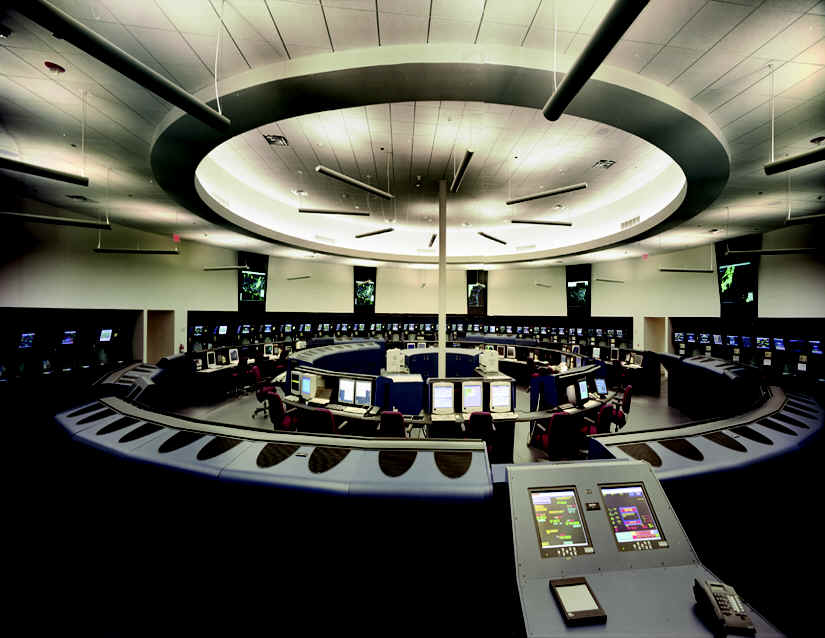
During the flight the dispatcher keeps feeding the captain information. Federal rules require the dispatcher to provide, before departure, all available weather reports and forecasts that may affect safety, including clear air turbulence, thunderstorms and low-altitude wind shear, and to keep updating the crew in flight. Much of that conversation now happens by datalink, through the aircraft’s ACARS messaging system.
The FAA’s own short overview of how air traffic control works, the job most often confused with dispatch.
How you become a dispatcher: the FAA certificate
In the US, an aircraft dispatcher certificate is an FAA airman certificate under 14 CFR Part 65. Applicants can take the knowledge test at 21 but must be at least 23 to hold the certificate, and must read, speak, write and understand English. They need either two years of relevant experience in the previous three, for example as a military or airline pilot, navigator, meteorologist, air traffic controller or dispatch assistant, or a graduation statement from an FAA-approved course of at least 200 hours.
Then come the tests: the written knowledge test and a practical test given by the FAA, demonstrated on one type of large air carrier aircraft. Once hired, a dispatcher needs initial training for each aircraft group and must spend at least five hours every 12 months observing operations from the flight deck, so the person planning a flight knows what the plan looks like from the front seat.
There are fatigue rules as well. An airline may not schedule a dispatcher for more than 10 consecutive hours of duty; anyone scheduled for more than 10 hours in 24 must get at least eight hours’ rest, and every dispatcher gets at least 24 consecutive hours off in any seven days. A dispatcher must stay on duty until every flight they released has landed, left their jurisdiction or been handed to a qualified relief.
A job almost as old as airline flying
American Airlines traces its dispatch service back to 15 April 1926, when Robertson Aircraft Corporation started flying Contract Air Mail Route 2 between Chicago and St. Louis. At first the airmail pilots alone decided whether a flight was safe; according to the airline, federal regulations in the early 1930s introduced the requirement for both the pilot and the dispatcher to sign off.
The tools have changed beyond recognition, from wet-paper weather maps and queues for the radio to computerised flight planning and datalink. American says it now has about 550 FAA-certified dispatchers, working from its Integrated Operations Center, which opened in 2015, and every one of them still shares operational control with the captain on every flight.
Not every flight has a dispatcher
Joint responsibility with a certificated dispatcher applies to US domestic and flag airlines. Supplemental carriers, largely charter and cargo operators, use a different model: there, the pilot in command and the airline’s director of operations are jointly responsible for starting, continuing, diverting and ending a flight. The director may delegate the work, usually to flight followers, but not the responsibility. Smaller commuter and on-demand operators under Part 135 generally use flight followers too.
Europe goes further in the other direction. EU air operations rules require every airline to run a system of operational control, but they do not require a licensed dispatcher. EASA guidance states plainly that the rule “does not imply a requirement for licensed flight operations officers/flight dispatchers.” If an airline uses them, their training should be based on ICAO Annex 1 and ICAO guidance, described in the operations manual and repeated in recurrent training.
EUROCONTROL’s Flight Dispatcher Days 2026: airlines and air navigation providers on how operational control works in Europe.
Many European airlines still employ highly trained flight operations officers and run large operations control centres; the difference is in the legal architecture. In the United States, the second signature on the release is a licensed professional with personal, legal co-responsibility. In Europe, the airline itself decides how operational control is staffed, and the commander carries the final authority on board.
So next time your flight is delayed “for operational reasons”, there is a fair chance a dispatcher is part of the story. Somewhere in an operations centre, someone who will never see the aircraft has looked at the weather, the fuel and the defects, and has decided, together with the captain, that it is not yet safe to go.
Sources: US Code of Federal Regulations via eCFR (14 CFR 121.463, 121.465, 121.533, 121.537, 121.601, 121.627, 121.663, 121.687; 14 CFR 65.53, 65.57, 65.59, 65.61), EASA Easy Access Rules for Air Operations (ORO.GEN.110 and guidance), American Airlines newsroom (“From airmail to IOC”), AvWeb, AirlineGeeks, Wikipedia (Flight dispatcher)
Header photo: Pattharapong Sittirach / Wikimedia Commons, CC BY 2.0


0 Comments