
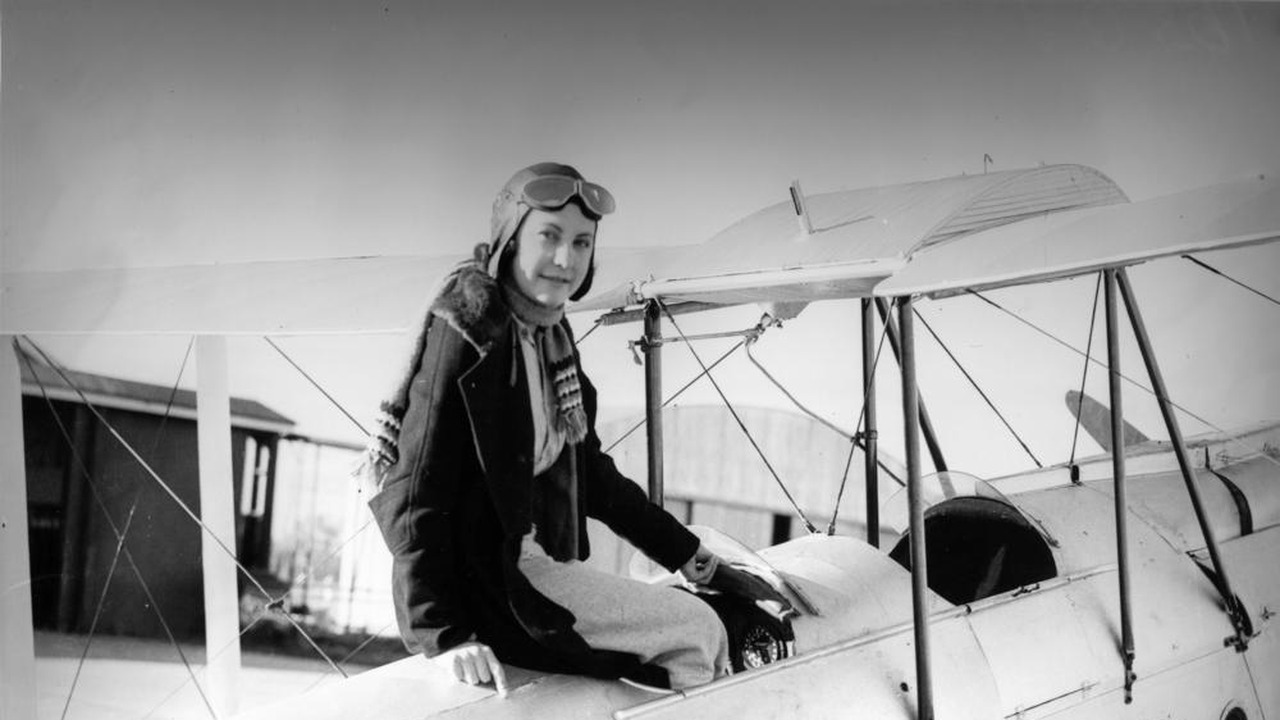
The tide was out, the beach was hard, and the approach was perfect. Then a water buffalo lumbered out in front of the little biplane. With no brakes and the tail still up, Lores Bonney could only stamp on the rudder and swerve. A wheel caught the water’s edge, the de Havilland Gipsy Moth slewed into the breakers and flipped over, and Australia’s most determined airwoman found herself hanging upside down in her harness, underwater, on a small island near Victoria Point at the southern tip of Burma.
It was April 1933, and Bonney was trying to become the first woman to fly solo from Australia to England. She got there. Then, four years later, she flew from Brisbane to Cape Town, the first solo flight from Australia to South Africa. Born 129 years ago today, on 20 November 1897, she remains one of the great forgotten pilots of aviation’s golden age.
Informations clés
- Nom: Maude Rose “Lores” Bonney (née Rubens)
- Né: 20 November 1897, Pretoria; died 24 February 1994, Gold Coast, Queensland
- Learned to fly: From August 1930 at Eagle Farm, Brisbane
- 1932: First woman to fly around the Australian mainland
- 1933: Brisbane to Croydon solo, 10 April to 21 June, about 157 hours in the air, in Gipsy Moth VH-UPV
- 1937: First solo flight from Australia to South Africa, Brisbane to Cape Town, in Klemm L32 VH-UVE
- Honneurs: MBE 1934, AM 1991, Australian Aviation Hall of Fame 2012
The pianist who wanted to fly
Maude Rose Rubens was born in Pretoria and grew up in Melbourne. She disliked her given names and chose “Lores”, pronounced Lor-ee. Sent to a finishing school in Germany to polish her piano playing, she came home fluent in German and French, an accomplished pianist with crippling stage fright. In 1917, while working for the Red Cross, she married Harry Bonney, a Brisbane leather goods manufacturer.
The man who changed her life was Harry’s cousin, Bert Hinkler, the Queensland aviator who had just flown solo from England to Australia in 1928. He took Lores up in his Avro Avian over Brisbane. Decades later, she described that first flight to her biographer, Terry Gwynn-Jones.
She took her first lessons at Brisbane’s Eagle Farm in August 1930, at first in secret while her husband played golf. When Harry found out, he did not object. He bought her a de Havilland DH.60G Gipsy Moth, which she named My Little Ship.
Brisbane to Wangaratta for dinner
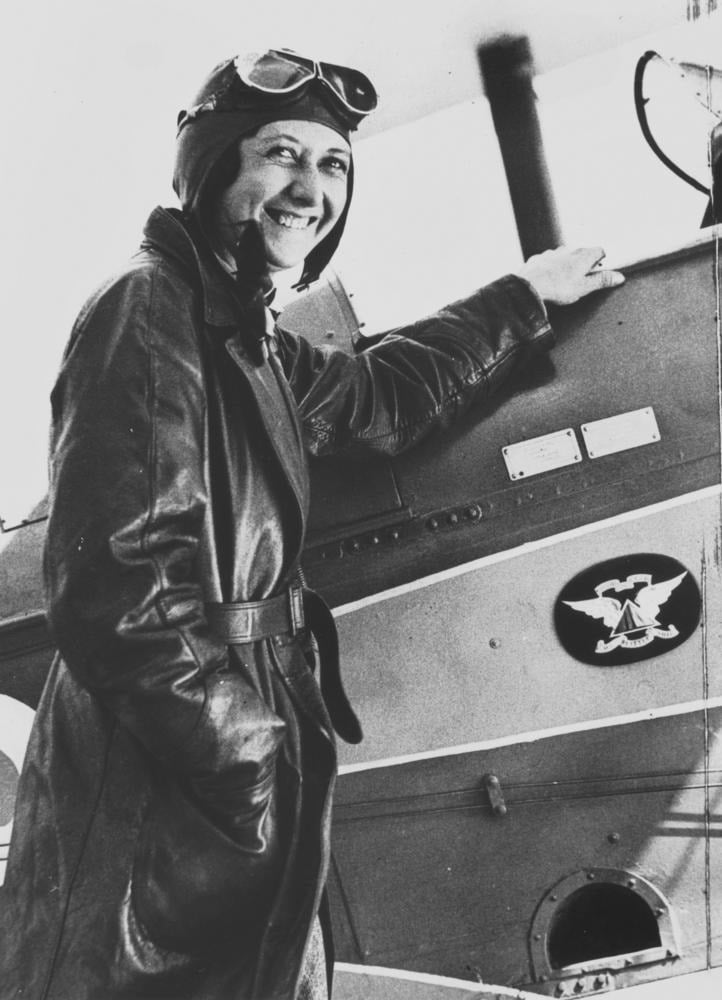
Her first record came almost by accident. In December 1931 she wanted to spend Christmas with her husband in Brisbane and the following day with her father in Wangaratta, Victoria. So she took off from Brisbane before dawn and flew the length of eastern Australia in a single day, landing in Wangaratta in the evening. Flight Safety Australia puts the flying time at 14 hours and 30 minutes, an Australian record for a solo flight in one day.
The next year she aimed higher. Before setting off around Australia, she asked Charles Kingsford Smith, who had flown around the continent himself, for advice. According to Gwynn-Jones, the great man dismissed her plan with a single line: “You might make it if you’ve got the guts.” Forty-five years later, she was still angry about it.
She set out in August 1932 and completed the circuit in about 95 hours of flying time spread over six weeks, despite, according to her biographer, a collapsed undercarriage, a cracked wing spar and a forced landing. She was the first woman to fly around the Australian mainland.
The Independent on Maude “Lores” Bonney and why her flights matter.
Ten weeks to Croydon
Bonney’s real ambition was England. According to Gwynn-Jones, she spent months as an unofficial apprentice in the Qantas maintenance hangar learning to overhaul her Moth and its engine, because there would be no radio, few airfields and nobody to fix the aeroplane but her. On 10 April 1933 she took off from Archerfield aerodrome in Brisbane. A photograph from the next day shows her at Darwin, working on My Little Ship before the crossing of the Timor Sea.
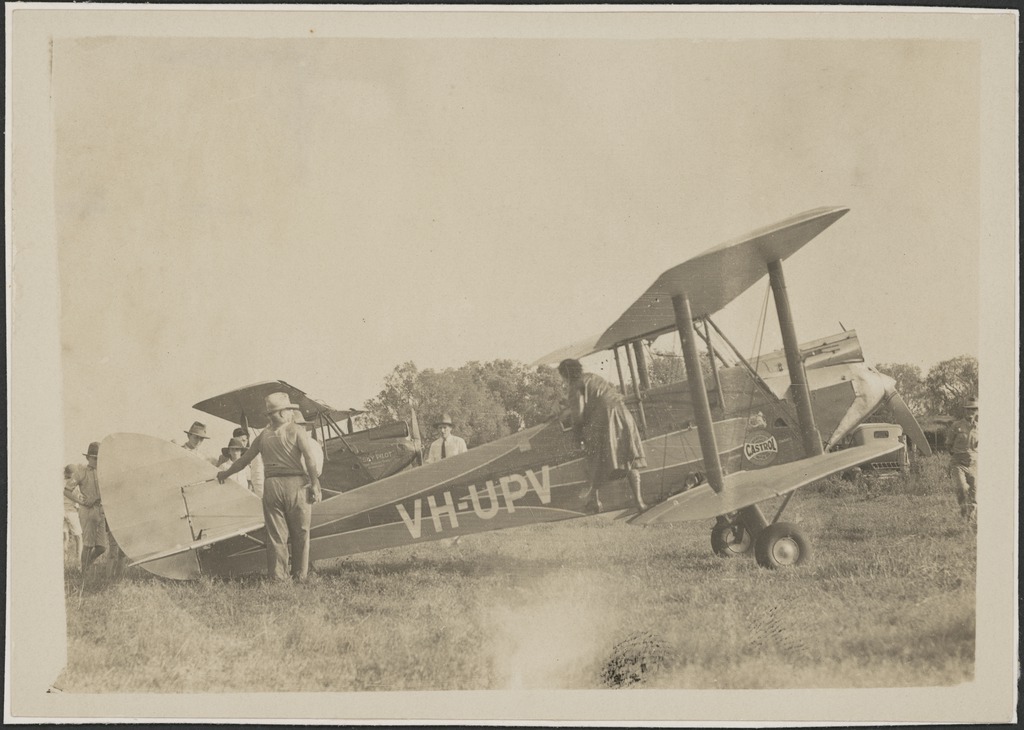
Food poisoning in Singapore cost her two days and any chance of a fast time. Then, close to Victoria Point in southern Burma, she flew into a monsoon storm. Rain stung her face and blinded her goggles, and a downdraft threw the Moth toward the sea. She regained control at around 50 feet, turned back to a small island she had just passed and tried to land on its beach. That was when the buffalo appeared.
Villagers, wary of her at first, helped her drag the wreck out of the surf. After six days, workers from a tin-mining company arrived by launch and suggested she should go home and ask her husband first. She refused to leave without her aeroplane, shipped it to Calcutta, waited a month for repairs, and set off again on 25 May.
By then a record was out of the question, so she flew the rest of the way at a gentler pace. On 21 June 1933 she landed at Croydon, London, after some 157 hours in the air. She had crashed twice on the way. In 1934 she was appointed a Member of the Order of the British Empire for the flight.
There is a footnote to that title. The Australian Women’s Register notes that, although the press of the day hailed Bonney as the first woman to fly solo from Australia to England, the distinction is today often given to Jean Batten, who flew the route in her Gipsy Moth after reaching Australia in 1934. Bonney’s own verdict was simpler: she got there first.
My Little Ship II: Brisbane to Cape Town
In 1937 Bonney attempted something nobody had done. In a new German Klemm L32 monoplane, registered VH-UVE and christened My Little Ship II, she set out to fly solo from Brisbane across Asia, the Middle East and Africa to Cape Town, in the country of her birth.
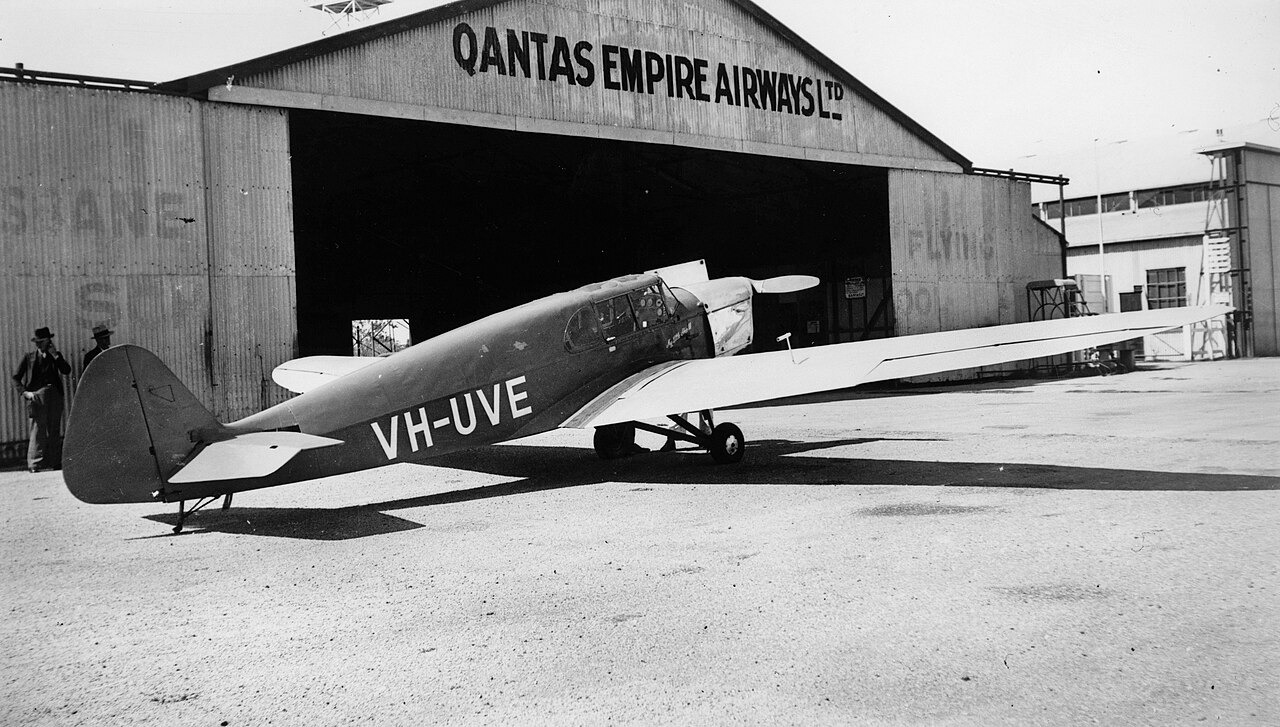
It was the hardest flight of her life. According to Gwynn-Jones, she was held up by monsoon rain in Bangkok, flew so low over India to escape headwinds that the heat melted the glue on her shoes, and was told repeatedly that the journey was “no place for a woman”. South of Khartoum her aircraft was damaged in a bush landing, and she hailed a passing Nile paddle steamer and towed the Klemm back to Khartoum on a barge for repairs.
Approaching Nairobi, flying blind in cloud over mountains, she broke into clear air with seconds to spare before a rock face; an engineer later found her altimeter was over-reading by almost 2,500 feet. In Pretoria, the city where she had been born, the South African Air Force presented her with honorary pilot’s wings. Then she flew on to Cape Town, completing the first solo flight from Australia to South Africa.
The Chermside & Districts Historical Society on Lores Bonney and her Brisbane connections.
The war, and the long silence
Bonney was planning a flight around the world, via Japan, Alaska and the United States, when the Second World War ended her flying career. The Klemm was destroyed in a hangar fire in 1939. My Little Ship was impressed into the Royal Australian Air Force as a trainer and scrapped after the war. She flew again after 1945 but gave up in 1949 because of failing eyesight.
Recognition came late. She was appointed a Member of the Order of Australia in 1991, received an honorary doctorate from Griffith University, and lived on the Gold Coast until her death on 24 February 1994, aged 96. The Bonney Trophy she presented in Britain is still awarded to an outstanding woman pilot there, and since her death Queensland has named an electoral district, a Brisbane riverside walk and a Gold Coast lookout after her. In 2012 she entered the Australian Aviation Hall of Fame.
She was barely five feet tall, flew in high style, and the newspapers of the 1930s wrote more about her clothes than her flying. The flying is what lasts: around Australia, Brisbane to London, Brisbane to Cape Town, in open cockpits and a small monoplane, with no radio and nobody to help her but herself.
Sources: HistoryNet (Terry Gwynn-Jones), Australian Women’s Register, Flight Safety Australia, National Library of Australia, State Library of Queensland, Evening Standard, Ed Coates Collection, Wikipedia (Maude Bonney)
Header photo: State Library of Queensland / Wikimedia Commons, no known copyright restrictions
0 Comments