
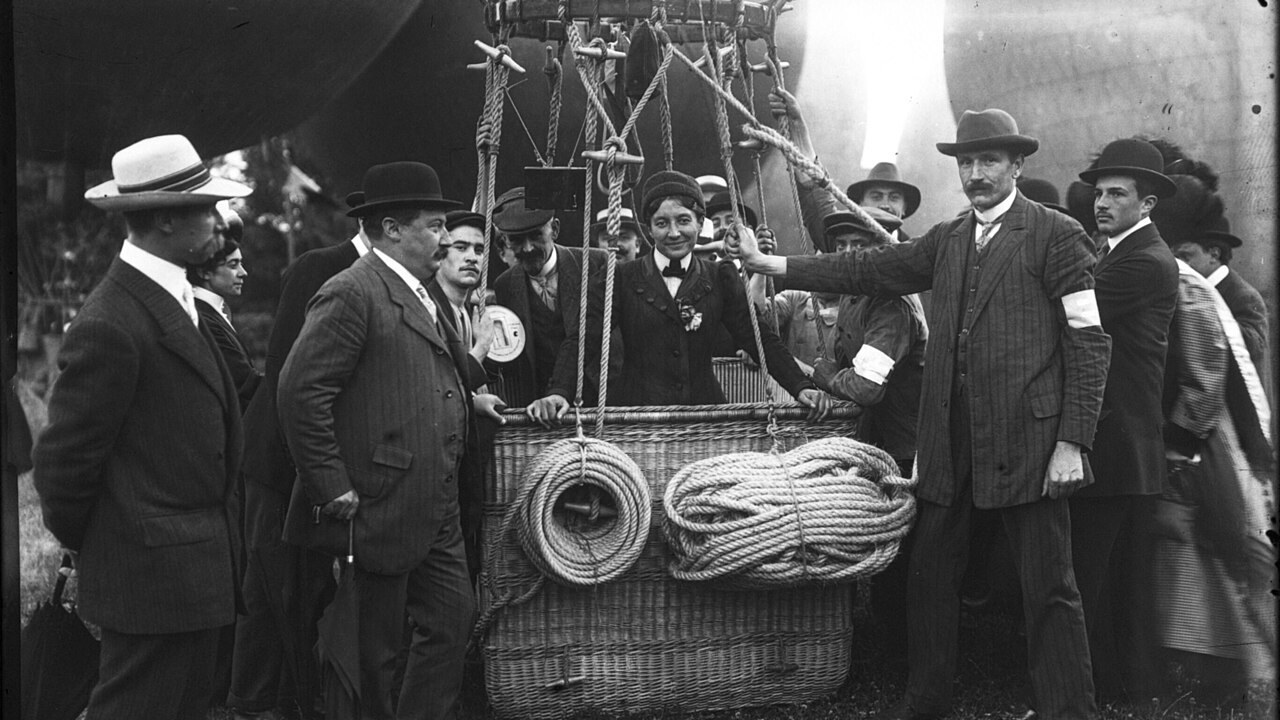
On the evening of 26 October 1909, a balloon called L’Étoile filante rose from the Parc de la Pépinière in Nancy. At the controls was a 34-year-old woman who had already climbed Alpine peaks, swum the Seine through Paris and won international shooting prizes. The wind carried her towards Holland, the weather held, and she decided to keep going.
Some fourteen hours and about 720 kilometres later, Marie Marvingt had become the first woman to pilot a balloon across the North Sea to England. It was not the most important thing she would do in the air. That came later, and it is still flying today every time a patient is lifted into an air ambulance.
Informations clés
- Nom: Marie Félicie Élisabeth Marvingt
- Né: 20 February 1875, Aurillac, France
- Décédé: 14 December 1963, Laxou, near Nancy, aged 88
- Balloon: First woman to pilot a balloon across the North Sea to England, 26 October 1909
- Pilot licence: Aéro-Club de France No. 281, 8 November 1910, on an Antoinette
- First World War: Credited in French accounts with two bombing raids on Metz-Frescaty; Croix de guerre
- Air ambulance: Ordered one from Deperdussin in 1912; first certified flight nurse, 1935
- Honneurs: Some 34 decorations, including the Legion of Honour
The fiancée of danger
Marie Félicie Élisabeth Marvingt was born in Aurillac, in the Cantal, on 20 February 1875. Her father, a senior postmaster and a keen sportsman, poured his enthusiasm into his daughter. The family moved to Metz, then part of Germany, and after her mother’s death in 1889 settled in Nancy, which remained her home for life.
Her sporting record reads like a dare. At 15 she canoed from Nancy to Koblenz. In 1905 she became the first Frenchwoman to swim the length of the Seine through Paris. In 1907 she won a military shooting prize from the French Ministry of War, and between 1908 and 1910 she collected more than twenty first places in winter sports at Chamonix and elsewhere. In 1910 the French Academy of Sports gave her its gold medal for all sports, the only time it awarded one.
French newspapers called her “la fiancée du danger”, the fiancée of danger. One story about her needs a health warning, though. For decades writers have repeated that she was barred from the 1908 Tour de France and rode the course anyway behind the men. French Wikipedia’s detailed biography notes that there is no evidence for this and calls it an urban legend.
Licence No. 281 on an Antoinette
Ballooning came first. Marvingt went up as a passenger in a free balloon in 1901 and soon flew them herself, winning ballooning prizes from 1909 onwards. In September 1909 she had her first aeroplane ride, as a passenger with Roger Sommer.
In 1910 she learned to fly under Hubert Latham, the dashing rival of Louis Blériot, on the Antoinette monoplane, a temperamental and difficult machine. She passed her tests at Mourmelon in October, and on 8 November 1910 the Aéro-Club de France issued her pilot’s licence No. 281. Only Raymonde de Laroche (No. 36) and Marthe Niel (No. 226) had been licensed before her, which made her the third woman in the world to earn a pilot’s licence, according to the aviation-medicine historian David Lam.
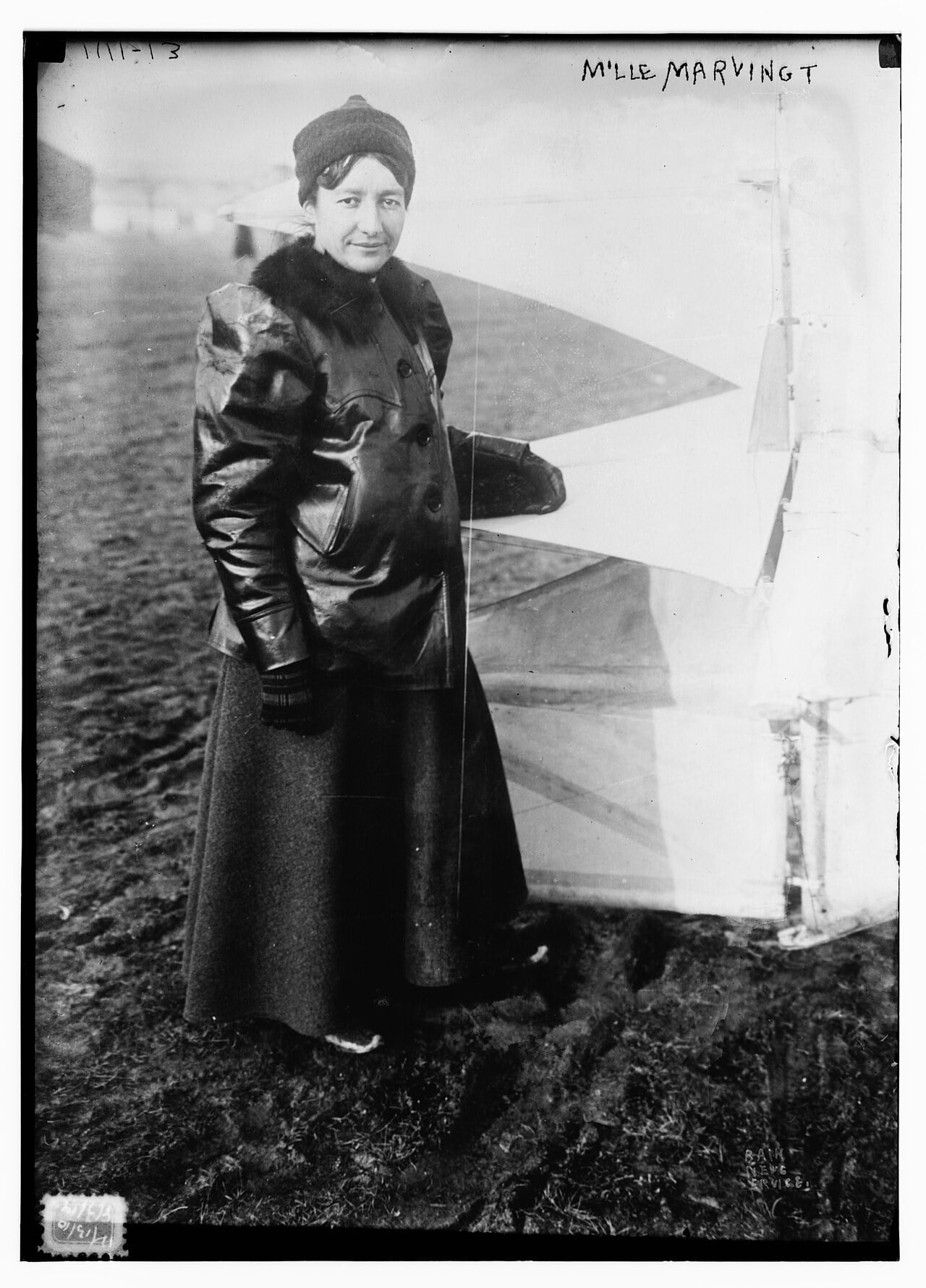
Weeks later she was chasing the new Coupe Femina, a prize for the Frenchwoman who flew the longest non-stop flight by the end of 1910. On 27 November she set the first officially recorded women’s duration mark, 53 minutes, flying laps in freezing weather until engine trouble forced her down. Her rival Hélène Dutrieu soon beat her mark and took the cup, but Marvingt had insisted that her flights be timed and verified, and women’s aviation records began there.
The History Guy tells the story of Marie Marvingt, from champion athlete to aviator and air ambulance pioneer.
An ambulance with wings
What set Marvingt apart was not a record but an idea. As early as 1910 she argued that aeroplanes could bring wounded soldiers back from the front far faster than any horse-drawn or motor ambulance. With Louis Béchereau, the Deperdussin engineer who later designed the SPAD S.VII fighters, she drew up a design for an air ambulance.
She toured France giving illustrated lectures to raise the money and, by French Wikipedia’s account, collected more than 21,000 of the 36,000 francs needed. In 1912 she ordered an air ambulance from Deperdussin. It was never delivered: the company collapsed when its owner, Armand Deperdussin, was accused of embezzling its funds.
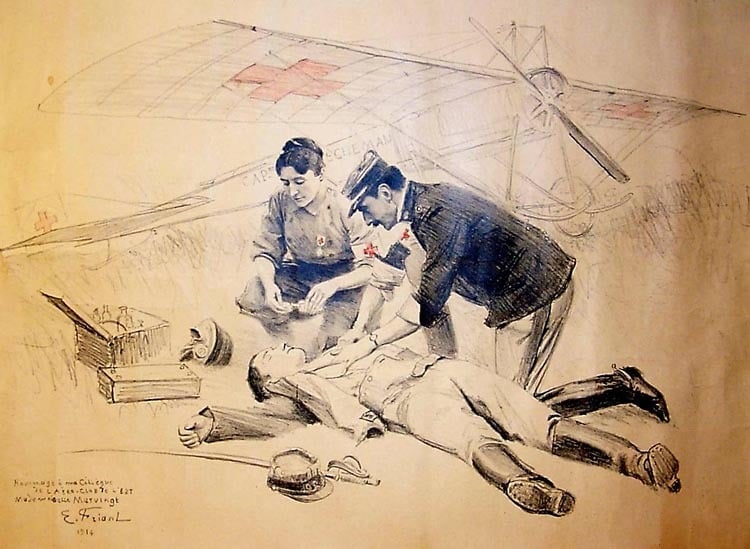
The war arrived before her aircraft did. In 1914 the painter Émile Friant drew her vision: a Red Cross aeroplane in a field and a nurse kneeling beside a wounded officer. It is still the best picture of what she was trying to build.
The war she was not allowed to fight
Marvingt wanted to fly for France in the First World War and was refused. French accounts credit her with flying on two bombing raids against the German air base at Metz-Frescaty anyway, standing in for an injured pilot, and say this earned her the Croix de guerre. English Wikipedia goes further and calls her the first woman to fly combat missions. Her own unofficial status, and the thin paperwork, mean the details are best treated with care.
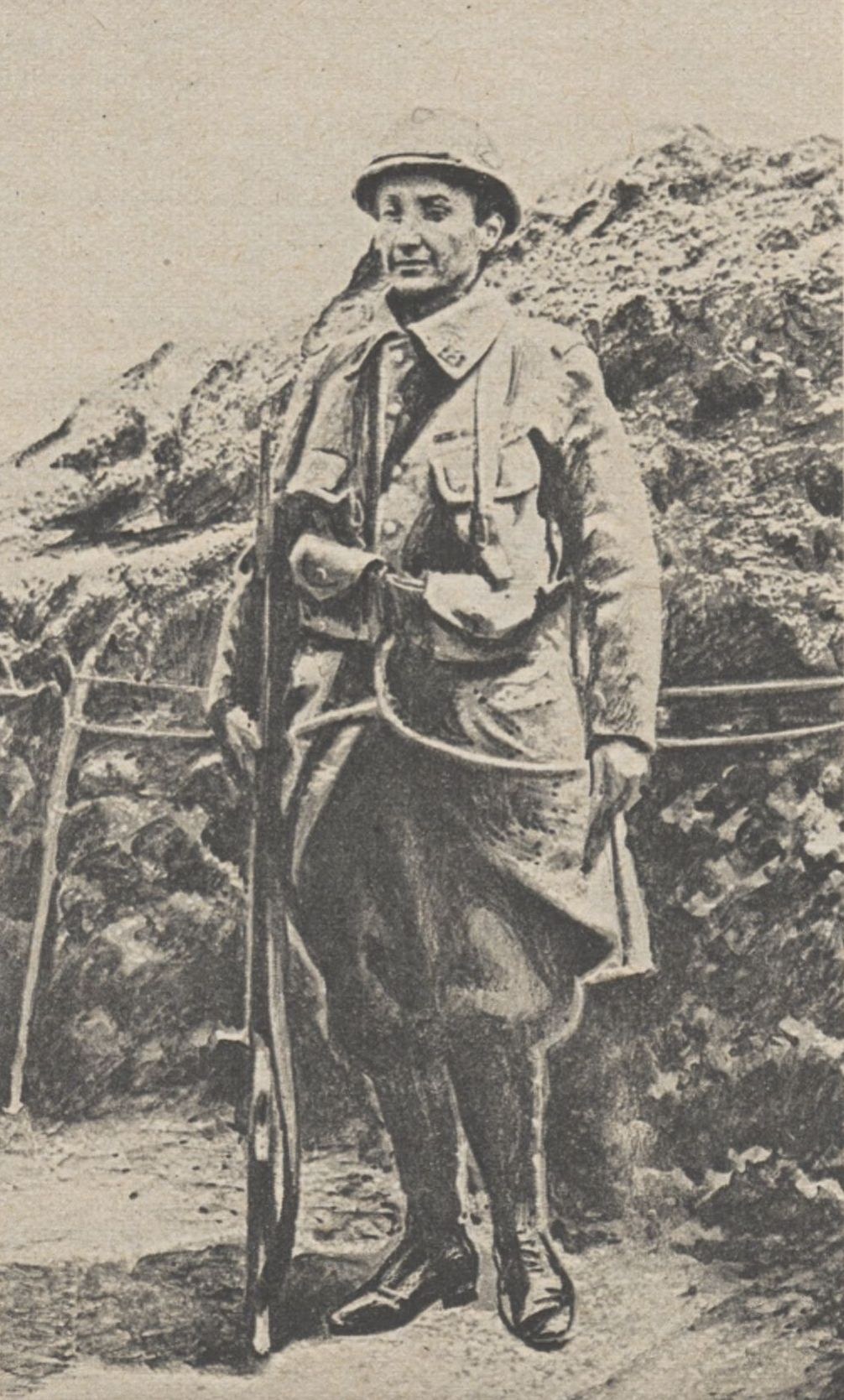
What is well documented is her stubbornness. She disguised herself as a man and served for several weeks in the front line with the 42nd Battalion of Chasseurs à pied before she was found out and sent home. She later went to the Italian front in the Dolomites, where her skiing skills were put to use helping evacuate the wounded, and she also worked as a surgical nurse and war correspondent.
Morocco, metal skis and flying nurses
Between the wars she gave her life to aeromedical evacuation, giving more than 3,000 lectures on the subject on at least four continents. She was a driving force behind the First International Congress on Medical Aviation in 1929, and in 1931 she created a prize for the best civil aircraft that could be converted into an air ambulance.
In 1934 she spent many months in Morocco, where she helped establish a civil air ambulance service, came up with metal skis so ambulance aircraft could land on sand, and wrote, directed and appeared in the documentary Les Ailes qui sauvent (The Wings That Save). She set up training for nurses of the air and in 1935 became the first certified flight nurse.
In the Second World War she worked again as a nurse and founded a convalescent home for wounded aviators in the Dordogne. In 1955 she received the Deutsch de la Meurthe grand prize for her work in aviation medicine. Even in her eighties she would not stay on the ground: she trained for a helicopter licence and took the controls of a Sud-Ouest Djinn, a jet-powered helicopter.
Archive French television footage of Marie Marvingt late in life, sharing her secrets for staying fit (in French, via Le Point).
The most decorated woman in France
Marie Marvingt died on 14 December 1963 in Laxou, near Nancy, aged 88. With some 34 decorations, among them the Legion of Honour, the Croix de guerre and the Resistance Medal, she was the most decorated woman in France. Yet she died in relative obscurity, paid little in her lifetime except as a journalist.
France has been catching up ever since. A €5 airmail stamp bore her face in 2004, and in 2022 the stadium in Le Mans was renamed after her, the first French sports ground of more than 20,000 seats to carry a woman’s name. Medical helicopters now land at roadsides and hospitals every hour of every day. The woman who drew the first one on paper, more than a century ago, deserves to be remembered with every take-off.
Sources: Wikipedia (Marie Marvingt, English and French editions), David M. Lam, “Marie Marvingt and the Development of Aeromedical Evacuation”, Aviation, Space, and Environmental Medicine 74(8), 2003, BBC News Magazine (Alison Fell, 2014), Library of Congress, Bibliothèque nationale de France / Gallica
Foire aux questions
Who was Marie Marvingt?
When did Marie Marvingt get her pilot licence?
Did Marie Marvingt fly bombing missions in the First World War?
How did Marie Marvingt pioneer the air ambulance?
Did Marie Marvingt ride the Tour de France?
When did Marie Marvingt die?
Articles similaires
Hélène Dutrieu: Belgium's Girl Hawk and the First Coupe Femina
Maryse Bastié: The Factory Girl Who Flew the South Atlantic Alone
Lilian Bland and the Mayfly: The Woman Who Built Her Own Plane
Harriet Quimby: America's First Licensed Female Pilot Crossed the Channel — Then Died at an Airshow
0 Comments