
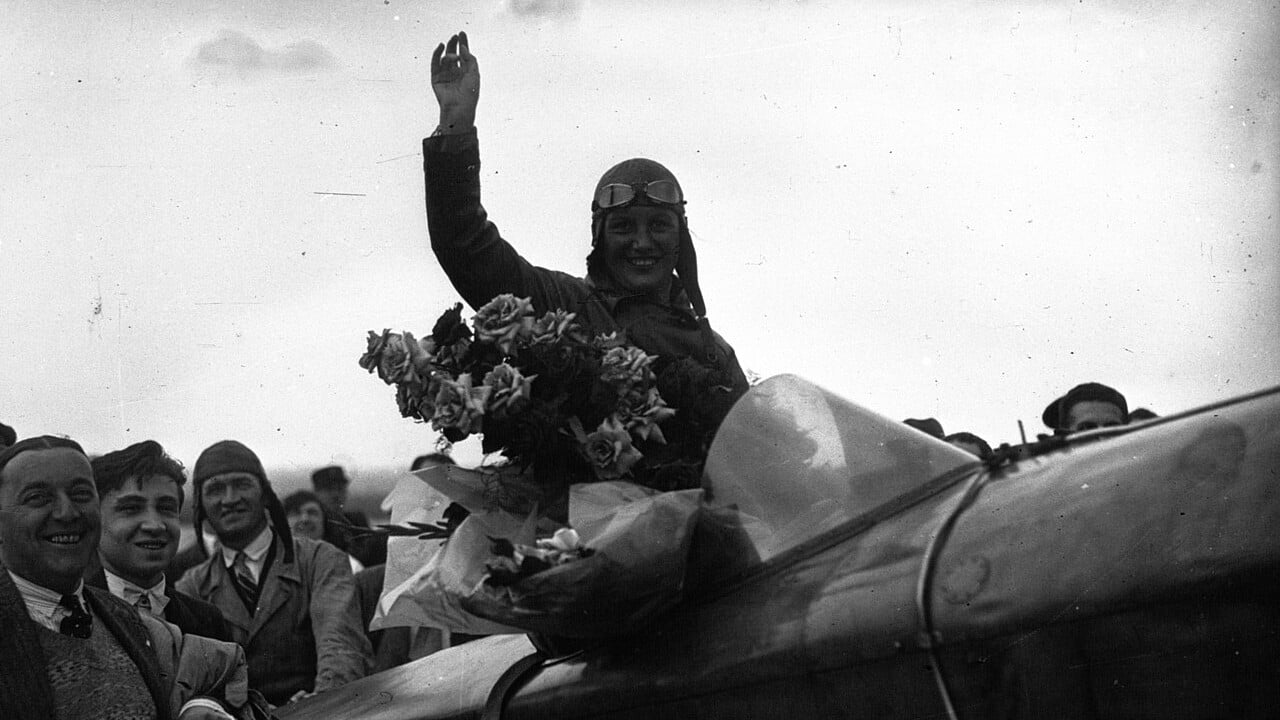
At 5:18 on the morning of 28 July 1929, a small parasol-winged Caudron lifted off from Le Bourget and began to circle. It did not come down that day, or that night. When Maryse Bastié finally landed at 8:05 the next morning, she had been airborne for 26 hours, 47 minutes and 30 seconds, alone, in an open cockpit.
It was a world record for duration, ratified by the Fédération Aéronautique Internationale. And it was flown by a woman who, a few years earlier, had been working in a shoe factory in Limoges.
Maryse Bastié went on to set records for distance as well as endurance, win the Harmon Trophy, fly solo across the South Atlantic and finish her career as a captain in the French Air Force. Outside France, she is almost forgotten.
Informations clés
- Né: Marie-Louise Bombec, 27 February 1898, Limoges
- Pilot’s brevet: 1925
- First world record: Duration, 26 h 47 min 30 s, Le Bourget, 28-29 July 1929, Caudron C.109
- Duration record regained: About 37 h 55 min, 2-4 September 1930, Klemm L 25
- Distance record: Le Bourget to Urino (USSR), 2,976 km, 28-29 June 1931
- Harmon Trophy: 1931
- South Atlantic: Dakar to Natal solo, 30 December 1936, 12 h 5 min, Caudron Simoun
- Air force: Joined 1944, rose to captain
- Décédé: 6 July 1952, Lyon-Bron
From Limoges to the cockpit
She was born Marie-Louise Bombec in Limoges on 27 February 1898. Her father died when she was a child, and as a teenager she went to work in a shoe factory. An early marriage failed. In 1922 she married again, this time a pilot named Louis Bastié, and the aeroplane entered her life.
She learned to fly in Bordeaux and, according to aviation historian Bryan Swopes, soloed on 8 September 1925 and received her pilot’s brevet later that month. In 1926 Louis Bastié was killed in a flying accident. His widow did not give up the cockpit. She flew aerobatics for money to keep flying, and in 1927 bought her own aircraft, a Caudron C.109 registered F-AHFE.
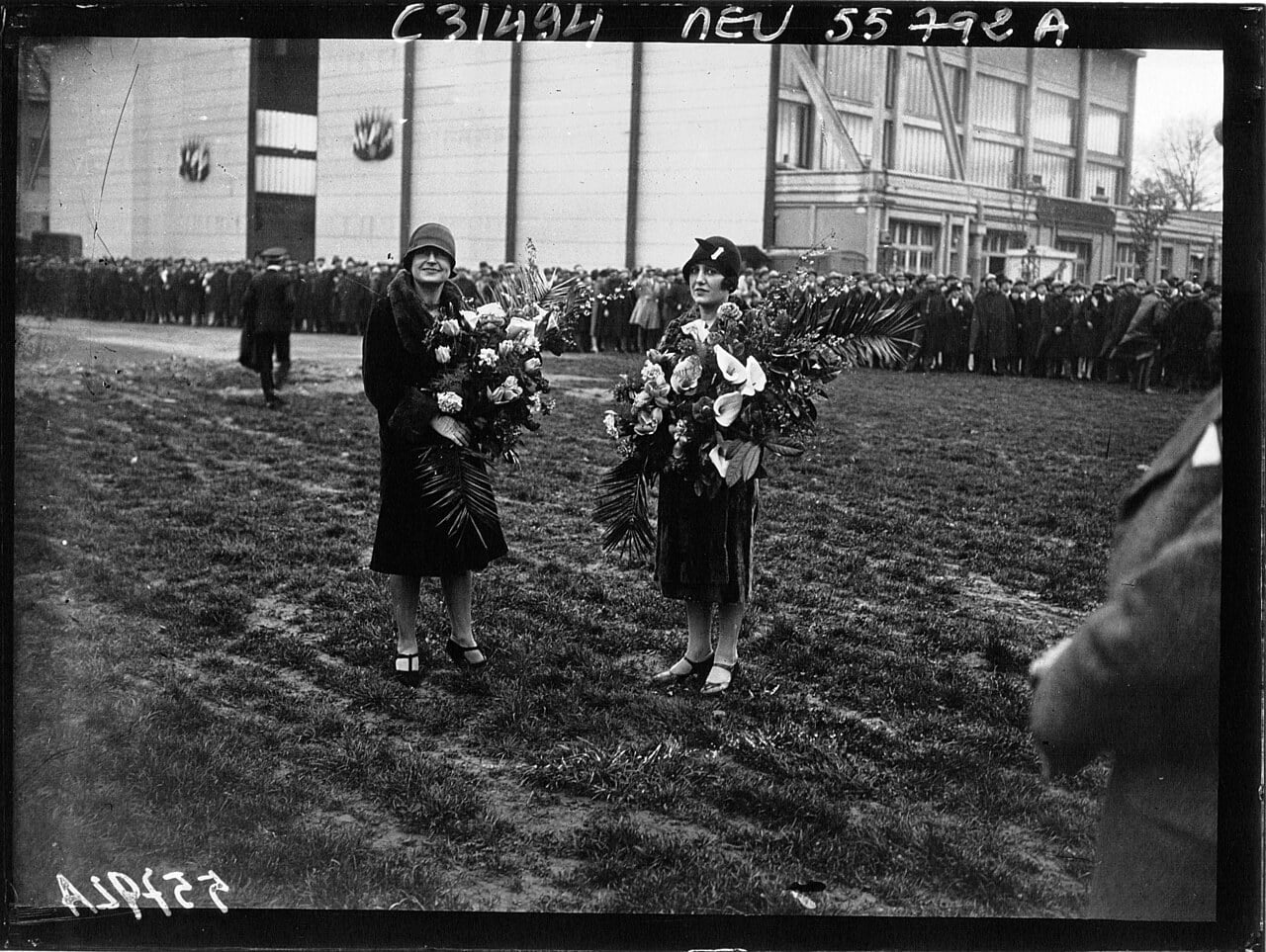
In 1928, Swopes records, she became the first woman in France to obtain a public transport pilot’s licence. The following summer she took the little Caudron up over Le Bourget for that first endurance record.
Reuters archive film of Maryse Bastié’s 1929 record flight.
The duel in the air
Duration records in those years were a contest of stamina as much as flying skill, and they did not stay put for long. In 1930 another French aviatrix, Léna Bernstein, beat Bastié’s time. Bastié answered from 2 to 4 September 1930 with almost 38 hours aloft in a Klemm L 25 monoplane, about 37 hours and 55 minutes, reclaiming the record.
Then she went for distance. On 28 and 29 June 1931 she flew the Klemm from Le Bourget to Urino in the Soviet Union, 2,976 kilometres in 30 hours and 30 minutes, a world distance record for women. The flight earned her the Harmon Trophy for 1931; according to the FAI she was the first Frenchwoman to win it. France made her a Chevalier of the Legion of Honour.
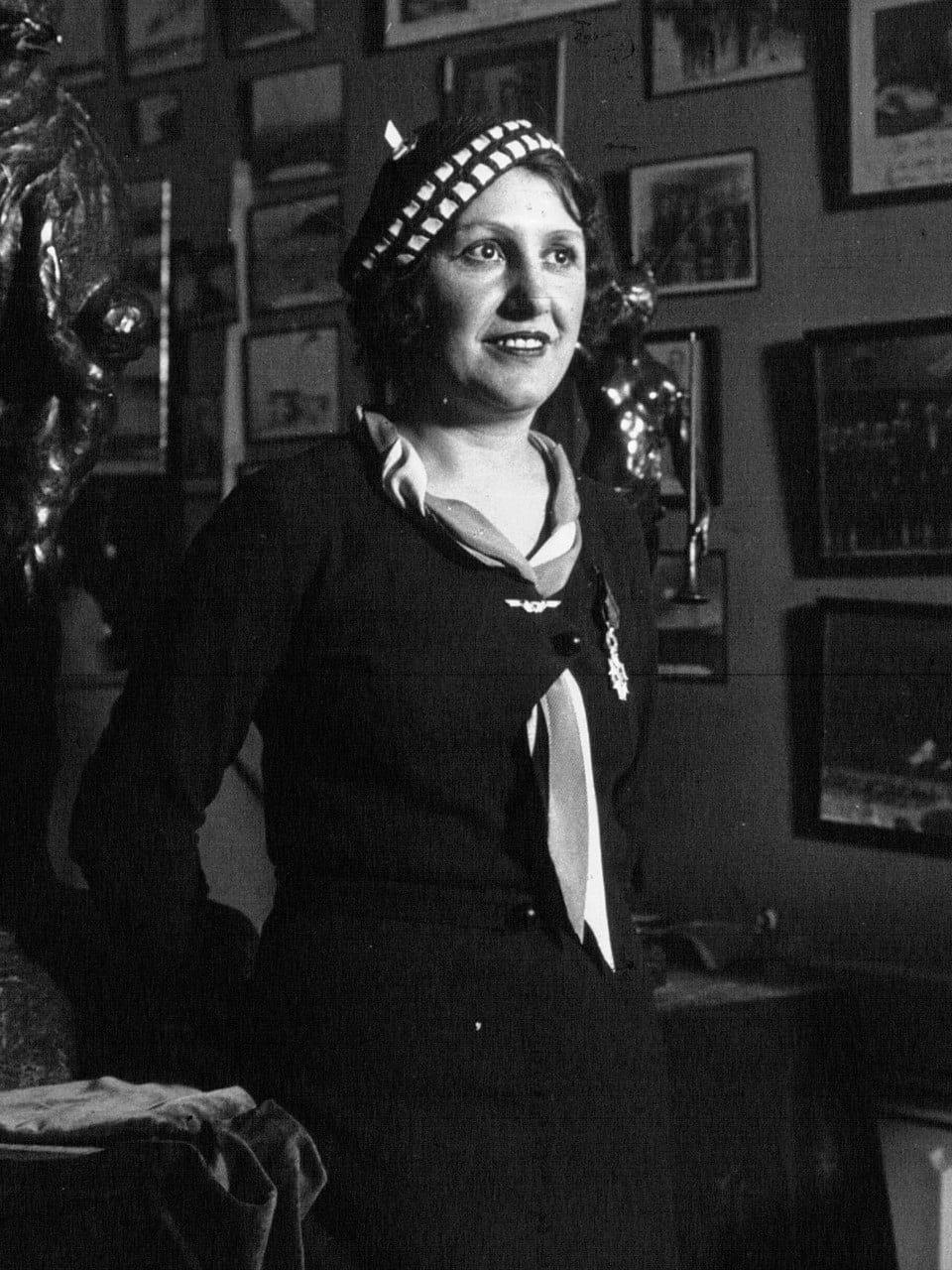
In 1935 she opened her own flying school at Orly. A year later came the flight that made her famous across the Atlantic world.
Dakar to Natal, alone
On 30 December 1936 Bastié took off from Dakar in a Caudron C.635 Simoun, registered F-ANXO, and pointed it west across the South Atlantic. Twelve hours and five minutes later she landed at Natal in Brazil. It was the ocean that the Aéropostale pilots of Jean Mermoz’s generation had fought to conquer, and she had crossed it alone, in a fast single-engined tourer, in record time.
France promoted her to Officer of the Legion of Honour. In 1937 she published her own story, Ailes ouvertes: carnet d’une aviatrice, open wings, the notebook of an aviatrix.
France Télévisions (ICI Nouvelle-Aquitaine) on previously unseen images of the Limoges-born aviation pioneer.
War, resistance and the air force
The war grounded civilian flying in France. During the occupation, Swopes writes, Bastié was suspected of working with the Resistance and held for 15 days by the Gestapo at Fresnes prison before being released. When the Legion of Honour raised her to Commander in 1947, the citation referred to her exceptional war record and acts of resistance.
In 1944 she joined the French Air Force, the Armée de l’air, and rose to the rank of captain, eventually logging more than 3,000 flying hours. According to Swopes, she was first assigned as a pilot-journalist in the air minister’s office.
On 6 July 1952, after a conference in Lyon, she was killed at the Lyon-Bron air show when the second prototype of the Nord 2501 Noratlas, in which she was a passenger, crashed during a demonstration. She was 54. Some 100,000 spectators were at the show, according to Swopes.
A name on schools and streets
France did not forget her as quickly as the rest of the world did. In 1955 she appeared on a French airmail stamp. Schools and streets across France carry her name. She is buried in the Montparnasse cemetery in Paris.
Her generation of French airwomen was extraordinary: Adrienne Bolland over the Andes, Hélène Boucher setting speed records, Bastié flying longer and farther than almost anyone. Bastié’s path ran from a shoe factory floor to an air force captain’s stripes.
A French-language portrait of Maryse Bastié, heroine of French aviation.
Twenty-six hours, forty-seven minutes and thirty seconds in an open cockpit over Le Bourget. Most people could not sit still that long. Maryse Bastié flew it, and then went back up to fly longer.
Sources: Fédération Aéronautique Internationale (via Aviation Pros), This Day in Aviation (Bryan R. Swopes), Manchester Guardian, Reuters, Agence Meurisse
Header photo: Agence Meurisse / Wikimedia Commons, public domain

0 Comments