
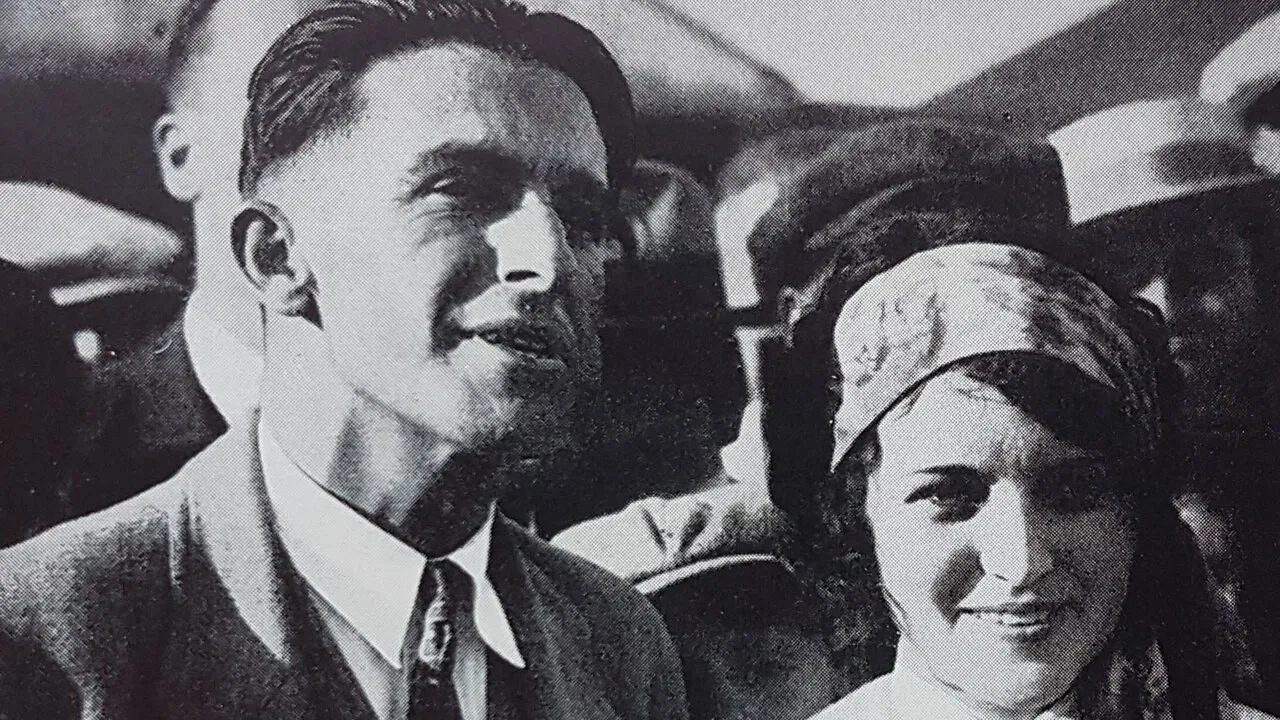
Somewhere over the eastern Atlantic in October 1927, a yellow monoplane was running out of oil over the Atlantic. Its two occupants had been in the air for more than a day. They had seen no ship for hours. Then, below them, a Dutch tanker called Barendrecht came into view.
In the cockpit sat Ruth Elder, a former dental receptionist from Anniston, Alabama, and her flying instructor George Haldeman. Five months after Charles Lindbergh had flown alone from New York to Paris, Elder had set out to become the first woman to fly across the Atlantic. Instead, she was about to land on it.
Informations clés
- OMS: Ruth Elder, with pilot and instructor George Haldeman
- Aéronef: Stinson SM-1 Detroiter American Girl, one Wright J-5 Whirlwind engine
- Défunt: Roosevelt Field, Long Island, 11 October 1927, 5:04 pm Eastern time
- Destination: Le Bourget, Paris (planned)
- Problème: A cracked oil line; oil leak about 15 hours after take-off
- Ending: Ditched beside the Dutch tanker Barendrecht, roughly 325 to 360 miles from the Azores; both rescued unhurt
- Enregistrer: 2,623 miles over water, a new over-water endurance record and the longest flight by a woman at that time
From Lakeland to Long Island
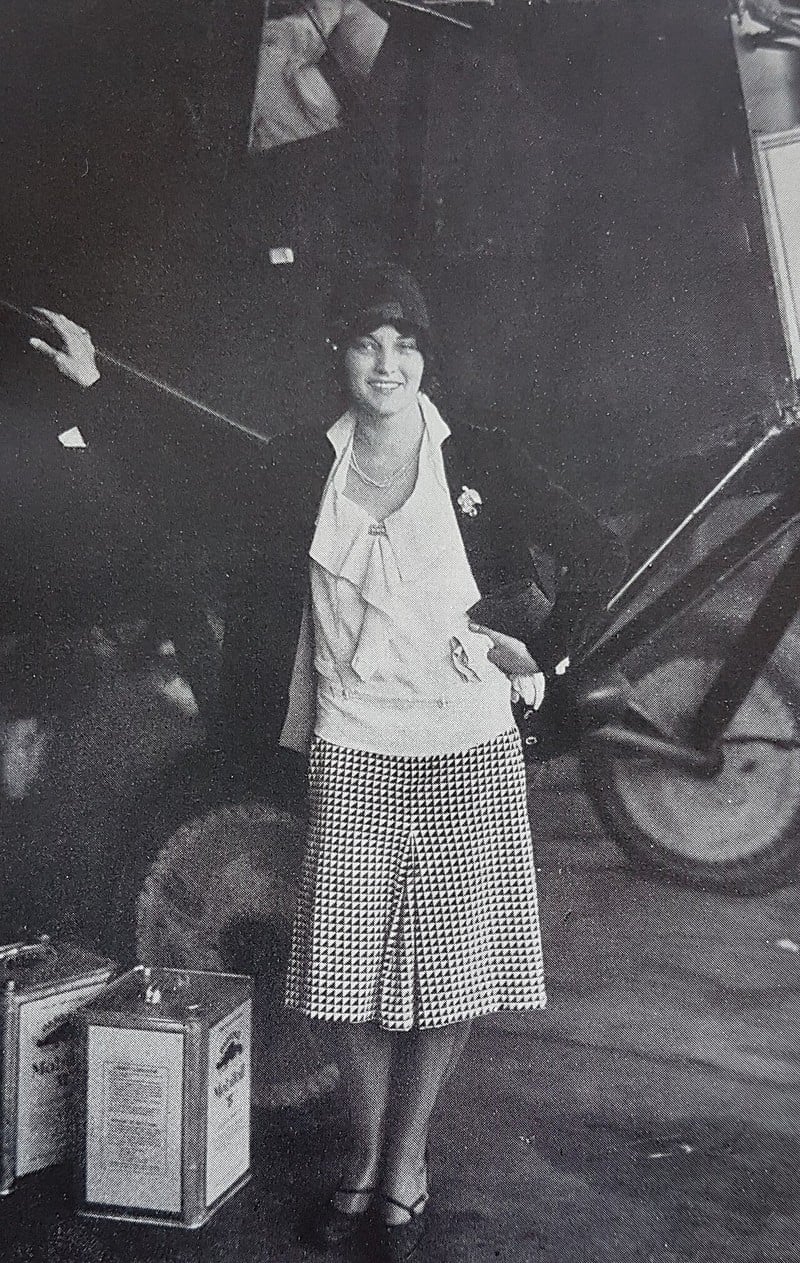
Elder grew up in Anniston and later moved to Lakeland, Florida, where she worked in a dental office. There she met Haldeman, a local pilot, who in 1925 began teaching her to fly, according to This Day in Aviation. The Encyclopedia of Alabama records that he refused her at first, believing women unsuited to flying, and gave in only after weeks of persuasion. Soon the pair were flying stunts at carnivals and county fairs.
Lindbergh’s flight in May 1927 changed her ambitions. A group of investors from Wheeling, West Virginia, agreed to pay for an Atlantic attempt, and Elder chose a Stinson SM-1 Detroiter, a six-seat high-wing cabin monoplane with a single Wright J-5 Whirlwind radial engine. She christened it American Girl. Fitted with extra tanks, it reportedly carried 520 US gallons of fuel, enough for around 44 hours in the air.
It was a dangerous season to try. The Encyclopedia of Alabama notes that 16 people died attempting trans-oceanic flights in August 1927 alone. Before she could go, Elder had to pass a medical examination, and the Army medical officer, as This Day in Aviation records, called her “the most perfect physical specimen of the American girl I have ever seen.” The newspapers called her the “Miss America of the Air.”
Into the storm
After a week waiting for weather, American Girl lifted off from Roosevelt Field, Long Island, at 5:04 pm Eastern time on 11 October 1927, bound for Le Bourget, Paris. Rather than Lindbergh’s great-circle route, Elder and Haldeman planned to follow the shipping lanes, flying east for some 1,240 miles before turning north-east. The whole trip was estimated at about 3,600 miles.
About an hour out they ran into a storm that pushed them south of their course, and it took around eight hours to clear it. Then, about 15 hours after take-off, the engine began leaking oil. A cracked oil line meant the Whirlwind was slowly bleeding its lubricant away, and with it any realistic chance of reaching Europe.
The Huntsville Madison County Public Library’s short history of Katherine Stinson and Ruth Elder, two early aviators from Alabama.
They kept going. According to the Encyclopedia of Alabama, after 32 hours aloft, with the oil almost gone, they began preparing to ditch. The Barendrecht was the only ship they had seen in more than 12 hours. They put the Stinson down on the sea beside it, and the tanker’s crew hauled both aviators aboard, wet, tired and uninjured.
A ditching that set a record
The crew tried to lift American Girl aboard as well, but the aircraft caught fire and had to be let go. Accounts put the ditching between about 325 and 360 miles from the Azores. The tanker took the pair to the Azores, and from there they travelled on via Lisbon and Madrid, reaching Paris on 28 October to a hero’s welcome.
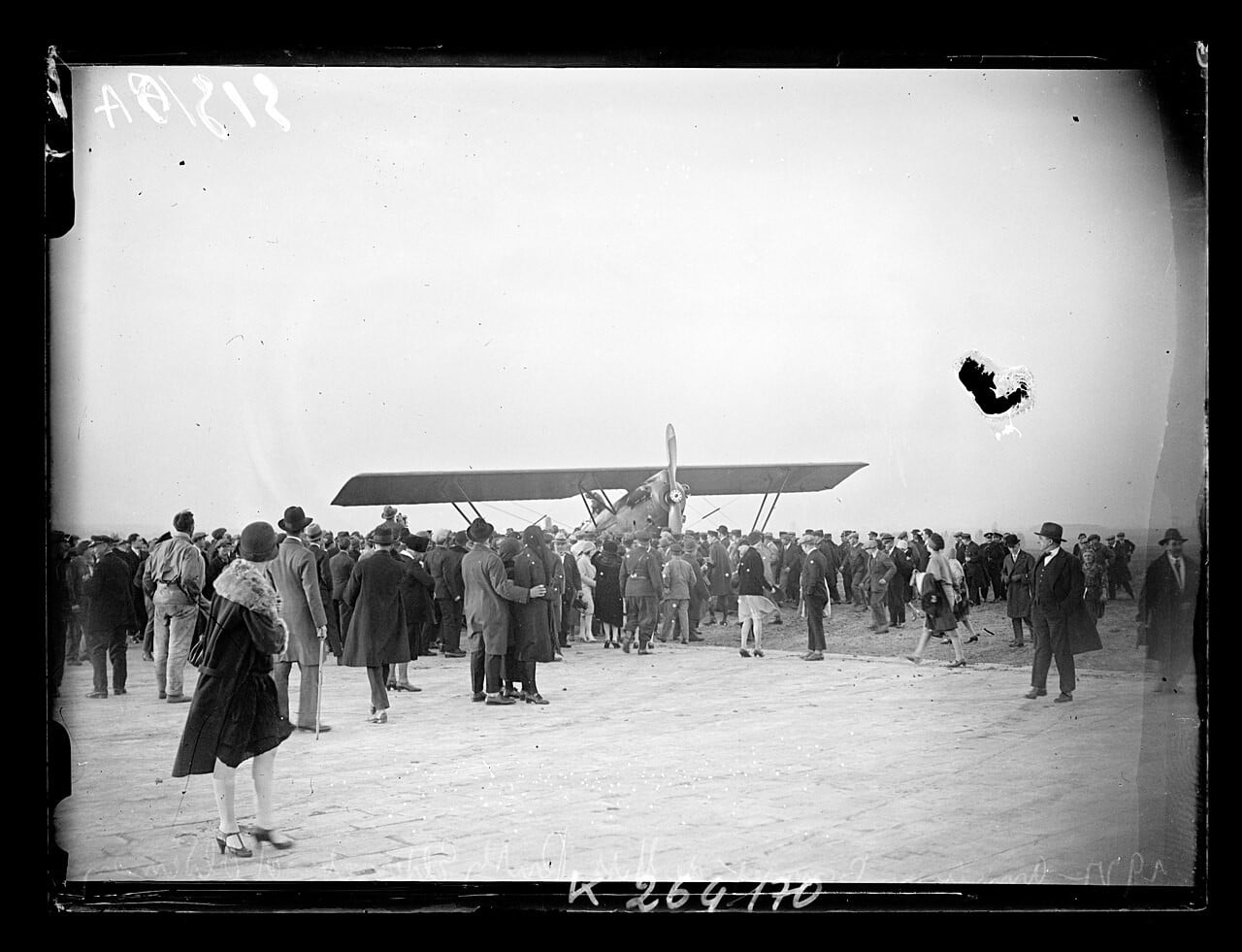
They had not made it, but they had flown 2,623 miles over water, a new over-water endurance record, and it was the longest flight ever made by a woman at that time. Elder’s flight has been called a glorious failure, and the public treated it as a triumph.
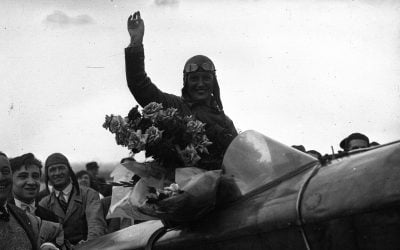
Back in New York, after crossing on the liner Aquitania, the pair got a ticker-tape parade. At City Hall, Mayor Jimmy Walker presented them with an illuminated scroll, and Elder was asked to speak to the crowd.
Haldeman spoke to the purpose of the whole venture. It had, he said, been meant as a success for commercial aviation.
Hollywood, the Derby and after
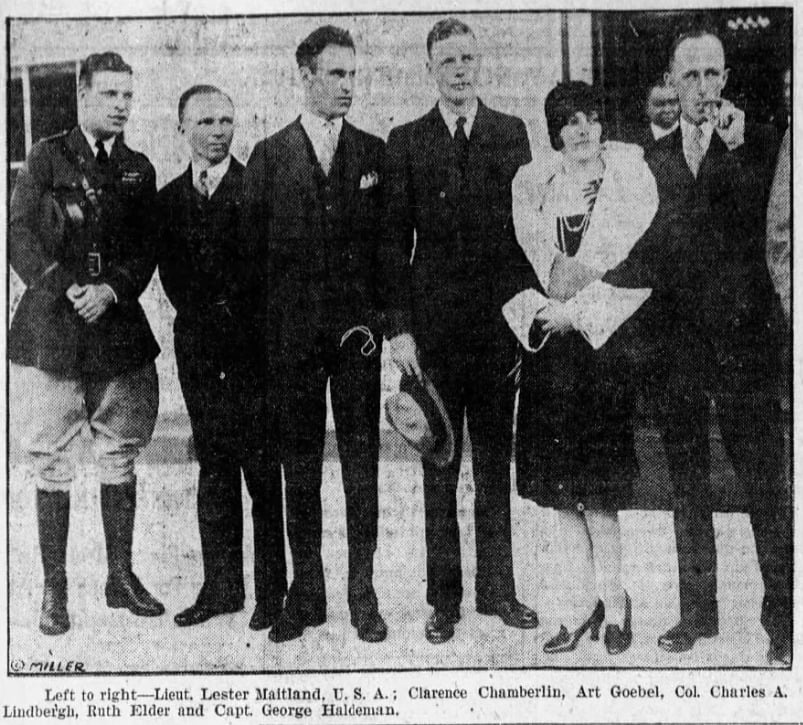
In Washington, the two were guests of President Calvin Coolidge alongside Lindbergh. Elder toured on the vaudeville circuit and went to Hollywood, starring in two silent films, Moran of the Marines (1928) and The Winged Horseman (1929). This Day in Aviation puts her pay for them at about $250,000. In the mid-1930s she admitted in an interview: “The money slipped through my fingers and soon there was nothing.”
She kept flying. In August 1929 she entered the first Women’s Air Derby from Santa Monica to Cleveland in her Swallow, survived an engine failure and forced landing, and finished fifth. She was a charter member of the Ninety-Nines, the women pilots’ organisation, and later worked as a secretary for Howard Hughes’ aircraft company.
British Pathé newsreel from 1927: Ruth Elder arrives back in New York, rides in her parade and is honoured at City Hall.
It was Amelia Earhart who became the first woman to cross the Atlantic by air, as a passenger in 1928, and the first to fly it solo in 1932. Elder has been half-forgotten ever since. Yet in 1927, she was one of the most famous women in America.
Ruth Elder died in San Francisco on 9 October 1977, two days before the 50th anniversary of her take-off from Roosevelt Field. Her ashes were scattered from an aeroplane over the Pacific. It seems the right ending for a woman whose most famous flight had ended on the sea.
A 1935 home movie from the Periscope Film archive featuring the pioneer aviators Ruth Nichols and Ruth Elder.
Sources: This Day in Aviation (Bryan R. Swopes), Encyclopedia of Alabama, National Archives (The Unwritten Record), Transportation History Foundation, Davis-Monthan Airfield Register, British Pathé
Header photo: Unknown photographer / Wikimedia Commons, public domain
0 Comments