
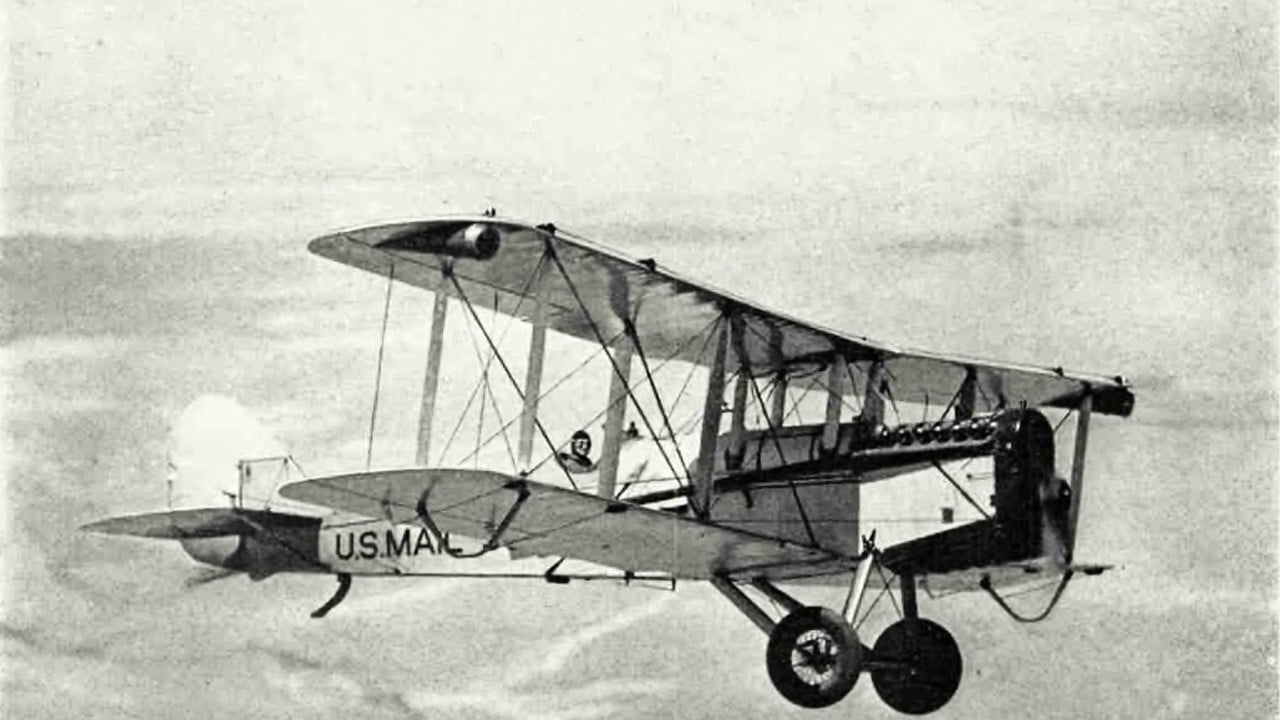
At about one in the morning on 23 February 1921, a biplane came down out of a freezing Nebraska sky onto the airfield at Omaha. The pilot climbed out with plaster on his broken nose, thinking, as he later put it, only of supper and sleep. Then the field manager told him the news. The relief pilot who was supposed to carry his mail sacks on to Chicago was snowbound. Every other aircraft in the great coast-to-coast relay was on the ground.
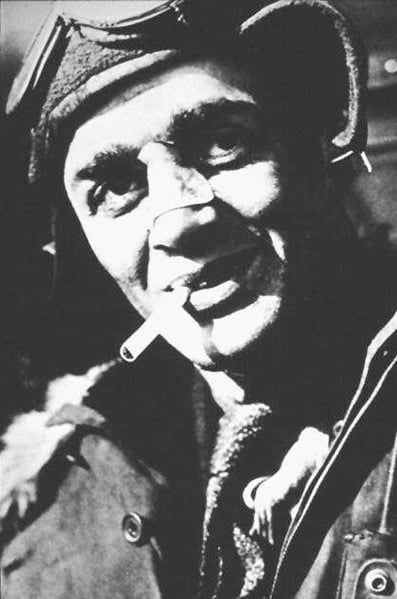
His name was Jack Knight. He had never flown the route east of Omaha. He had no radio, no lighted airway, a basic compass and, eventually, a piece torn from a road map. By breakfast he was in Chicago, the front pages had a new hero, and the US Air Mail Service had a future.
Informations clés
- Événement: First day-and-night transcontinental airmail flight, US Air Mail Service
- Dates : 22 and 23 February 1921
- Itinéraire: San Francisco to New York by relay (westbound attempt halted by snow)
- Pilotes : Seven pilots on the completed eastbound relay
- Total: 2,629 miles in 33 hours 20 minutes
- Knight’s night: North Platte to Omaha to Chicago, about 830 miles, 10:44 p.m. to 8:40 a.m.
- Aéronef: De Havilland DH-4 biplanes
- Résultat: Funding secured; scheduled 24-hour airmail from 1 July 1924
An airmail service on borrowed time
In early 1921 the US Air Mail Service looked like a very expensive way to lose pilots. The transcontinental route between New York and San Francisco had opened in September 1920, but the aircraft flew only by day. At dusk the mail sacks went onto a train, and at dawn another aircraft picked them up. According to the US Centennial of Flight Commission, a train alone needed 108 hours to cross the country; the air-and-rail mix cut that to 78.
That was not enough to impress the incoming administration of Warren Harding, which regarded airmail as a waste of money, and Congress was tired of paying for it. Assistant Postmaster General Otto Praeger, the service’s driving force, decided only a spectacle could save it: carry the mail coast to coast entirely by air, through the night as well as the day. He picked Washington’s Birthday, 22 February 1921, for the attempt.
The tools were primitive. Pilots flew war-surplus de Havilland DH-4 biplanes from open cockpits, navigating by railway lines, rivers and farms. Praeger’s plan for the night legs was simple: ask post office workers and citizens to light bonfires, oil drums and flares along the route. His motto for the pilots, according to HistoryNet, was blunter still.
The grand relay
At 6 a.m. on 22 February, two mail planes left Hazelhurst Field on Long Island heading west. Two more left San Francisco heading east. Relief pilots and aircraft waited at each stop in between. The relay began to fall apart almost at once.
In the east, fog and snow forced one westbound pilot down in Pennsylvania, and the other got the mail as far as Chicago before the next pilot turned back in a snowstorm. The westbound attempt was over. In the west, tragedy struck: pilot William Lewis was killed when his aircraft crashed shortly after taking off from Elko, Nevada. His mail was recovered and carried on eastward by other pilots.
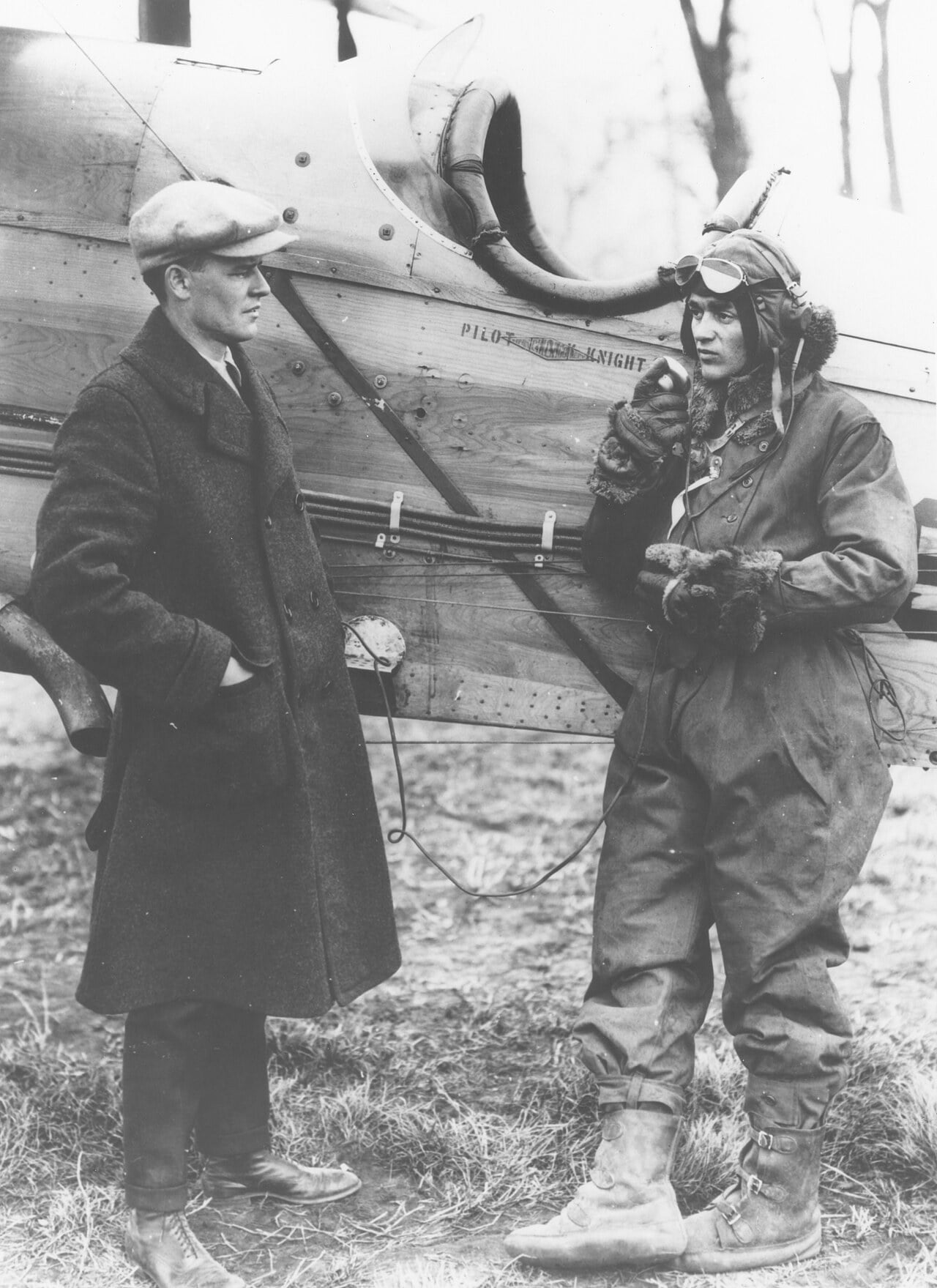
The eastbound mail reached Cheyenne, Wyoming, as night fell, and Frank Yeager flew it on to North Platte, Nebraska, landing in the dark by the light of burning fuel. There Jack Knight was waiting, still sore from a crash in the mountains near Laramie days earlier that had broken his nose. A cracked tailskid on Yeager’s aircraft had to be repaired, and Knight took off for Omaha at 10:44 p.m., according to the Centennial of Flight Commission.
Wyoming PBS on the airmail pilots and Jack Knight’s freezing 1921 night flight.
Bonfires across Nebraska
The night was bitterly cold but clear enough to see the ground. Knight followed the Platte River, and then the fires began to appear below him, lit by postal workers, airfield staff and farmers who had heard the mail was coming.
He landed at Omaha at about 1 a.m., to be told he was the only pilot still flying. The sensible thing was to stop and let the mail go by train. That would also have proved the critics right. Knight asked for coffee and a map instead.
The only map anyone could find was a highway wall map. Knight tore off the section from Omaha to Chicago, stuffed newspapers inside his flying suit for extra insulation, and took off into the dark at about 2 a.m.
Lost over Iowa, found by a watchman
Across Iowa the weather closed in. Knight followed railway tracks to Des Moines but could not judge the depth of snow on the field, so he climbed again and pressed on another 120 miles to Iowa City. By then, everyone at the Iowa City field had gone home, assuming the relay had been cancelled. Knight roared low over the town. The night watchman heard the engine and lit a flare to mark the field, and Knight got down in a strong winter wind.
He refuelled, warmed up, and took off again at 6:30 a.m. for the last 200 miles to Chicago. At 8:40 a.m. he landed at Checkerboard Field near Chicago, where a crowd had waited through the night. His all-night run had covered about 830 miles, by compass and torn road map. Jack Webster flew the mail on to Cleveland, and Ernest Allison brought it into Hazelhurst Field, New York, at 4:50 p.m. on 23 February.
The Smithsonian’s National Postal Museum on the de Havilland DH-4, the workhorse of the early US airmail.
Seven pilots had carried the mail 2,629 miles from San Francisco to New York in 33 hours and 20 minutes, according to the Centennial of Flight Commission and the Smithsonian’s National Postal Museum. That was a fraction of the train time. The newspapers made Knight a household name, and the political tide turned: Harding came round to supporting the money for airmail.
From bonfires to beacons
Knight’s flight proved night airmail was possible. It did not make it safe. Regular night flying waited until the service could build a proper lighted airway, with rotating beacons and emergency landing fields along the route. Knight himself lobbied farmers and chambers of commerce in Nebraska and Wyoming to help. On 1 July 1924, scheduled 24-hour transcontinental airmail began.
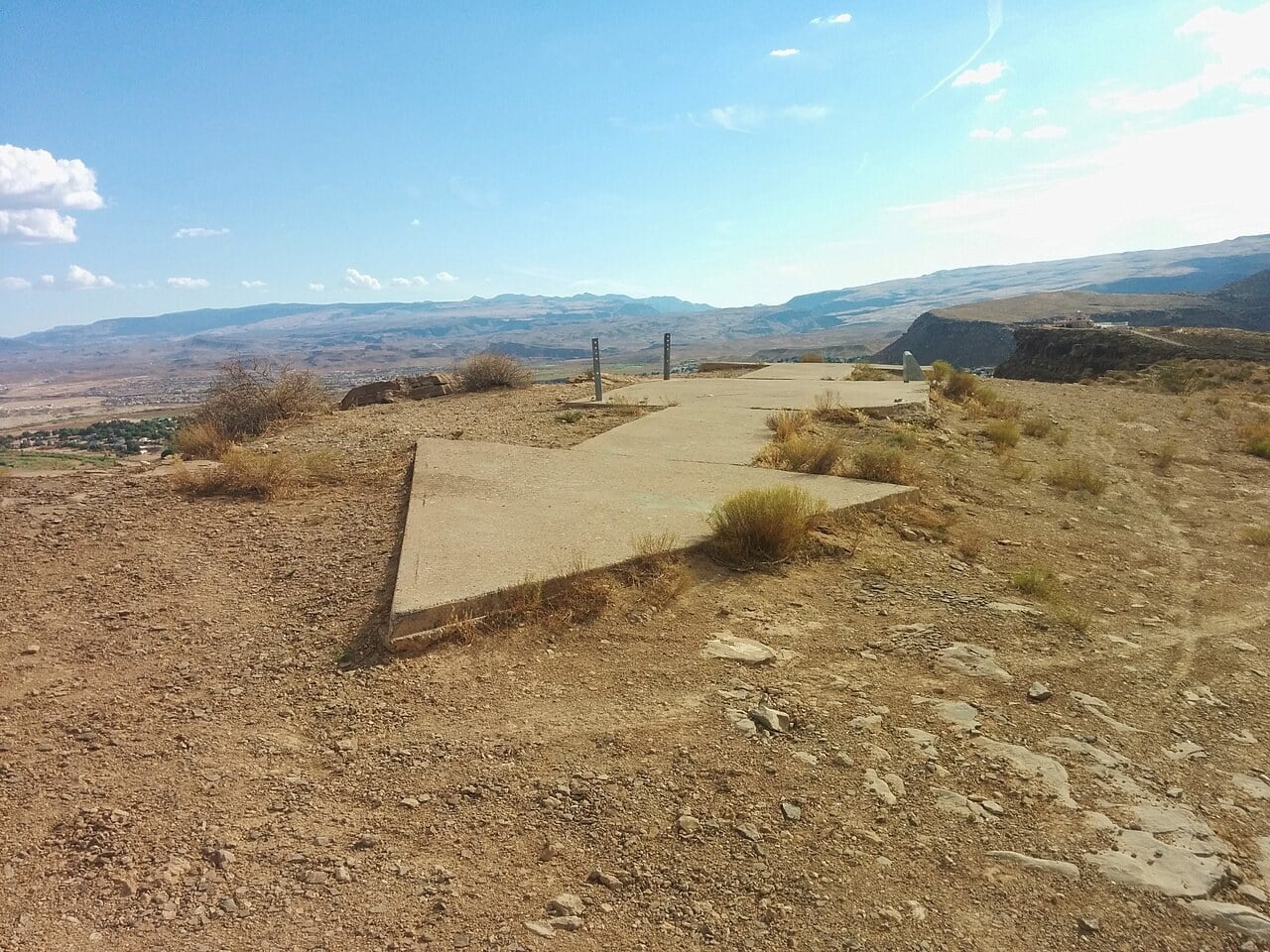
Some of those beacons were placed beside huge concrete arrows pointing to the next light, and a few still survive in the American West. They were the ancestors of the airways and navigation aids every pilot uses today. When the government handed airmail to private contractors in 1927, Knight joined National Air Transport, which later became United Air Lines, and went on to fly DC-3s between Omaha and Chicago.
The Smithsonian’s National Postal Museum on airmail’s quest for speed.
Before Lindbergh, Jack Knight was one of the most famous pilots in America. He earned it in one freezing night, with a broken nose, a scrap of map and a line of bonfires, and he saved the idea that letters, and eventually people, could cross a continent by air without waiting for the sun.
Sources: US Centennial of Flight Commission (Roger Mola, “Jack Knight”), Smithsonian National Postal Museum, HistoryNet
Header photo: US Army Air Service, via National Geographic January 1926 / Wikimedia Commons, public domain
0 Comments