
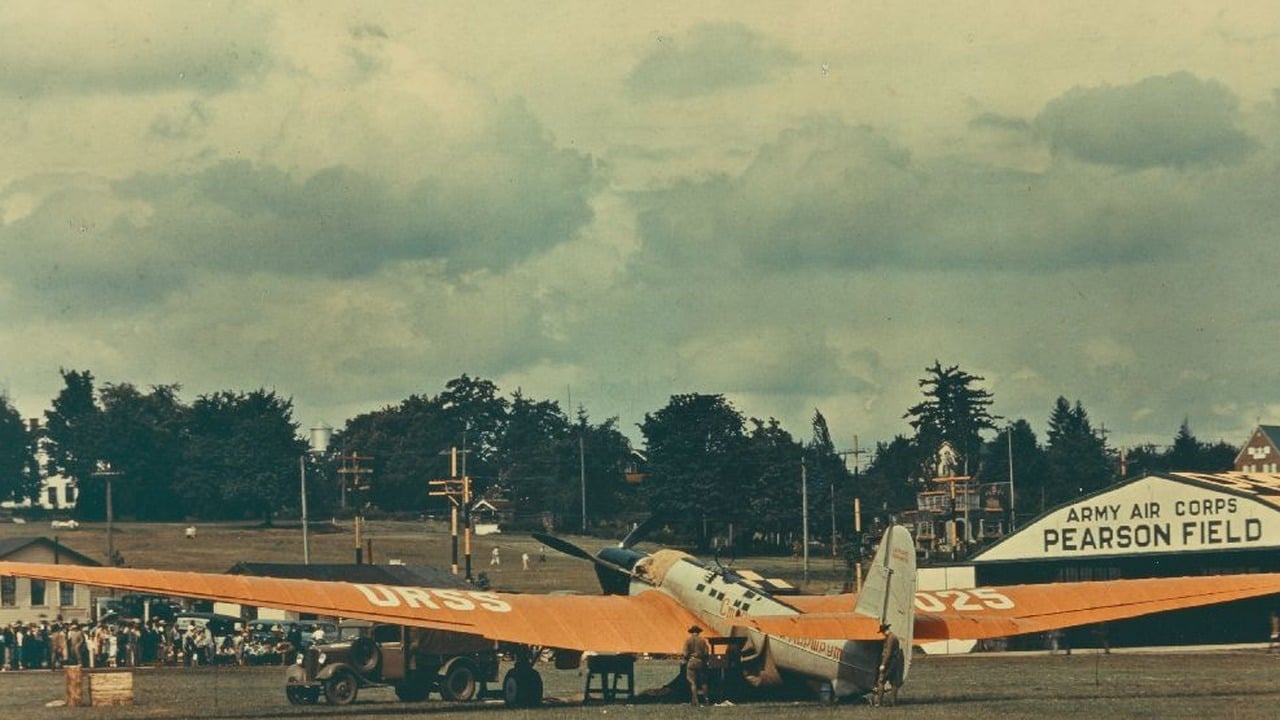
On 20 June 1937, the handful of guards on duty at Pearson Field in Vancouver, Washington, watched a strange aircraft come in to land. It had a single engine, a slender fuselage and long red wings that HistoryLink, the Washington State history encyclopedia, likens to an albatross. On the wings were the letters URSS and the number N025.
Across the Columbia River, crowds were waiting at Portland’s Swan Island airfield for exactly this aircraft. They never got it. The crew inside, Valery Chkalov, Georgy Baidukov and Alexander Belyakov, had just flown from Moscow over the North Pole, and their pilot had decided he did not want to land in front of a mob.
The ANT-25 transpolar flight was the first non-stop flight from the Soviet Union to the United States over the top of the world. Wikipedia’s biography of Chkalov says it pioneered the polar air route from Europe to the American Pacific coast, a route airliners would one day fly routinely. Three weeks later, a second ANT-25 went even further.
Informations clés
- Aéronef: Tupolev ANT-25 (RD), single Mikulin M-34 engine, 34 m wingspan
- Équipage: Valery Chkalov (pilot), Georgy Baidukov (co-pilot), Alexander Belyakov (navigator)
- Itinéraire: Shchelkovo near Moscow, over the North Pole, to Pearson Field, Vancouver, Washington
- Dates : 18 to 20 June 1937
- Time aloft: About 63 hours (sources give 63 h 16 min or 63 h 25 min)
- Follow-up: Gromov, Yumashev and Danilin, Moscow to San Jacinto, California, 12 to 14 July 1937
- Enregistrer: Gromov: 10,148 km straight-line distance record in 62 h 17 min
A wing built for distance
The Tupolev ANT-25 was designed for one thing: range. Its Russian designation RD stood for Rekord Dalnosty, “range record”. It was designed by a TsAGI team led by Pavel Sukhoi under the overall supervision of Andrei Tupolev, and Mikhail Gromov flew the first prototype on 22 June 1933.
The secret was the wing. It spanned 34 metres on an aircraft only 13.4 metres long, with a span more than 13 times its chord, and it doubled as the fuel tank. According to Wikipedia, fuel made up 52 percent of the take-off weight. A single Mikulin M-34 V-12 engine of about 750 horsepower gave it a top speed of only around 246 km/h. Only two were built.
Rex’s Hangar tells the story of the Tupolev ANT-25, the first aircraft to fly non-stop from Russia to America.
The aircraft had already made Chkalov famous. In July 1936, he, Baidukov and Belyakov flew an ANT-25 from Moscow to Udd Island in the Soviet Far East, 9,374 kilometres in 56 hours 20 minutes, landing on a beach. The island is now called Chkalov Island, and all three men became Heroes of the Soviet Union.
Chkalov was an unlikely long-distance pilot. He was a fighter pilot and stunt flyer who, by Wikipedia’s account, was at first sceptical about his selection because he had little navigational knowledge. Baidukov, an aviation engineer, briefed him on the ANT-25 and brought in Belyakov, chief instructor at their academy, as navigator.
Over the top of the world
The three men took off from the Shchelkovo airfield near Moscow early on 18 June 1937, heading for the United States by way of the North Pole. HistoryLink says the Soviet authorities tried to keep the flight secret, and that word only leaked out a full day after take-off.
The first 24 hours were routine. After that, the Arctic fought back. HistoryLink describes how the magnetic compass became useless near the Pole, leaving Belyakov to navigate by dead reckoning and a solar heading indicator, with only rare chances to take sightings through the weather. Storms, headwinds and icing ate into the fuel and the crew’s limited oxygen.
At one point, according to HistoryLink, the engine coolant began to freeze. The crew reached for their drinking water and found that it had frozen too. They crossed the Pole and headed south over northern Canada, with almost no radio contact, before turning west over the Rockies and running down the Pacific coast.
Period footage of Chkalov’s 1937 non-stop flight from Moscow to America over the North Pole, from the Russian State Archive of Film and Photo Documents.
Not here, the other shore
Wikipedia’s account says they passed Seattle around the 60-hour mark and reached the Columbia River two hours later. Over Eugene, Oregon, they turned back north; Wikipedia says fuel was running short, while HistoryLink describes a fuel pump problem. Their target was Portland, but the Swan Island airfield below was packed with spectators.
Chkalov remembered what the Paris crowds had done to Charles Lindbergh’s aircraft in 1927 and headed instead for the army airfield across the river at Vancouver Barracks. The ANT-25 touched down at Pearson Field after about 63 hours in the air. Sources give the flight time as 63 hours 16 minutes or 63 hours 25 minutes, and the distance flown as anywhere from about 8,500 to 9,130 kilometres.
HistoryLink reports that only eleven gallons of fuel remained in the tanks. Within minutes the post commander, General George C. Marshall, the future Army Chief of Staff and Secretary of State, drove across the golf course to greet the three Soviet flyers.
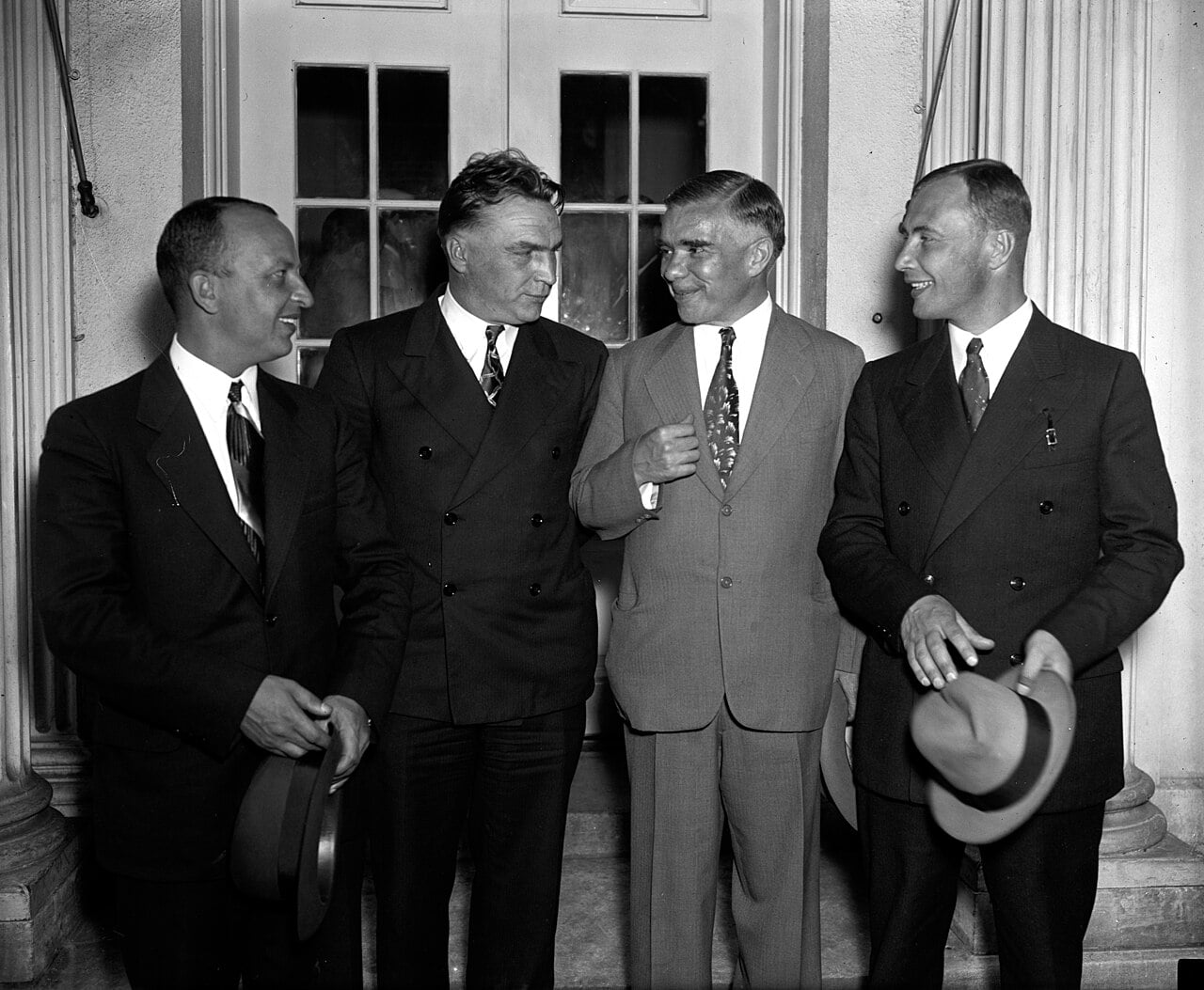
What followed was a national tour of the United States, including a reception by President Franklin D. Roosevelt at the White House on 28 June and a parade in New York. At home, Chkalov became known as the “Russian Lindbergh”.
Gromov goes further
Moscow was not finished. On 12 July 1937, Mikhail Gromov, Andrey Yumashev and Sergey Danilin took off in the second ANT-25, also bound for the United States via the North Pole. Fog closed San Diego and blocked their way as far inland as March Field at Riverside, so on 14 July they put down in a dairy pasture outside San Jacinto, California.
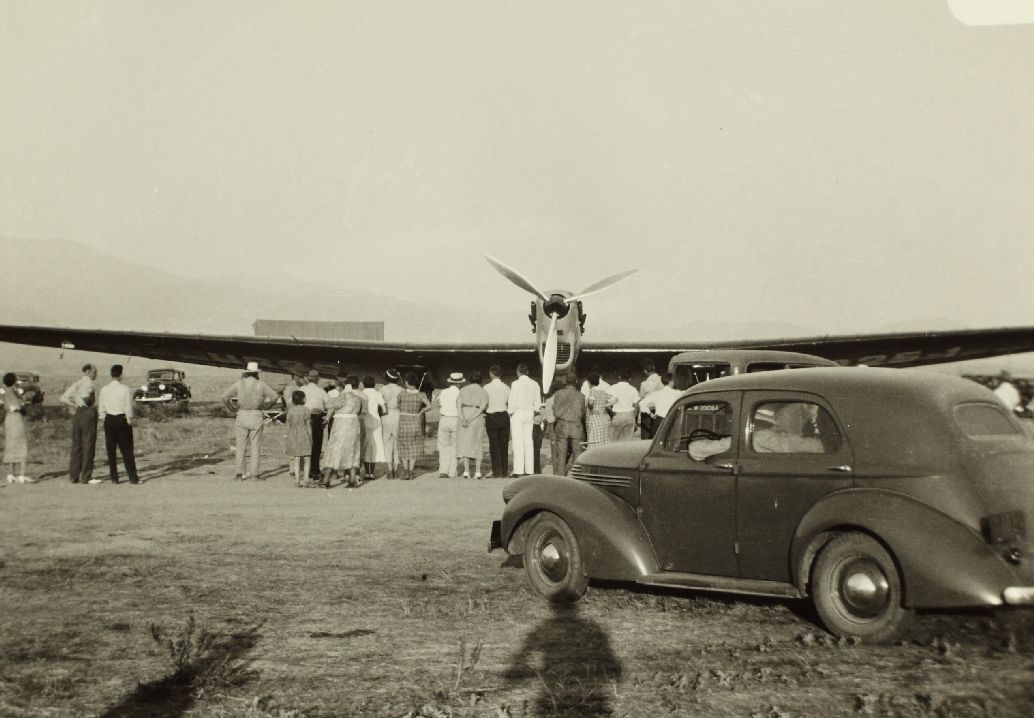
They had been in the air for 62 hours 17 minutes. Gromov’s crew set a new world non-stop distance record of 10,148 kilometres in a straight line, about 6,305 miles, having flown some 11,500 kilometres in total. Wikipedia notes they still had fuel for roughly another 1,500 kilometres, but pressing on would have meant crossing into Mexico without permission from FAI officials.
The record stood until November 1938, when two Royal Air Force Vickers Wellesley bombers flew non-stop from Egypt to Australia. Gromov’s landing site is now California Historical Landmark No. 989.
Archive film of Gromov’s record-breaking ANT-25 flight from Moscow to San Jacinto, California, in July 1937, posted by the AIRBOYD channel.
The cost of fame
The triumph had a shadow. Soon afterwards Sigizmund Levanevsky was lost attempting the same polar route in a new four-engined DB-A, and political repression reached into the design bureaus: Tupolev was jailed. Chkalov himself was killed on 15 December 1938 while testing the prototype Polikarpov I-180 fighter, eighteen months after Vancouver.
His ANT-25 went on show at the Soviet pavilion of the 1939 New York World’s Fair. In 1975, a monument to the 1937 polar flight was dedicated at Pearson Field, and a street in east Vancouver was named Chkalov Drive. HistoryLink describes it as the first monument in the United States commemorating an achievement by the Soviet Union.
Today, the polar routes Chkalov and Gromov scouted are routine for long-haul airliners crossing between Asia, Europe and North America. In 1937, they were flown by three men in a fabric-winged single-engine aircraft, navigating by the sun, with frozen drinking water and eleven gallons to spare.
Sources: Wikipedia (Tupolev ANT-25; Valery Chkalov; Georgy Baydukov; Mikhail Gromov), HistoryLink.org (Essay 7208), California Office of Historic Preservation (Landmark No. 989), Library of Congress, San Diego Air & Space Museum Archives
0 Comments