
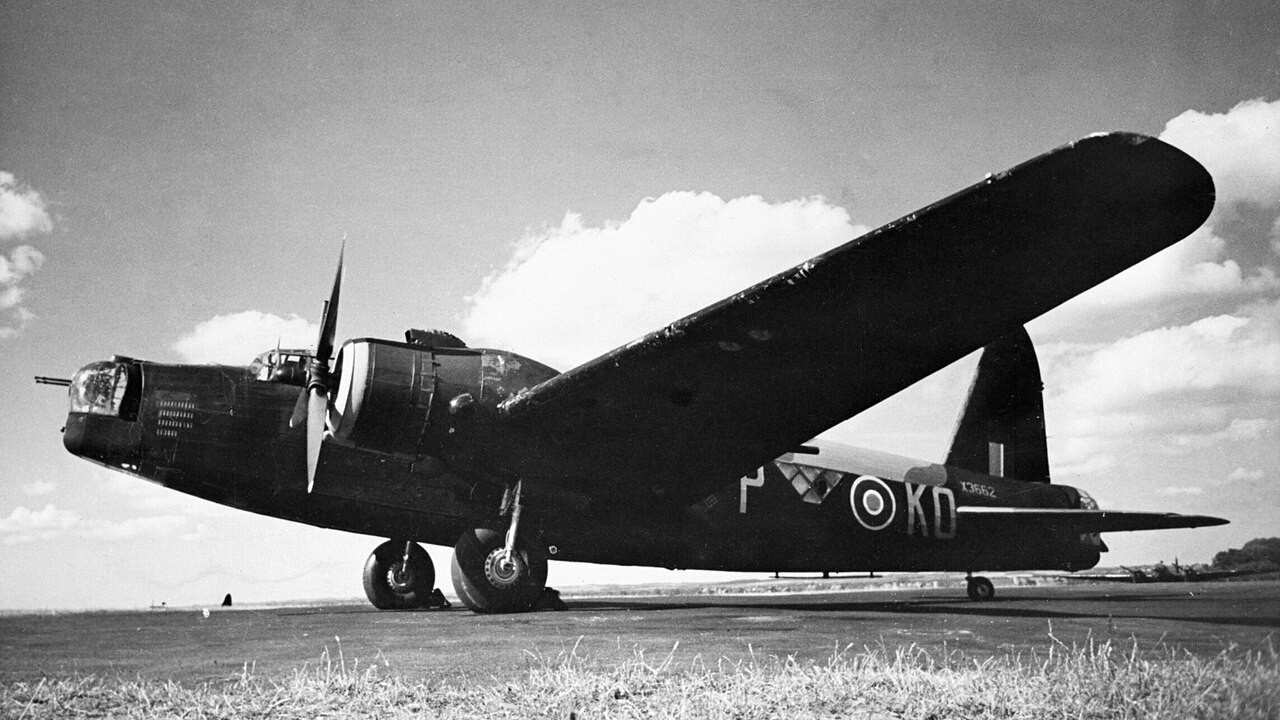
Soon after noon on Saturday 30 May 1942, the order went out from Bomber Command to its groups and squadrons. The target was Cologne. That night 1,047 bombers were dispatched, more than two and a half times as many as the Royal Air Force had ever sent out in a single night.
Many of them were not front-line aircraft at all. They were tired Vickers Wellingtons et Handley Page Hampdens from training units, some flown by instructors, some by pupils who had not finished their courses. Operation Millennium, the first thousand-bomber raid, was a gamble placed by a commander who had been in his job for barely three months.
Informations clés
- Opération: Millennium, the first RAF thousand-bomber raid
- Date: Night of 30/31 May 1942
- Cible: Cologne (Hamburg was Harris’s first choice)
- Commandant: Air Marshal Arthur Harris, Bomber Command
- Bombers dispatched: 1,047, including 602 Wellingtons; 365 from the operational training groups
- Innovations : First bomber stream; all aircraft over the target within 90 minutes
- Dommage: 3,330 buildings destroyed; 469 to 486 people killed
- RAF losses: 41 bombers (3.9 percent), plus 2 intruder Blenheims
A force fighting for its future
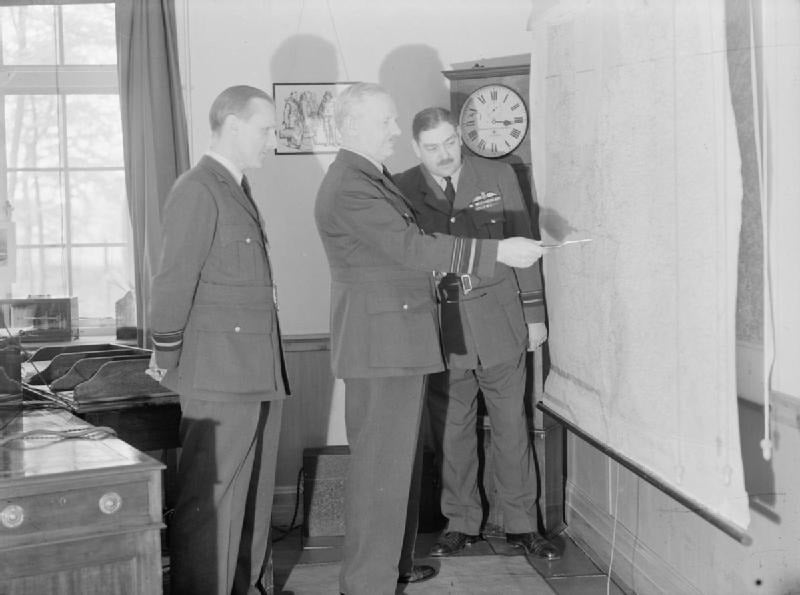
When Air Marshal Arthur Harris took over Bomber Command in February 1942, the force was in trouble. Its bombing in 1941 had been badly inaccurate, and there were calls to break it up and send its aircraft to more urgent theatres such as the Battle of the Atlantic. Harris needed a demonstration that nobody in the War Cabinet could ignore.
His idea was simple and outrageous: gather 1,000 bombers and send them against a single German city in one night. Both Winston Churchill and the Chief of the Air Staff, Sir Charles Portal, liked it. According to the RAF’s own Bomber Command history, Churchill told Harris he was prepared to lose 100 aircraft.
The problem was arithmetic. Harris had only a little over 400 aircraft with trained crews in regular front-line use. The rest would have to come from somewhere else.
Scraping together a thousand
The answer was the training system. Bomber Command’s conversion units and its two operational training groups, 91 and 92 Groups, held hundreds more aircraft: Wellingtons, Armstrong Whitworth Whitleys and Hampdens. The training groups alone would eventually supply 365 of the bombers. They could be crewed by instructors, many of them veterans of earlier tours, and by men in the later stages of training.
Harris also asked his fellow commanders for help. Coastal Command offered 250 bombers, and Flying Training Command offered 50. Then, as planning came to an end, the Admiralty refused to let the Coastal Command aircraft take part. The Royal Navy wanted long-range aircraft for the war against the U-boats, and a triumph for Bomber Command would not help its case.
Archive footage of Arthur Harris delivering his 1942 “reap the whirlwind” statement, cut down by the uploader to the relevant passage.
Bomber Command scraped harder. Front-line squadrons put up every spare crew and aircraft, and the training units committed crews from the bottom half of their courses. In 91 Group, 49 of the 208 aircraft provided took off with pupil pilots. In the end, all but four of the 1,047 bombers came from Bomber Command’s own resources; Flying Training Command supplied just four Wellingtons.
Inventing the bomber stream
Sending 1,000 bombers into German airspace meant rewriting the rules. Until then, crews had largely made their own way to the target. For Millennium, every aircraft would fly a common route at the same speed, each given its own height band and time slot. It was the first use of the bomber stream.
The logic was to beat the German night-fighter belt, the Kammhuber Line. Each radar box could direct at most six interceptions an hour, so a dense stream passing through as few boxes as possible would swamp it. The new Gee radio navigation system made such precise flying possible for the leading crews of 1 and 3 Groups.
The time over the target shrank just as dramatically. Earlier in the war, four hours had been allowed for a raid by 100 aircraft. For Cologne, 1,000 bombers would get 90 minutes. Planners accepted a higher risk of mid-air collisions in exchange for overwhelming the flak, and above all the fire brigades.
The Operations Room’s animated account of Operation Millennium, showing how the bomber stream crossed the German night-fighter belt to reach Cologne.
Cologne, not Hamburg
Harris’s first-choice target was Hamburg, Germany’s second city and a major U-boat builder. The final orders were ready on 26 May, with the full moon approaching, but the weather over Germany stayed bad for three days running. On 30 May Harris switched to his second choice, Cologne, within reach of Gee.
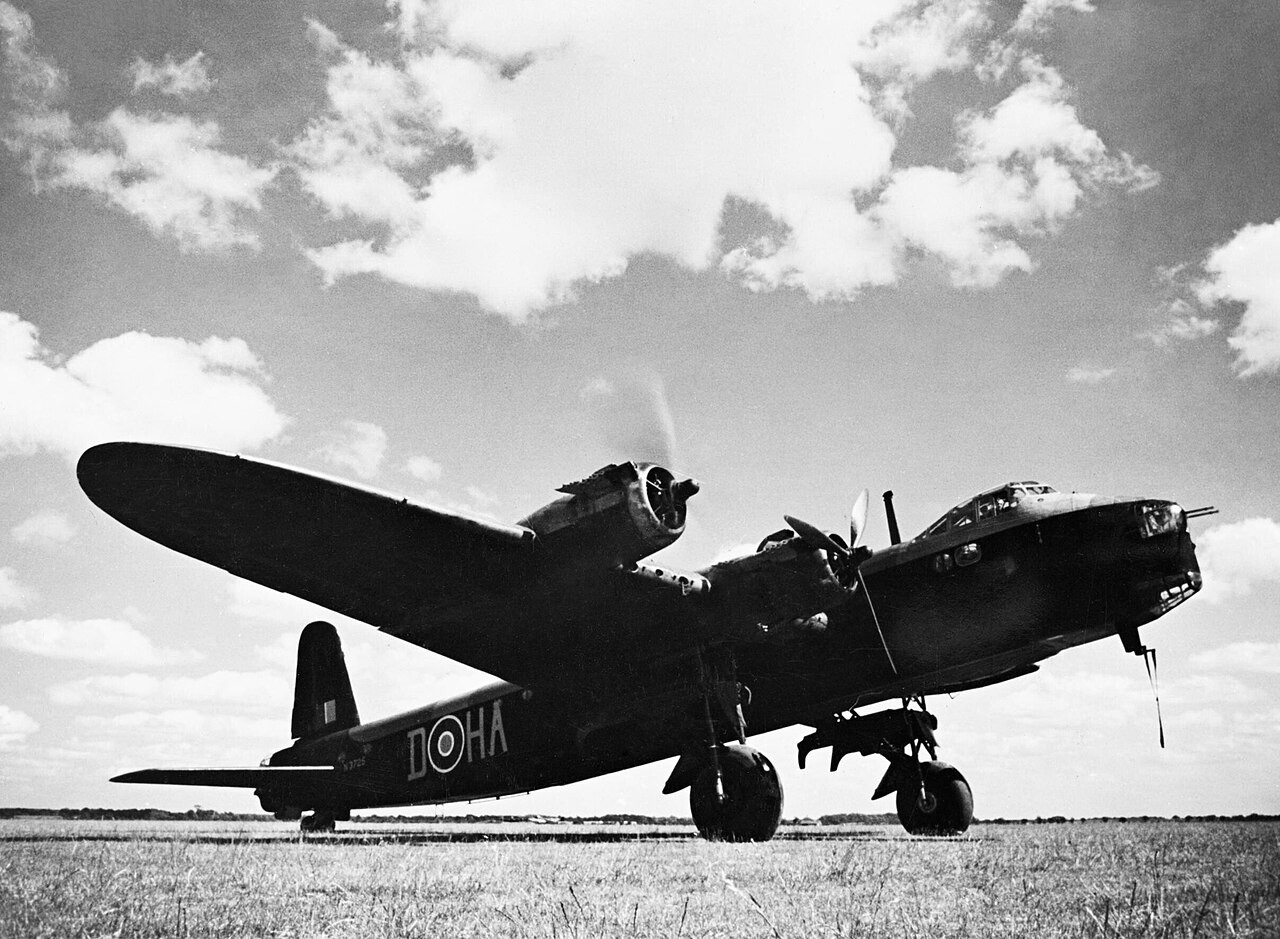
The force was a cross-section of Bomber Command in transition: 602 Wellingtons, 131 Halifaxes, 88 Stirlings, 79 Hampdens, 73 Lancasters, 46 Avro Manchesters and 28 Whitleys. The first bombers arrived over Cologne at 00:47 on 31 May. Behind the main force, other aircraft flew intruder sorties against German night-fighter airfields along the route. The RAF counted 1,103 sorties in all that night.
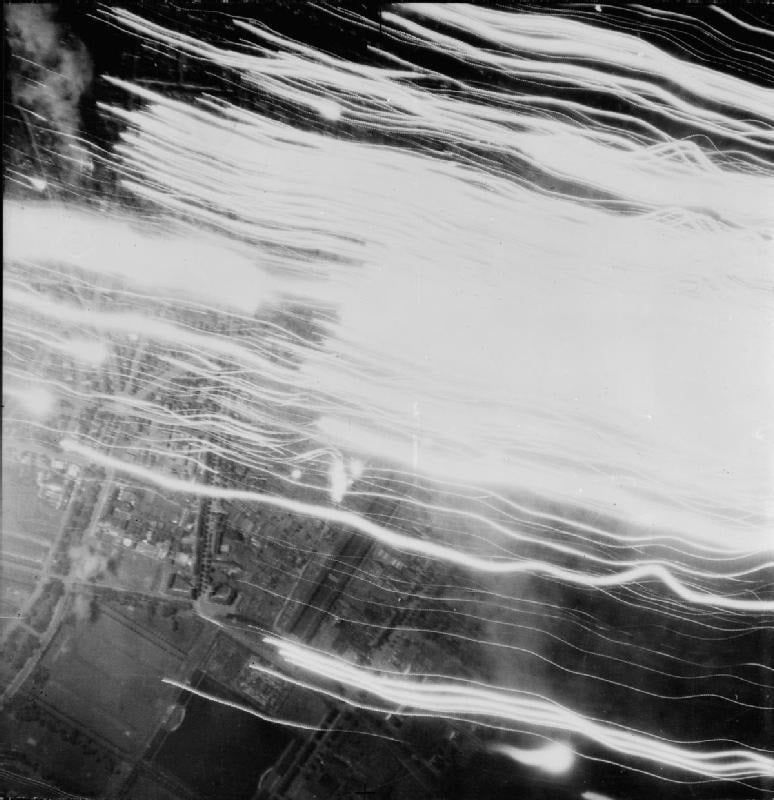
Bomber Command’s night bombing records show that 868 aircraft bombed the main target, though the official history gives 898. About two-thirds of the roughly 1,455 tons of bombs were incendiaries. German records counted around 2,500 separate fires, 1,700 of them classed as large by the city’s fire brigade. Cologne’s wide modern streets prevented a full firestorm, but more than 90 percent of the damage was done by fire.
The cost on both sides
German local records listed 3,330 buildings destroyed and more than 9,500 others damaged, along with 13,010 homes destroyed, most of them flats. Between 469 and 486 people were killed, the large majority of them civilians, more than 5,000 were injured and some 45,000 were bombed out. Up to 150,000 of Cologne’s nearly 700,000 people fled the city after the raid.
Bomber Command lost 41 bombers, or 3.9 percent of the force, plus two Blenheims on the intruder missions. That was more aircraft than on any previous night, but far fewer than Churchill had been ready to accept. Bomber Command estimated that 22 went down over or near Cologne: 16 to flak, four to night fighters and two in a collision.
One of the losses was an Avro Manchester of No. 50 Squadron flown by 20-year-old Flying Officer Leslie Manser. Hit by flak over the city and with an engine on fire, he held the crippled bomber steady over Belgium while his crew bailed out, then refused a parachute for himself. Five of his crew evaded capture and made it home; their testimony earned him a posthumous Victoria Cross.
A raid that saved a command
Two nights later, Harris sent the thousand-bomber force to Essen. That raid failed. A third, against Bremen at the end of June, did not quite reach 1,000 aircraft, and after that the training units went back to training. The giant raids were never repeated in that form.
But the point had been made. The bomber stream worked, collisions never became the disaster planners feared, and later raids would push 700 or 800 aircraft through a target in under 20 minutes. The morning after Cologne, five de Havilland Mosquitos flew Bomber Command’s first operations of the type, photographing the smoking city.
British Movietone’s June 1942 newsreel on the thousand-bomber raid on Cologne, from the AP Archive.
The publicity confirmed Bomber Command’s place as a major force for the rest of the war and made Arthur Harris a public figure, “Bomber” Harris, for the rest of his life. The firestorms of Hamburg and Dresden were still to come. Cologne, on the night of 30 May 1942, was where the arithmetic of the thousand first came true.
Sources: Royal Air Force, Bomber Command 60th Anniversary history (via UK Government Web Archive), Wikipedia (Bombing of Cologne in World War II; Arthur Harris; Leslie Manser), Wikiquote, Imperial War Museum photo archive
0 Comments