
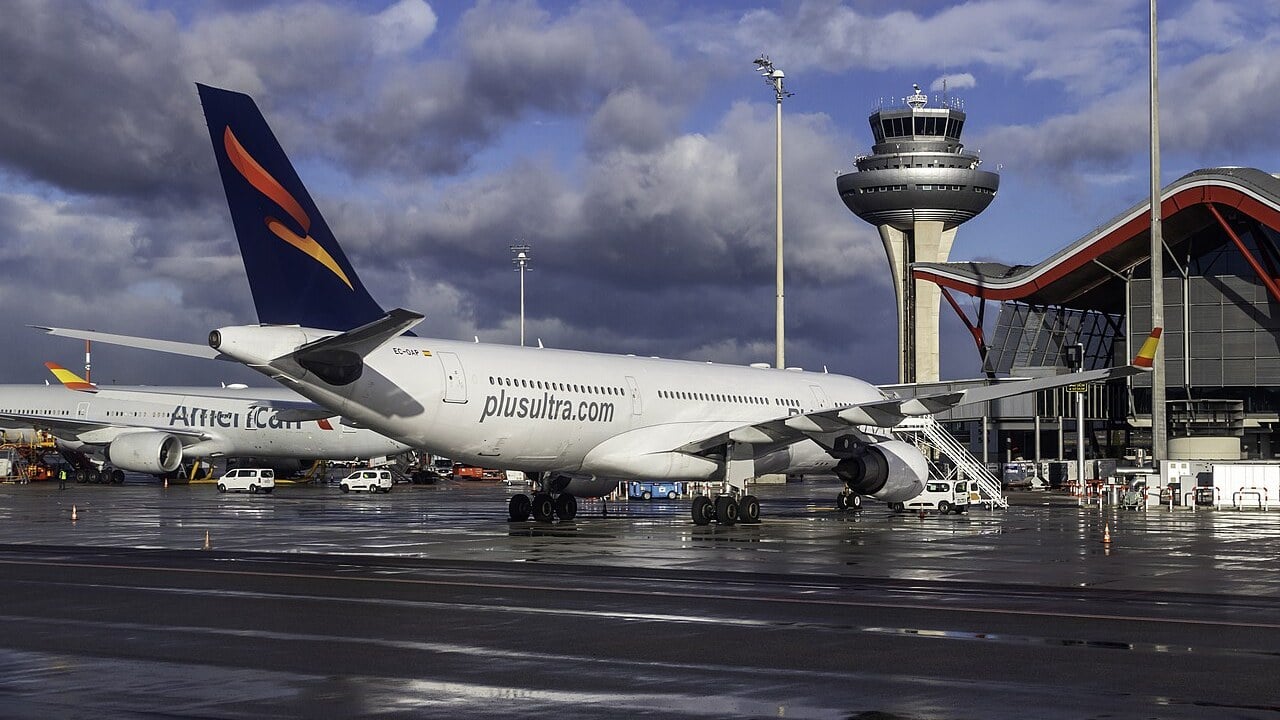
On Monday 23 November 2026, the Spanish long-haul airline Plus Ultra suspended all operations. The carrier, which flies a fleet of seven Airbus A330s between Madrid and Latin America, told FlightGlobal that “intensive negotiations” to fix its finances had failed, and that it was continuing to work through a court-supervised restructuring.
Plus Ultra has not been declared dead, and its story is still being written. But for anyone holding one of its tickets, the question is the same one that thousands of travellers have faced before: what actually happens in an airline collapse? The answer depends on how you booked, how you paid and, surprisingly often, on who owns the aircraft.
Informations clés
- Hook: Plus Ultra suspended all operations on 23 November 2026 while in a court-supervised restructuring
- Packages (UK): ATOL protects package holidays and flights sold by ATOL-licensed firms; flights bought direct from an airline are not covered
- Packages (EU): Package Travel Directive requires insolvency protection; stand-alone flights are not covered
- Card payments: UK Section 75 for credit card purchases over £100; card chargeback schemes for other payments
- Rescue fares: Voluntary discounted tickets from other airlines, usually only on routes they already fly
- Aéronef: Usually leased; under the Cape Town Convention the UK applies a 60-day waiting period before lessors can repossess
- Monarch, 2017: Around 85,000 passengers flown home; £40.5 million final cost to the taxpayer
- Thomas Cook, 2019: Operation Matterhorn: 150,000 UK passengers, more than 1,000 flights over two weeks
The night the music stops
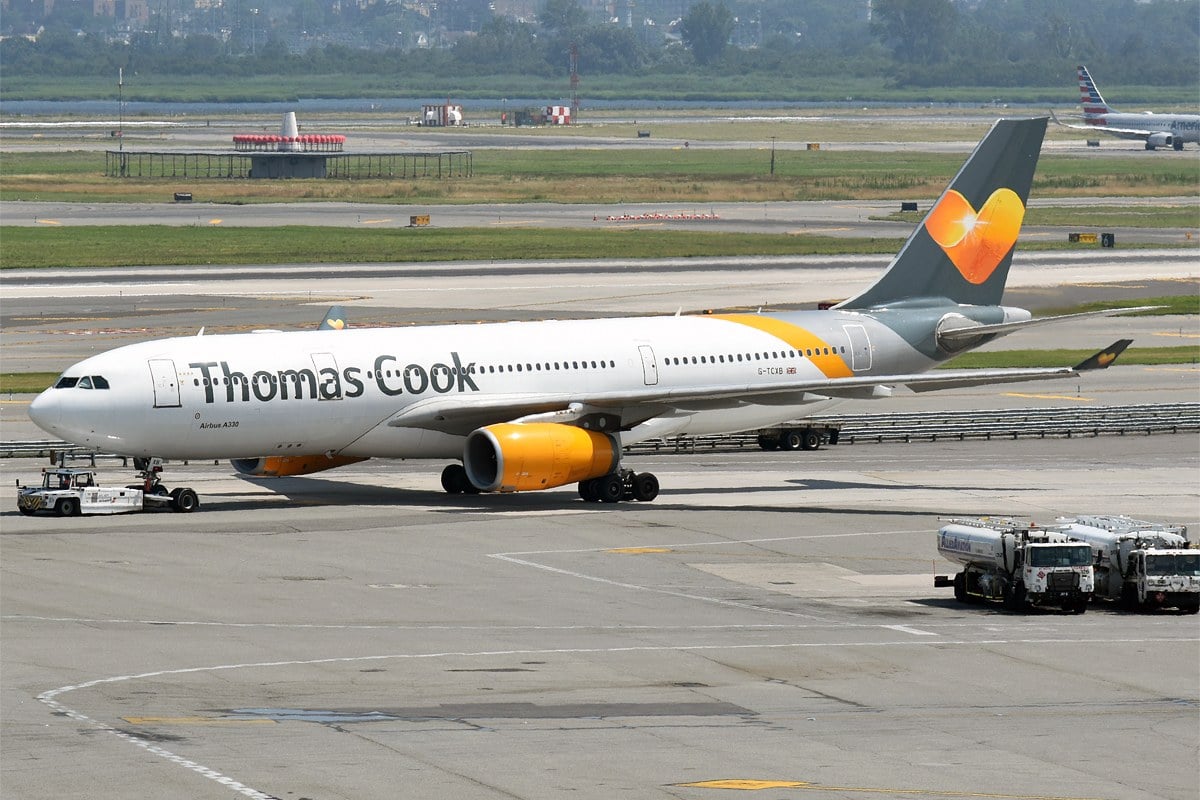
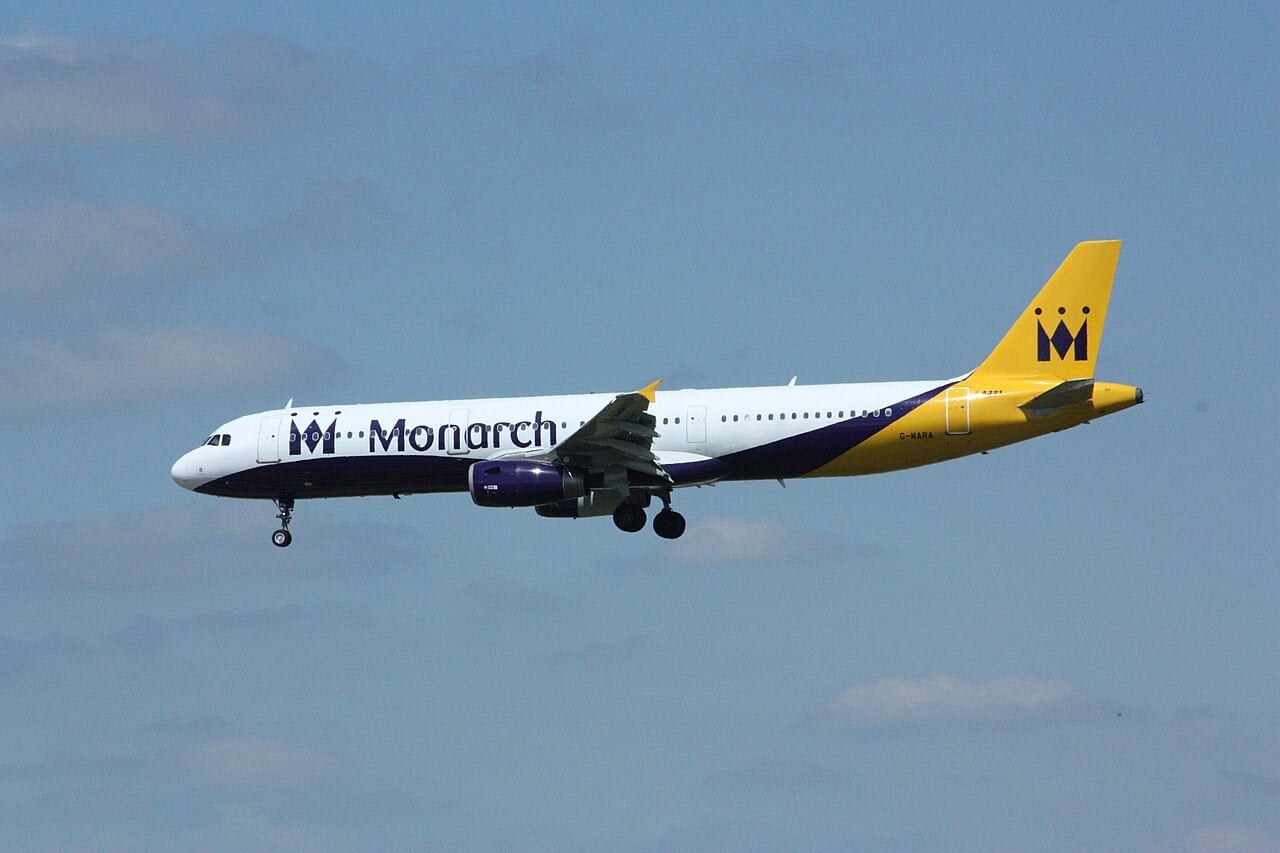
Airline failures rarely happen at a civilised hour. Monarch Airlines’ last flight, from Tel Aviv to Manchester, landed at 03:19 on 2 October 2017; shortly after 04:00 the UK Civil Aviation Authority confirmed that the airline had ceased trading and entered administration. Thomas Cook ceased trading at 02:00 on Monday 23 September 2019, after UK airports had begun impounding its aircraft as they arrived, citing unpaid airport charges.
From that moment every future flight is cancelled. Unless the administrator decides it is in creditors’ interests to keep the operation going, the fleet is grounded. Suppliers of fuel, ground handling and maintenance can demand payment in advance or refuse to supply, and the passengers already abroad suddenly have no ticket home.
Getting home: ATOL, repatriation and rescue fares
In the UK, the first question is whether you bought a package. Air Travel Organisers’ Licensing, the CAA’s ATOL scheme, protects people who bought package holidays and flights from ATOL-licensed travel firms. If the firm or its airline fails, the scheme pays to bring travellers home and to refund those who have not yet travelled. A ticket bought directly from an airline is not ATOL-protected.
In practice the UK government has gone further more than once. When Monarch failed, Transport Secretary Chris Grayling ordered what he called the country’s biggest ever peacetime repatriation, and the CAA built a temporary airline from chartered aircraft to fly every stranded Monarch passenger home free of charge, ATOL-protected or not. The government later reported that around 85,000 passengers were brought back, 98% of them on the same day as their original flight, at a final cost to the taxpayer of £40.5 million.
Thomas Cook two years later was bigger still. Under Operation Matterhorn, the government told the CAA to bring home all 150,000 UK passengers left abroad, again whether or not they had ATOL protection. Transport Secretary Grant Shapps told Parliament it required more than 1,000 flights by CAA-chartered aircraft over two weeks, from more than 50 overseas airports, and the CAA sent letters of guarantee to over 3,000 hotels so holidaymakers would not be thrown out.
Those operations were political decisions, not legal rights. For smaller failures, the usual lifeline is the rescue fare: a discounted ticket that other airlines may offer to stranded passengers who can show proof of their original booking. When Primera Air stopped flying in October 2018, leaving about 5,000 UK passengers without flights home, British Airways, Virgin Atlantic, Delta and Norwegian stepped in on US routes, and British Airways, easyJet and Ryanair in Spain, some with significant discounts. Only about 500 of the 5,000 claimed them. Rescue fares are voluntary, though, and an airline will generally only offer them on routes it already flies.
Euronews in October 2017, as Monarch’s chief executive spoke of his devastation at the airline’s failure.
Getting your money back
For flights you have not yet taken, protection comes in layers. ATOL-protected customers get a refund or alternative arrangements through the scheme. A credit card booking costing more than £100 is protected by Section 75 of the UK Consumer Credit Act 1974, which lets you claim from the card company. The Visa and Mastercard chargeback arrangements and PayPal’s Buyer Protection offer a further, non-statutory route.
Travel insurance can help too, but only if the policy includes airline failure cover. When the UK’s Airline Insolvency Review looked at the market, it found that only about half of policies did. It also found the opposite problem: overlapping protection meant some passengers had paid twice for the same cover, while others had none at all.
In the European Union, package travel rules give holidaymakers who buy a package insolvency protection. Those rules do not cover stand-alone travel services such as a flight booked on its own. For flight-only passengers, the payment method is usually the best hope.
Wendover Productions explains why so many airlines go bankrupt (2019).
What happens to the aircraft
Most airline fleets are not owned by the airline. Jets are typically leased from specialist lessors or financed by banks that hold security over them, as we explained in our guide to aircraft leasing. The Airline Insolvency Review put it bluntly: aircraft are particularly vulnerable when an airline is in administration, because lessors want their expensive assets back as quickly as possible to put them back on the market.
International law is on the lessors’ side. Under the Cape Town Convention, which the UK applies with a 60-day waiting period, an insolvent airline must either hand the aircraft back or cure its debts within that time, after which the lessor can repossess without going back to court. We looked at the mechanics in our piece on aircraft repossession.
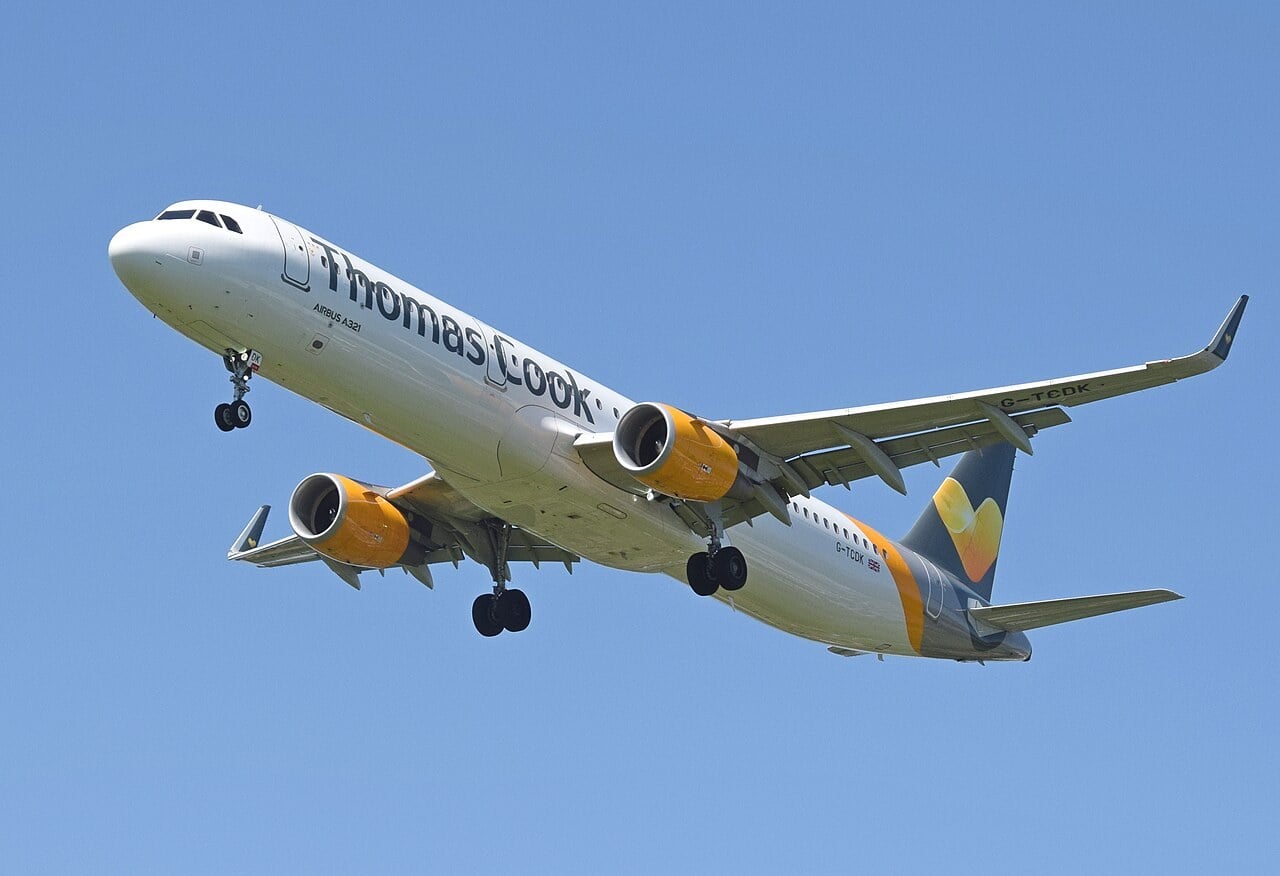
Lessors are not the only creditors with a grip on the metal. Airports and air navigation service providers can place liens on aircraft for unpaid landing, parking and navigation charges, and hold them until the debt is paid. That is why lessors often ask for their jets to be returned to a neutral airport outside the country at the point of administration, and why Thomas Cook aircraft were being impounded on the night it failed.
Slots and staff
Some of a failed airline’s most valuable assets cannot be seen at all. Take-off and landing slots at congested airports are worth serious money, as our explainer on airport slots shows. In November 2019, Thomas Cook’s UK slots were sold for £36 million, with easyJet taking Gatwick and Bristol and Jet2 taking Birmingham, Stansted and Manchester.
The human cost is harder to sell. Thomas Cook’s collapse left about 21,000 employees worldwide without jobs, 9,000 of them in the UK. Even so, many Thomas Cook staff kept working alongside the government in the days after the collapse to help get their former customers home.
Europa Press reports on 23 November 2026 that Plus Ultra has suspended all its flights until further notice (in Spanish).
Why the night-time rescue gets harder
The Monarch rescue worked partly because the CAA could charter enough aircraft of the right size. The Airline Insolvency Review estimated that only around 60 charter aircraft were available outside peak season, nowhere near enough to replace a big carrier.
The review’s conclusion was that for larger airlines, the most effective option is to keep the failed airline’s own fleet flying in administration long enough to bring everyone home.
For now, the practical lessons are simple. Book packages through protected firms if you want a guaranteed way home, pay by credit card where you can, and check that your travel insurance actually covers airline failure. As Plus Ultra’s passengers are discovering, the time to read the small print is before the airline stops flying, not after.
Sources: FlightGlobal, UK Department for Transport / GOV.UK (Monarch repatriation 2017; Thomas Cook statement to Parliament 2019; Airline Insolvency Review interim and final reports), European Union Your Europe (package travel), Wikipedia (Monarch Airlines; Thomas Cook Group; Air Travel Organisers’ Licensing), BBC, Sky News, Europa Press


0 Comments