
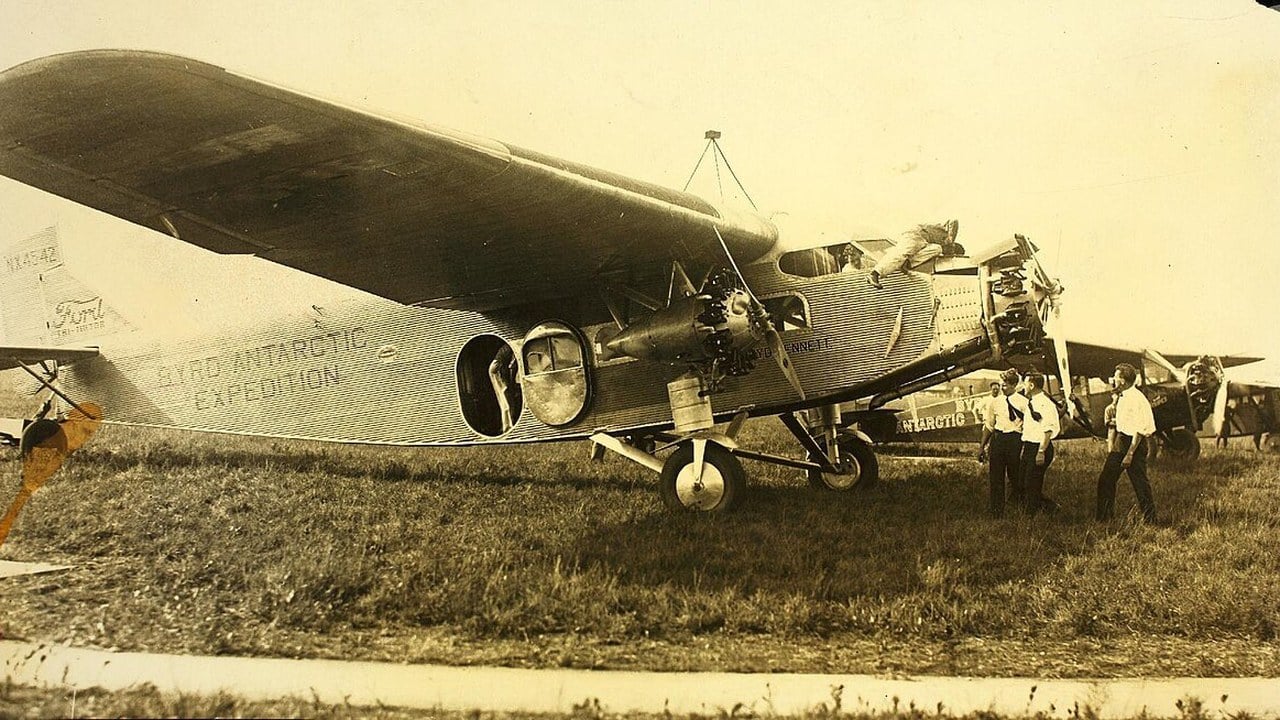
The Ford Trimotor was climbing as hard as it could, and it was not enough. Ahead lay the wall of mountains guarding the Antarctic Plateau, and the heavily loaded Floyd Bennett could not gain the height to clear it. In the cockpit sat a 30-year-old Norwegian, Bernt Balchen. Behind him rode Richard Byrd, the expedition’s leader and navigator. The crew did the only thing they could: lighten the aeroplane. Empty fuel tanks and emergency supplies went out of the door.
The Trimotor clawed its way onto the plateau, and on 29 November 1929 it crossed the South Pole. Ninety-seven years later, Byrd’s name is the one on the history books. But the man flying the aeroplane, Bernt Balchen, went on to live one of the most remarkable lives in aviation, from the Antarctic ice to secret wartime airlifts out of Sweden.
Informations clés
- Vol: First flight to the South Pole and back
- Date: Took off 28 November 1929; crossed the Pole on 29 November 1929
- Aéronef: Ford 4-AT Trimotor Floyd Bennett, NX4542
- Équipage: Bernt Balchen (chief pilot), Harold June (co-pilot and radio), Ashley McKinley (photographer), Richard E. Byrd (navigator and leader)
- Base: Little America, Ross Ice Shelf
- Durée: 18 hours 41 minutes, round trip
- Key moment: Empty fuel tanks and emergency supplies thrown out to climb onto the polar plateau
- Bernt Balchen: Born 23 October 1899 near Kristiansand, Norway; US citizen from 1931; died 17 October 1973
A Norwegian on Byrd’s team
Balchen was born on 23 October 1899 at Tveit, just outside Kristiansand in southern Norway. Before he ever flew, he had joined the French Foreign Legion, served in the Norwegian Army and been wounded in a cavalry charge as a volunteer in the Finnish Civil War. He trained as a pilot in the Norwegian naval air service in the early 1920s and became as good a mechanic as he was a flyer.
He met Byrd by accident. In 1926 Balchen was on Spitsbergen with Roald Amundsen’s airship expedition when Byrd’s Fokker trimotor, Josephine Ford, damaged its undercarriage. With Amundsen’s permission, Balchen helped repair it, and Byrd and his pilot Floyd Bennett went on to make their disputed North Pole flight on 9 May 1926. Balchen followed Byrd to the United States.
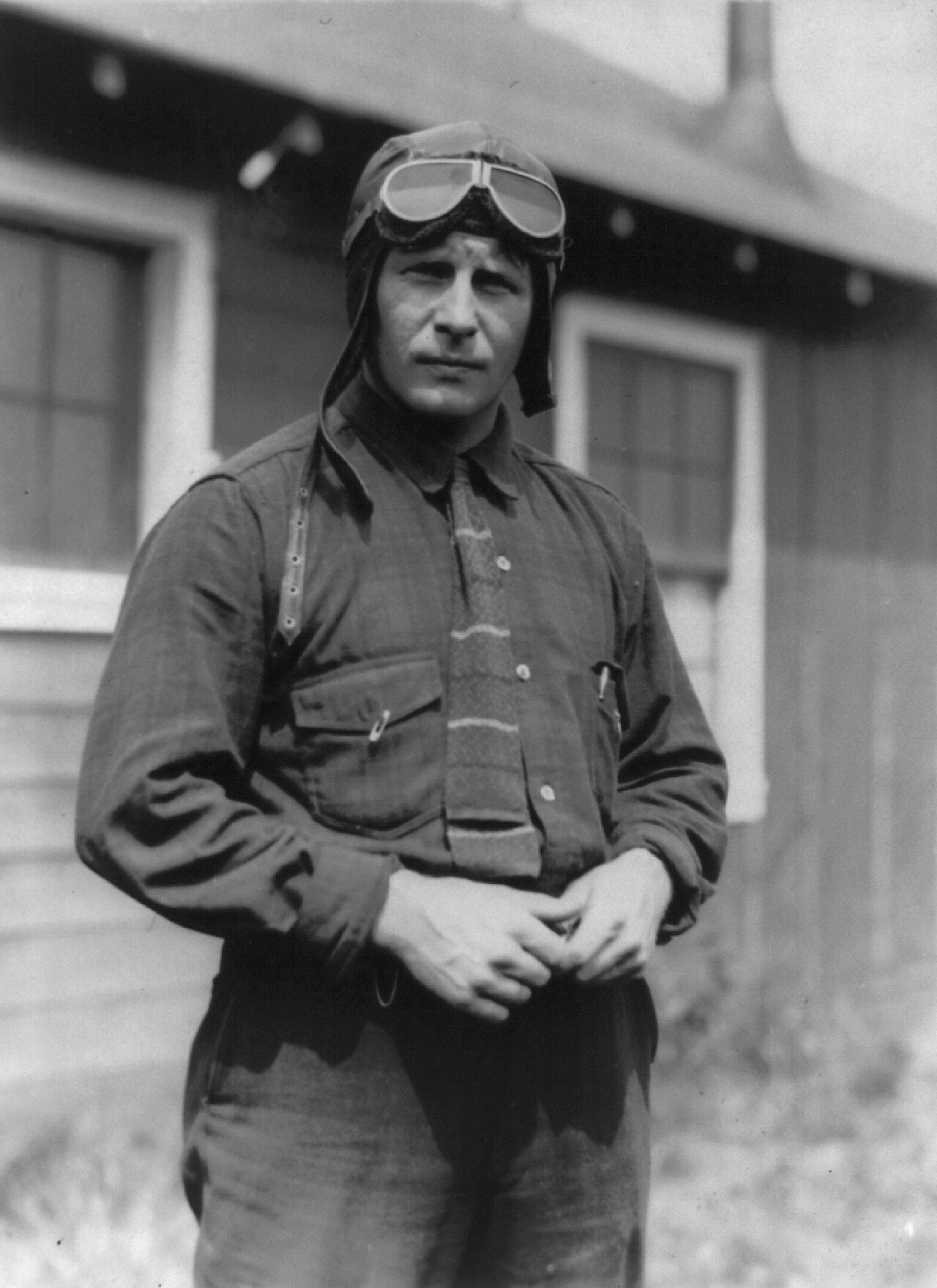
A year later he was in the cockpit of Byrd’s big Fokker America for its 1927 transatlantic flight. Balchen, trained to fly in bad weather and to navigate, did much of the flying through cloud. Fogged out of Paris and low on fuel, the crew ditched off the Normandy coast at Ver-sur-Mer, and everyone survived.
In April 1928, Balchen and Floyd Bennett flew a Ford Trimotor north to help the stranded crew of the German aircraft Bremen, which had just made the first east-to-west nonstop crossing of the Atlantic. Bennett, still weak from an earlier crash, fell ill with pneumonia and died on 25 April 1928. When Byrd took a Ford Trimotor to Antarctica later that year, he named it after his lost pilot.
Over the Pole in the Floyd Bennett
Byrd’s first Antarctic expedition set up its base, Little America, on the Ross Ice Shelf. It brought three aircraft: a Fairchild, a Fokker and the Ford 4-AT Trimotor Floyd Bennett, registered NX4542. After sitting out the long polar winter, the expedition was ready in November 1929 for the flight it had come for.
With Byrd at the South Pole (1930), the expedition’s own documentary film, including the preparations for the polar flight.
On 28 November 1929 the Floyd Bennett took off from Little America with four men aboard: Balchen as chief pilot, Harold June as co-pilot and radio operator, Ashley McKinley as aerial photographer and Byrd as navigator and expedition leader. The hard part was the climb from the ice shelf onto the polar plateau, which the overloaded Trimotor struggled to manage until the crew threw out empty fuel tanks and emergency supplies.
They crossed the South Pole on 29 November and flew back to Little America, a round trip of 18 hours and 41 minutes. It was the first flight to the South Pole and back. Congress promoted Byrd to rear admiral by a special act on 21 December 1929. The expedition’s film, With Byrd at the South Pole, reached cinemas in 1930.
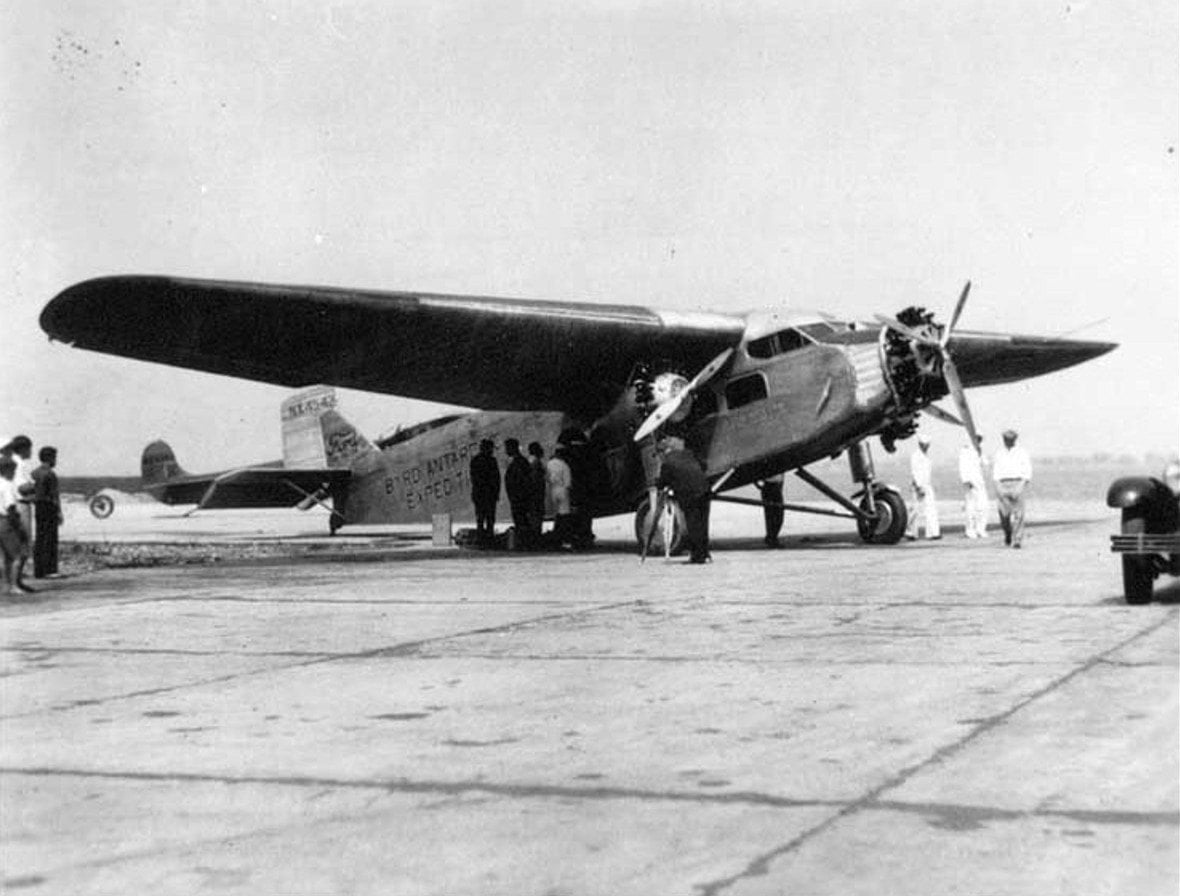
For aviation, the flight showed that aircraft could reach the most remote place on Earth and come home again. Afterburner has followed the story onward: Lincoln Ellsworth’s first trans-Antarctic flight in 1935, for whose expeditions Balchen also flew between 1933 and 1935, Byrd’s Operation Highjump after the war, and the US Navy R4D Que Sera Sera, which finally landed at the Pole in 1956.
Secret flights out of Sweden
Balchen became an American citizen in 1931. When the Second World War began, he first flew ferry flights for the British, delivering aircraft from North America to the war in Europe. After Pearl Harbor he joined the US Army Air Forces, rising from captain to colonel, and was put in charge of Arctic operations based in Greenland.
There he built the airfield Bluie West 8 at Søndre Strømfjord, today’s Kangerlussuaq, a stepping stone for aircraft ferried to Europe. He led rescues of crews who came down on the icecap and went after the German weather stations on Greenland’s north-east coast, including a Forteresse volante B-17 raid on a German outpost in May 1943.
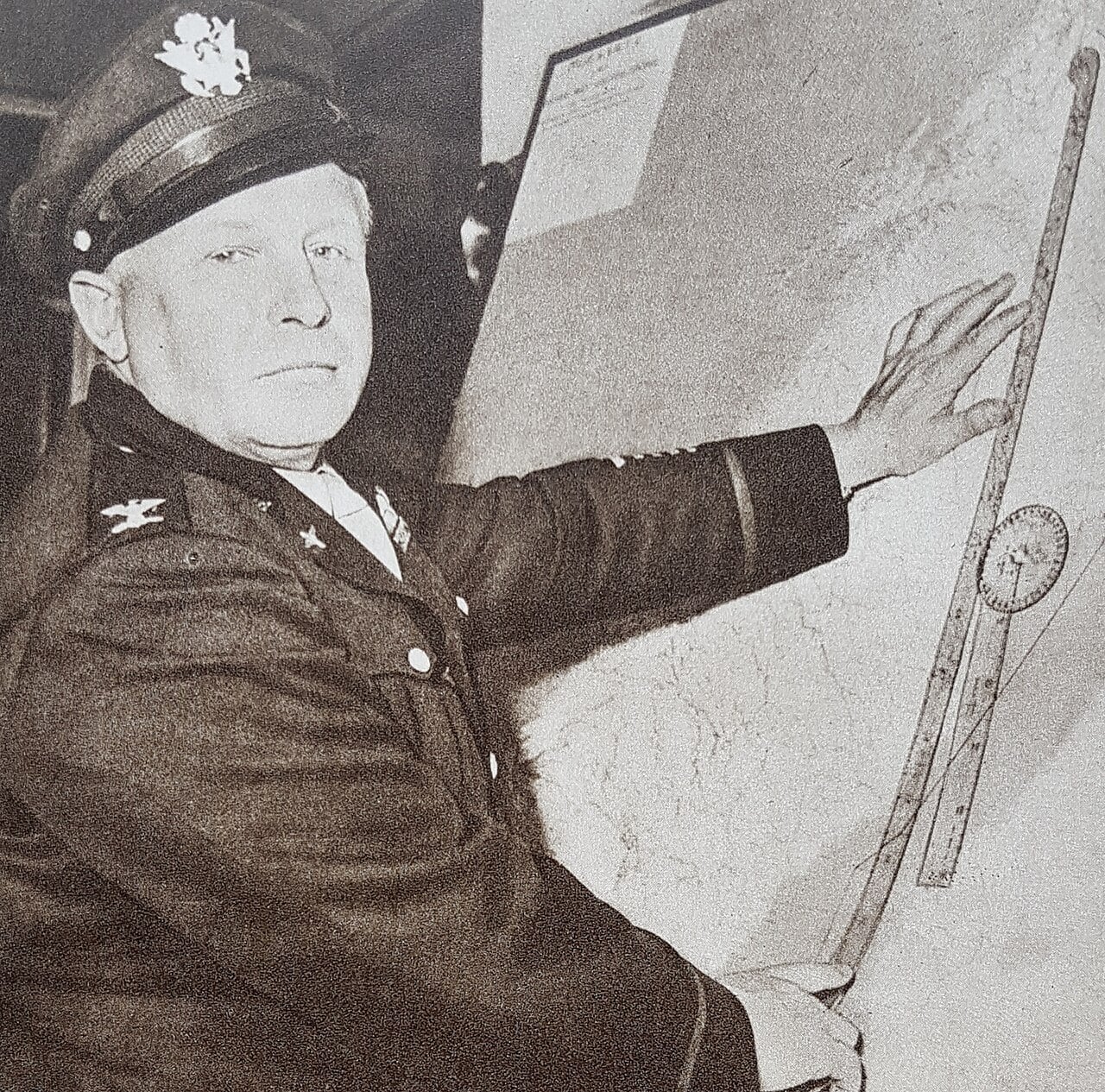
In 1944 Balchen took charge of Operation Balder, flying Norwegians who had escaped to neutral Sweden onward to Britain in American B-24 Liberators, operating from Kallax near Luleå in northern Sweden. He also commanded black-painted Liberators that dropped agents and supplies into occupied Norway, and in the winter of 1945 he used C-47 Dakotas to carry supplies, Norwegian troops and a field hospital from northern Sweden to the Kirkenes area of Finnmark.
The doubter of the North Pole
After the war Balchen ran the Norwegian airline DNL from 1946 to 1948, a forerunner of SAS, and then returned to the US Air Force to command the 10th Rescue Squadron in Alaska. In 1949 he flew from Alaska across the North Pole. He retired from the Air Force in 1956 and kept working as an Arctic consultant until his death on 17 October 1973. He is buried at Arlington National Cemetery.
“Bernt Balchen – en kunstner med vinger”, a Norwegian-language film on Balchen’s life from the Norwegian Armed Forces’ historical film archive.
One shadow lay over his friendship with Byrd. Balchen came to doubt that Byrd and Bennett had really reached the North Pole in 1926, because the Josephine Ford’s speed did not fit the distance claimed. According to the Norwegian biographical encyclopedia, Byrd’s circle worked to keep those doubts out of Balchen’s 1958 autobiography. The debate gained new weight in 1996, when Byrd’s own diary of the flight was released and showed erased navigation sights that differ from his official report.
Whatever happened in the Arctic in 1926, there is no doubt about 29 November 1929. A Norwegian who had come to America as a mechanic flew a Ford Trimotor over the bottom of the world, with the stores thrown overboard to clear the mountains. Balchen spent the rest of his life proving that the polar regions were a place aeroplanes could work, not just visit.
Sources: Norsk biografisk leksikon (Bernt Balchen), US Navy and Library of Congress photo archives, San Diego Air & Space Museum Archive, Dennis Rawlins on the 1926 Byrd diary
0 Comments