
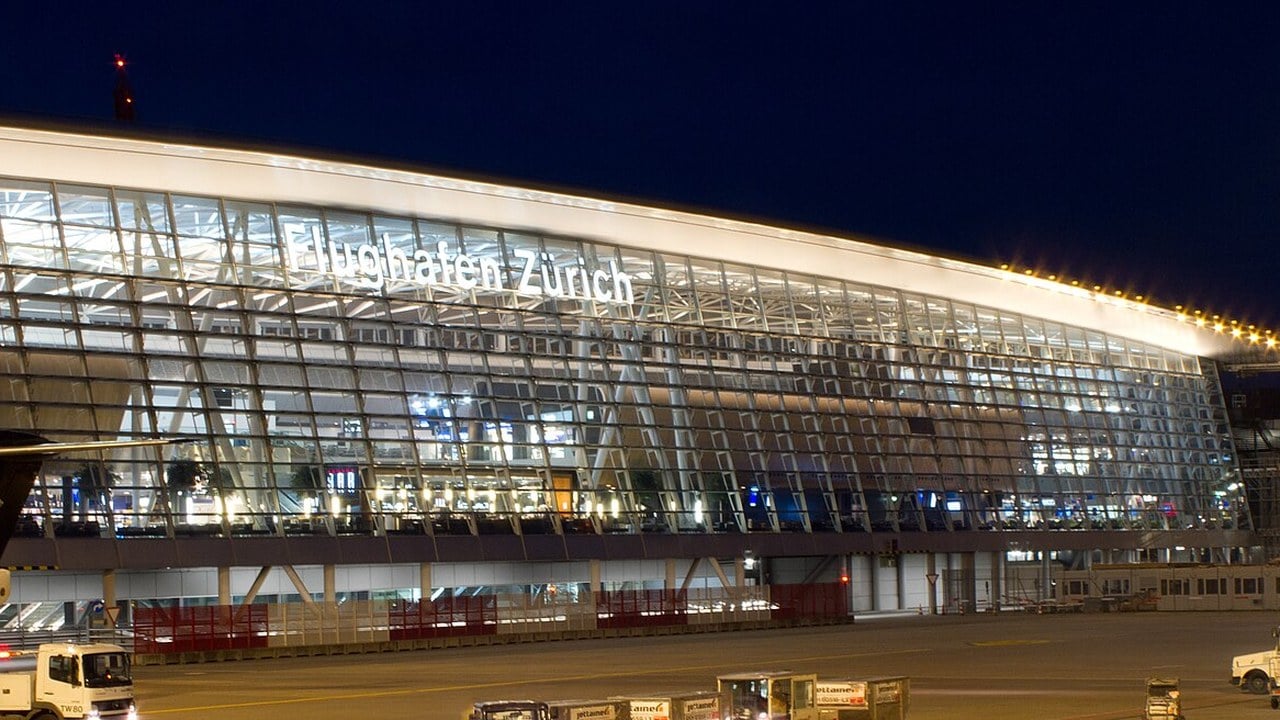
At 22:55 the last scheduled arrival touches down at Zurich. At 23:30 the airport goes quiet, and for the next six and a half hours any aircraft that wants to land or take off needs a special permit. In the towns around it, people sleep. The half-hour gap between the last scheduled flight and the hard stop is a much-argued-over 30 minutes in Swiss airport politics.
Night curfews are one of aviation’s least understood rules. Some airports ban scheduled flights outright. Others, like London Heathrow, have no ban at all, but ration night flights with a points system that makes a noisy jet far more expensive to fly at night than a quiet one. And almost everywhere, some aircraft can still land at 3am.
Informations clés
- Zurich: Operating hours 06:00-23:30; last scheduled departure 22:45, arrival 22:55; 23:00-23:30 for delays only
- Frankfurt: No scheduled take-offs or landings 23:00-05:00; max 133 movements per night in the shoulder hours, averaged over the year
- Heathrow: No formal ban; night quota period 23:30-06:00 with 5,800 movements a year and a seasonal noise quota
- Quota count: Points per movement by certificated noise; QC0.125 = 81-83.9 EPNdB; each 3 dB step doubles the points
- Banned in UK: QC8 and QC16 from 23:00 to 07:00; QC4 from 23:30 to 06:00
- UK regime: Limits unchanged for a bridging regime from October 2025 to October 2028
- Exempt at Zurich: Emergency landings, ambulance, police, disaster relief, Swiss military and approved state aircraft
- United States: New curfews on Stage 3 aircraft need FAA approval under the 1990 Airport Noise and Capacity Act
Who sets the rules?
There is no worldwide night-flight rule. Curfews are set airport by airport, by national governments, regional authorities, courts or planning permissions, which is why the hours and the exceptions differ so much. Sydney’s Kingsford Smith shuts to most traffic from 11pm to 6am, which is exactly why the new Western Sydney International was built to run around the clock.
In Europe, three examples show the spectrum: Zurich’s permit-only night, Frankfurt’s court-backed ban, and Heathrow’s budget of noise points.
Zurich: a curfew with a delay buffer
Zurich Airport’s operating hours run from 06:00 to 23:30, under rules set by the Swiss federal government. Departures may be scheduled until 22:45 and landings until 22:55. The half hour from 23:00 to 23:30 is not for scheduled traffic at all; it exists so that delayed flights can still get in or out without special permission.
After 23:30, the airport operator can grant exceptions only for unforeseen, extraordinary events. A short list of flights is not restricted at all: emergency landings, ambulance and police flights, disaster relief, Swiss military aircraft and state aircraft approved by the Federal Office of Civil Aviation. So yes, an air ambulance can land at Zurich at 3am.
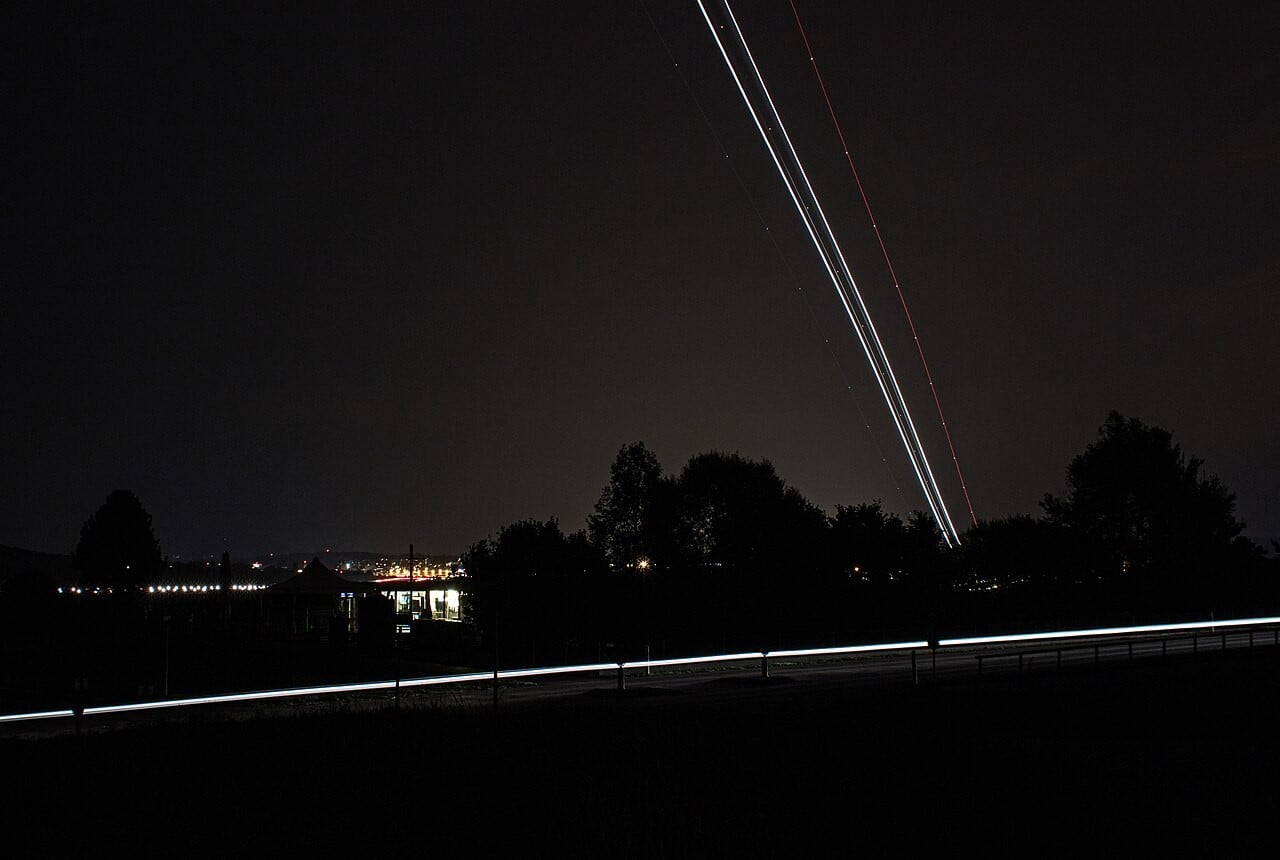
Flughafen Zürich says it already has the shortest operating hours in any European or global comparison, and it argues hard for keeping the 23:00 to 23:30 delay window. Cutting another 30 minutes, the airport says, could put up to a third of its long-haul connections at risk according to its forecasts. Residents’ groups see it the other way round.
Flughafen Zürich explains the operating concepts that decide which runways are used at different times of day (in German).
Frankfurt: banned by the courts
Frankfurt, Germany’s largest hub, opens at 05:00 and closes at 23:00. Between those hours, no scheduled take-offs or landings are allowed. In the shoulder hours, from 22:00 to 23:00 and from 05:00 to 06:00, the airport may handle no more than 133 movements per night, averaged over the year.
That ban was won in court. When Frankfurt’s new runway opened in October 2011, the state of Hesse’s approval still allowed 17 flights a night between 23:00 and 05:00. The regional administrative court imposed a provisional ban, and on 4 April 2012 the Federal Administrative Court in Leipzig upheld it. Lufthansa Cargo had estimated the ban would cost it €40 million in earnings a year, and Lufthansa chief executive Christoph Franz said it “threatens to clip the wings of Frankfurt, of Hesse and of Germany as an export and logistics nation.”
The exceptions are tightly drawn. Fraport says aircraft forced to approach Frankfurt for meteorological, technical or other safety reasons, or flying disaster relief or medical aid missions, may land during the ban.
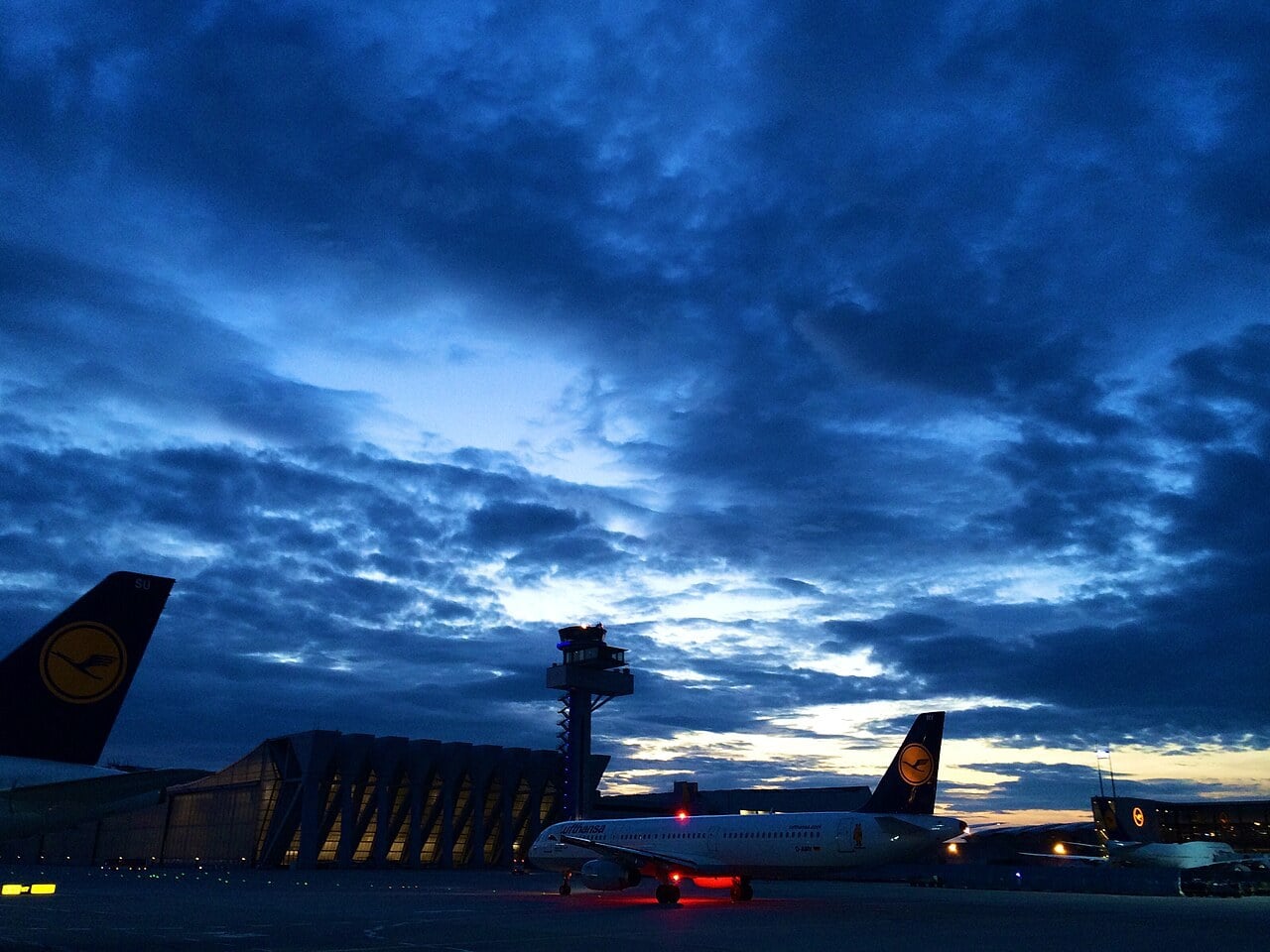
Hessischer Rundfunk’s airport series follows a night mission for an organ-donation transport at Frankfurt Airport (in German).
Heathrow: a budget of noise points
Heathrow is different again. Its own website states plainly that there is no formal ban on night flights, but the government has restricted them since 1962; today the restrictions are part of the noise measures set under the Civil Aviation Act 1982. The core of the system is the night quota period from 23:30 to 06:00, which applies at all three government-designated London airports: Heathrow, Gatwick and Stansted.
Two limits apply at once. The first is a simple cap on movements: at Heathrow, 2,550 in the winter season and 3,250 in summer, or 5,800 a year. The second is the quota count, or QC, which Heathrow has used since 1993. Every aircraft type receives a QC rating based on its certificated noise level; each landing or take-off in the night quota period spends that many points from a seasonal noise budget of 2,415 points in winter and 2,735 in summer.
How the quota count works
The scale is logarithmic, because noise is. The UK government’s 2017 decision explains that each band is 3 decibels wide, and a 3 dB step represents a halving or doubling of noise energy. So each step up the scale doubles the points. Aircraft certificated at 81 to 83.9 EPNdB are rated QC0.125; anything quieter is QC0 and costs no quota points, though it still counts towards the movement cap.
The arithmetic is the clever part. A single movement by a QC2 aircraft spends as much quota as 16 movements by QC0.125 aircraft. The curfew stops being a flat ban and becomes an economic signal: an airline that wants to fly at night is pushed towards its quietest aircraft. Heathrow says the system is designed to discourage older, noisier planes and encourage newer, quieter ones.
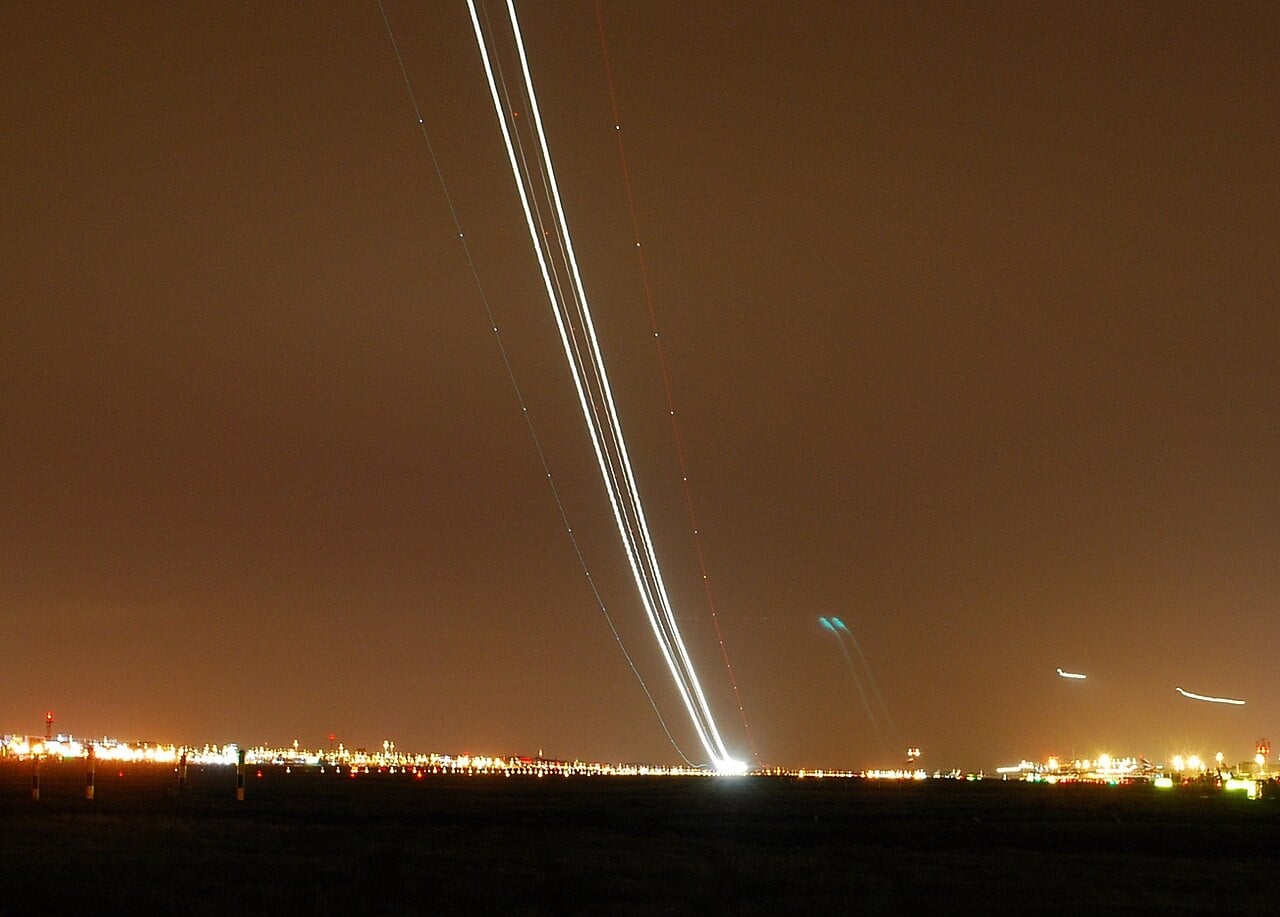
At the top of the scale, the noisiest types are simply banned. QC8 and QC16 aircraft may not operate in the night period from 23:00 to 07:00. From the 2022 regime, the government also banned QC4 movements during the night quota period; its own example of a QC4 movement was a Boeing 747-400 on departure. In December 2024 it decided to keep the existing movement and quota limits for a three-year bridging regime from October 2025 to October 2028, while it waits for new research on night noise and health.
In practice, Heathrow says around 80 per cent of its night flights arrive between 04:30 and 06:00, an average of 16 aircraft a day, and a voluntary agreement stops flights scheduled in that window from landing before 04:30. It has no scheduled departures between 22:45 and 06:00 and no scheduled arrivals between 22:55 and 04:50.
Exemptions and the 3am question
Every system has a safety valve. In the UK, the government can allow extra night flights in exceptional circumstances such as emergencies, heavy snow or disruption likely to cause serious hardship to passengers. These dispensations are contentious: one parish council told the government’s 2024 consultation that Stansted recorded 1,471 in summer 2023, against 462 at Heathrow and 1,293 at Gatwick. The government now requires the three airports to report and justify their dispensations after each season.
The United States went the opposite way. The Airport Noise and Capacity Act of 1990 made noise policy a national matter, and a new local restriction on modern Stage 3 aircraft needs Federal Aviation Administration approval under Part 161. Burbank’s Bob Hope Airport tried: it applied for a mandatory curfew from 10pm to 6:59am, and in October 2009 the FAA turned it down because the evidence supported only two of the six statutory conditions.
So, can anything land at 3am? At Zurich and Frankfurt, an emergency, an air ambulance, a disaster-relief flight or a state aircraft can. At Heathrow there is no ban, only a strictly rationed budget, and the airport itself keeps the small hours almost empty. Everywhere else, the answer depends on a local deal between sleep and connectivity, and those deals are being renegotiated all the time.
Heathrow Airport explains its early-morning flights as part of its airspace and future operations consultation.
For anyone living under an approach path, the details matter enormously. A curfew is not just a time on a sign. It is a set of hours, a list of exceptions and, in Britain, a points account that decides whether the 04:30 arrival over your roof is a jumbo or something much quieter.
Sources: Flughafen Zürich AG, Fraport AG, Heathrow Airport, UK Department for Transport (night flight restrictions decisions 2017, 2021 and 2024), Federal Aviation Administration (Part 161, Burbank decision 2009), hessenschau, The Local / AFP
Header photo: Carlos Delgado / Wikimedia Commons, CC BY-SA 3.0

0 Comments