
Just after midnight on 5 December 1971, a company of about 120 Indian soldiers at a lonely border post in the Thar Desert heard engines in the dark. Coming towards them was a Pakistani armoured column: dozens of tanks, infantry in trucks, an entire brigade aiming for Jaisalmer. The post at Longewala had no tanks of its own and no way to stop them.
The men stayed anyway. At first light, the Force aérienne indienne arrived, and what followed became one of the most lopsided air-versus-armour actions of the jet age. Indian pilots later called it a turkey shoot.
Informations clés
Battle: Battle of Longewala, India-Pakistan war of 1971
Dates : 4-7 December 1971 (main fighting 5-6 December)
Lieu: Longewala post, Thar Desert, Rajasthan, near Jaisalmer
Defenders: A Company, 23rd Battalion, Punjab Regiment, about 120 men, under Maj. Kuldip Singh Chandpuri
Attaquants : Elements of Pakistan’s 18th Infantry Division with T-59 and Sherman tanks
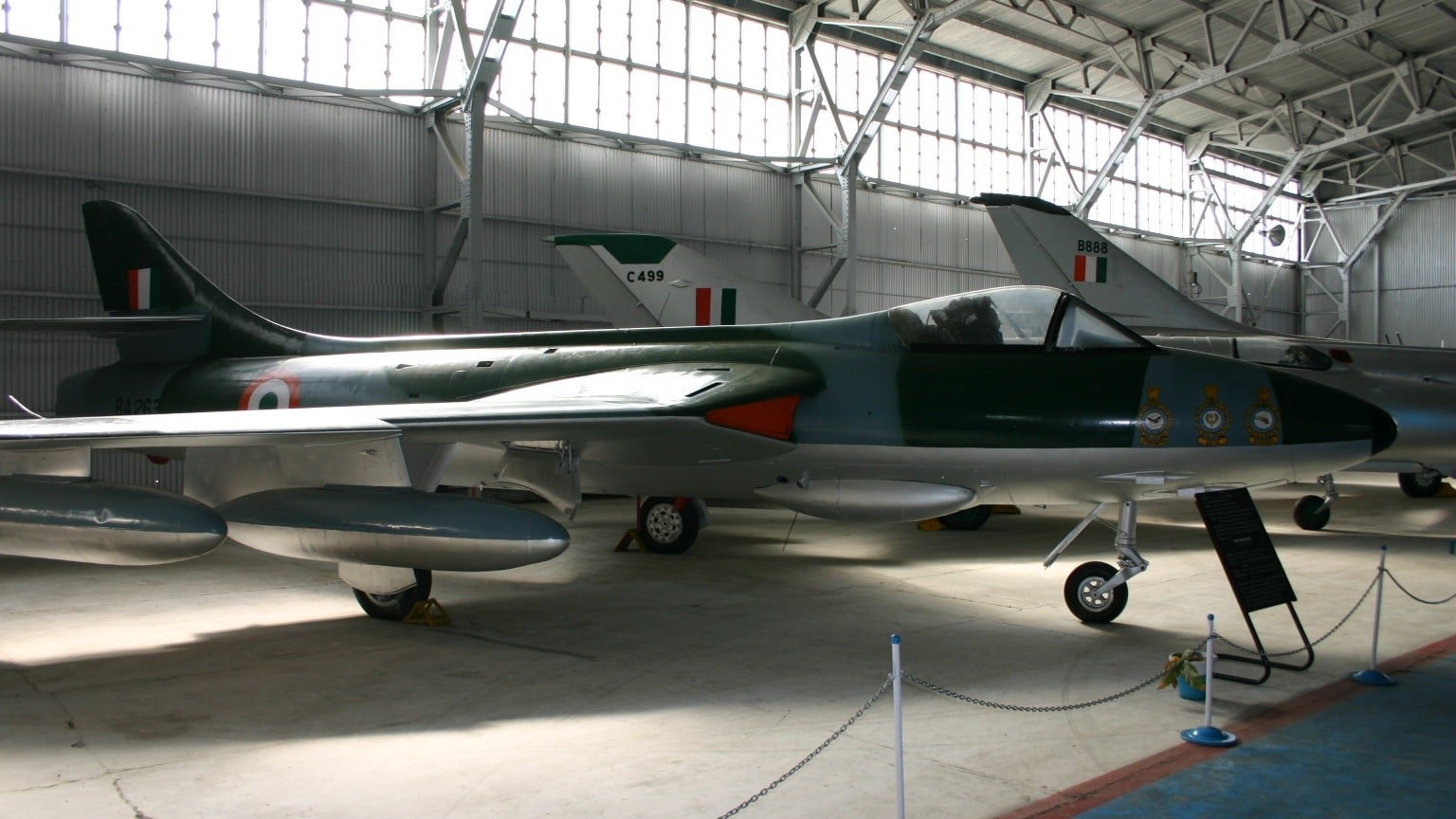
Air power: Indian Air Force Hawker Hunters from Jaisalmer; HAL Marut fighter-bombers also took part
Pakistani losses: Around 36-37 tanks destroyed or abandoned, according to most accounts
Indian losses: Two soldiers killed, according to Wikipedia
A company, a night and a promise
The post was held by A Company of the 23rd Battalion, Punjab Regiment, with a few Border Security Force men and a camel detachment, under Maj. Kuldip Singh Chandpuri. Facing them were elements of Pakistan’s 18th Infantry Division, with T-59 tanks of the 22nd Cavalry and Shermans of the 38th Cavalry. Pakistani troops crossed the border at about 1 a.m. and their tanks were in sight of the post by around 4.30.
Chandpuri chose to stay, telling his men that he had a written task and would carry it out until he received written orders to the contrary, and that anyone who wished to leave could do so. Through the night, his company and its recoilless rifles held off the column, helped by a Pakistani night attack that was slowed by darkness and soft sand.
Hunters at Dawn: the air battle of Longewala, part one (Shiv Aroor).
Hunters at dawn
Le Chasseur de faucons was not built to fly at night, so the defenders had to last until sunrise. At Jaisalmer, the base commander was Wing Commander M.S. “Mini” Bawa. The first pair of Hunters, armed with Matra T-10 rockets and 30 mm ADEN cannon, was airborne at first light, and by about 7 a.m. they were over Longewala.
What they found was a pilot’s dream and a tank commander’s nightmare: armour bunched together in open desert, with no Pakistani fighters overhead. The Pakistan Air Force was committed elsewhere and gave the column no cover. An Army air observation officer, Maj. Atma Singh, circled in a slow HAL Krishak, directing the jets onto targets.
The Hunters flew wave after wave of sorties through the day, returning to Jaisalmer only to rearm and refuel. A full tank assault in the afternoon was broken the same way. By nightfall the desert around the post was littered with burning armour and abandoned vehicles, and the Pakistani column was pulling back. That night Indian troops pushed forward and took Manitwala post, about 10 km inside Pakistan.
Who won Longewala?
The scale of the result is not seriously disputed: around 36 or 37 Pakistani tanks destroyed or abandoned, roughly 100 or more other vehicles lost and hundreds of men killed, against two Indian soldiers killed, according to the figures collected on Wikipedia and in The Tribune. The question that has divided veterans ever since is how much credit belongs to the men on the ground and how much to the men in the air.
The 1997 Bollywood film Border, with Sunny Deol as Chandpuri, made the ground battle famous and gave the air force a small role, which many airmen resented. A 2008 dispute over credit even led Chandpuri to sue for a token one rupee. A book by Air Marshal Bharat Kumar, The Epic Battle of Longewala, argues that the Hunters decided the outcome; Army accounts stress that the company’s stand bought the time for them to do it. Both sides, in fairness, needed the other.
Air Marshal (retd.) M.S. Bawa on the air battle of Longewala and the film Border (Unsung India Foundation).
Longewala today
Chandpuri received the Maha Vir Chakra, India’s second-highest wartime gallantry award, and later rose to brigadier. He died in Chandigarh in November 2018. In Pakistan, the Hamoodur Rahman Commission later recommended that the divisional commander be tried for negligence.
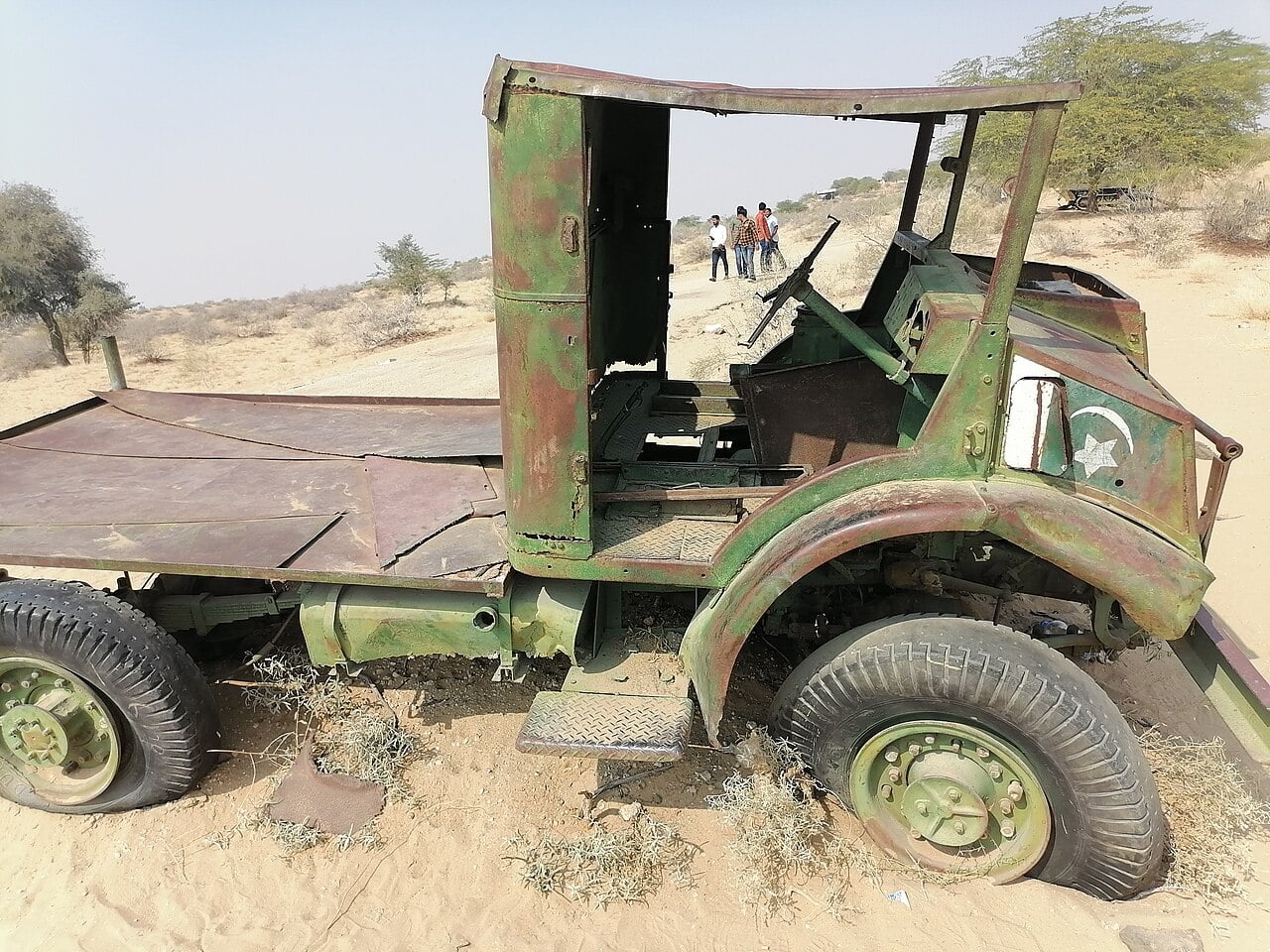
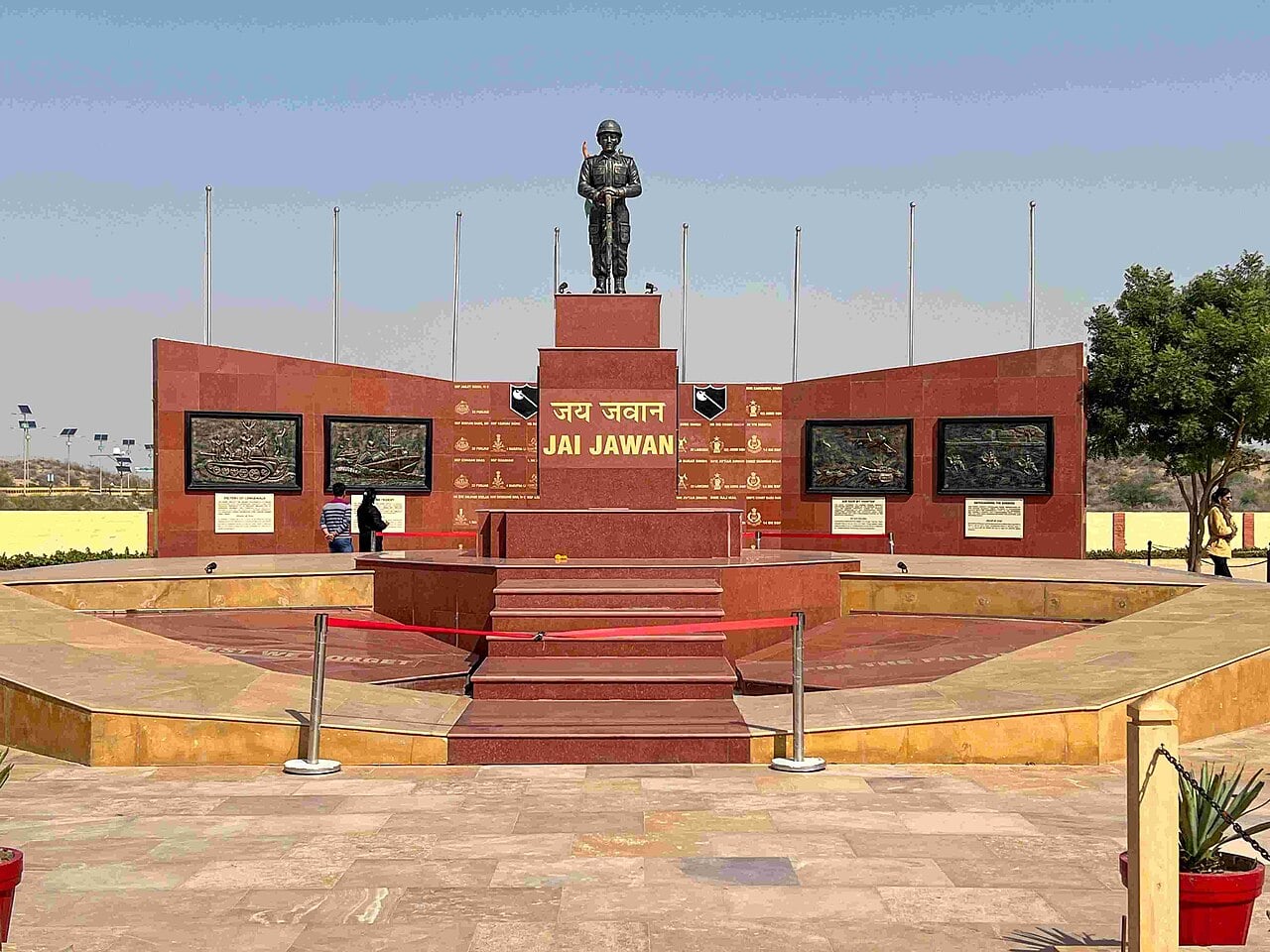
The post itself is now a war memorial and museum, with captured tanks and wrecked vehicles still sitting in the sand where they stopped.
The Battle of Longewala, 1971, animated (Prudentia Tech).
Sources: Wikipedia (Battle of Longewala), The Tribune (Brig I.S. Gakhal, 2021), Indpaedia (Times of India reports, incl. Air Marshal Bharat Kumar, The Epic Battle of Longewala), Hamoodur Rahman Commission


0 Comments