
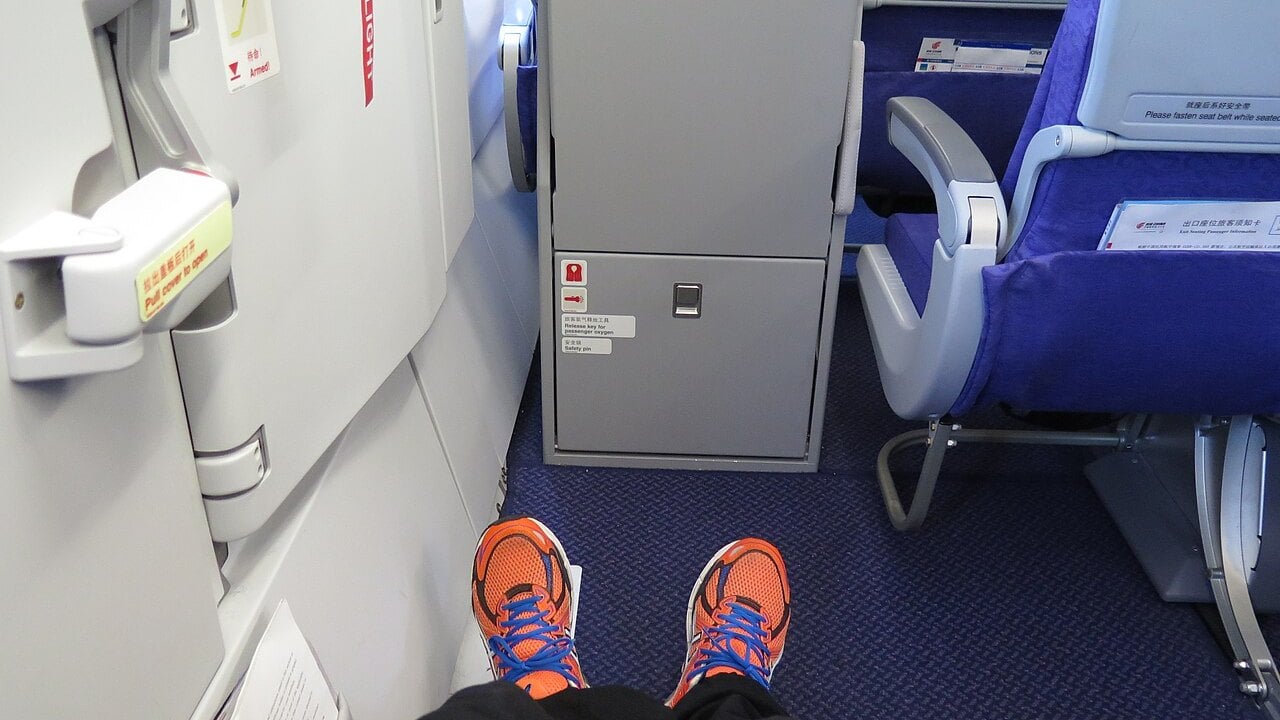
The flight attendant stops at your row before the doors close, leans in and asks whether you are willing and able to help in an emergency. It sounds like small talk, and most people say yes without thinking about it, stretch their legs and reach for the headphones. But that question is a legal step. Until a crew member has checked who is sitting beside the exits, a US airliner is not allowed to push back.
The exit row is the only seat on the aeroplane that comes with a job description. Here is who is allowed to sit there, who is not, and what the US National Transportation Safety Board found when it asked real exit-row passengers what they actually did.
Informations clés
- US rule: 14 CFR 121.585, “Exit seating” (Part 121 airlines), published 1990
- Exit seat: Any seat with direct access to an exit, plus seats a passenger must pass to reach it, up to the first aisle
- Minimum age: 15
- Upper age limit: None in the federal rule; the test is whether you can perform the functions
- Functions listed: 10, from locating and opening the exit to stabilising a slide and finding a safe path away
- Reseating: If you cannot or will not do the tasks; the airline may not ask your reason
- Pushback: Not allowed until a required crew member has checked the exit seats
- NTSB 2000 study: 22 of 42 exit-row passengers (52%) had not read the briefing card
A seat defined by the law, not the legroom
In the United States the rule is 14 CFR 121.585, “Exit seating”, published in March 1990 for airlines flying under Part 121. It defines an exit seat as any seat with direct access to an exit, plus every seat in a row that passengers would have to pass through to reach that exit, from the first seat inboard of the exit to the first aisle. On a narrowbody with overwing hatches, that usually means the whole three-seat block beside the window.
The rule puts the duty on the airline. Each carrier must decide whether each person it seats there is suitable, make that decision “in a non-discriminatory manner”, and get its procedures approved by the FAA. It must also make those written procedures available for the public to inspect at its ticket counters and boarding gates.
Ten things you might have to do
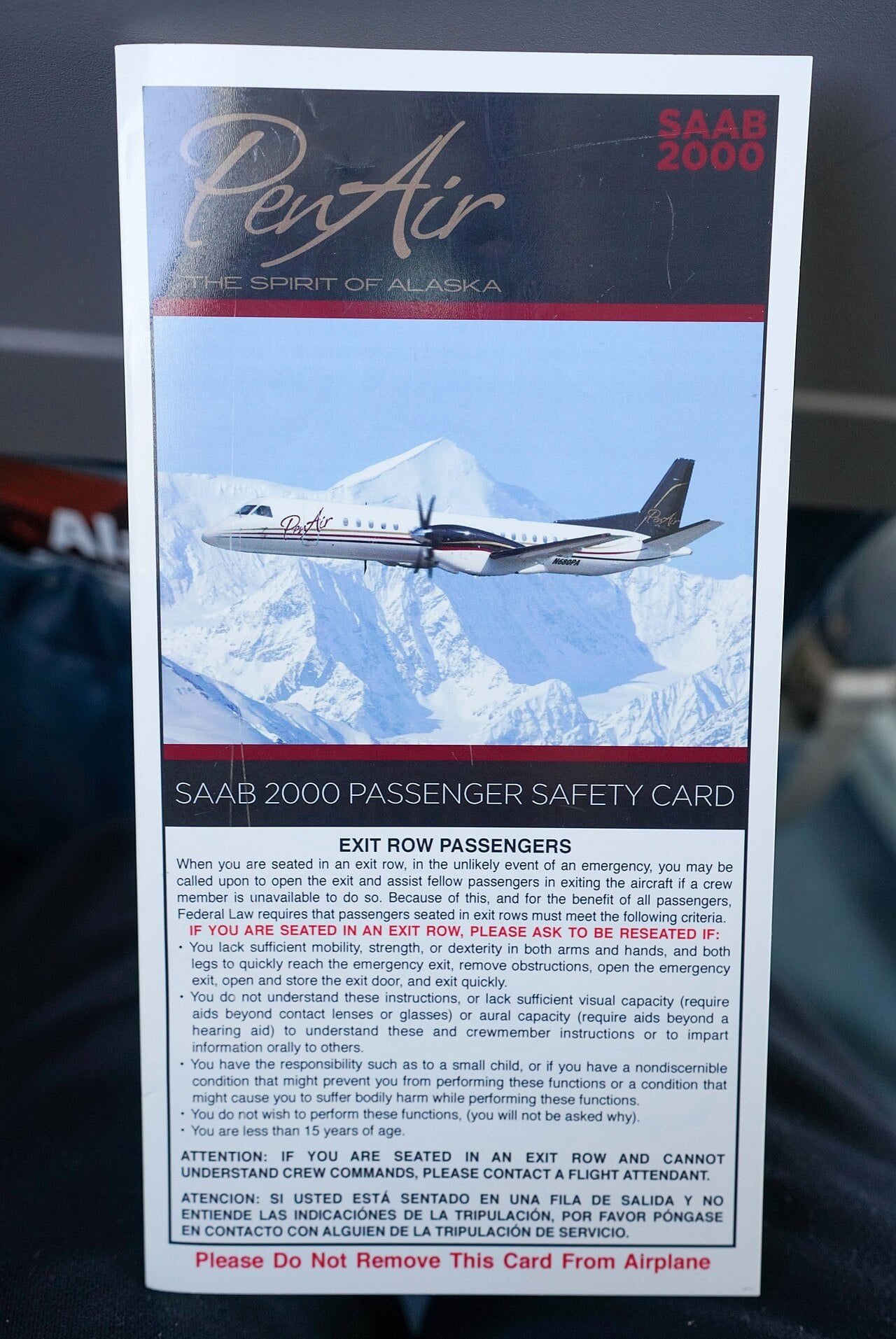
Paragraph (d) of the rule lists the functions an exit-row passenger may be called on to perform if no crew member is available. You must be able to locate the exit, recognise its opening mechanism, understand the instructions and operate it. You must decide whether opening it would make things worse, follow a crew member’s spoken directions and hand signals, and stow or secure the hatch so it does not block the opening.
Where there is a slide, you must assess it, activate it and stabilise it after deployment so others can get off. Then you must go through the exit quickly and pick a safe path away from the aircraft. Those ten tasks are what the safety card in your seat pocket is legally required to explain, in the language the crew uses for its commands.
Cranfield Aviation demonstrates how an overwing exit is opened, one of the tasks an exit-row passenger may be asked to perform.
Who is not allowed to sit there
Paragraph (b) is the list of disqualifications. An airline may not seat you in an exit row if it decides you probably could not do those tasks because you lack the mobility, strength or dexterity in both arms, both hands and both legs to reach, grasp, push and pull the mechanisms, or to lift and move objects the size and weight of an overwing hatch, keep your balance and get out quickly.
You are also excluded if you are under 15, or cannot do the tasks without help from an adult companion. The same goes for anyone who cannot read and understand the printed or pictorial instructions or understand spoken crew commands, needs visual aids beyond glasses or contact lenses, needs hearing help beyond a hearing aid, or cannot pass information on to other passengers out loud.
Finally, the rule excludes anyone with a responsibility, such as caring for small children, that might stop them doing the job, or a condition that might cause them harm if they did. Notice what is not on the list: there is no upper age limit in the federal rule. The FAA sets a minimum of 15 and leaves the rest to the airline’s judgement of whether a person can do the tasks.
The question before the doors close
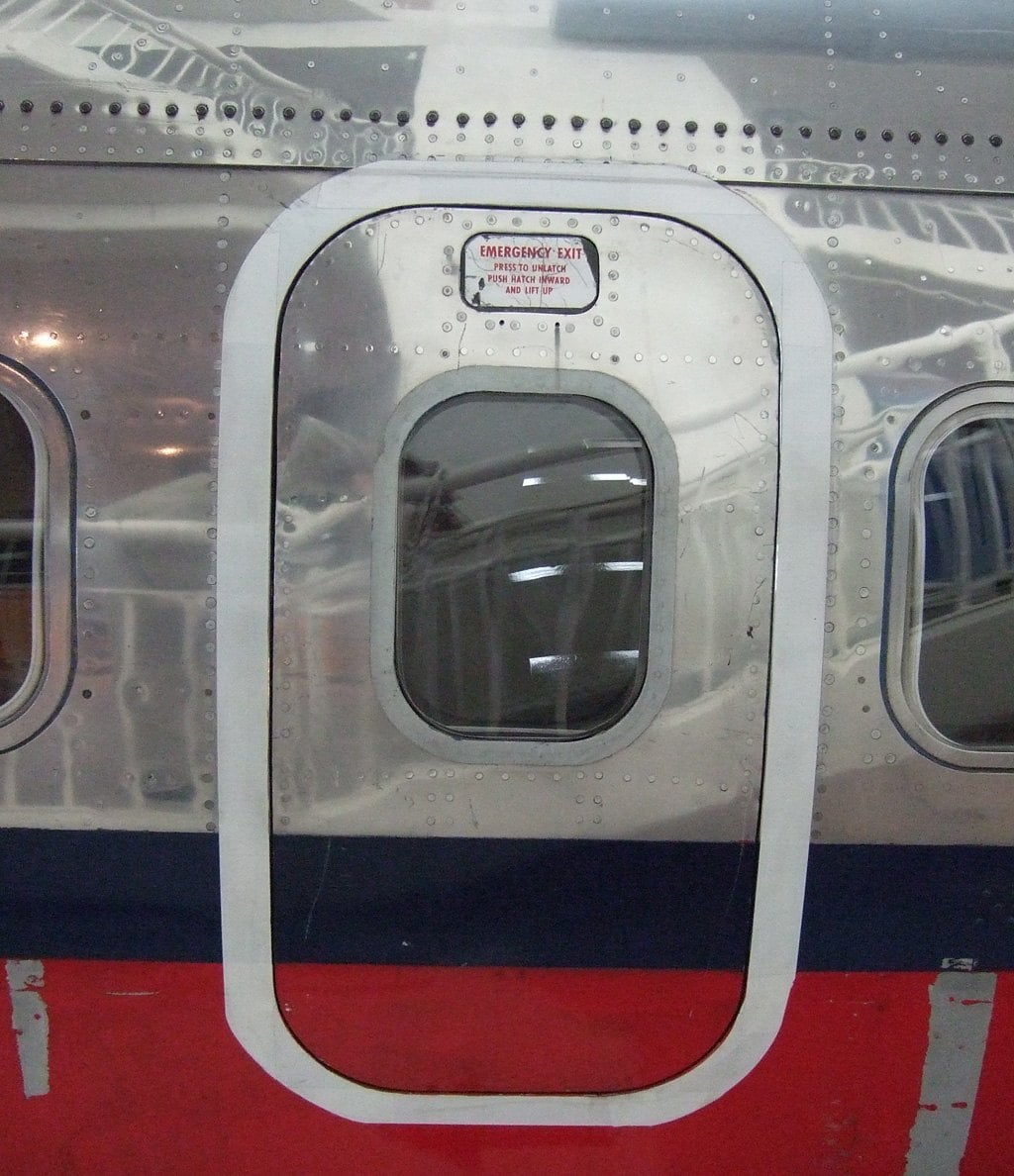
The rule gives passengers a way out without embarrassment. The card at every exit seat must ask you to identify yourself for reseating if you cannot meet the criteria, have a condition nobody can see that would stop you, might be hurt doing the tasks, or simply do not want to do them. The airline is not allowed to ask why.
If you speak up, or the crew decides you are not suitable, the airline must move you to a non-exit seat “expeditiously”. If the cabin is full, it must find someone who is willing and able to swap in. And paragraph (g) is the hard stop: no taxi and no pushback until at least one required crew member has checked that nobody in an exit seat looks unable to do the job.
The rule tells airlines who may not sit in an exit row. Nowhere does it require that anyone sit there at all. A row left empty breaks no part of 121.585; what the rule controls is who occupies it. Under this rule, an airline may refuse to carry you over exit seating in only two cases: if you refuse to follow the crew’s exit-seating instructions, or if an exit seat is the only one that physically fits a passenger with a disability.
What the NTSB found in real evacuations
In June 2000 the NTSB adopted its safety study Emergency Evacuation of Commercial Airplanes, NTSB/SS-00/01. In six of its evacuation cases, the Board had information on how the overwing exits were used, and 42 passengers had been seated in those exit rows. Their questionnaires were sobering.
Twenty-two of the 42, or 52 percent, said they had not read the briefing card. Only 9 had been personally briefed by a flight attendant; 24 said they received no briefing, and only two of those had looked at the card. In two cases passengers opened overwing exits that should have stayed shut: once after a crew order to use only the forward exits, once when a flight attendant had told everyone to stay seated. A child broke an arm jumping off a wing whose flaps had not been lowered.
The overwing exit of a Boeing 737-700 Next Generation being opened. The NTSB’s 2000 study noted that Boeing had designed a new hinged overwing exit for the 737-600, -700, -800 and -900 that swings up and out of the escape path.
Screening did not always work either. No exit-row passenger in the study was younger than 15, but two were over 70, and one of them could not open the exit. Three exit-row passengers did not speak the language in which the crew gave its briefings and commands. In another case a passenger opened an overwing exit into smoke and had to jump through fire; two others who used that exit were severely burned.
The Board concluded that most exit-row passengers do not read the safety information and do not get a personal briefing, even though a briefing helps. It recommended that the FAA require a personal preflight briefing for every passenger in an exit row where no qualified crew member is seated. Our explainers on aircraft exit types et le 90-second evacuation rule show why those seconds at the hatch matter so much.
Before you say yes
So next time you are asked, treat it as a real question. Read the card, find the handle, look at how the hatch comes out and where it goes, and listen to what the crew says about the slide or the wing. If you cannot or do not want to do it, say so; the airline has to move you and cannot ask why.
The extra legroom is real. So is the job that comes with it. In the NTSB’s own cases, the people beside the hatch decided whether the exit opened, when it opened and whether it should have opened at all.
Sources: 14 CFR 121.585 (Electronic Code of Federal Regulations); NTSB Safety Study NTSB/SS-00/01, Emergency Evacuation of Commercial Airplanes (2000)

0 Comments