

A crate of broken fighter parts is the least glamorous object in military aviation. Nobody guards it the way they guard a jet. It goes in a container, on a commercial aircraft, and turns up at a repair shop on the other side of the world. That is how the F-35 Lightning II programme has moved spares between eight partner nations for more than a decade.
This year one of those crates left Australia, headed for the United States, and landed in Hong Kong instead.
On Tuesday 22 September 2026, Australian Deputy Prime Minister and Defence Minister Richard Marles confirmed it. Politico had reported the diversion four days earlier, citing three people familiar with the matter, and said the shipment included an F-35 canopy. Hong Kong is a Chinese special administrative region. That single geographic fact is why congressional staff have been sitting through briefings about a box of unserviceable parts since June.
Informations clés
Ce qui s'est passé: A shipment of unserviceable F-35 components left Australia bound for repair in the United States and was rerouted to Hong Kong.
Quand: Earlier in 2026. State Department and Pentagon officials briefed congressional staff in June; Politico reported it on 18 September 2026; Australia confirmed it on 22 September 2026.
What was in the box: Politico reports the shipment included an F-35 canopy, citing two people familiar with the matter. Australia says no sensitive parts were involved.
Who was carrying it: An intermediary transporting parts on behalf of Lockheed Martin, which manages the programme supply chain.
Australian fleet: 72 F-35As, full operational capability declared in 2025.
Programme partners: Eight, per Lockheed Martin: the United States, United Kingdom, Australia, Italy, Netherlands, Canada, Denmark and Norway.
Current status: The F-35 Joint Program Office says it is working to retrieve the components and investigate.
What Was Actually in the Shipment
The Pentagon has confirmed the incident without confirming the contents. A Department of Defense spokesperson told CNN that the F-35 Joint Program Office was aware of a shipment issue involving unserviceable F-35 Lightning II components, and that it was working with US authorities and industry partners to retrieve them, investigate, and put safeguards in place to stop it happening again.
The canopy detail comes from Politico, attributed to two of its three sources. It matters more than it sounds. The F-35 canopy is not simply a piece of shaped acrylic: it carries a thin coating of transparent radar-absorbent material that contributes to the aircraft’s low-observable performance. That coating degrades with weather, ultraviolet light and time, which is exactly why canopies get shipped away for repair in the first place.

Australia runs maintenance depots for the fighter, but none of them can currently repair a canopy. So the part goes back across the Pacific. Politico reported that Lockheed Martin used a third company to move the components, and that it is still not clear why the shipment was rerouted or who has the equipment now.
Canberra Plays It Down
Marles told reporters in Adelaide that the Australian government had been made aware of the issue and was assisting. He was careful about where responsibility sits.
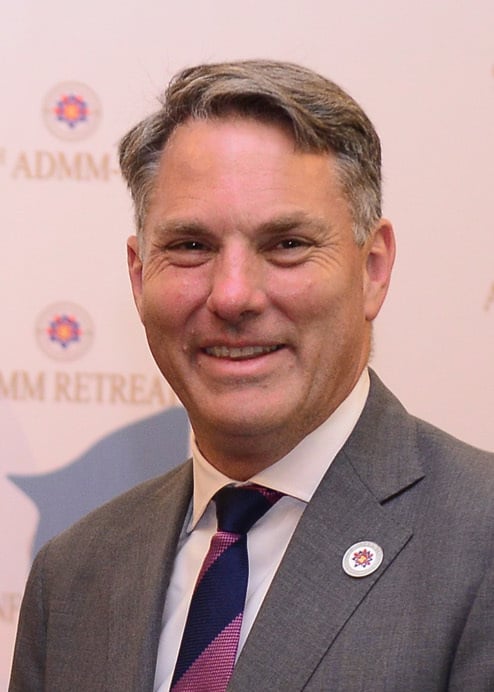
He added that Australia was “examining very much everything that has occurred at the Australian end,” and that the matter would ultimately be managed by the United States and Lockheed Martin as the prime contractor responsible for the global supply chain.
It is still not public whether the shipment originated at the F-35 Aircraft Sustainment Hub the Australian government maintains at Williamtown, north of Newcastle. Australia is one of eight countries drawing on a shared pool of F-35 spare parts, an arrangement designed to keep fleets flying by treating components as fungible across borders rather than as national property.
Why a Real Part Beats Stolen Data
The espionage concern is not hypothetical, and it is not new. A US Air Force report published in June set out how Beijing has tracked American progress in stealth shaping while scaling up its own low-observable aircraft and its anti-stealth air defences. The worry here is more specific than data theft.
That is the distinction worth holding on to. Specifications tell an adversary what a coating is supposed to do. A physical sample tells them whether the document was accurate, how the material has aged, and how it was applied.
Not everyone thinks the sky has fallen. A defence analyst who has worked the F-35 supply chain pointed out that the word “canopy” covers a lot of hardware.
The honest position, as of today, is that nobody outside the investigation knows which specific items were in the crate.
Sam Eckholm’s tour of the Fort Worth production line is the clearest public look at how tightly the F-35 airframe is built, and by extension why individual panels and covers are treated as controlled items rather than spare parts.
A Supply Chain That Was Already Leaking
The uncomfortable context is that the F-35 programme has a documented accountability problem, and it predates this shipment by years.
In May 2023 the US Government Accountability Office published GAO-23-106098, titled “F-35 Program: DOD Needs Better Accountability for Global Spare Parts and Reporting of Losses Worth Millions.” It found roughly a million spare parts worth about $85 million had been lost, and that the Defense Department had reviewed the circumstances of only about 2 per cent of identified losses since 2018. As of October 2022, some 940,000 parts worth more than $66 million had been lost at non-prime contractor facilities worldwide and had still not been reported for adjudication.
The mechanism behind those numbers is the part that explains today’s story. The Defense Department owns the parts until they are installed on an aircraft; Lockheed Martin holds the records. The GAO found the Joint Program Office does not enter global spares-pool parts into an accountable property system of record, which is the bureaucratic way of saying that when a box moves, no government database necessarily moves with it.
Australia has been inside this system since 2014, and Lockheed Martin has spent years promoting Australian industry’s role in it.
Lockheed Martin’s own film on Australian F-35 industrial participation is a useful companion to the story: it shows how deeply the sustainment work is distributed, and how many hands a component passes through before it reaches a repair bay.
Que se passe-t-il ensuite ?
More congressional staff briefings are expected in the coming weeks. The Pentagon says it wants the components back. The State Department has declined to comment, the Hong Kong government has declined to comment, and the Chinese embassy has said it is unfamiliar with the incident.
The likeliest outcome is dull: a freight forwarder made a routing error, the parts sat in a bonded warehouse, and nobody in Beijing ever opened the crate. But the programme the Pentagon expects to spend close to $2 trillion on over its lifetime just demonstrated that a controlled stealth component can leave an allied country and arrive somewhere nobody intended, and that it takes a reporter rather than a tracking system to notice.
Sources: ABC News (Stephen Dziedzic and Tom Lowrey, 22 September 2026), CNN (Alex Stambaugh and Hilary Whiteman, 22 September 2026), Politico (18 September 2026), Defence Industry Europe, US Government Accountability Office report GAO-23-106098, Lockheed Martin.


0 Comments