
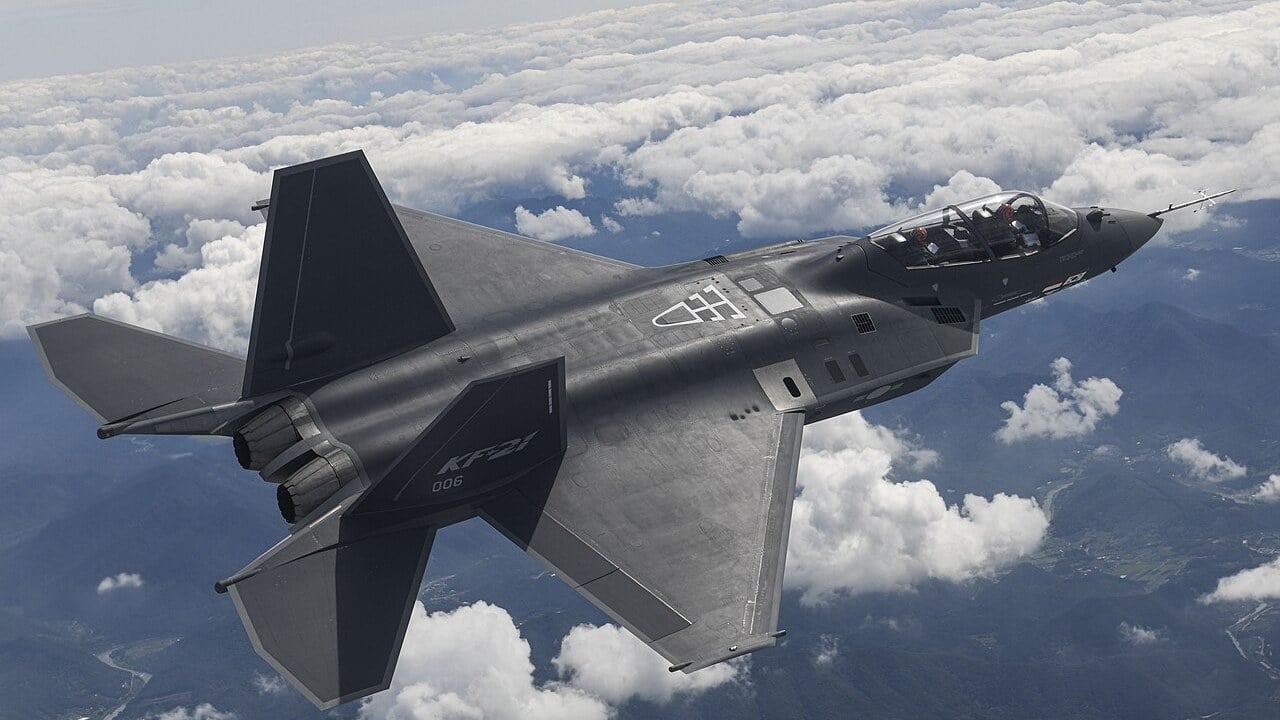
Indonesia may have walked away from building whole KF-21 Boramae fighters, but it has not walked away from the jet. On Wednesday 11 November 2026, in a ministry building in central Jakarta, Korea Aerospace Industries (KAI) and Indonesia’s state aircraft maker PT Dirgantara Indonesia (PTDI) signed three memorandums of understanding that keep Indonesian factories making KF-21 parts, and then reach well beyond the fighter.
The deals were signed on the sidelines of the 12th Korea-Indonesia Defense Industry Cooperation Committee meeting, held at Indonesia’s Defence Ministry. KAI chief executive Kim Jong-chul and PTDI president director Gita Amperiawan put their names to agreements covering KF-21 follow-on production, flight simulators and, for the first time, commercial airliners. KAI announced the package on Thursday 12 November.
Informations clés
- Signé : Wednesday 11 November 2026, Indonesian Defence Ministry, Jakarta
- Occasion: 12th Korea-Indonesia Defense Industry Cooperation Committee meeting
- Signatories: KAI CEO Kim Jong-chul and PTDI president director Gita Amperiawan
- KAI-PTDI MoUs: Three: KF-21 follow-on production, simulators, commercial aircraft
- KF-21 work: Three pylon structural assemblies made by PTDI in Indonesia, as in initial production
- Airliner: Joint exploration of a mid-size passenger aircraft; no design or timetable announced
- Also signed: PTDI-KAEMS MoU on maintenance of Korean CN-235 and C-212 fleets
- KF-21 order: Indonesia not yet a signed KF-21 customer; KAI hopes it will be the first
Three pylon assemblies, made in Indonesia
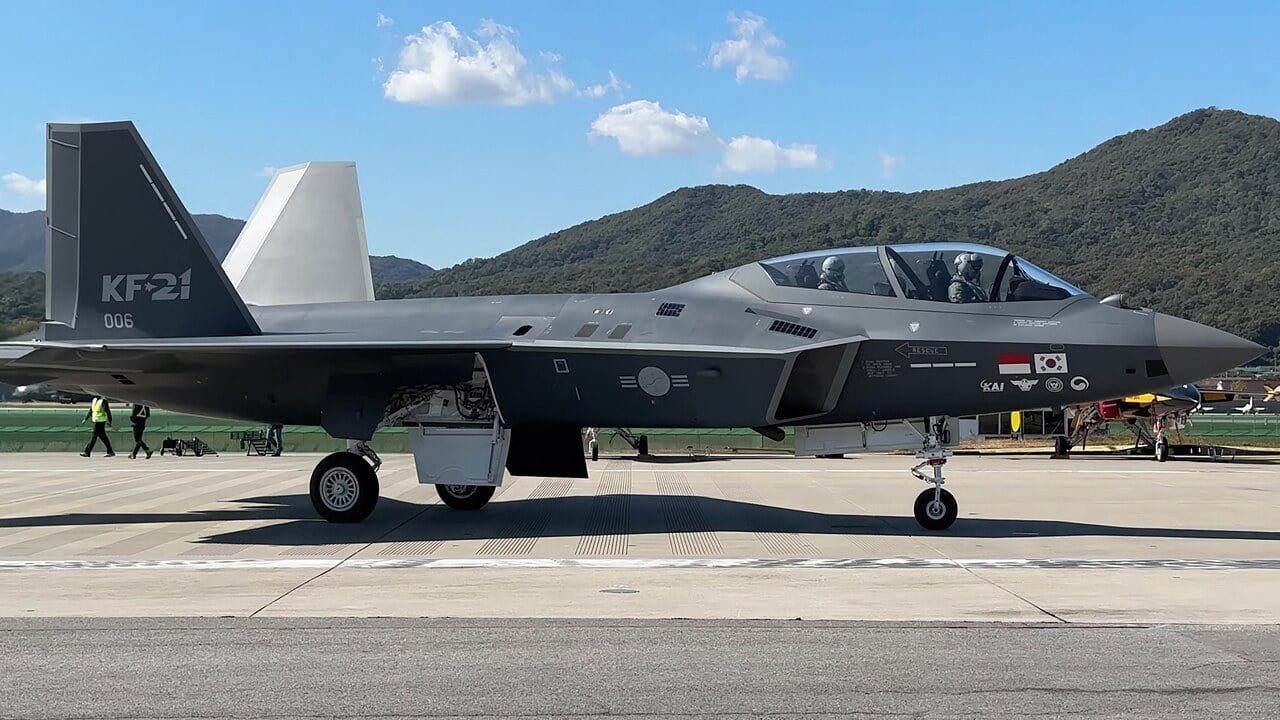
The fighter agreement is narrow but concrete. According to KAI, as reported by the Seoul Economic Daily, the two companies will continue local production in Indonesia of three types of pylon structural assemblies for the KF-21’s follow-on production run, extending an arrangement that already exists for the initial production batch. PTDI will remain the supply source for those parts.
Indonesian defence outlet Indomiliter named the three parts: an air-to-air adapter, an adapter for the electro-optical targeting pod, and a weapon pylon adapter. It reported that PTDI is the sole source for all three in the KF-21 production programme. These are the structures that hang missiles, bombs and sensor pods under the wings, small in size but essential to every armed sortie the jet will fly.
The second agreement aims to build a joint business in aircraft simulators. The companies plan to work together on ground-based training systems for aircrew and maintenance technicians, with technology exchanges and specialist training on both sides.
A bigger idea: a mid-size airliner
The third memorandum is the surprise. KAI and PTDI will exchange information on market analysis, technology and design to explore a possible partnership in commercial aircraft, citing rising global demand for mid-size passenger jets. Indomiliter described it as an opening for a joint study of a next-generation, medium-sized passenger aircraft. No design, size or timetable has been announced.
PTDI also signed a fourth memorandum the same day, with Korea Aviation Engineering & Maintenance Service (KAEMS). That agreement covers maintenance, repair and overhaul work on PTDI-built transports flown by the South Korean government: the CN-235 fleets of the Korea Coast Guard and the Republic of Korea Air Force, plus C-212s. PTDI announced all four memorandums on X on 12 November.
From co-developer to customer
The new deals sit on top of a partnership that has been through a rough few years. Indonesia joined the KF-21 programme as an international partner, with a promise to fund about 20 percent of development. Payments slipped repeatedly, and Seoul eventually cut Jakarta’s contribution to 600 billion won. At the end of June 2026, Indonesia’s Defence Ministry confirmed it was dropping the co-production scheme and would buy the fighter directly.
Supplying parts is how Indonesian industry stays in the programme anyway. In September, Korean newspaper Financial News, citing Indonesian media, reported that a PTDI executive had told a trade fair in Jakarta that an industrial cooperation agreement would give PTDI 15 percent of KF-21 airframe parts, and that a contract for 16 KF-21s for the Indonesian Air Force was being negotiated. No such order has been signed yet.
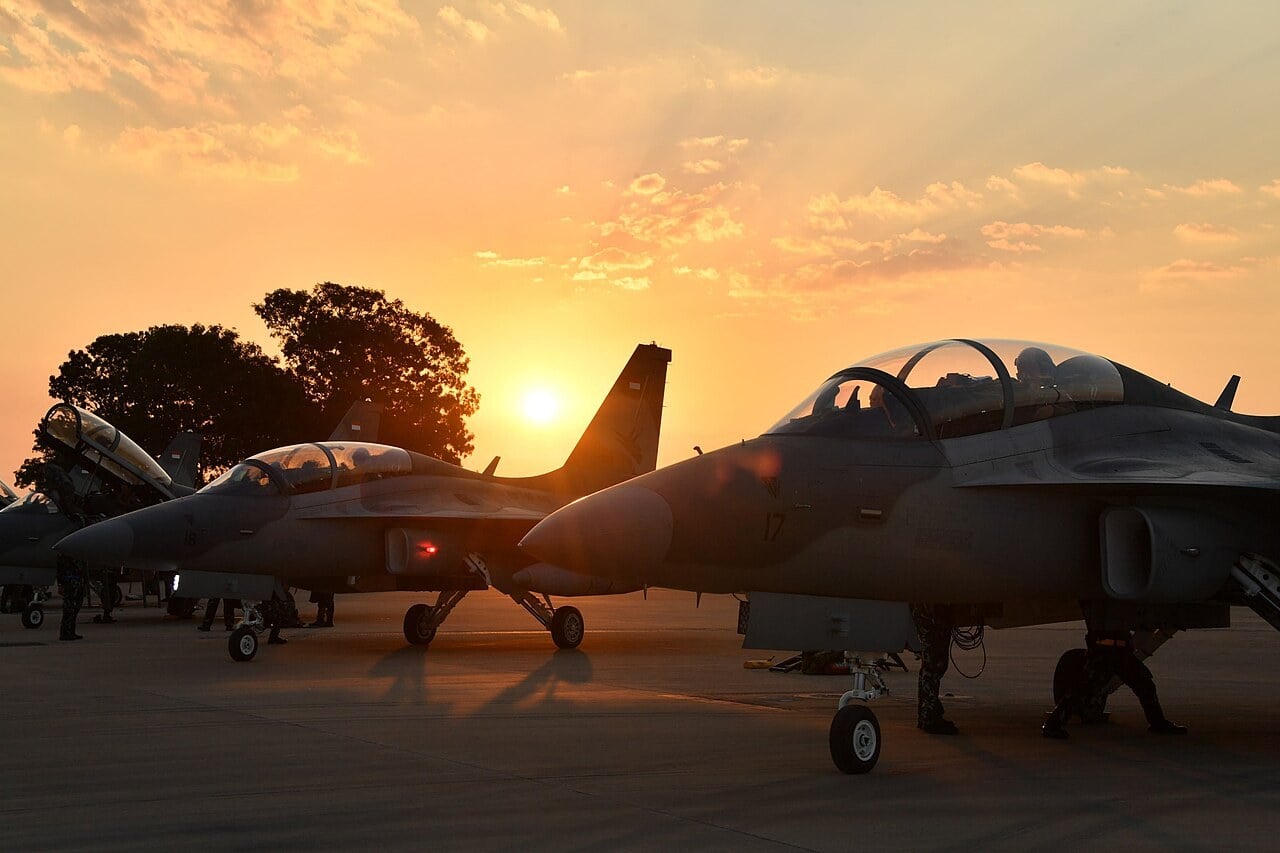
KAI has good reason to court Jakarta. Indonesia was the first export customer for both the KT-1 basic trainer and the supersonic T-50. KAI has delivered 20 KT-1Bs and, after six more jets arrived in July, a total of 22 T-50i advanced trainers. The company says it expects Indonesia to become the first foreign country to adopt the KF-21, and one KAI official called a purchase by a development partner a decisive moment for proving the fighter to the world.
KOREA NOW footage of the KF-21 Boramae flying at Seoul ADEX 2025, the fighter Indonesia hopes to buy.
What the memorandums do not do
Memorandums of understanding are statements of intent, not contracts. The KF-21 pylon work is the firmest element because it extends production PTDI already does. The simulator and airliner tracks are explorations, and the airliner in particular is years from anything that flies.
Still, the Jakarta signing shows the shape of the relationship after the co-production dream ended. Indonesia buys Korean trainers and may buy Korean fighters; Korea buys Indonesian parts and maintenance, and floats a civil project to keep both design teams busy. For the KF-21, the next real milestone in Indonesia is not a memorandum but a signed purchase contract.
Sources: Korea Aerospace Industries (via Seoul Economic Daily and The Korea Times), PT Dirgantara Indonesia (official X account), Indomiliter, Financial News, Antara
Header photo: Ministry of National Defense of the Republic of Korea / Wikimedia Commons, KOGL Type 1
Foire aux questions
What did KAI and PTDI sign in November 2026?
Which KF-21 parts does PTDI build?
Where were the KAI PTDI agreements signed?
Is Indonesia buying the KF-21 Boramae?
Are KAI and PTDI building an airliner together?
Which KAI aircraft does Indonesia already fly?
Articles similaires
L'Indonésie abandonne la coproduction du KF-21 et achètera directement auprès de la Corée du Sud.
KF-21 Boramae: South Korea Delivers Its First Production Fighter
KF-21 Boramae: South Korea's Top General Flies the New Fighter
Premier avion de chasse exporté par la Corée du Sud : le KF-21 est destiné à l’Indonésie.

0 Comments