
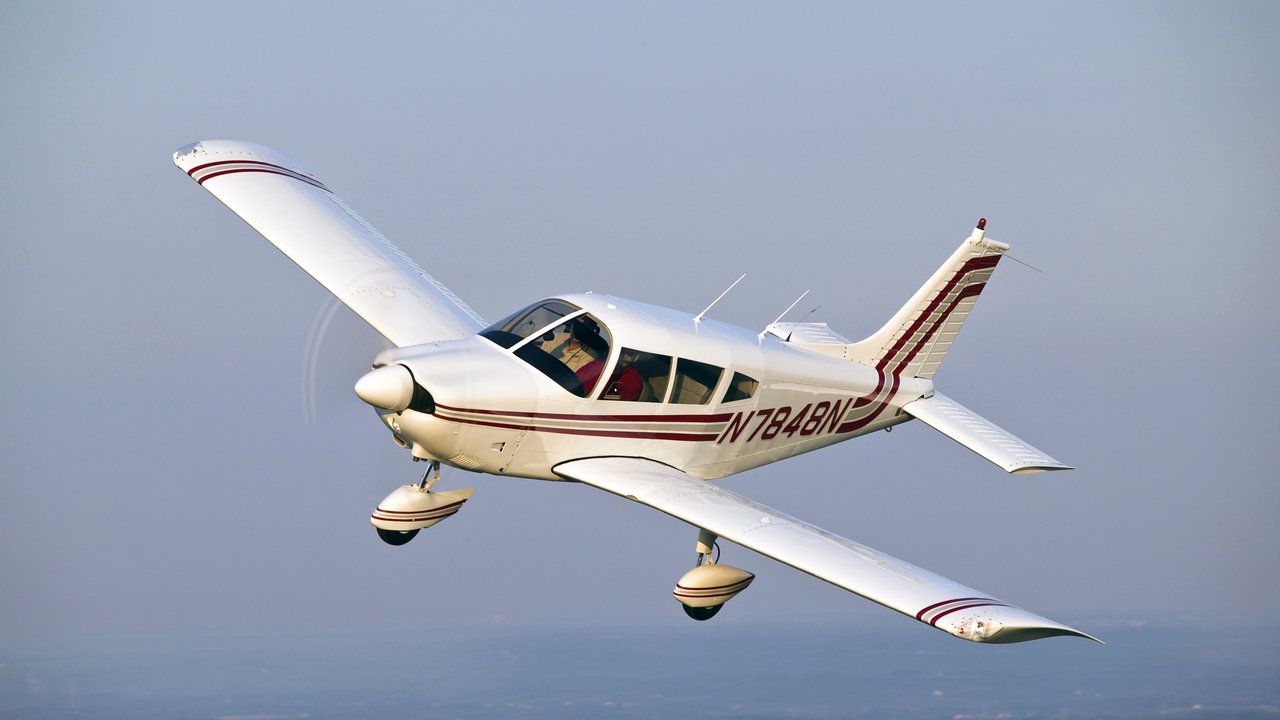
Twenty hours of flight time. No FAA medical exam, just a valid US driver's licence. For two decades that was the deal behind the sport pilot certificate, and the catch was always the aircraft: small, light, two-seat machines with a hard weight cap and a slow top speed.
MOSAIC changed the catch. Since 22 October 2025, the same certificate can open the door to four-seat airplanes, retractable gear, controllable-pitch propellers and, with extra training, night flying. Some things have not changed at all, and the gap between a sport pilot and a private pilot is still real. Here is where the lines now fall.
Informations clés
- Règle: MOSAIC final rule, published 24 July 2025 (90 FR 35034)
- Pilot rules effective: 22 October 2025
- Aircraft certification changes: 24 July 2026
- Minimum flight time (airplane): 20 hours: 15 dual, 5 solo
- Medical: FAA medical or US driver's licence (day)
- Aircraft limit: Airplane VS1 59 knots CAS or less, up to 4 seats
- Passagers : Un
- Night: Allowed with 3 hours night training, endorsement and medical or BasicMed
Two dates, two halves of one rule
The FAA published the Modernization of Special Airworthiness Certification final rule on 24 July 2025. According to the Federal Register, it took effect on 22 October 2025, except for a list of specific amendments that became effective on 24 July 2026. The FAA's own MOSAIC fact sheet sorts the two dates neatly: pilot training, certification rules and privileges came first, 90 days after publication, while the new light-sport category airworthiness rules followed a year after publication.
That second half, the new aircraft category and the end of the old 1,320-pound light-sport definition, is the subject of Afterburner's earlier story, Une nouvelle catégorie d'avions vient d'être légalisée. This article is about the pilot in the seat: what the certificate itself now allows.
The FAA has kept tidying up since. On 14 September 2026 it published a final rule aligning the sport pilot practical test standards with the new MOSAIC requirements, so the checkride now matches the regulation.
What a sport pilot can fly now
The key paragraph is 14 CFR 61.316. A sport pilot may act as pilot in command of an aircraft that, since its original certification, meets a set of performance and design limits. For airplanes, the maximum stalling speed in the clean configuration, VS1, is 59 knots CAS at maximum takeoff weight and the most critical centre of gravity. For other aircraft the figure is 45 knots.
Airplanes may have up to four seats; other aircraft are limited to two. The cabin, if there is one, must be unpressurised. A partial loss of power must not upset directional control, and the design must let the pilot set up a controlled descent if the engine quits. The FAA fact sheet adds that the old weight and airspeed limits are gone and that any powerplant type is allowed except a turbojet.
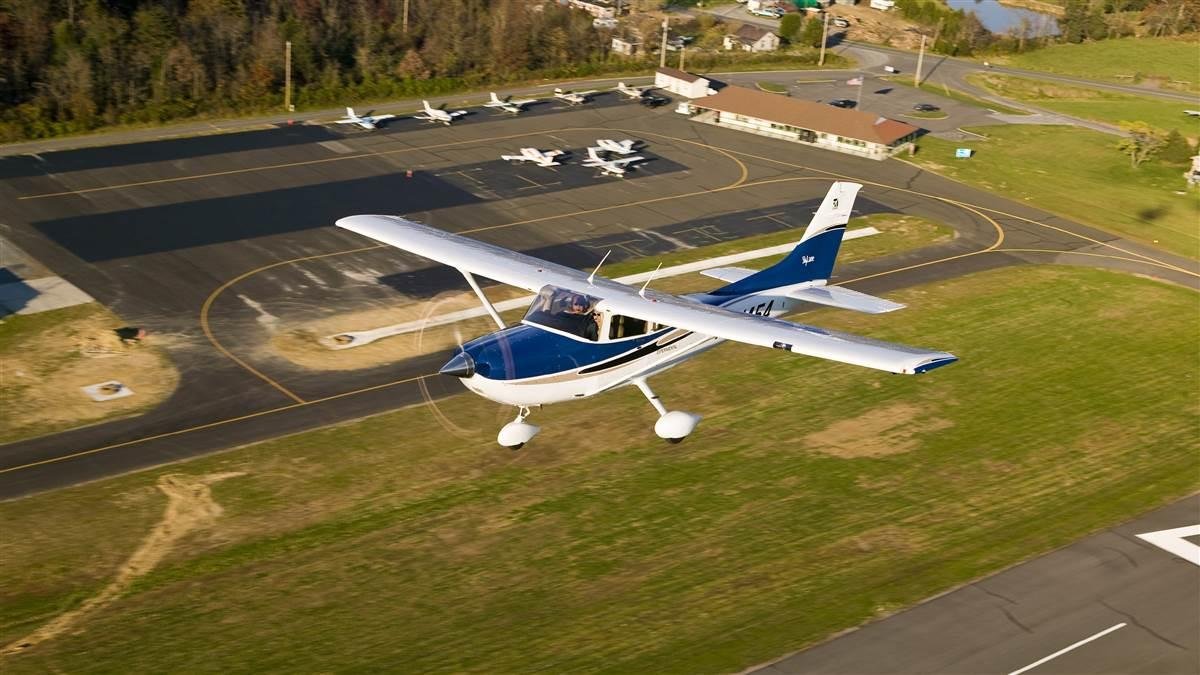
Retractable gear and manual controllable-pitch propellers are permitted, but only after ground and flight training and an instructor's endorsement under 61.331. Speed is handled the same way: flying an airplane whose maximum level-flight speed, VH, is above 87 knots CAS needs its own logged training and endorsement under 61.327, as does flying one at or below 87 knots, unless the pilot already logged such time before 2 April 2010.
Note the phrase since its original certification. An aircraft has to have met the limits from the start; it does not qualify by being modified to fit them later.
AOPA looks at the kinds of airplanes that come within reach of sport pilots under the MOSAIC limits.
What a sport pilot still cannot do
The aircraft got bigger. The privileges mostly did not. Under 61.315 a sport pilot still may not carry more than one passenger, so a four-seat airplane is still a two-person airplane. The FAA fact sheet says it plainly: four-seat airplanes are allowed, but the two-occupant limit stays.
The rest of the list is familiar. No flying for compensation or hire or in furtherance of a business, though passengers can split fuel, oil, airport and rental costs as long as the pilot pays at least half. No Class A airspace. No flight above 10,000 feet MSL or 2,000 feet AGL, whichever is higher. No flight with less than three statute miles of flight or surface visibility, or without visual reference to the surface. No towing.
Class B, C and D airspace and towered airports are open, but only after the training and endorsement in 61.325, which includes three full-stop landings at a towered airport. Abroad, the certificate carries the limit Holder does not meet ICAO requirements, so flying outside the United States needs prior permission from the country concerned.
Night flying, finally
The biggest new privilege is night. Under 61.329 a sport pilot may fly at night after three hours of night flight training in the category and class, including a night cross-country with a landing at an airport at least 25 nautical miles away (powered parachutes excepted) and ten full-stop takeoffs and landings at night, plus an instructor's endorsement.
There is a medical string attached. To fly at night, a sport pilot must either hold an FAA medical certificate or meet the BasicMed conditions of 61.113(i). The driver's licence alone covers daytime sport flying only.
What it costs in hours
For an airplane, 61.313 asks for at least 20 hours of flight time, including 15 hours of instruction and 5 hours of solo flight training. Within that: 2 hours of cross-country training, 10 full-stop takeoffs and landings, one solo cross-country of at least 75 nautical miles with full-stop landings at two or more points and one leg of at least 25 nautical miles, and 2 hours of checkride preparation within the two calendar months before the test.
A recreational pilot certificate, under 61.99, needs at least 30 hours, including 15 hours of instruction and 3 hours of solo. A private pilot certificate in a single-engine airplane, under 61.109, needs at least 40 hours, including 20 hours of instruction and 10 hours of solo, with 3 hours of night training and 3 hours of flight solely by reference to instruments among them.
Those are legal minimums, not predictions. Most students take longer than the minimum for every certificate, and time spent training for the sport certificate is not wasted: 61.99 lets a sport pilot credit instruction from a sport pilot instructor toward the recreational certificate, if the training covered areas required for both.
Pilot Institute's walk-through of the sport pilot privileges and limits under MOSAIC.
Sport, recreational or private?
The recreational certificate now looks squeezed. A recreational pilot may carry one passenger, may not fly an aircraft certificated for more than four occupants, with more than one engine, more than 180 horsepower or retractable gear, and may not fly between sunset and sunrise. Flights beyond 50 nautical miles and into towered or Class B, C and D airspace need endorsements. And unlike a daytime sport pilot, a recreational pilot needs an FAA medical certificate or BasicMed.
The private certificate is still the one without a passenger cap. It is the route to an instrument rating and a commercial certificate, and, unlike the sport and recreational certificates, it does not carry the not-ICAO-compliant limitation. It also needs an FAA medical certificate or BasicMed, and twice the minimum hours of a sport certificate.
For a pilot who wants to fly one friend on a sunny Saturday, the sport certificate after MOSAIC is the best value it has ever been. For anyone who wants to carry the family, fly in cloud or one day get paid to fly, it is a first step, not a destination.
A sport pilot explains the endorsements needed to add the new MOSAIC privileges to an existing certificate.
Sources: Federal Register, FAA MOSAIC Fact Sheet, eCFR (14 CFR 61.23, 61.99, 61.101, 61.109, 61.313, 61.315, 61.316, 61.325, 61.327, 61.329, 61.331), AOPA
0 Comments