
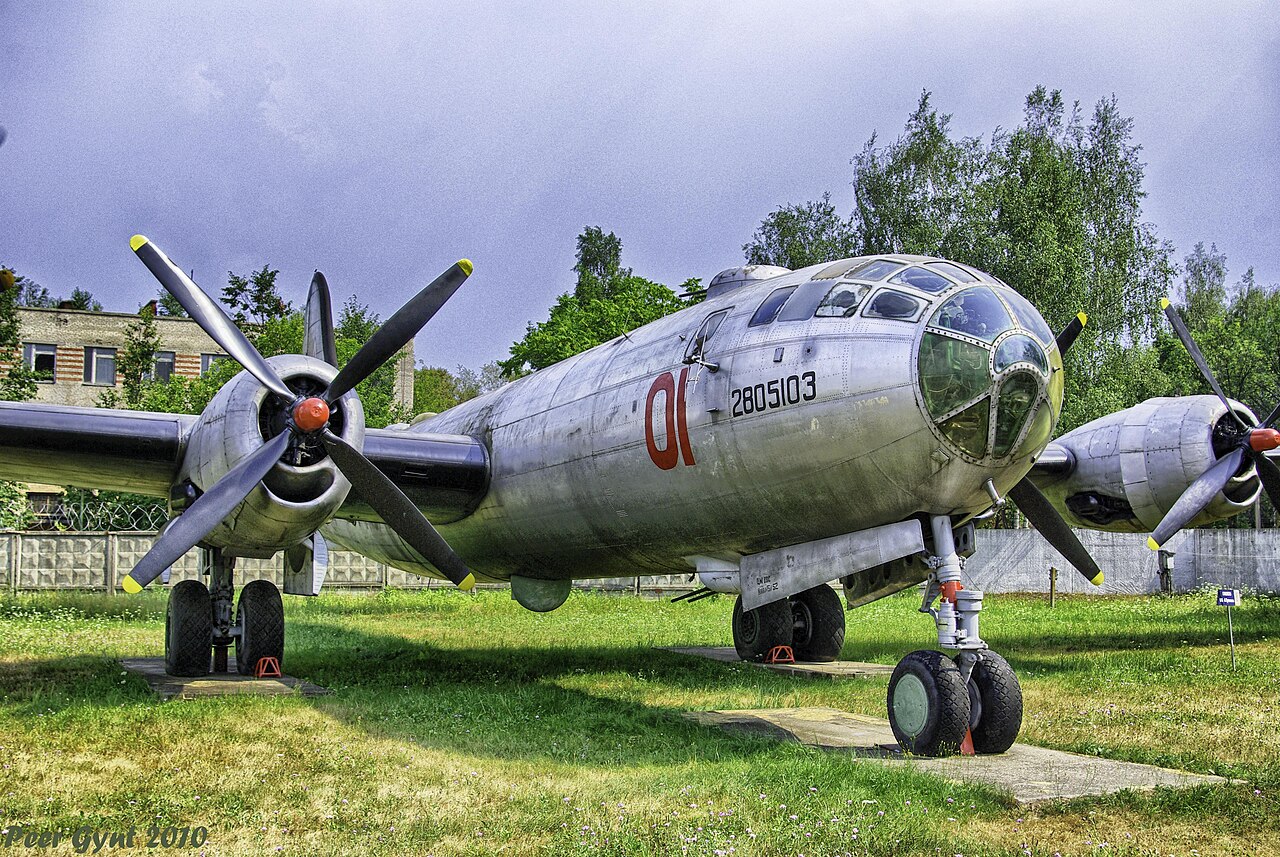
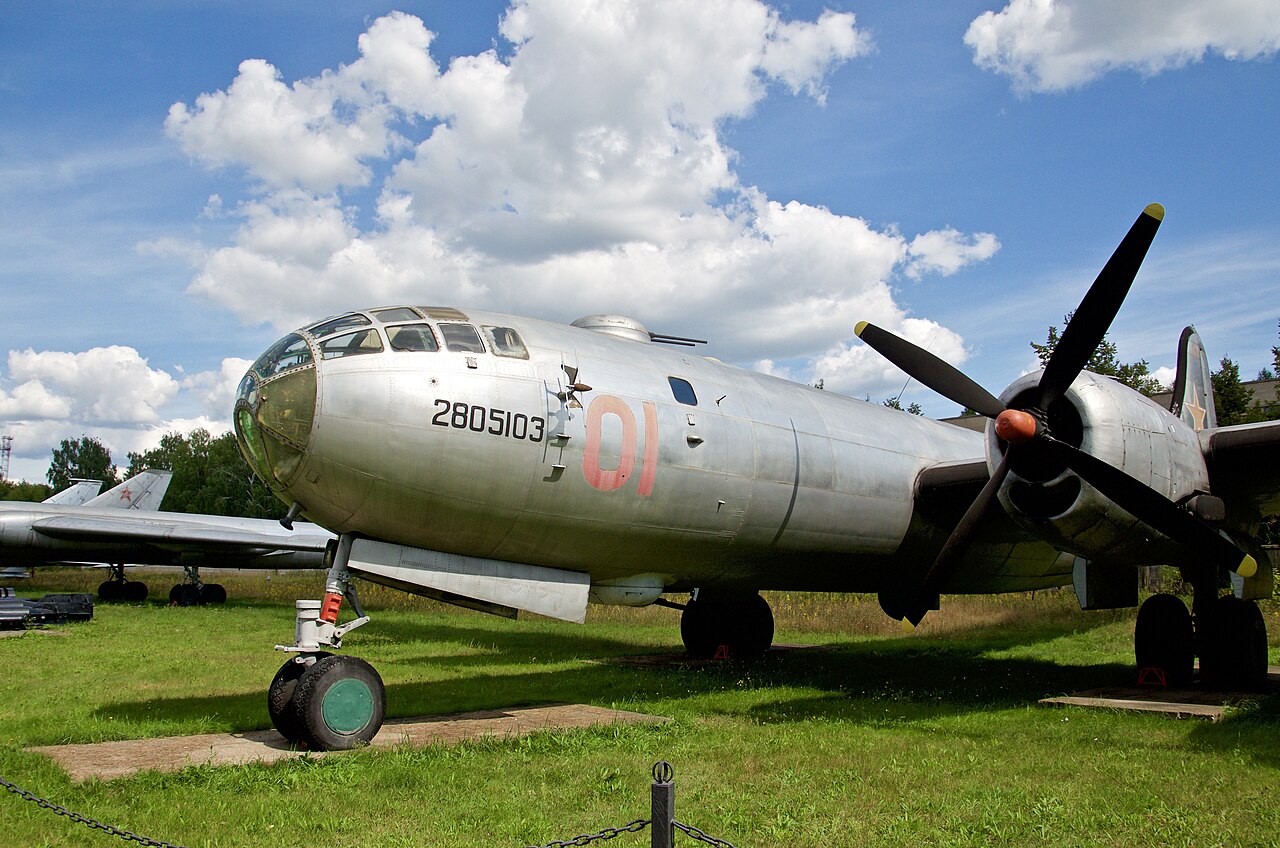
At about 9:33 on the morning of 14 September 1954, a four-engined Tu-4 bomber flying high over the steppe between Samara and Orenburg released a single bomb. The aim point was a white cross laid out in an oak grove on the Totskoye range. The bomb exploded roughly 350 metres above the ground with a force of about 40 kilotons, more than twice the Hiroshima bomb. In shelters and trenches a few kilometres away, some 45,000 Soviet soldiers felt the ground heave. Within minutes they had their orders: attack.
The codename for the exercise was Snezhok, “Snowball”. It was the first time the Soviet Army had sent a large force into the area of a real nuclear explosion, and for 35 years almost nobody was allowed to talk about it.
Informations clés
- Date: 14 September 1954, about 9:33 Moscow time
- Lieu: Totskoye range, Orenburg region, in the southern foothills of the Urals
- Arme: Air-dropped atomic bomb of about 40 kilotons, burst about 350 m above ground
- Aéronef: Tupolev Tu-4, crew led by Major Vasily Kutyrchev
- In charge: Marshal Georgy Zhukov; troops in the field under General Ivan Petrov
- Forces: About 45,000 men; planned 600 tanks and self-propelled guns, 500 guns and mortars, 320 aircraft
- Disclosed: Troop exercise first described publicly in Krasnaya Zvezda on 29 September 1989
Preparing for an Atomic Battlefield
By 1954 both superpowers had the bomb, and both armies wanted to know whether soldiers could fight where one had just gone off. The Americans had already sent troops toward ground zero in the Desert Rock exercises in Nevada, the first in November 1951. A Soviet government resolution of September 1953 set preparations in motion for a Soviet equivalent. Its overall direction went to the deputy defence minister, Marshal Georgy Zhukov, the commander who had taken Berlin.
The planning documents, now declassified, read like a manual for a new kind of war. The attacking troops would start 5 kilometres from the target. The main bodies would sit in covered shelters, and anyone in the open had to be at least 8 kilometres away. Each soldier was allowed a dose of 10 roentgen, and ground reading more than 25 roentgen an hour was to be bypassed. The bomber could drop only if its crew could see the target. Zhukov himself was worried about the late-summer weather.
Four villages near the aim point, among them Makhovka, were ordered emptied: 1,633 families, given one truck each to move their belongings. Even the senior officers struggled to grasp what was coming. After a briefing by the nuclear physicists, the air force commander, Chief Marshal Konstantin Vershinin, reportedly admitted that the generals had understood so little that they could not even formulate a question.
The Bomber
The aircraft chosen to deliver the bomb was the Tu-4, the Soviet Union’s reverse-engineered copy of the American B-29 Superfortress, built from three B-29s that had landed in the Soviet Far East during the Second World War. Two crews trained for the mission. The one that flew it was led by Major Vasily Kutyrchev, who had already taken part in tests at the Semipalatinsk test site. He was later awarded the Order of Lenin.
Lightning
The day began at four in the morning. Watching from a stand about 15 kilometres away were Zhukov, Bulganin, the nuclear programme’s scientific leader Igor Kurchatov, a row of marshals and observers from allied socialist countries. At 9:23 came the order to take cover. Ten minutes later came the codeword “Molniya”, lightning, and the flash.
Sheltering soldiers remembered the earth shaking and dust filling their dugouts. “We were buried alive,” the veteran Leonid Pogrebnoy told the newspaper Argumenty i Fakty sixty years later. Windows broke in Sorochinsk, about 40 kilometres away. Then, a few minutes after the blast, artillery and bombers struck the “enemy” positions. Il-28 jet bombers escorted by MiG-17 flew in under the rising cloud.
The Totskoye exercise explained. Video: Plainly Difficult.
Into the Blast Zone
At 10:10 the attack began. Tanks, armoured personnel carriers and infantry rolled toward the epicentre through burning forest and scorched villages, past equipment that had been placed out as targets and animals tethered to measure the effects. Radiation survey teams went ahead to mark the routes, and the lead groups passed the area of the epicentre around midday, about three hours after the explosion. The exercise ended at four in the afternoon.
Not all 45,000 men crossed ground zero, as is often said: most of the force stayed well back. But the troops wore little more than gas masks and light capes, and the men who went closest got no protection worth the name. “We were test subjects, like the horses and rabbits,” Pogrebnoy said.
The Totskoye exercise and its aftermath. Video: Dark Docs.
Thirty-Five Years of Silence
On 17 September 1954, Pravda printed a short TASS statement that “one of the types of atomic weapons” had been tested. It said nothing about troops. Participants reportedly signed pledges to keep silent for 25 years, and many could not even tell their doctors where they had been. The exercise was finally described in public on 29 September 1989, when the Defence Ministry’s newspaper Krasnaya Zvezda ran a long article about it.
In December 1991 Russia extended the benefits given to Chernobyl clean-up workers to veterans of nuclear tests and exercises, but many Totskoye veterans struggled to prove they had been there. How much harm the exercise did is still argued over. Local studies have reported higher cancer rates in the region, while a Radium Institute survey published in 2004 found no significant long-lived contamination left in the soil.
Not the Only One
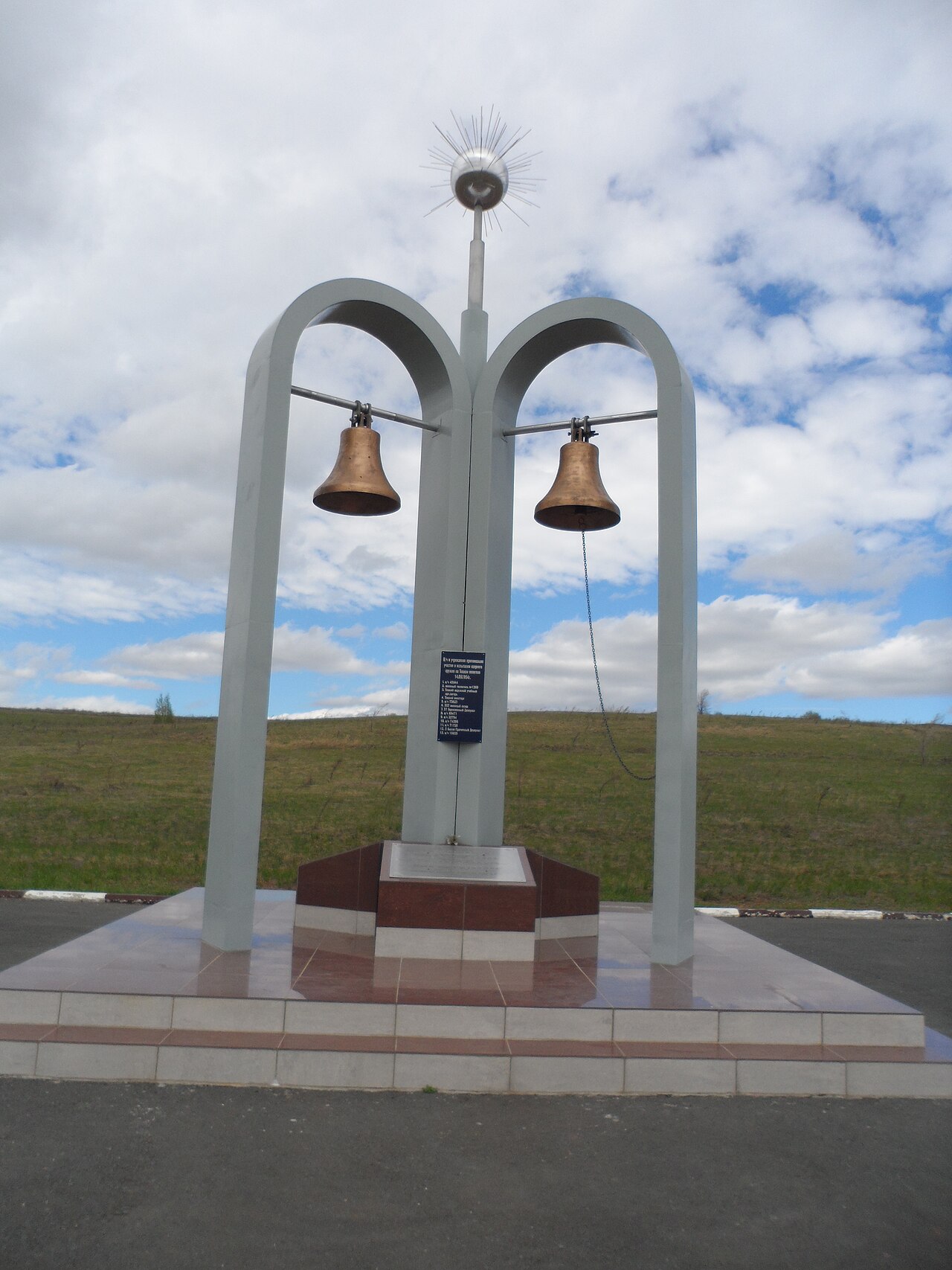
Totskoye was not unique. The United States ran eight Desert Rock exercises in Nevada between 1951 and 1957, and the Soviet Union held a second, smaller troop exercise at Semipalatinsk in 1956, landing paratroopers by helicopter near the epicentre after the blast. But no other exercise put so many soldiers so close to a nuclear explosion. In 2004 an obelisk was raised on the spot where the bomb went off, dedicated to the men who were sent toward it.
Sources: Marshal G. Zhukov, letter to N. Bulganin, 16 August 1954, and minutes of the Totskoye preparatory meeting, 4 September 1954, Wilson Center Digital Archive (Volkogonov papers); Gen. I. Petrov, “On Safety”, April 1954 (TsAMO), Wilson Center Digital Archive; Krasnaya Zvezda (29 September 1989), as reported by the Washington Post (30 September 1989) and Deseret News (29 September 1989); Yu. Dubasov et al., Radiochemistry 46 (2004); Physics Today; Lenta.ru (14 September 2024); Argumenty i Fakty (2014); Novaya Gazeta (14 September 2022); Vechernyaya Moskva (13 September 2017); Radio Svoboda (14 September 2009); Jamestown Foundation Monitor (25 October 1996); Supreme Soviet of the Russian Federation, Resolution 2123-1 (27 December 1991); Defense Threat Reduction Agency, Operation Buster-Jangle report.

0 Comments